
 +86-(0)512-82283871
Content
- 1 Designed for More Than Smooth Indoor Floors
- 2 Powertrain Performance and Climbing Support
- 3 Battery Capacity and Real-World Range
- 4 Comfort and Adjustability for Different Users
- 5 Heavy-Duty Capacity Without an Oversized Footprint
- 6 How the Product Compares with Alternative Mobility Designs
- 7 Manufacturing Strengths Behind the Product
- 8 Practical Outdoor Use
- 9 Daily Operation and Ownership Considerations
- 10 Transport, Storage, and Access Planning
- 11 Non-Medical Device Notice for the United States
- 12 Why Manufacturer Support Matters
- 13 Who May Benefit Most from This Model?
- 14 Purchasing Checklist
- 15 Q&A: iPower GTS Plus Product Questions
- 15.1 What type of mobility product is the iPower GTS Plus?
- 15.2 How much weight can it support?
- 15.3 How powerful are the motors?
- 15.4 What is the maximum speed?
- 15.5 What range can users expect?
- 15.6 Can the wheelchair travel outdoors?
- 15.7 Can the joystick be positioned for either hand?
- 15.8 Are lighting and a swing-away controller included?
- 15.9 Is a power tilt and lift system available?
- 15.10 What batteries does the chair use?
- 15.11 How long does charging take?
- 15.12 Is the wheelchair easy to lift into a vehicle?
- 15.13 What makes this model different from a small travel wheelchair?
- 15.14 Where is the product manufactured?
- 15.15 What should buyers ask the manufacturer before ordering?
- 16 Conclusion
- 17 References
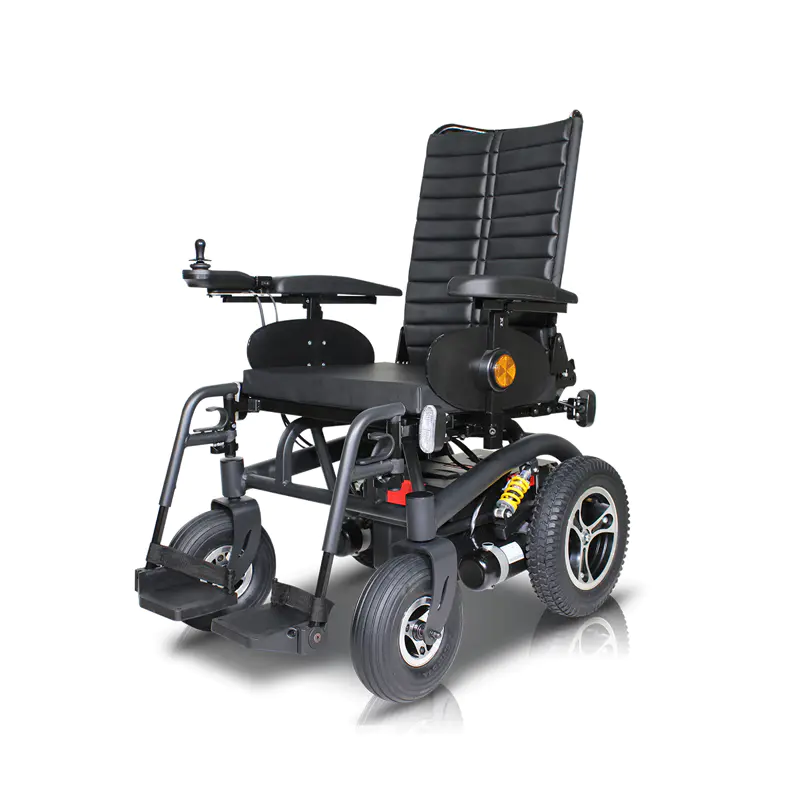
- 18 Product: iPower GTS Plus More popular type second hand off road light power electric electronic wheelchair for the elderly
For many wheelchair users, mobility is not limited to moving through a hallway, shopping center, or smooth pavement. Everyday independence may also require crossing uneven sidewalks, traveling over compacted paths, navigating ramps, handling outdoor destinations, and remaining comfortable during longer journeys. A power wheelchair intended for this type of use must combine stability, drive performance, comfort, controllability, range, and practical serviceability in one dependable platform.
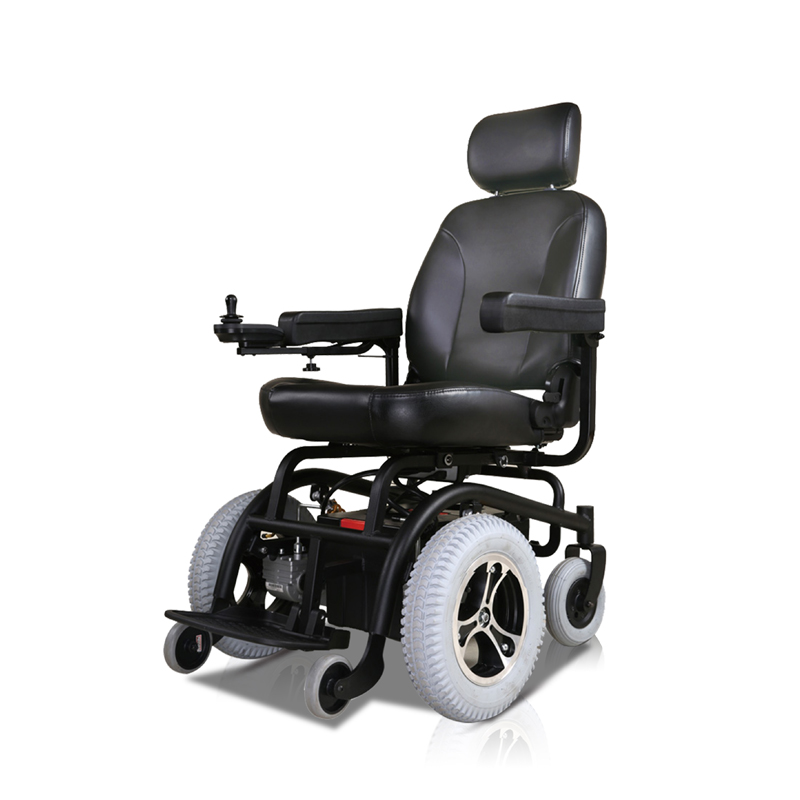
The iPower GTS Plus is designed around that requirement. Classified as a heavy-duty power wheelchair, it combines a reinforced 136-kilogram, or 300-pound, weight capacity with a pair of 350-watt motors, large pneumatic tires, rear suspension, an electromagnetic braking system, and a driving range of approximately 30 to 40 kilometers. Its configuration is intended to provide a balance between outdoor capability and everyday usability for older adults and people who need powered mobility support.
This article examines the product’s specifications, design advantages, operating characteristics, comfort features, manufacturing background, and potential applications. It also explains how the wheelchair compares with more limited mobility products and identifies the points that purchasers should consider before selecting a model for personal use.
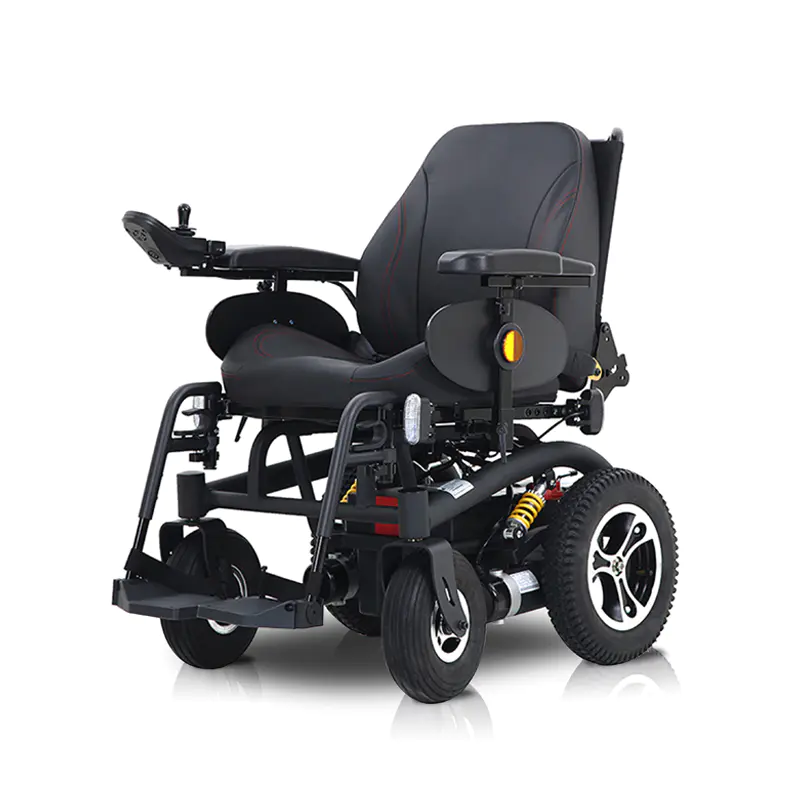
iPower GTS Plus More popular type second hand off road light power electric electronic wheelchair for the elderly
Designed for More Than Smooth Indoor Floors
Many compact electric wheelchairs are optimized for indoor movement. Their small dimensions can be useful in narrow rooms, elevators, and retail aisles, but a highly compact structure may involve compromises when the chair is used outside. Small wheels can make uneven surfaces more noticeable, limited motor output can reduce confidence on inclines, and a lower weight capacity may restrict suitability for some users.
The iPower GTS Plus takes a different approach. Its design gives priority to outdoor performance while maintaining dimensions that remain practical for daily transportation and access. The wheelchair measures 1,045 millimeters in length, 625 millimeters in width, and 1,080 millimeters in height. This creates a substantial platform without making the product excessively wide for many common access points.
The large front and rear tires are one of the clearest differences between the iPower GTS Plus and lightweight indoor-oriented chairs. The front tires measure 10 by 3 inches, while the rear pneumatic tires measure 14 by 3 inches. Larger wheels generally help a power wheelchair roll over surface changes more smoothly than very small solid casters. They can also improve the approach angle when crossing minor thresholds, pavement transitions, or compacted outdoor paths.
The rear suspension works together with the wheel and tire configuration to improve contact and stability on surfaces that are not perfectly flat. Suspension does not eliminate every impact, and users should still avoid dangerous terrain, but it can reduce the harshness of normal outdoor irregularities. This is particularly important for users who spend considerable time traveling between home, community facilities, parks, medical appointments, and commercial areas.
With a maximum forward speed of 8 kilometers per hour, equivalent to approximately 5 miles per hour, the wheelchair offers a practical travel pace for outdoor mobility. The speed is sufficient for efficient movement while allowing the operator to maintain control in ordinary pedestrian environments. Actual safe speed should always be adjusted according to surface conditions, visibility, traffic, slope, and local regulations.
Powertrain Performance and Climbing Support
The drive system uses two 24-volt, 350-watt motors, producing a total rated motor output of 700 watts. A dual-motor configuration distributes propulsion across the two driven wheels and provides consistent power delivery. For a heavy-duty wheelchair, this is a meaningful advantage because the motors must move not only the chair but also the user, batteries, personal belongings, and the additional resistance created by outdoor surfaces.
The motor package is described as high performance and high efficiency. In practical terms, an efficient powertrain can help convert available battery energy into useful movement while controlling unnecessary losses. Efficiency is influenced by many factors, including user weight, tire pressure, terrain, speed, temperature, battery condition, and driving style. Even a powerful wheelchair will achieve different results on level pavement than on grass, gravel, ramps, or repeated inclines.
The stated maximum driving gradient is 10 degrees. This figure indicates the rated slope capability under appropriate conditions, but it should not be interpreted as permission to travel on every slope of that angle. Slope safety also depends on the length of the incline, surface traction, wetness, side angle, braking condition, battery charge, and whether the user is moving forward or backward. Operators should follow the supplied instructions and use caution on all inclines.
The combination of two motors, large tires, and rear suspension gives the iPower GTS Plus a stronger outdoor orientation than many basic indoor wheelchairs. A lightweight travel chair may be easier to lift, but it may not provide the same level of rolling stability, payload capacity, or drive power. Conversely, some very large heavy-duty chairs may deliver more capacity but become more difficult to maneuver in normal residential spaces. The iPower GTS Plus occupies a useful middle position between these two categories.
Electromagnetic Braking
The wheelchair uses an electromagnetic brake system. This type of braking is commonly integrated with powered mobility controls so that the drive system can slow or hold the chair when the joystick is released, depending on the controller settings and operating conditions. It supports predictable stopping behavior and reduces the need for a separate manual braking action during ordinary powered travel.
Braking performance is affected by the slope, surface, tire condition, battery status, total load, and maintenance condition. Users should never depend on a powered brake system as a substitute for safe driving practice. The electromagnetic brake, controller, tires, and drive motors should be inspected and maintained according to the product instructions.
Battery Capacity and Real-World Range
The iPower GTS Plus is equipped with two 12-volt, 40-amp-hour lead-acid batteries. Connected as a 24-volt battery system, the pair provides the energy required by the twin motors and control electronics. Lead-acid batteries remain widely used in mobility products because they are established, serviceable, and capable of supplying the current needed by heavy-duty drive systems.
The stated maximum driving range is 30 to 40 kilometers, or approximately 19 to 25 miles. This is a substantial range for a powered wheelchair and can support extended daily use when the chair is properly charged and operated under favorable conditions. The actual distance will vary. A heavier occupant, frequent acceleration, steep terrain, soft ground, low tire pressure, cold weather, and an aging battery can all reduce range.
The supplied charger is rated at DC 24 volts and 5 amperes, with an AC input range of 115 to 230 volts. The listed charging time is 6 to 8 hours. This makes overnight charging a practical routine for many users. Charging should take place in a suitable, ventilated location using the correct charger and following the manufacturer’s safety instructions.
Battery care is an important part of ownership. Users should avoid leaving the battery system deeply discharged for extended periods, should check the charger and cables for visible damage, and should arrange replacement when the batteries no longer provide dependable capacity. A range estimate should be treated as a planning guide rather than a guarantee. For journeys away from home, it is sensible to allow a reserve for detours, slopes, weather, and unexpected delays.
| Specification | Stated Information | Practical Importance |
|---|---|---|
| Overall dimensions | 1,045 L × 625 W × 1,080 H mm | Balances outdoor stability with practical everyday access |
| Maximum forward speed | 8 km/h, approximately 5 mi/h | Supports efficient travel in appropriate pedestrian environments |
| Maximum driving gradient | 10 degrees | Provides useful incline capability when operated safely |
| Maximum driving range | 30–40 km, approximately 19–25 miles | Supports longer outings and multi-stop daily travel |
| Weight capacity | 136 kg, approximately 300 lb | Broadens suitability for users requiring a heavy-duty platform |
| Front tires | 10 × 3 inches | Helps the chair approach surface changes and outdoor terrain |
| Rear tires | 14 × 3 inches, pneumatic | Supports traction, rolling comfort, and outdoor stability |
| Suspension | Rear suspension | Helps moderate vibration over ordinary uneven surfaces |
| Braking | Electromagnetic brake | Provides integrated powered stopping control |
| Battery system | Two 12 V 40 Ah lead-acid batteries | Delivers the energy required for the dual-motor system |
| Motor system | Two 24 V 350 W motors | Provides a combined rated output of 700 W |
| Controller | 24 V/50 A, PG or Dynamic | Manages motor response and user commands |
| Charging time | Approximately 6–8 hours | Suitable for regular overnight charging routines |
Comfort and Adjustability for Different Users
A power wheelchair can have strong motors and a long range, but it must also fit the person using it. Poor positioning can cause discomfort, reduce control, and make longer journeys tiring. The iPower GTS Plus includes an adjustable seat width, allowing the seating area to be adapted to different body sizes. This is especially valuable in a heavy-duty product category, where a single fixed seat dimension may not suit every user.
Adjustable armrest height provides another important point of customization. Users can position the armrests to support a more natural posture and improve comfort during extended sitting. Appropriate armrest height may also make it easier to rest the arms while operating the joystick. Because individual body proportions vary, the final adjustment should be made carefully and checked for comfort, posture, and unobstructed joystick use.
The joystick can be used on either side. This bilateral arrangement is a notable practical advantage. Some users have stronger or more reliable control on one side, while others may need to change the control position because of personal preference, seating configuration, or a temporary limitation. The ability to place the joystick for left- or right-side use gives the chair greater flexibility than a fixed-position control layout.
An optional swing-away controller mount is also available. When installed, this feature can allow the controller to move away from the seating area when the user is transferring, positioning close to a table, or completing another task. A swing-away system can improve access and reduce the chance of the controller interfering with transfers. The availability and exact configuration of optional equipment should be confirmed with the supplier before purchase.
An optional light package is available for users who require additional visibility and convenience during appropriate low-light travel. Lighting can help the user see the immediate path and make the chair more visible to others. It should not be considered a substitute for reflective clothing, route planning, or compliance with local requirements for mobility devices used outdoors.
The product information also identifies an optional power tilt and lift system as a planned feature. Because the information describes this option as “soon,” purchasers should verify current availability, compatibility, delivery timing, and any effect on seat dimensions or weight. The presence of an upgrade path may be attractive to users who expect their positioning needs to develop over time, but optional functions should be evaluated based on confirmed specifications rather than assumptions.
Heavy-Duty Capacity Without an Oversized Footprint
The 136-kilogram, or 300-pound, weight capacity is one of the model’s central strengths. A higher capacity makes the chair suitable for a wider range of users and provides room for clothing, personal items, and ordinary accessories. It may also contribute to a more robust overall frame and running gear compared with products designed only for lower loads.
Weight capacity should always be treated as a total safe load rather than only the user’s body weight. The combined weight of the user, bags, removable equipment, cushions, and other carried items must remain within the specified limit. Staying within the rating supports safe handling, braking, motor performance, and structural durability.
At the same time, a heavy-duty chair must remain usable in real homes and communities. The 625-millimeter width is relatively purposeful for a chair with large wheels and a 300-pound capacity. Buyers should measure doorways, elevators, ramps, vehicle loading areas, storage locations, and turning spaces before ordering. The chair’s 59-kilogram heaviest part, listed in the product data, also needs to be considered when planning transportation or maintenance.
The weight of the heaviest component means that lifting may require more than one person or suitable loading equipment. This is a normal consideration for a power wheelchair equipped for outdoor performance and heavy-duty use. Buyers comparing it with highly portable folding chairs should recognize that portability and outdoor strength often involve different design priorities.
How the Product Compares with Alternative Mobility Designs
The iPower GTS Plus should be compared with products that serve similar needs rather than with every type of mobility device. A compact indoor power chair may have a tighter turning footprint or lower transport weight, but it may not provide the same motor output, tire size, suspension, or user capacity. A standard mobility scooter may offer a familiar riding position, but it may not provide the same joystick operation or wheelchair-style seating flexibility. A very large outdoor wheelchair may offer even greater capacity, but could be more difficult to store or maneuver indoors.
Against a basic indoor power wheelchair, the iPower GTS Plus offers several identifiable advantages. Its two 350-watt motors provide a combined 700-watt rated output. Its 10-inch front wheels and 14-inch pneumatic rear tires are better aligned with outdoor use than small indoor casters. Rear suspension provides an additional layer of impact management, and the 30-to-40-kilometer stated range supports journeys that might exceed the practical range of a smaller chair.
Against a lightweight folding travel chair, the main advantage is capability rather than convenience. The iPower GTS Plus offers a higher 300-pound capacity, more substantial tires, greater motor output, and a longer listed range. These features can be more important to users who need stability and outdoor performance every day. The trade-off is that a heavy-duty configuration generally requires more planning for lifting, storage, and vehicle transport.
Against a conventional scooter, the model’s joystick control and power wheelchair layout may be preferable for users who need a compact directional control, a seating position that can be customized, or a control arrangement on either side. The correct choice depends on the individual’s posture, hand function, transfer method, home layout, and intended environment. There is no single mobility product that is ideal for every person.
The product’s advantage over competitors should therefore be understood as a combination of features. It is not based on one isolated specification. The value comes from the interaction of outdoor-oriented wheels, twin motors, suspension, long stated range, heavy-duty capacity, adjustable seating, bilateral joystick positioning, and optional accessories. Buyers should compare these factors together, along with service support and the availability of replacement parts.
Manufacturing Strengths Behind the Product
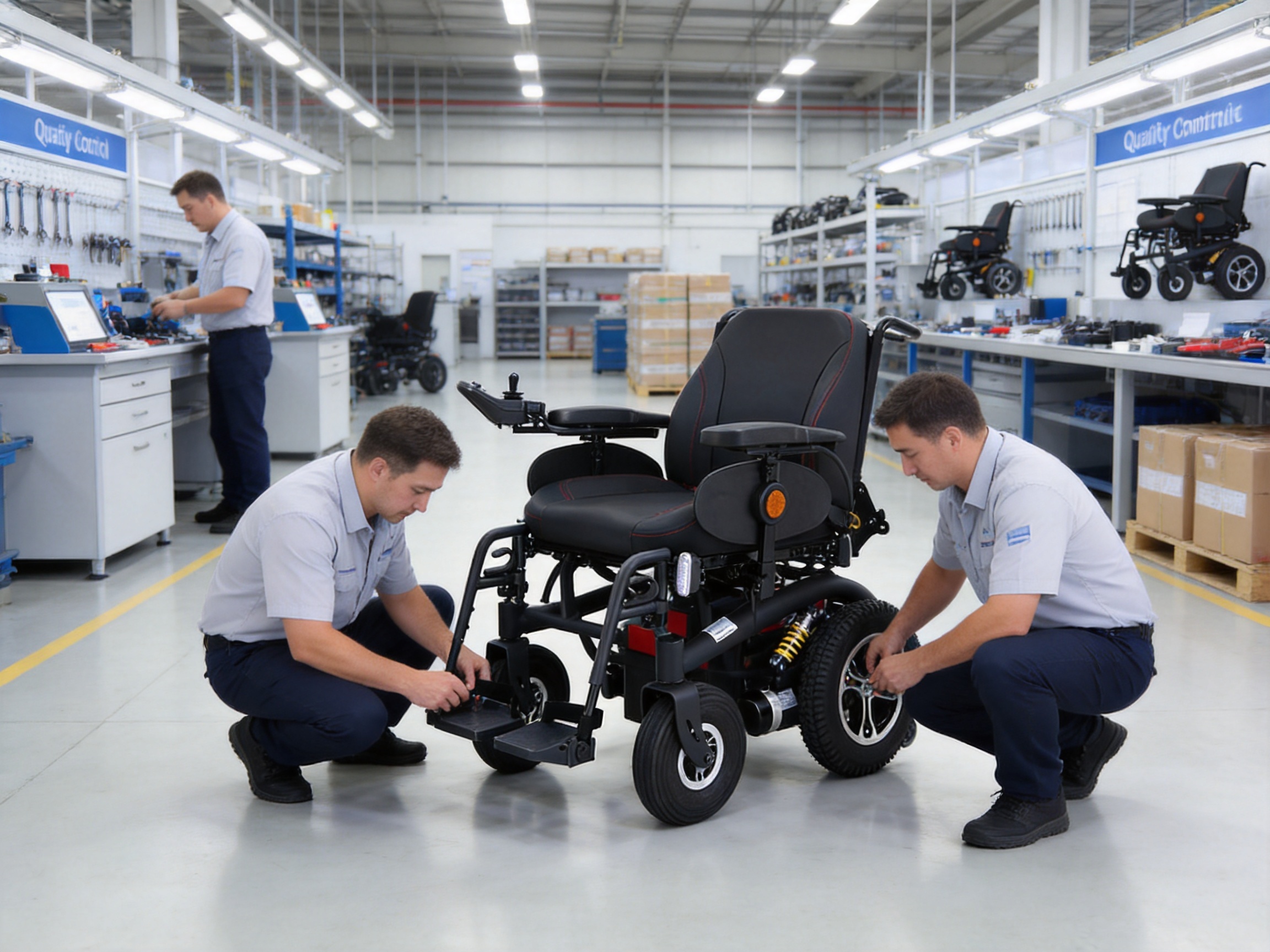
The iPower GTS Plus is produced by Suzhou Sweetrich Vehicle Industry Technology Co., Ltd., a mobility manufacturer located in Suzhou Industrial Zone, Jiangsu, China. According to the supplied company information, the business was established in 2011 and has accumulated more than ten years of experience in the research, development, and production of mobility scooters and power wheelchairs.
The company operates a facility covering approximately 60 acres, including a factory area of about 30,000 square meters. A manufacturing site of this scale can support the coordination of product development, component handling, assembly, testing, warehousing, and quality management. The precise production layout and individual process controls should be confirmed directly with the company, but the stated facility size demonstrates an established industrial base rather than a small-scale workshop approach.
The manufacturer describes itself as a high-tech company with intellectual property rights relating to electric scooters and power wheelchairs. Intellectual property ownership can support ongoing product development by allowing the company to refine its own designs, control selected engineering solutions, and build knowledge across multiple product generations. In a mobility product, this can involve the relationship between frame geometry, drive systems, controller response, seating adjustments, battery integration, and user safety.
The company also emphasizes strict production management and scientific product design. These principles are particularly important for power wheelchairs because the product combines mechanical, electrical, and human-interface systems. A reliable wheelchair must coordinate the structural frame, wheels, tires, motors, electromagnetic brakes, battery system, charger, joystick, controller, and adjustable seating components. A weakness in any one area can affect the user experience of the entire product.
Integrated Product Development
Integrated development is one of the manufacturer’s important strengths. The company’s focus on both mobility scooters and power wheelchairs suggests experience with different mobility architectures, including steering systems, powered drive systems, batteries, seating arrangements, and outdoor chassis design. Knowledge gained across these categories can help inform decisions about comfort, maneuverability, energy use, and durability.
For the iPower GTS Plus, the product features show an effort to connect performance and usability. The 700-watt motor package is supported by a 24-volt, 50-amp controller. The large wheels are paired with rear suspension. The heavy-duty capacity is accompanied by adjustable seat width and armrest height. The joystick can be installed on either side, and optional accessories extend the product’s functionality. These combinations suggest that the design is not centered only on speed or motor strength; it also considers how the chair is configured around the user.
Scientific product design in this context means using structured engineering decisions rather than adding features without regard to balance. Larger tires affect overall dimensions. More powerful motors affect battery demand. A heavier frame affects transport. Adjustable seating affects the structure and control layout. A capable manufacturer must manage these relationships so that the final product remains practical and predictable.
Production Management and Quality Orientation
The company states that it uses strict production management to support reliability and quality. For a product such as the iPower GTS Plus, effective production management may include controlled component selection, assembly procedures, electrical inspection, functional testing, packaging controls, and traceability. The supplied information does not specify individual test standards or certification numbers, so buyers should request the documentation relevant to their market and intended use.
A disciplined manufacturing approach is especially important for the electrical system. The battery charger must correspond to the 24-volt battery arrangement. The controller must work correctly with the dual motors. The electromagnetic brake must respond appropriately to the control system. Connectors and wiring must be installed securely and protected from ordinary use conditions. These details are not always visible in product photographs, but they strongly influence long-term ownership.
Mechanical assembly is equally important. Wheels must be aligned, fasteners must be secured, the suspension must operate correctly, and the adjustable seating components must hold their selected positions. Pneumatic tires need suitable inflation and regular inspection. A manufacturer that combines design knowledge with controlled production is better positioned to address these requirements consistently.
Experience in International Markets
The company reports that its products are exported to America, Europe, Japan, Australia, the Middle East, Russia, and other markets. International experience can strengthen a manufacturer’s understanding of different user expectations, environmental conditions, distribution arrangements, packaging requirements, and regional product needs.
Export experience does not automatically mean that every configuration satisfies every local regulation. Customers should confirm the applicable requirements in the destination country, including labeling, electrical safety, battery transport, road or sidewalk use, warranty terms, and service arrangements. Nevertheless, a history of international distribution can be an advantage when a supplier is expected to communicate across markets and support products used in different environments.
The company’s stated goal is to provide qualified products, considerate service, and reasonable prices while developing long-term cooperation with customers worldwide. For distributors and institutional buyers, this orientation may be relevant because a mobility product requires support beyond the initial sale. Product information, spare parts, troubleshooting guidance, warranty procedures, and replacement battery availability can all affect the total value of a purchase.
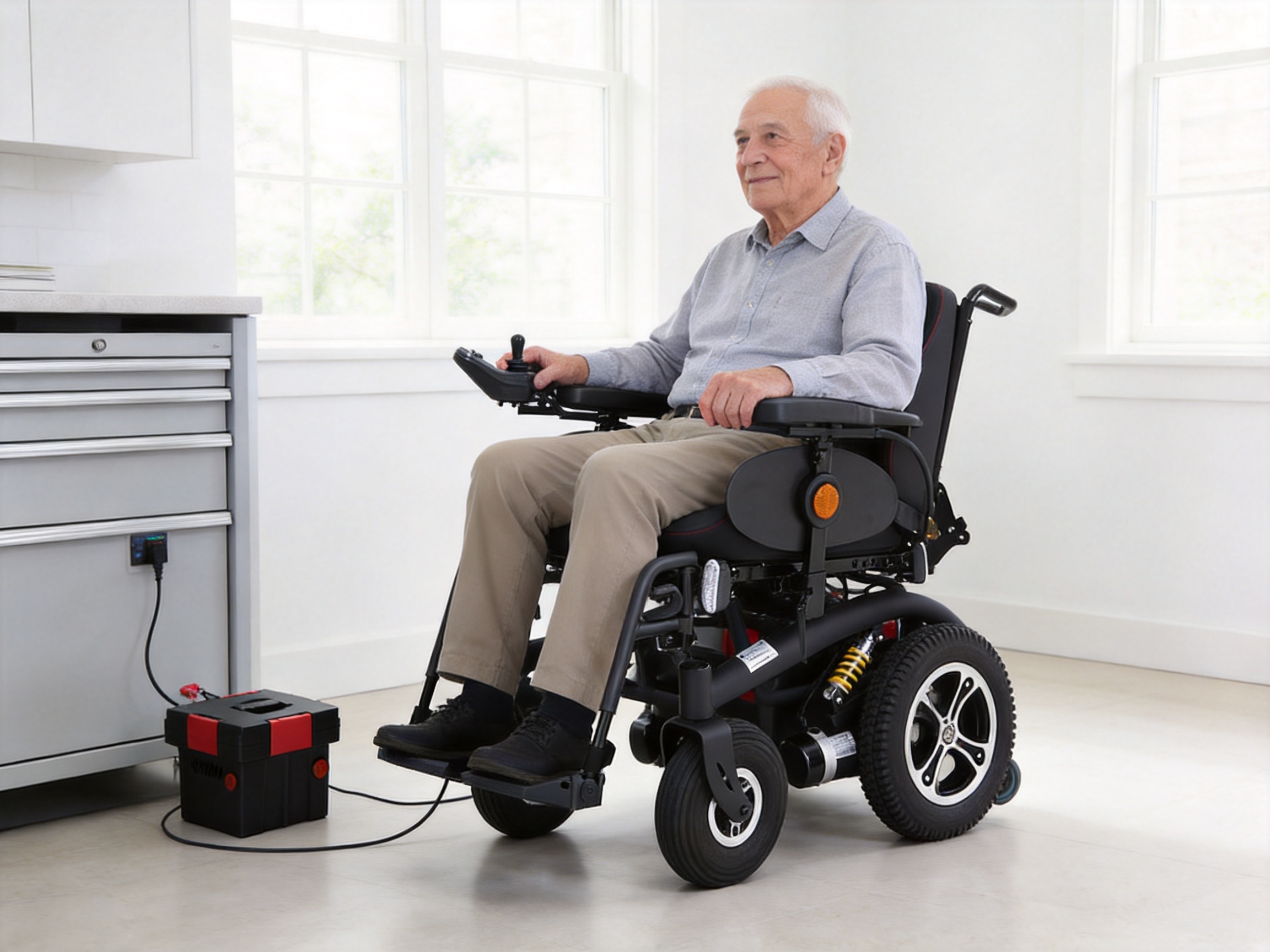
Practical Outdoor Use
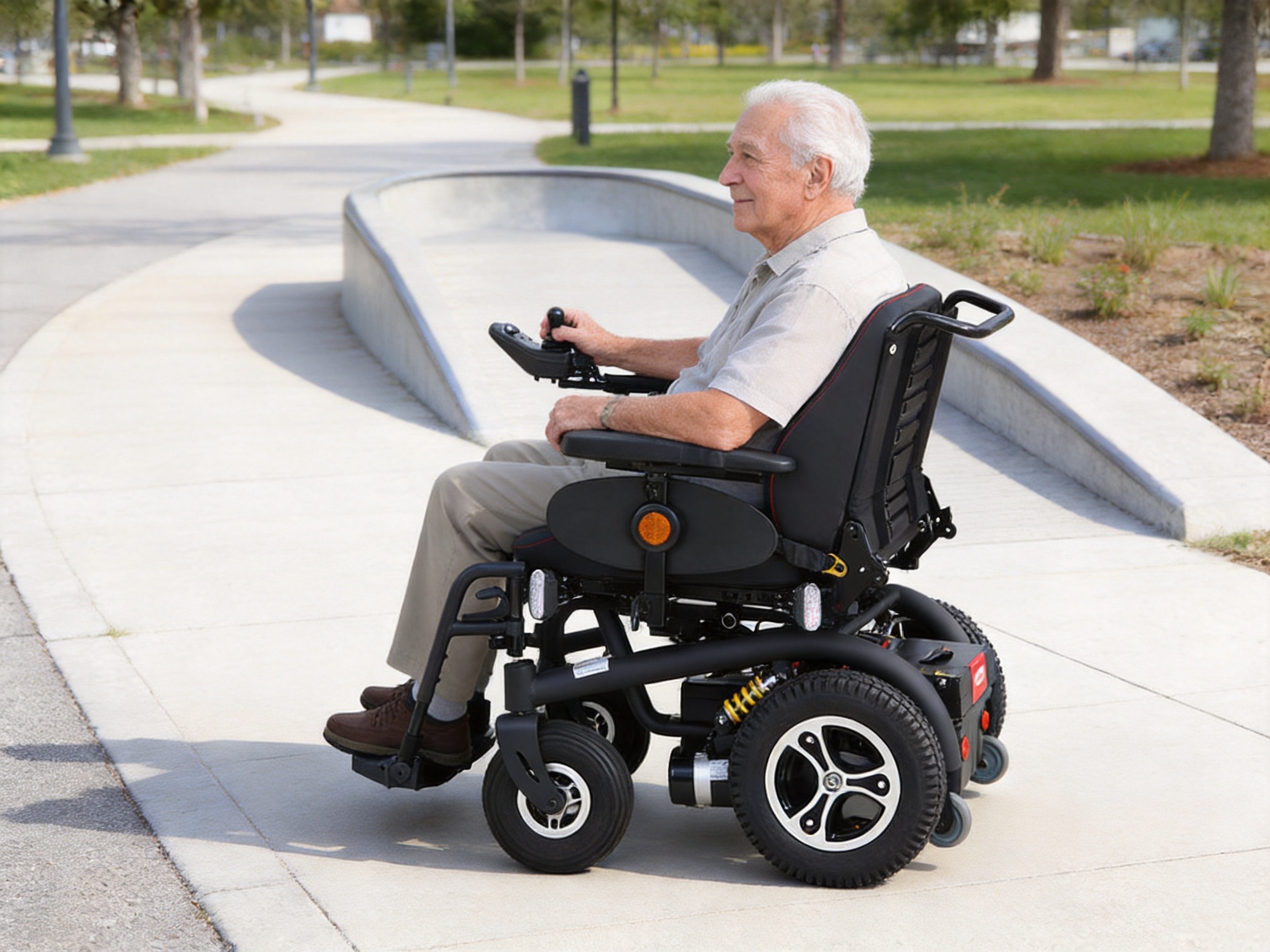
The iPower GTS Plus is well suited to users who want to travel beyond the immediate indoor environment. Potential applications include neighborhood travel, shopping areas, paved park routes, outdoor residential paths, appointments, community centers, and other destinations with appropriate access. The chair’s outdoor performance features can make these trips more comfortable and less dependent on assistance.
The large wheels and rear suspension are helpful when a route includes pavement joints, mild surface irregularities, compact ground, or transitions between different surfaces. The 8-kilometer-per-hour maximum speed can reduce travel time on longer routes, while the electromagnetic brake supports controlled stopping. The 30-to-40-kilometer stated range can also reduce the need to recharge between multiple short trips.
Users should distinguish between outdoor capability and unrestricted off-road capability. A power wheelchair with pneumatic tires and suspension is better equipped for uneven conditions than a basic indoor chair, but it is not intended for hazardous slopes, deep mud, loose sand, standing water, rocky trails, or terrain that could cause a rollover. Route assessment remains essential. A safe outdoor route should have adequate width, predictable traction, visible obstacles, and suitable slope conditions.
The optional light package may improve convenience for users who travel during early morning or evening hours. The optional swing-away controller can help users approach tables or complete transfers. Seat-width and armrest adjustments can support a more comfortable fit. Together, these features make the wheelchair adaptable to a variety of daily routines rather than limiting it to one type of trip.
Daily Operation and Ownership Considerations
Before first use, the wheelchair should be adjusted to the user and checked for correct operation. Seat width, armrest height, joystick position, tire inflation, battery connection, and brake response should all be reviewed. The user should practice starting, stopping, reversing, turning, and changing speed in a clear area before traveling in public spaces.
Joystick sensitivity and speed should be introduced gradually. A user who is new to powered mobility may initially benefit from slower settings and supervised practice. Turning at higher speed, traveling close to drop-offs, or moving across a side slope requires particular caution. The chair should be operated according to the instruction manual and any advice provided by a qualified mobility professional.
Tire maintenance is central to performance. Pneumatic tires should be checked regularly for correct inflation, visible damage, and tread wear. Underinflated tires can increase rolling resistance and reduce range, while uneven inflation can affect handling. Damaged tires should be repaired or replaced before the chair is used on demanding routes.
Battery maintenance should include regular charging, inspection of the charger and cables, and attention to changes in range. Lead-acid batteries are consumable components. Their performance naturally declines with age and usage. If a fully charged chair begins to lose range significantly, the batteries, charger, connections, and electrical system should be evaluated by a qualified service provider.
The frame, suspension, wheel assemblies, armrests, seat adjustments, joystick mount, and brake system should also be inspected. Fasteners should not be tightened or modified without following the recommended procedures. Unauthorized modifications can change the chair’s balance, electrical load, or braking performance and may affect warranty coverage.
Transport, Storage, and Access Planning
Transportation planning is important because the iPower GTS Plus is a substantial outdoor wheelchair rather than an ultra-light travel chair. The listed heaviest part weighs 59 kilograms, or approximately 37 pounds according to the supplied information. Buyers should confirm the exact component weight and determine whether a ramp, hoist, vehicle lift, or assistance from another person will be required.
The overall width of 625 millimeters should be compared with the narrowest doorway and access point in the home. Measurements should include door frames, hallway turns, elevator entrances, bathroom access, and storage spaces. The length and turning area should also be considered, especially in smaller rooms or when the chair is expected to enter a vehicle-accessible lift.
Storage should protect the wheelchair from excessive moisture, extreme temperatures, and unnecessary exposure to damaging conditions. Batteries should be maintained according to the battery supplier’s instructions. If the chair is stored for an extended period, the user should follow the recommended charging and maintenance schedule rather than allowing the battery system to remain neglected.
For air, rail, or long-distance vehicle transport, the user should contact the carrier in advance. Battery type, wheelchair dimensions, loading equipment, and securement procedures may affect acceptance. The chair should not be lifted by adjustable armrests, joystick components, or other parts that are not intended to bear the full product weight.
Non-Medical Device Notice for the United States
The supplied product information identifies the wheelchair as a non-medical device for the United States market. This statement is important for customers, distributors, and content publishers. The product is intended to provide powered mobility assistance, but it should not be presented as a medical treatment, diagnostic device, or replacement for professional clinical advice.
Suitability depends on the user’s physical abilities, seating requirements, environment, transfer method, and ability to operate the controls safely. A healthcare professional, occupational therapist, seating specialist, or qualified mobility dealer may be able to help evaluate whether this type of chair is appropriate. Users should also confirm local rules governing powered mobility devices in public areas and on roads or sidewalks.
Marketing claims should remain consistent with the available specifications. The iPower GTS Plus can be described as an outdoor-oriented, heavy-duty power wheelchair with dual motors, rear suspension, adjustable seating features, and a stated range of 30 to 40 kilometers. It should not be described as capable of every terrain, guaranteed to prevent falls, or suitable for every medical condition.
Why Manufacturer Support Matters
A mobility product is a long-term equipment purchase. Its value depends not only on the initial specification sheet but also on the availability of support. Before purchase, customers should ask about warranty duration, service procedures, replacement batteries, tires, chargers, controllers, joystick assemblies, armrests, suspension components, and other wear parts.
Distributors should also request technical documentation, assembly instructions, electrical information, packaging details, and training materials. These resources can make it easier to support end users and diagnose routine issues. For fleet or institutional applications, the ability to obtain consistent replacement parts can influence operating costs and equipment availability.
Sweetrich’s stated international customer base and long-term cooperation strategy may be useful in this regard. A manufacturer serving America, Europe, Japan, Australia, the Middle East, Russia, and other regions must communicate with different partners and manage different distribution expectations. Customers should still confirm the specific support available in their country rather than assuming that all services are provided locally.
Good support also involves honest communication about the product’s limits. A responsible supplier should explain the difference between maximum rated performance and typical real-world use, the effect of batteries and terrain on range, the need for tire maintenance, and the transport implications of a heavy-duty chair. This type of communication helps users make better decisions and reduces avoidable operating problems.
Who May Benefit Most from This Model?
The iPower GTS Plus may be a strong option for an adult who requires powered mobility, wants to spend meaningful time outdoors, and needs a chair with a 300-pound weight capacity. It may also suit a user who values a joystick rather than a tiller, needs the controller on a particular side, or wants the possibility of adding practical accessories.
It is particularly relevant for users whose routes include moderate slopes, uneven pavement, outdoor paths, and longer distances. The combination of twin motors, large wheels, rear suspension, and extended stated range gives the chair a performance profile suited to these situations.
The model may be less suitable for a person whose main priority is ultra-light transport. The 59-kilogram heaviest-part specification and heavy-duty chassis require more preparation than a small folding wheelchair. It may also be unsuitable for a home with very narrow access points or for a user who cannot safely control a joystick without additional support.
As with any powered mobility product, the right choice should be based on a complete assessment. Buyers should consider body size, posture, hand function, transfer ability, daily route, storage, vehicle access, charging location, and local service availability. A strong specification cannot compensate for a poor fit between the chair and the user’s actual environment.
Purchasing Checklist
Before ordering, confirm the available seat-width adjustment range and determine whether the standard configuration provides adequate support. Check the armrest adjustment range, joystick side preference, and whether the swing-away mount is included or optional. Ask whether the light package and power tilt or lift system are currently available.
Confirm the exact battery configuration, charger compatibility, charging requirements, and replacement process. Ask how the stated range was measured and what conditions may reduce it. For international buyers, verify the charger’s compatibility with the local electrical supply and the documentation required for importation.
Measure all access points and identify how the chair will be transported. Confirm the actual weight of removable and non-removable components, as well as the safe loading method. If the chair will be used in a vehicle, consult the vehicle-lift or securement-equipment provider before purchase.
Request information about the warranty, service network, spare parts, user manual, and technical support. A product with strong outdoor features is most valuable when it can be maintained properly throughout its service life.
Q&A: iPower GTS Plus Product Questions
What type of mobility product is the iPower GTS Plus?
The iPower GTS Plus is a heavy-duty electric power wheelchair designed with outdoor performance in mind. It is not presented as a medical device for the United States market. It uses joystick control, dual electric motors, large tires, rear suspension, and an electromagnetic braking system.
How much weight can it support?
The stated weight capacity is 136 kilograms, or approximately 300 pounds. This rating should include the user and carried items. Buyers should remain within the total capacity and consult the supplier if additional equipment will be installed.
How powerful are the motors?
The wheelchair uses two 24-volt, 350-watt motors. Together, they provide a stated total motor output of 700 watts. Actual performance depends on terrain, battery condition, tire pressure, user weight, and operating conditions.
What is the maximum speed?
The listed maximum forward speed is 8 kilometers per hour, or approximately 5 miles per hour. Users should choose a safe speed according to the surroundings and comply with applicable local rules.
What range can users expect?
The stated driving range is 30 to 40 kilometers, equivalent to approximately 19 to 25 miles. Real-world range varies according to load, terrain, incline, weather, tire inflation, speed, and battery age. Users should plan journeys with an appropriate reserve.
Can the wheelchair travel outdoors?
Yes. Its large 10-inch front wheels, 14-inch pneumatic rear tires, rear suspension, dual motors, and stated 10-degree maximum driving gradient are intended to support outdoor use. It should still be operated only on safe, suitable surfaces and should not be treated as an unrestricted all-terrain vehicle.
Can the joystick be positioned for either hand?
The product information states that the joystick is available for use on both sides. The exact installation procedure and configuration should be confirmed with the supplier or dealer.
Are lighting and a swing-away controller included?
The light package and swing-away controller mount are listed as optional features. Buyers should confirm whether these options are included in the selected quotation and whether they affect the final dimensions or weight.
Is a power tilt and lift system available?
The supplied information identifies an optional power tilt and lift system as an upcoming feature. Availability, compatibility, and delivery timing should be confirmed directly before purchase.
What batteries does the chair use?
It uses two lead-acid batteries rated at 12 volts and 40 amp-hours each. Together they form the 24-volt battery system used by the chair.
How long does charging take?
The listed charging time is approximately 6 to 8 hours. Charging should be performed with the correct charger and according to the operating and battery safety instructions.
Is the wheelchair easy to lift into a vehicle?
It is a heavy-duty outdoor wheelchair, so vehicle transport requires planning. The listed heaviest part is 59 kilograms, approximately 37 pounds in the supplied data. Buyers should confirm component weights and consider a ramp, hoist, or vehicle lift.
What makes this model different from a small travel wheelchair?
The iPower GTS Plus emphasizes outdoor capability, capacity, and range. It has two 350-watt motors, large tires, rear suspension, a 300-pound capacity, and a stated range of up to 40 kilometers. A smaller travel chair may be easier to lift but may offer less outdoor stability or lower capacity.
Where is the product manufactured?
The product is manufactured by Suzhou Sweetrich Vehicle Industry Technology Co., Ltd. in Suzhou Industrial Zone, Jiangsu, China. The company reports that it was established in 2011 and operates a factory of approximately 30,000 square meters on a site of about 60 acres.
What should buyers ask the manufacturer before ordering?
Buyers should ask about current options, seat adjustment ranges, warranty coverage, service support, replacement parts, battery requirements, transportation, local compliance documentation, and the precise contents of the selected configuration.
Conclusion
The iPower GTS Plus is built for users who need more than basic indoor powered movement. Its design brings together a 300-pound capacity, a 700-watt dual-motor system, large front and rear tires, rear suspension, electromagnetic braking, a stated 30-to-40-kilometer range, adjustable seat width, adjustable armrests, and a joystick that can be arranged for either side.
These features give it a meaningful advantage over simpler indoor chairs and lightweight travel models when outdoor stability, payload capacity, and distance are the main priorities. The trade-off is the practical responsibility associated with a heavier chassis, larger equipment, battery maintenance, and vehicle transportation.
The manufacturer adds value through more than the product specification. Its reported experience since 2011, substantial Suzhou manufacturing facility, focus on research and development, intellectual property portfolio, strict production management, international export experience, and emphasis on long-term customer cooperation provide a foundation for ongoing product support and development.
For the right user and environment, the iPower GTS Plus can provide a capable platform for greater independence. A careful assessment of fit, access, route conditions, transport, charging, maintenance, and local requirements will help ensure that its outdoor-oriented design delivers the expected benefits.
References
1. Product specification sheet for the iPower GTS Plus heavy-duty power wheelchair, including dimensions, motor system, battery system, range, speed, gradient, tires, suspension, braking, and weight capacity.
2. Product feature information for the iPower GTS Plus, including outdoor performance, adjustable seat width, adjustable armrest height, bilateral joystick availability, swing-away controller option, lighting option, and planned power tilt and lift option.
3. Company profile supplied for Suzhou Sweetrich Vehicle Industry Technology Co., Ltd., including company history, manufacturing location, facility size, research and development focus, intellectual property, export markets, and production principles.
4. General powered mobility equipment guidance concerning battery charging, tire inspection, slope safety, user fitting, transport planning, and routine maintenance.