
 +86-(0)512-82283871
Content
- 1 A Practical Heavy-Duty Design for Daily Mobility
- 2 Advantages Compared with Basic Indoor Power Wheelchairs
- 3 Powertrain and Driving Performance
- 4 Battery System, Charging, and Range
- 5 Comfort and User-Focused Adjustability
- 6 Outdoor Capability and Terrain Considerations
- 7 Manufacturing Strengths and Quality-Oriented Production
- 8 Engineering Integration from Frame to Controller
- 9 Maintenance for Reliable Long-Term Use
- 10 Transport, Storage, and Practical Ownership
- 11 Who May Benefit from This Model?
- 12 Comparison with Alternative Mobility Solutions
- 13 Specification Overview
- 14 Safety Principles for Users and Caregivers
- 15 Q&A
- 15.1 What type of product is the iPower GTS Plus?
- 15.2 Is it a medical device?
- 15.3 What is the maximum user weight?
- 15.4 How fast can it travel?
- 15.5 How far can it travel on one charge?
- 15.6 What kind of batteries does it use?
- 15.7 How long does charging take?
- 15.8 Does it have suspension?
- 15.9 Can the joystick be positioned for either hand?
- 15.10 What are the tire sizes?
- 15.11 Can the chair climb any hill?
- 15.12 Is it easy to put into a small car?
- 15.13 What optional features are available?
- 15.14 Who manufactures the product?
- 15.15 What should be checked before ordering?
- 16 Conclusion
- 17 References
- 18 Product: iPower GTS Plus More popular type second hand off road light power electric electronic wheelchair for the elderly
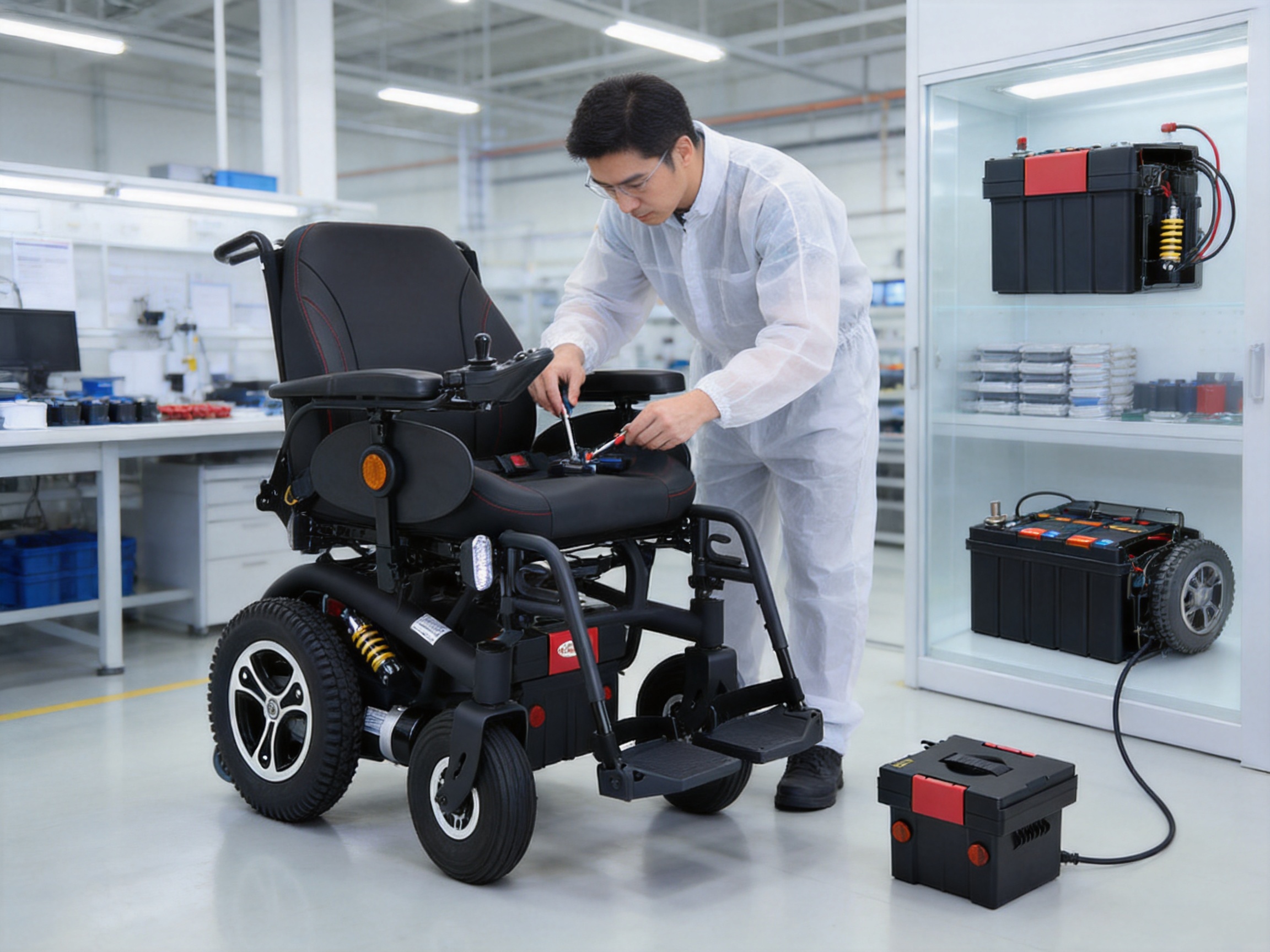
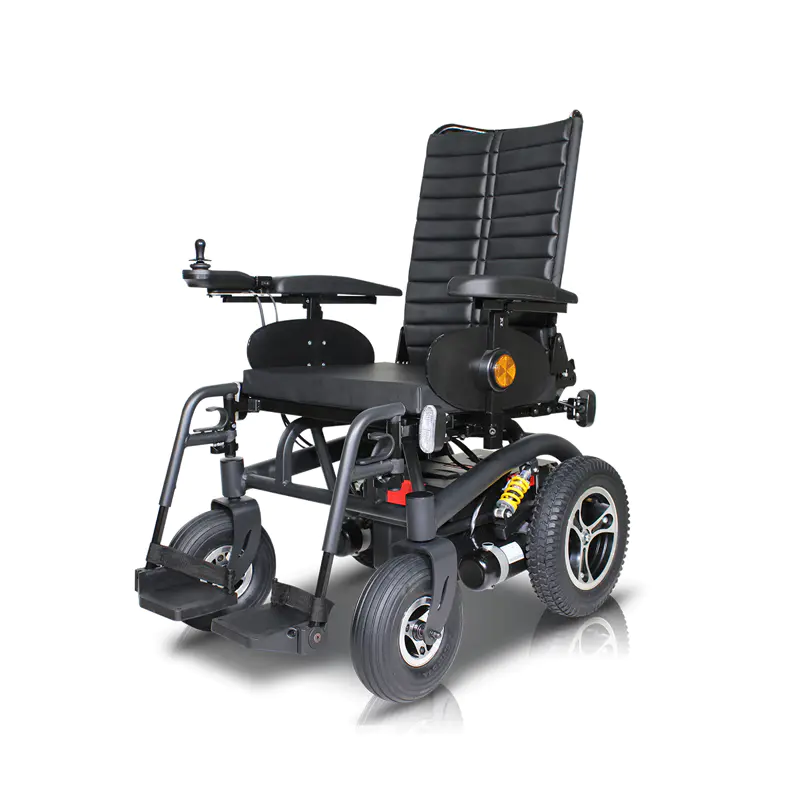
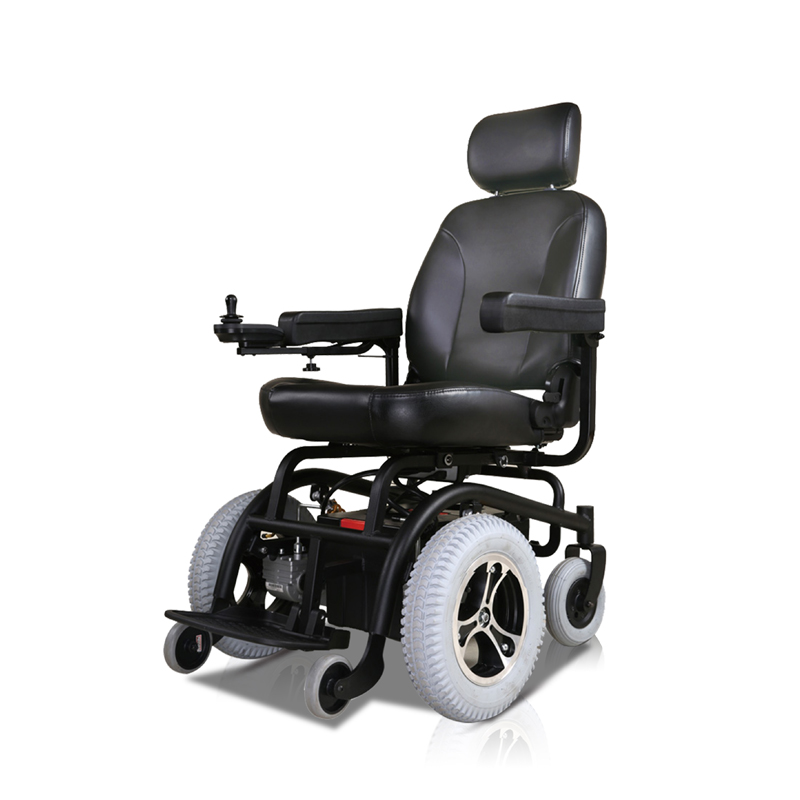
The iPower GTS Plus is a heavy-duty electric power wheelchair designed for users who want dependable mobility beyond the limitations of a basic indoor chair. Combining outdoor-oriented performance, a reinforced 136-kilogram weight capacity, adjustable seating features, powerful dual motors, large pneumatic tires, rear suspension, and a practical driving range, it is built for everyday travel across a variety of surfaces.
Rather than focusing only on compactness, this model emphasizes stability, traction, comfort, and usable outdoor performance. Its configuration is suitable for users who need a powered wheelchair for neighborhood travel, paved paths, shopping areas, parks, accessible outdoor facilities, and other environments where a lightweight indoor chair may not provide sufficient ground clearance, tire size, or driving confidence.
The product is identified as a non-medical device for the United States market. It should be selected, configured, and operated according to the user’s physical needs, local regulations, terrain conditions, and professional advice where appropriate. Its purpose is to support mobility and independence; it is not presented as a medical treatment or a replacement for clinical care.
A Practical Heavy-Duty Design for Daily Mobility
Many power wheelchairs are optimized for indoor maneuverability, transportation, or minimum weight. Those qualities can be valuable, but they may involve compromises when a user frequently travels outdoors. Small wheels can struggle with uneven paving, narrow tires may provide less traction, and limited motor output may make slopes or rough surfaces more difficult to manage.
The iPower GTS Plus takes a different approach. It combines the basic functions of a powered wheelchair with a chassis and wheel arrangement intended to handle more demanding outdoor use. Its 10-inch front wheel and 14-inch rear pneumatic tires help the chair roll over ordinary surface variations with greater ease than a small-wheeled indoor-oriented design. Rear suspension further supports a smoother ride by helping absorb some vibration from outdoor paths and uneven ground.
The overall dimensions are 1,045 millimeters in length, 625 millimeters in width, and 1,080 millimeters in height. This creates a substantial but still practical footprint for a heavy-duty outdoor wheelchair. The width is important for stability and seating space, while the length supports the large wheel configuration and motor package. Users should always compare these measurements with doorways, ramps, vehicle lifts, storage areas, and local accessibility requirements before purchase.
With a maximum forward speed of 8 kilometers per hour, or approximately 5 miles per hour, the chair is suitable for controlled outdoor travel. Actual operating speed should be adjusted to match the user’s experience, surface conditions, visibility, pedestrian traffic, and local rules. A lower speed is often appropriate in crowded areas, on slopes, around corners, and near entrances or crossings.
The maximum listed driving gradient is 10 degrees. This figure is a specification rather than a guarantee that every user, load, surface, or battery condition will perform identically on a slope. Inclines should be approached carefully, and users should avoid wet, loose, unstable, or excessively steep terrain. The chair’s stability depends on the combined effects of the slope, direction of travel, tire condition, user weight, cargo, battery charge, and surface traction.
Advantages Compared with Basic Indoor Power Wheelchairs
The most important advantage of the iPower GTS Plus is the balance between heavy-duty capacity and outdoor capability. A basic indoor power wheelchair may be narrower or easier to transport, but it may not offer the same combination of wheel size, motor output, suspension, and rated user capacity.
Its 136-kilogram, or 300-pound, weight capacity gives the model a broader range of potential users than many lighter chairs. A higher capacity can also provide additional design flexibility for clothing, small personal items, and ordinary daily accessories, provided the total load remains within the manufacturer’s limit. The weight limit should never be exceeded, because overloading can affect braking, steering, range, stability, and component durability.
The chair is equipped with two 350-watt motors, providing a total motor rating of 700 watts. This dual-motor arrangement is valuable because power is delivered through both drive wheels rather than relying on a single motor. When properly maintained and operated, dual motors can support stronger starting performance, controlled outdoor travel, and improved ability to manage moderate inclines.
The 14-inch rear pneumatic tires are another meaningful point of distinction. Larger tires can roll over small surface irregularities more effectively than compact solid wheels, while pneumatic construction can contribute to a more compliant ride. Tire pressure must be checked regularly, because underinflation can increase rolling resistance and reduce range, while overinflation can reduce comfort and traction. Pneumatic tires also require inspection for punctures, wear, and valve condition.
The 10-inch front wheel supports steering and helps the chair approach small transitions in a more controlled way. Together, the front and rear wheel sizes create a configuration intended for outdoor stability rather than exclusively tight indoor turning. Users should still approach curbs, thresholds, drainage channels, and abrupt surface changes at an appropriate angle and speed.
Rear suspension adds another layer of comfort. Although suspension cannot eliminate every vibration, it can help reduce the shock transferred through the frame when traveling over ordinary outdoor surfaces. This is particularly relevant for users who spend extended periods in the chair or who are sensitive to repeated jolts.
The adjustable seat width allows the seating area to be adapted to different users and clothing requirements. Proper seating width can improve comfort and positioning during longer trips. A seat that is too narrow may create pressure points, while a seat that is too wide may reduce lateral support. Adjustment should be performed carefully, and users with specific postural or pressure-management needs should seek qualified professional guidance.
Adjustable armrest height provides another useful fit feature. Armrests that are correctly positioned can support the forearms, reduce shoulder strain, and make transfers more comfortable. The adjustment also allows the chair to be better matched to the user’s body proportions and preferred driving posture.
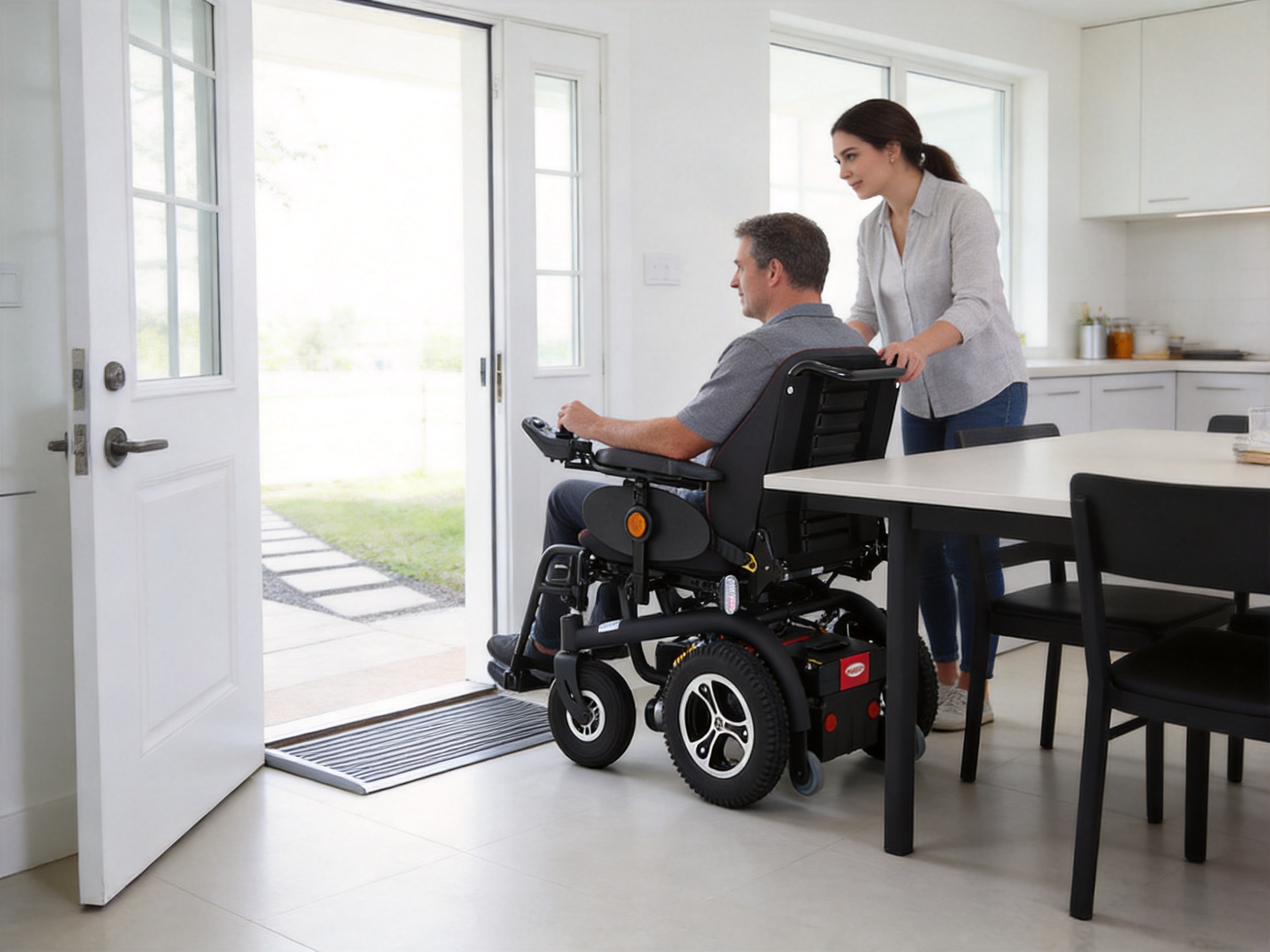
The joystick can be used on either side, which makes the control arrangement more adaptable. This may be helpful for users who prefer one side, have different arm positions, or need the chair configured around a particular transfer method. An optional swing-away controller mount can further improve access during transfers and can reduce interference when approaching a desk, table, or other close surface.
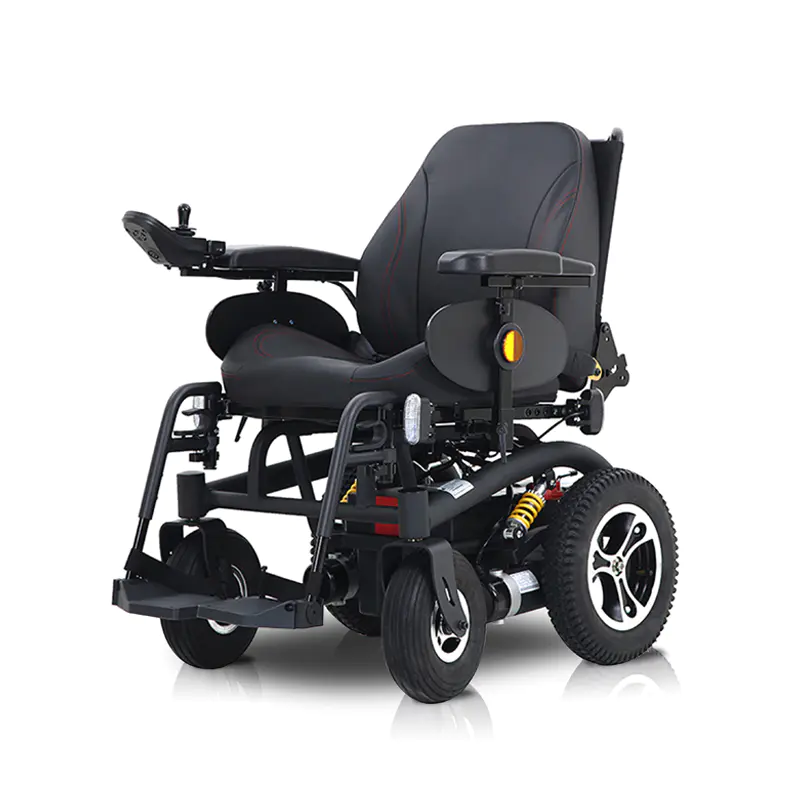
iPower GTS Plus More popular type second hand off road light power electric electronic wheelchair for the elderly
Powertrain and Driving Performance
The iPower GTS Plus uses a 24-volt electrical system with two 24-volt, 350-watt motors. The combined 700-watt motor package is designed to provide the output required by a heavier outdoor wheelchair. The use of two motors also supports independent drive-wheel operation, which is central to the steering behavior of many powered wheelchair designs.
Motor performance is affected by more than the nominal wattage. Battery condition, tire pressure, user weight, slope, temperature, road surface, cargo, and driving style all influence acceleration and range. The 700-watt rating should therefore be understood as part of the complete system rather than as a guarantee of identical performance in every situation.
The motor controller is specified as a 24-volt, 50-amp unit from PG and Dynamic. The controller is an important part of the power system because it translates joystick commands into controlled motor operation. Smooth acceleration and deceleration depend on the interaction between the controller, motors, joystick, battery system, braking system, and mechanical components.
A responsive controller can help users make small speed adjustments instead of relying only on abrupt starts and stops. This is especially useful in indoor transitions, crowded walkways, ramps, and areas where precise positioning is important. Operators should become familiar with the control response in an open, level area before using the wheelchair in complex environments.
The electromagnetic brake system is designed to bring the chair to a controlled stop when the joystick is released and to help hold the chair when powered movement is not being commanded. Braking performance should be checked routinely. Users should not rely on the electromagnetic brake alone when parked on a steep slope, during maintenance, or when the chair is being transported.
The listed maximum forward speed is 8 kilometers per hour. This speed provides practical outdoor mobility while remaining appropriate for controlled powered-chair operation. In real use, many users will select a lower setting for comfort and safety. Speed control is particularly important when traveling near pedestrians, pets, bicycles, vehicles, doors, ramps, and uneven edges.
The maximum driving gradient is listed at 10 degrees. On any incline, the user should keep the chair aligned with the slope whenever possible and avoid sudden turns. Descending should be done slowly and directly. Loose gravel, wet leaves, mud, ice, sand, and polished surfaces can substantially reduce traction, even when the incline is within the stated specification.
The drive system’s value is not simply its ability to move the chair forward. It also supports controlled starting, directional changes, stopping, and steady travel. For an outdoor user, these characteristics can reduce the need for frequent assistance and make routine destinations more practical.
Battery System, Charging, and Range
The wheelchair uses two 12-volt, 40-ampere-hour lead-acid batteries. Together, the batteries provide the 24-volt supply required by the motor and control system. Lead-acid batteries are widely used in mobility equipment because they are familiar, serviceable, and capable of supplying the current required by a heavy-duty powerchair.
The maximum driving range is listed as 30 to 40 kilometers, or approximately 19 to 25 miles. This is a useful range for many daily mobility routines, including neighborhood trips, shopping, outdoor recreation, and planned visits. Range estimates should always be treated as approximate. Temperature, user weight, terrain, speed, tire pressure, battery age, stopping frequency, and charging practices can all affect actual distance.
Users who regularly travel near the upper end of the available range should plan conservatively. A battery indicator may not represent remaining distance with complete precision, especially under changing loads or on hills. It is sensible to leave a reserve for unexpected detours, weather changes, delays, and reduced battery performance over time.
The supplied charger is specified as DC 24 volts and 5 amperes, with an AC input range of 115 to 230 volts. The listed charging time is 6 to 8 hours. Charging is normally best performed after daily use or according to the battery supplier’s instructions. The charger should be connected in a dry, ventilated area using a suitable electrical outlet.
Charging equipment should not be covered during operation, and damaged cables, connectors, or plugs should not be used. The batteries should be installed and maintained according to the correct polarity and connection procedure. Users should follow the supplied operating and maintenance documentation rather than substituting an incompatible charger.
Battery care has a direct effect on convenience and ownership cost. Leaving batteries deeply discharged for extended periods can reduce service life. Likewise, storing the chair for a long time without an appropriate maintenance-charging routine may lead to capacity loss. The correct procedure can depend on the exact battery type, charger, and storage conditions.
The lead-acid battery arrangement contributes to the chair’s robust performance, but it also adds weight. The product information lists the heaviest part as 59 kilograms, while the dimensional and component information should be confirmed with the supplier before arranging transportation or lifting. A suitable ramp, vehicle lift, or trained assistance may be needed for safe loading.
Comfort and User-Focused Adjustability
Comfort is a major factor in whether a powered wheelchair becomes a genuinely useful part of daily life. The iPower GTS Plus includes several adjustment possibilities intended to help match the chair to the user rather than forcing every user into the same fixed configuration.
Adjustable seat width is especially important for a heavy-duty model because users may have different body shapes, clothing requirements, and positioning preferences. A properly adjusted seat can help provide stable support without unnecessary pressure. It can also make it easier to maintain a natural posture while operating the joystick.
Armrest-height adjustment allows the upper limbs to rest in a more relaxed position. Correct height can help reduce excessive elevation or dropping of the shoulders. The armrests can also contribute to lateral support, although they should not be used as the sole support during transfers unless the design and procedure specifically allow it.
The side-selectable joystick is a practical feature for individual configuration. A user who operates more comfortably with the left hand can have the controller positioned on that side, while another user may prefer the right. The option can also be helpful where a transfer routine or physical limitation affects one side of the body.
The optional swing-away controller mount can move the joystick away from the seat edge when the user is transferring or positioning close to a table. This can make access more convenient and help protect the controller from accidental contact. The mount should be returned to its driving position and secured before operation.
An optional light package may improve visibility and awareness in suitable low-light conditions. Lights do not replace reflective clothing, route planning, a charged battery, or compliance with local rules. If the chair is used near roads or in areas with vehicle traffic, the user should follow applicable visibility and safety requirements.
An optional power tilt and lift system is identified as an upcoming option in the supplied product information. Availability, compatibility, timing, and specifications should be confirmed directly with the supplier. Users considering a powered seating function should receive appropriate fitting and operating guidance, especially if they have postural, skin-integrity, or transfer-related needs.
Outdoor Capability and Terrain Considerations
The iPower GTS Plus is designed with outdoor performance as a central consideration. Its large wheels, suspension, motor output, and heavy-duty capacity work together to provide a more capable platform for routes that extend beyond smooth indoor flooring.
Suitable surfaces may include paved sidewalks, accessible paths, compact outdoor walkways, shopping-center routes, and other reasonably maintained terrain. The chair may also manage ordinary cracks, small transitions, and mild surface irregularities more effectively than a compact chair with smaller wheels. However, it is not an all-terrain vehicle, and users should evaluate each route before attempting it.
Grass, gravel, sand, mud, wet leaves, snow, and steep cross-slopes can change the chair’s handling. Pneumatic tires may provide useful compliance and traction, but they can still spin or lose grip on loose surfaces. A route that is technically passable in dry conditions may become unsafe after rain or freezing temperatures.
Large wheels can help the chair roll over modest obstacles, but users should not use the wheelchair to climb curbs or steps unless a route and procedure are specifically approved for that purpose. Abrupt obstacles can damage the front wheel assembly, frame, motors, or suspension, and can create a tip-over risk.
When approaching a threshold or shallow transition, reduce speed and keep the chair aligned with the direction of travel. Avoid striking an obstacle at an angle where one wheel may rise suddenly. If the transition is uncertain, stop and seek another route or assistance.
Outdoor performance also depends on visibility and route awareness. Users should inspect paths for potholes, drainage grates, construction barriers, low branches, slippery surfaces, and unexpected drops. The chair’s performance features support mobility, but they do not remove the need for responsible driving.
Manufacturing Strengths and Quality-Oriented Production
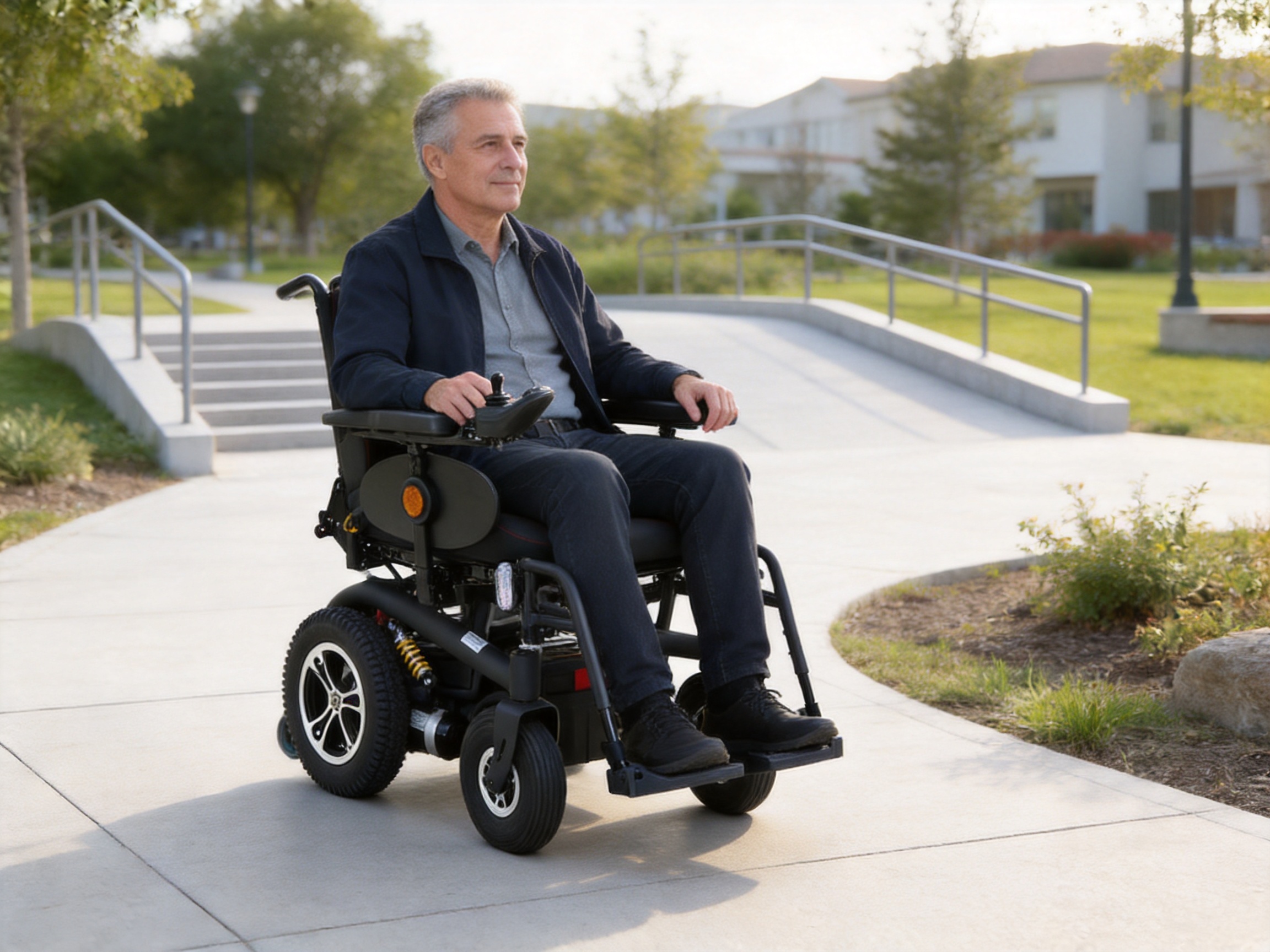
The manufacturer, Suzhou Sweetrich Vehicle Industry Technology Co., Ltd., is described as a high-tech mobility company located in Suzhou Industrial Zone, Jiangsu, China. Established in 2011, the company has developed more than a decade of experience in the research, development, and production of mobility scooters and power wheelchairs.
The company is reported to operate on a 60-acre site with a 30,000-square-meter factory. A substantial production facility can support organized manufacturing workflows, component handling, assembly, testing, warehousing, and quality-management activities. For mobility equipment, these capabilities are important because a finished wheelchair is not a single electronic product; it is a system combining structural, electrical, mechanical, seating, and control elements.
The company’s stated focus is to improve the convenience, independence, and dignity of elderly and disabled users. That purpose is reflected in the product’s practical features: adjustable seating, side-selectable joystick control, optional controller movement, outdoor-oriented wheels, suspension, and a higher weight capacity. These are not decorative additions. Each feature addresses a specific aspect of daily use.
Sweetrich also states that it owns intellectual property rights for its electric scooters and power wheelchairs. Intellectual property can support product development by protecting original design work, engineering solutions, control arrangements, and other technical contributions. It may also encourage continued investment in product refinement and model differentiation.
The company describes its products as incorporating advanced control technology and driving systems. In a power wheelchair, control technology must coordinate user input with motor response, braking, battery supply, and safe movement. Consistent integration is essential for predictable handling, particularly when a chair is designed for both indoor and outdoor environments.
Scientific product design and strict production management are identified as company priorities. In practical terms, a quality-oriented manufacturing approach should include controlled component selection, documented assembly procedures, inspection of electrical connections, verification of mechanical fasteners, functional testing, and review of finished products before shipment. Specific inspection protocols and certifications should be confirmed with the supplier for the intended market and configuration.
The iPower GTS Plus demonstrates the value of system-level manufacturing. Its performance depends on how the frame, motors, controller, batteries, tires, suspension, brakes, joystick, and seating components work together. A strong production process must therefore address both individual parts and their interaction as a complete mobility platform.
International experience is another stated company strength. The company reports exports to America, Europe, Japan, Australia, the Middle East, Russia, and other markets. Serving multiple regions requires attention to customer communication, packaging, product documentation, voltage requirements, replacement components, and market-specific expectations. Buyers should still verify the exact configuration, warranty, service terms, and regulatory requirements for their destination.
The company’s long-term cooperation with customers suggests an emphasis on continuity rather than one-time transactions. For mobility equipment, after-sales communication is particularly important because users may need guidance about adjustment, maintenance, battery replacement, controller configuration, or optional equipment.
Engineering Integration from Frame to Controller
A heavy-duty power wheelchair must withstand repeated starts, stops, turns, transfers, and changes in surface conditions. The frame must support the user and the drive system, while the wheel assemblies must maintain alignment and stable contact with the ground. The design must also leave enough room for batteries, motors, suspension components, seating hardware, and control wiring.
The iPower GTS Plus integrates a 24-volt electrical architecture with two 350-watt motors and a 50-amp controller. This combination gives the product a clear relationship between power supply, control capacity, and drive output. The battery system supplies energy, the controller regulates its delivery, and the motors transform that energy into movement.
Electromagnetic braking is integrated into the operating system rather than relying only on a mechanical hand brake. This supports a straightforward user experience: movement is commanded through the joystick, and releasing the control can initiate a controlled stop. As with every powered mobility product, the user should understand how the chair behaves when power is interrupted, the batteries are low, or the chair is being pushed manually.
The pneumatic tire configuration also requires engineering attention. Tire size affects rolling behavior, steering response, ground clearance, and load distribution. The front and rear tires have different dimensions because they perform different roles in the chassis. Proper alignment and inflation are essential for maintaining the intended handling characteristics.
Suspension contributes to the relationship between the frame and the ground. It can help maintain contact and reduce the transmission of vibration, but it must remain properly maintained. Loose hardware, damaged components, or unusual noises should be investigated before continued outdoor use.
From a manufacturing perspective, the quality of the final product depends on repeatability. Two chairs with the same specifications should be assembled consistently, with reliable wiring, secure fasteners, correct control settings, and accurate adjustment points. A structured production system helps reduce variation and supports more predictable service.
Maintenance for Reliable Long-Term Use
Regular maintenance is essential for preserving the performance of any power wheelchair. The user or caregiver should inspect the tires, wheels, frame, seat, armrests, joystick, charger, battery connections, and braking behavior according to the product manual.
Pneumatic tires should be checked for correct pressure and visible damage. The recommended pressure should come from the manufacturer or tire specification. Tires that are worn, cracked, punctured, or unevenly worn should be repaired or replaced by a qualified service provider.
Wheel assemblies should be examined for looseness, abnormal noise, or wobble. The front wheel and suspension area deserve particular attention because they encounter surface transitions and steering loads. Any change in tracking or steering response should be treated as a reason for inspection.
The joystick should move smoothly and return correctly to its neutral position. It should be protected from water, impact, and contamination. The controller mount should be checked to ensure that it remains firmly positioned during travel and that any swing-away mechanism latches correctly.
Battery terminals and cables should remain clean, secure, and free from visible damage. Users should not modify the electrical system or replace components with unapproved alternatives. If a fuse, connector, charger, or controller behaves unexpectedly, professional service is preferable to improvised repair.
The frame and seating components should be kept clean and dry. Moisture exposure can damage electrical parts and accelerate corrosion in mechanical components. After outdoor use in wet conditions, the chair should be dried appropriately before storage or charging.
Brake performance should be evaluated on a safe, level surface. If the chair rolls unexpectedly when the joystick is released, or if stopping behavior changes, use should be discontinued until the system is inspected. Braking is a critical safety function and should not be ignored.
Preventive maintenance can also reduce total ownership cost. Identifying low tire pressure, loose fasteners, battery deterioration, or unusual motor noise early may prevent larger repairs later. A service record can help owners track battery replacement, tire changes, inspections, and adjustments.
Transport, Storage, and Practical Ownership
With a listed heaviest part of 59 kilograms, the iPower GTS Plus should be treated as a substantial mobility device. It may not be suitable for manual lifting by one person. Owners should plan transportation before purchase, considering vehicle dimensions, lift capacity, ramp angle, tie-down points, and the availability of trained assistance.
The chair should be secured during transport using equipment appropriate for powered wheelchairs. The joystick, armrests, seat, and optional accessories should be protected from impact. Batteries and electrical components must be handled according to the applicable transport and safety requirements.
Storage should take place in a dry, reasonably temperate location protected from rain, excessive heat, freezing conditions, and direct sunlight. The chair should not block emergency exits or create a trip hazard. If it is stored for an extended period, the batteries should be maintained according to the charger and battery manufacturer’s instructions.
Owners should measure their usual routes and storage spaces. The product’s width of 625 millimeters should be compared with door openings, elevator entrances, bathroom access, and vehicle loading areas. The 1,045-millimeter length should also be considered when turning inside a home or positioning the chair near furniture.
The chair’s value is greatest when it fits the user’s complete lifestyle. A user who needs outdoor range but also has limited storage space may need to plan a dedicated parking and charging area. A user who travels frequently by car may need a vehicle lift or accessible transport service. These practical matters are part of choosing the right mobility product.
Who May Benefit from This Model?
The iPower GTS Plus may be suitable for users who need a powered wheelchair with a higher capacity and stronger outdoor orientation. It can be considered by elderly users, people with limited walking ability, and individuals who require powered mobility for routine activities, provided the chair is appropriate for their physical abilities and seating needs.
It may be particularly relevant to users who travel farther than a typical indoor route, encounter mild outdoor slopes, or prefer larger wheels and suspension. The 30-to-40-kilometer listed range can support planned daily activities without requiring charging after every short trip, although the actual range depends on operating conditions.
The model may also benefit users who need adaptable controls. The ability to position the joystick on either side and the availability of a swing-away mount can make the chair easier to configure around personal preferences and transfer routines.
It may be less suitable for someone whose primary requirement is an ultra-light folding chair for frequent lifting into a small car. The heavy-duty structure, large tires, and lead-acid batteries provide useful outdoor capability, but they also contribute to overall weight. Buyers should prioritize the features most relevant to their daily environment.
Before purchase, the user should consider seating posture, upper-limb control, vision, reaction time, balance, transfer ability, home access, terrain, travel distance, and caregiver support. A professional seating or mobility assessment may be appropriate when the user has complex positioning requirements.
Comparison with Alternative Mobility Solutions
Compared with a standard manual wheelchair, the iPower GTS Plus can reduce the physical effort required for propulsion and provide independent movement for users who cannot comfortably self-propel. The joystick allows the user to control direction and speed without repeatedly pushing the hand rims. The trade-off is a larger and heavier product that requires charging and mechanical maintenance.
Compared with a compact indoor powerchair, the model offers stronger outdoor-oriented features, including larger tires, rear suspension, a 700-watt total motor package, and a 136-kilogram capacity. The compact alternative may be easier to store or maneuver in narrow rooms, while the iPower GTS Plus is intended to provide a broader operating envelope.
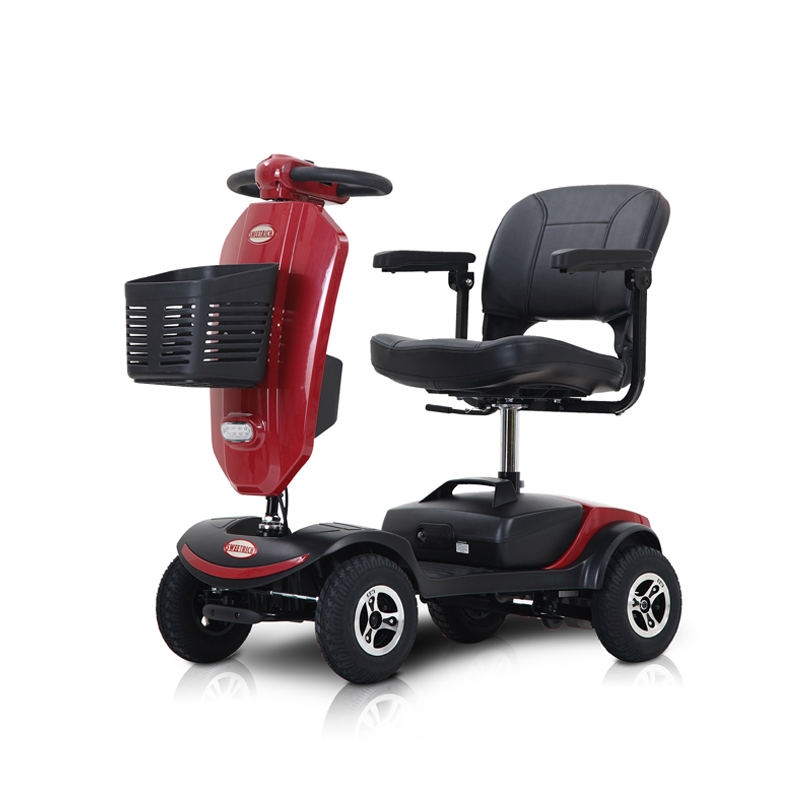
Compared with a mobility scooter, a power wheelchair can offer a more supportive seated configuration and joystick control. This may be useful for users who cannot comfortably use a scooter tiller or who need the controller positioned on a preferred side. A scooter may provide a more open riding posture, so the better option depends on the user’s control ability, posture, transfer method, and environment.
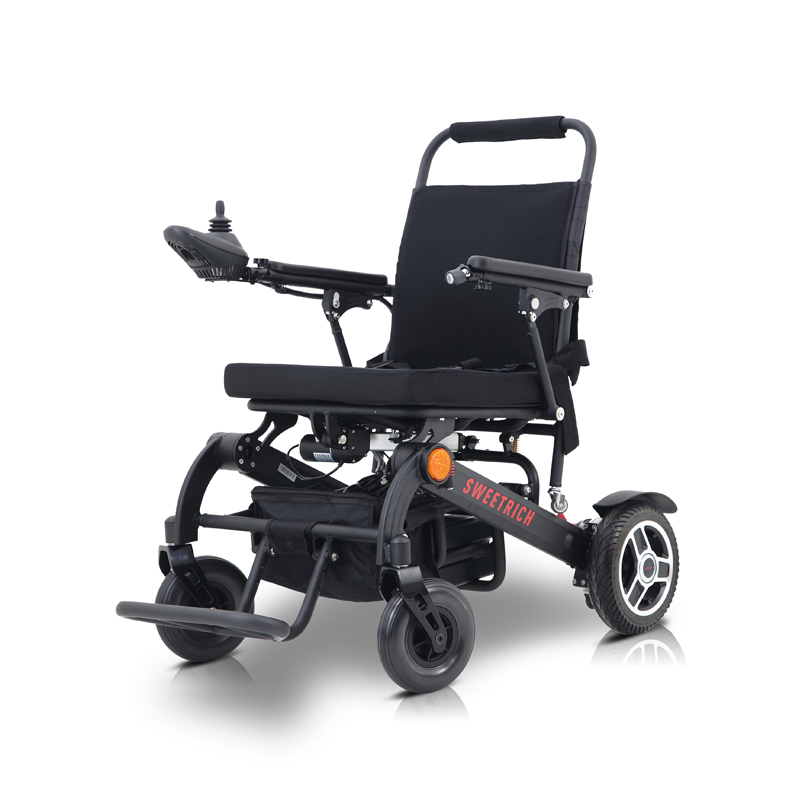
Compared with a lightweight travel chair, the iPower GTS Plus is oriented toward durability, capacity, and outdoor operation rather than minimum transport weight. Its large wheel arrangement and dual-motor system can be advantageous on outdoor routes, while a travel model may be more convenient for air travel, compact storage, or frequent vehicle loading.
The product’s competitive advantage should therefore be judged by use case rather than by a single specification. A buyer should compare total suitability: seating fit, terrain, range, weight capacity, service access, transportation, battery requirements, optional equipment, and long-term support.
Specification Overview
| Specification | Details |
|---|---|
| Product type | Heavy-duty electric power wheelchair |
| Primary orientation | Outdoor performance and daily powered mobility |
| Overall dimensions | 1,045 mm length × 625 mm width × 1,080 mm height |
| Maximum forward speed | 8 km/h, approximately 5 mi/h |
| Maximum driving gradient | 10 degrees |
| Listed driving range | 30–40 km, approximately 19–25 miles |
| Weight capacity | 136 kg, approximately 300 lb |
| Suspension | Rear suspension |
| Front tire | 10 × 3 inches |
| Rear tires | 14 × 3 inches, pneumatic |
| Brake system | Electromagnetic brake |
| Battery system | Two 12-volt, 40-ampere-hour lead-acid batteries |
| Charger | DC 24 volts, 5 amperes; AC input 115–230 volts |
| Charging time | Approximately 6–8 hours |
| Motors | Two 24-volt, 350-watt motors |
| Motor controller | 24 volts, 50 amperes; PG and Dynamic specified |
| Heaviest listed part | 59 kg, subject to configuration confirmation |
| Control configuration | Joystick available for left- or right-side use |
| Optional equipment | Swing-away controller mount, light package, and power tilt and lift system when available |
Safety Principles for Users and Caregivers
Users should read the complete operating instructions before driving. Initial practice should take place in an open, level area free from traffic and obstacles. The operator should learn the joystick response, turning radius, braking behavior, reverse movement, speed adjustment, and battery indicator before traveling outdoors.
Seat belts or positioning supports should be used when supplied or recommended for the configuration. Loose clothing, bags, and objects should be kept away from moving wheels, motors, and suspension components. Children and pets should remain clear of the chair while it is moving.
Ramps and slopes require special attention. Travel slowly, avoid sudden directional changes, and do not exceed the stated gradient. The chair should not be driven across a steep side slope if doing so could reduce stability. If the user is uncertain about a route, assistance or an alternative path should be selected.
The wheelchair should not be driven through deep water or exposed to heavy rain unless the product instructions specifically permit it. Water can damage controllers, motors, connectors, batteries, and charging equipment. Charging should never take place when the charger or electrical connection is wet.
Before every trip, the user should confirm that the battery has sufficient charge, tires appear correctly inflated, the joystick is functioning normally, and the seat and armrests are secure. Lights and reflective equipment should be used when appropriate. The user must comply with local traffic, sidewalk, accessibility, and mobility-device regulations.
Q&A
What type of product is the iPower GTS Plus?
It is a heavy-duty electric power wheelchair designed for daily powered mobility with an emphasis on outdoor performance. It includes dual motors, large tires, rear suspension, adjustable seating features, and a listed weight capacity of 136 kilograms.
Is it a medical device?
The supplied product information identifies it as a non-medical device for the United States market. It is intended to support mobility and independence, not to diagnose, treat, cure, or prevent a medical condition.
What is the maximum user weight?
The listed weight capacity is 136 kilograms, or approximately 300 pounds. The total load should remain within this limit, including clothing, personal belongings, and any accessories carried on the chair.
How fast can it travel?
The maximum forward speed is listed as 8 kilometers per hour, or approximately 5 miles per hour. Users should select a lower speed when operating indoors, near pedestrians, on slopes, around corners, or on unfamiliar terrain.
How far can it travel on one charge?
The listed range is 30 to 40 kilometers, or approximately 19 to 25 miles. Actual range varies according to battery condition, terrain, user weight, tire pressure, weather, speed, slope, and driving habits.
What kind of batteries does it use?
The wheelchair uses two 12-volt, 40-ampere-hour lead-acid batteries. The batteries work together as a 24-volt power supply for the motors and control system.
How long does charging take?
The stated charging time is approximately 6 to 8 hours. Users should use the specified charger and follow the battery and product instructions for daily charging and long-term storage.
Does it have suspension?
Yes. The specification identifies rear suspension. This feature is intended to help improve ride comfort over ordinary outdoor surface irregularities, although it does not make every type of terrain safe or suitable.
Can the joystick be positioned for either hand?
Yes. The joystick is available for both left- and right-side use. An optional swing-away controller mount is also identified for improved access during transfers or close positioning.
What are the tire sizes?
The front wheel is listed as 10 by 3 inches, while the rear pneumatic tires are listed as 14 by 3 inches. These larger wheels support the model’s outdoor-oriented configuration.
Can the chair climb any hill?
No. The maximum listed driving gradient is 10 degrees, but real-world performance depends on surface, load, battery condition, tire pressure, weather, and direction of travel. Users should avoid unstable or slippery slopes and operate conservatively.
Is it easy to put into a small car?
The listed heaviest part is 59 kilograms, so transportation may require a ramp, vehicle lift, or trained assistance. Buyers should confirm the exact transport weight and configuration before selecting a vehicle or loading method.
What optional features are available?
The listed options include a swing-away controller mount and a light package. A power tilt and lift system is identified as an upcoming option, so availability and technical details should be confirmed with the supplier.
Who manufactures the product?
The product is manufactured by Suzhou Sweetrich Vehicle Industry Technology Co., Ltd., a Suzhou-based company established in 2011. The company reports experience in mobility scooter and power wheelchair research, development, and production.
What should be checked before ordering?
Customers should confirm seat-width adjustment range, final dimensions, transport weight, battery specification, optional equipment availability, warranty coverage, spare-parts support, delivery configuration, and market-specific documentation. Home access and vehicle compatibility should also be measured in advance.
Conclusion
The iPower GTS Plus is designed for users who need more than basic indoor powered movement. Its principal strengths are the combination of outdoor-oriented wheel sizes, rear suspension, dual 350-watt motors, a 136-kilogram weight capacity, adjustable seat width, adjustable armrests, side-selectable joystick control, electromagnetic braking, and a listed range of up to 40 kilometers.
Its advantages over lighter or primarily indoor alternatives are most apparent when the user regularly travels on paved outdoor routes, encounters moderate slopes, needs a higher capacity, or values a more adaptable seating and control configuration. The trade-offs are its substantial transport weight, lead-acid battery system, and need for careful maintenance and route planning.
The manufacturer’s stated experience, production facility, international market reach, intellectual property ownership, and focus on quality-oriented product design provide a foundation for the model’s development. As with any mobility device, the best results depend on correct fitting, responsible operation, proper charging, regular inspection, and access to dependable after-sales support.
For users seeking a capable outdoor power wheelchair with practical adjustment features and a strong motor package, the iPower GTS Plus offers a balanced solution for everyday independence. Final suitability should be confirmed through a detailed review of the user’s physical needs, home environment, travel habits, transportation arrangements, and local operating requirements.
References
1. Product specification sheet for the iPower GTS Plus heavy-duty electric power wheelchair.
2. Manufacturer-provided information concerning dimensions, motor output, battery capacity, charging time, range, tire sizes, braking system, and weight capacity.
3. Manufacturer company profile describing research, development, production experience, factory facilities, intellectual property, and international markets.
4. General principles of powered wheelchair operation, battery care, tire maintenance, slope safety, and mobility-device inspection.
5. User and caregiver considerations for seating adjustment, joystick positioning, transportation planning, and accessible outdoor travel.