
 +86-(0)512-82283871

Content
- 1 Introduction
- 2 Product Overview
- 3 Outdoor Performance and Front-Wheel Drive
- 4 Powertrain, Controller, and Braking System
- 5 Battery Capacity, Charging, and Travel Range
- 6 Seating, User Support, and Daily Comfort
- 7 Foldable Design and Practical Transportation
- 8 Advantages Compared with Simpler Competitor Models
- 9 Manufacturing Strengths and Production Capability
- 10 Maintenance and Long-Term Ownership
- 11 Choosing the Product for Different Users
- 12 Safety Considerations
- 13 Value for Distributors and Mobility Providers
- 14 Frequently Asked Questions
- 14.1 What type of product is the iPower Sport FWD?
- 14.2 What is the maximum user weight?
- 14.3 How far can it travel on one charge?
- 14.4 How fast can the wheelchair travel?
- 14.5 Is the wheelchair suitable for hills?
- 14.6 What type of batteries does it use?
- 14.7 How long does charging take?
- 14.8 Can the wheelchair be transported in a car?
- 14.9 What makes the front-wheel-drive design useful?
- 14.10 Does the chair have suspension?
- 14.11 Is the product a medical device?
- 14.12 What maintenance does it require?
- 15 Conclusion
- 16 References
- 17 Product: iPower Sport FWD Certificated power suppier used battery electric wheelchair foldable for out door use
Introduction
Outdoor mobility equipment must combine stability, comfort, range, control, and practical transportability in one dependable platform. Users who travel across paved streets, residential paths, shopping areas, parks, and moderately uneven outdoor surfaces need more than a basic indoor wheelchair. They need a power mobility solution that can provide confident movement while remaining manageable for families, caregivers, distributors, and mobility retailers.
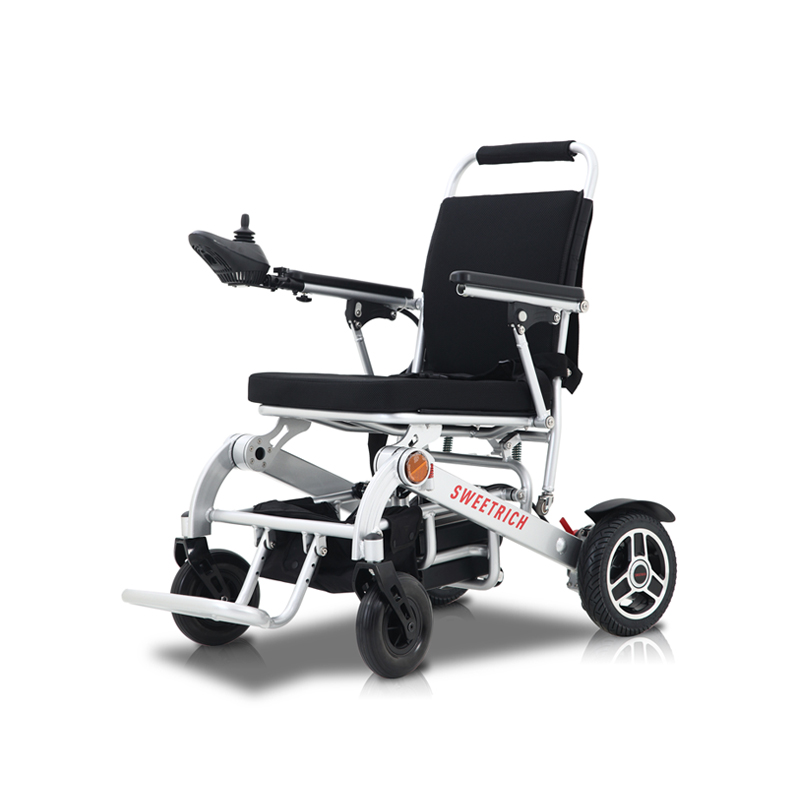
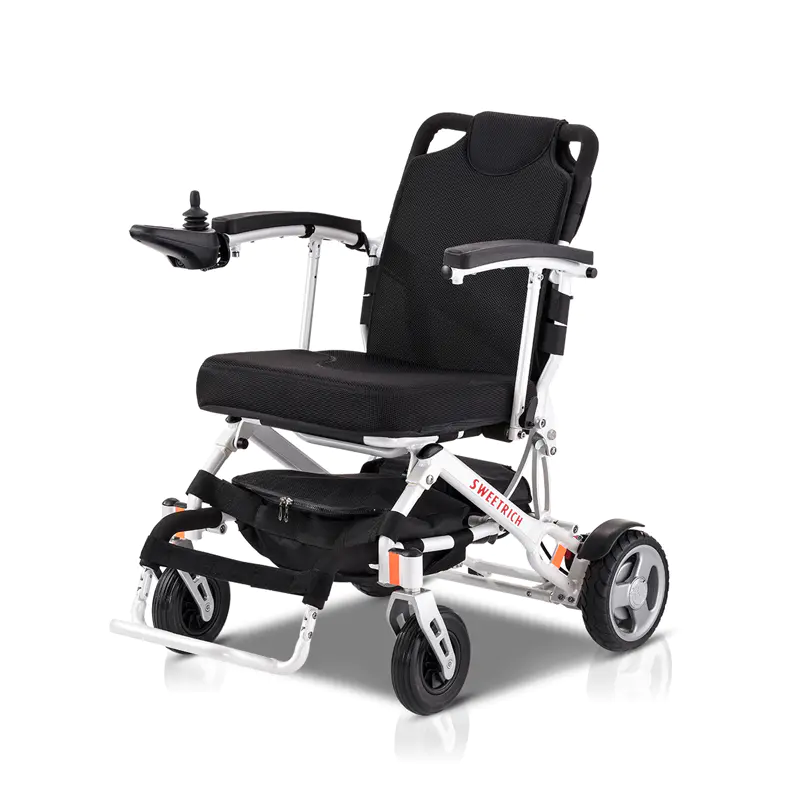
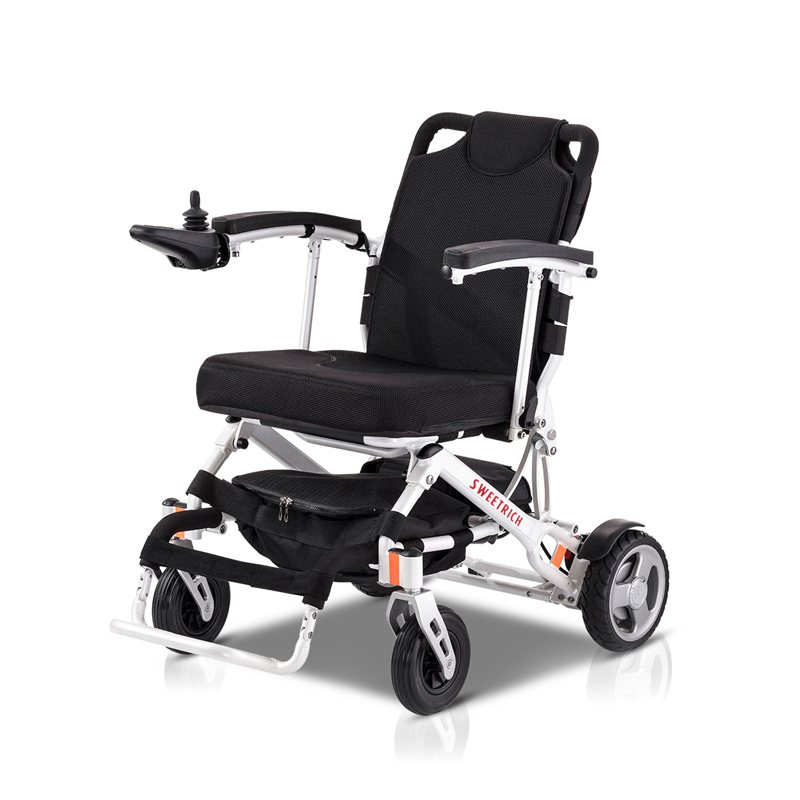
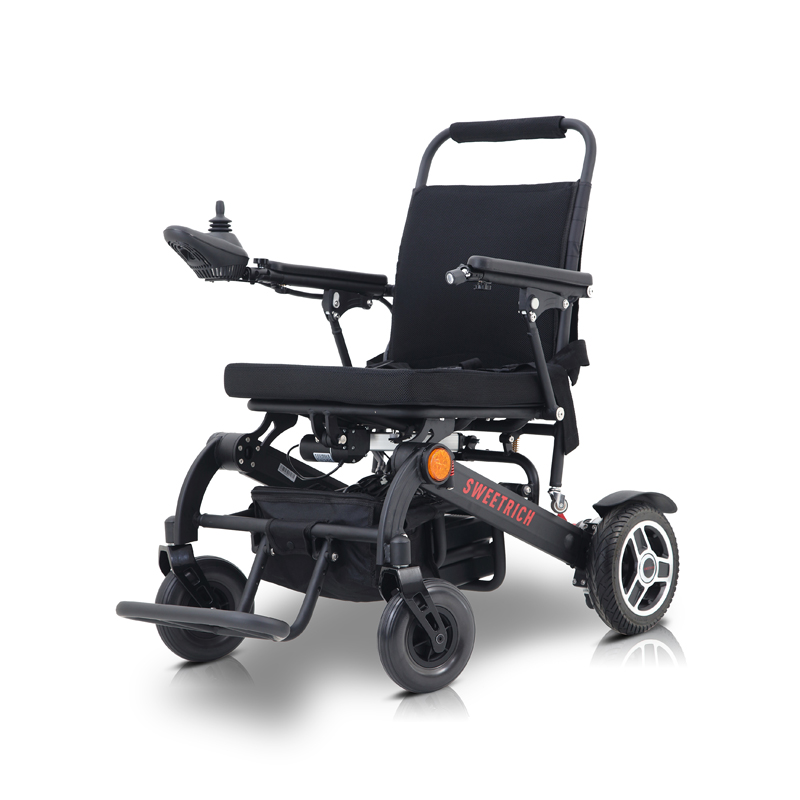
The iPower Sport FWD is a heavy-duty electric wheelchair designed around these requirements. It uses a front-wheel-drive layout, large pneumatic tires, front suspension, rear suspension support, anti-tip wheels, an adjustable seat back, and a leather-like cushioned seat. Its twin 320-watt motors and 24-volt electrical system provide the driving power needed for daily outdoor use, while electromagnetic braking contributes to controlled stopping.
With a stated maximum speed of 8 km/h, a driving range of approximately 30–40 km, and a weight capacity of 120 kg, the wheelchair is positioned as a practical choice for users seeking greater freedom beyond the home. Its lead-acid battery system is familiar to many mobility equipment providers, and the charging system is specified for AC input from 115 to 230 volts, supporting use in a broad range of markets.
This article examines the product’s engineering characteristics, user benefits, outdoor performance, manufacturing background, quality-oriented production approach, and advantages compared with simpler electric wheelchairs. It also explains why the combination of suspension, tire design, seating, battery capacity, and control technology is important when selecting a heavy-duty mobility device.
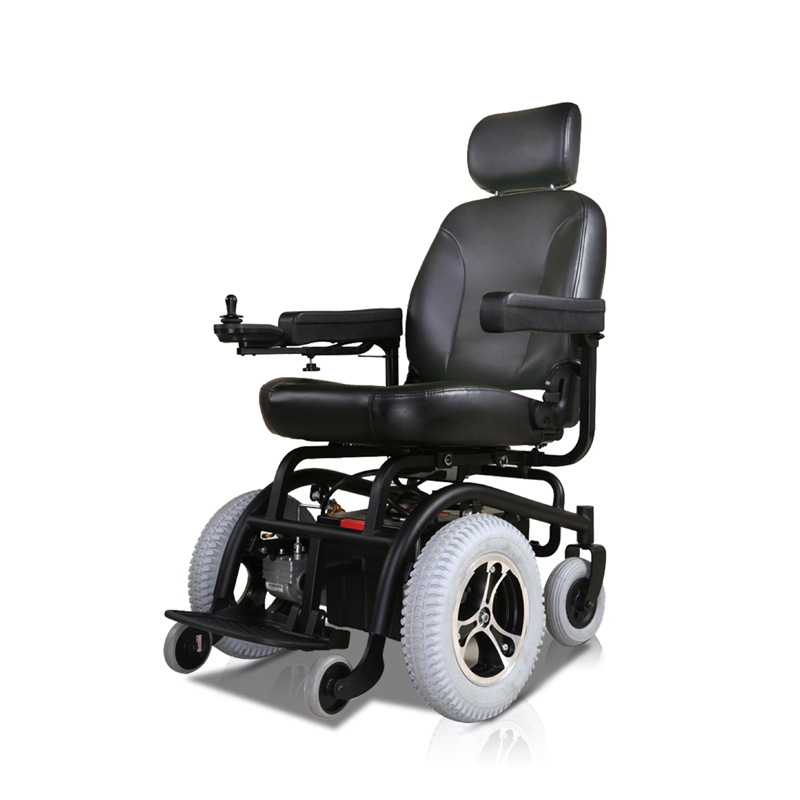
iPower Sport FWD Certificated power suppier used battery electric wheelchair foldable for out door use
Product Overview
The iPower Sport FWD belongs to the heavy-duty wheelchair category and is intended for outdoor-oriented mobility. Its structure is designed to support users who want a powered chair with more capability than a compact indoor model. The product combines a powered chassis with a seat system, drive motors, battery storage, safety controls, and suspension components in a single platform.
The front-wheel-drive configuration is particularly relevant to outdoor use. Front-wheel-drive power wheelchairs are often selected for their ability to approach obstacles and changes in terrain with the large front wheels leading the movement. Depending on the surface and driving technique, the layout can help the chair maintain traction and provide a stable feeling when navigating sidewalks, access paths, and outdoor spaces.
The listed overall dimensions are approximately 980 mm in length, 600 mm in width, and 1,180 mm in height. This gives the wheelchair a substantial yet relatively narrow footprint for a heavy-duty outdoor model. The 600 mm width may be helpful when approaching doorways, corridors, ramps, and other access points, although users should always compare the actual chair dimensions with the spaces they intend to use.
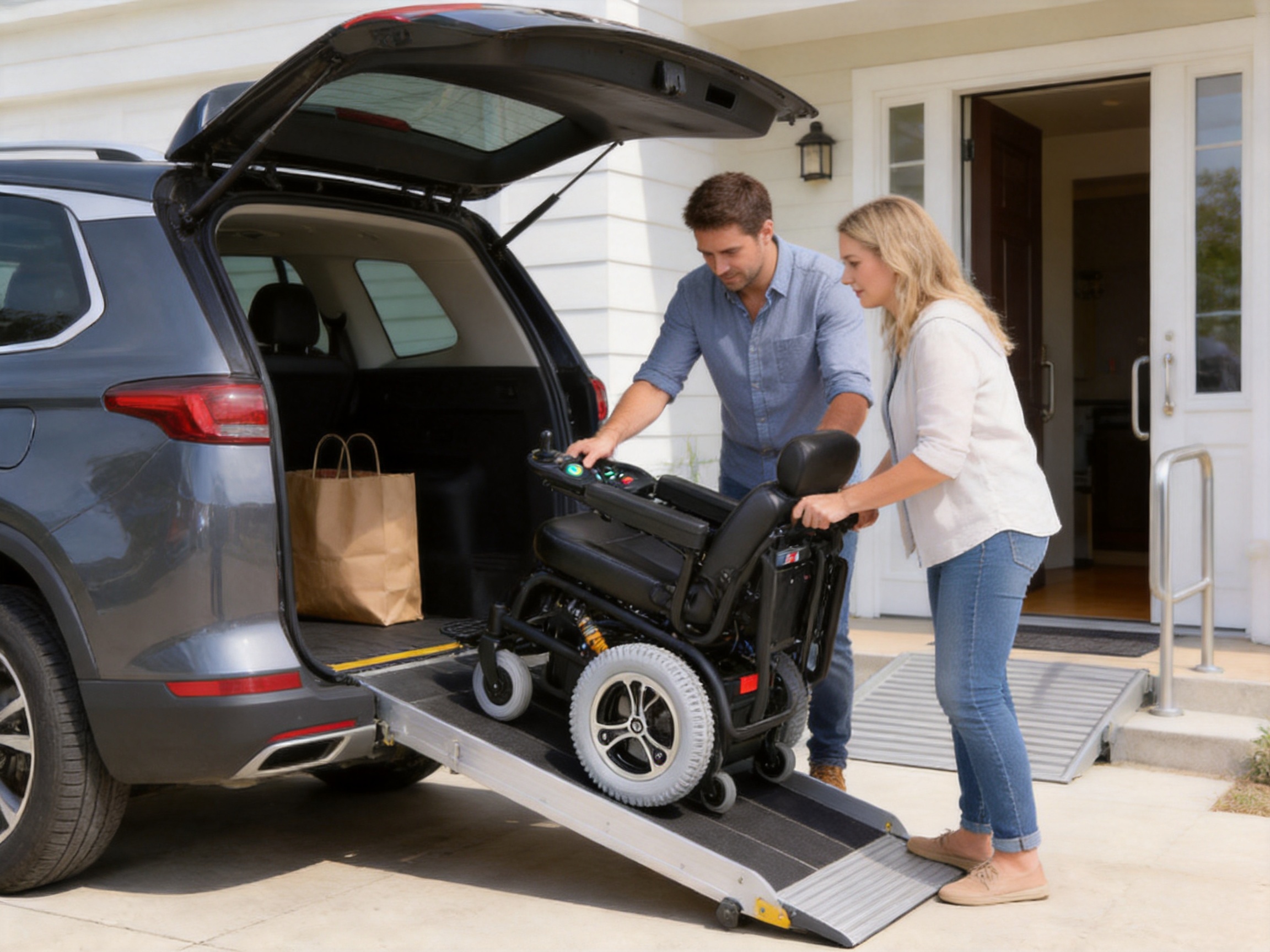
The product is described as foldable, which can offer additional convenience for transportation and storage. However, powered mobility equipment should always be folded, lifted, and transported according to the manufacturer’s instructions. The listed heaviest part is 56 kg, so the chair may require two-person handling or a suitable loading aid when placed into a vehicle.
Core Specifications
| Specification | Stated Information |
|---|---|
| Product type | Heavy-duty folding electric wheelchair |
| Drive layout | Front-wheel drive |
| Overall dimensions | 980 mm × 600 mm × 1,180 mm |
| Maximum forward speed | 8 km/h or approximately 5 mi/h |
| Maximum driving gradient | 10 degrees |
| Estimated driving range | 30–40 km or approximately 19–25 miles |
| Weight capacity | 120 kg or approximately 265 lb |
| Front tire size | 14 inches × 3 inches |
| Rear tire size | 8 inches × 2.5 inches |
| Suspension | Front suspension with rear suspension support |
| Braking system | Electromagnetic brake |
| Battery system | Two 12 V 40 Ah lead-acid batteries |
| Charger | DC 24 V 5 A, AC 115–230 V input |
| Charging time | Approximately 6–8 hours |
| Motors | Two 24 V, 320 W motors |
| Motor controller | 24 V, 50 A controller |
| Heaviest part | Approximately 56 kg |
Specifications should be interpreted as rated or stated values rather than guarantees of identical performance in every environment. Actual range may vary according to user weight, terrain, temperature, tire pressure, battery condition, driving style, gradient, and frequency of stopping and starting.
Outdoor Performance and Front-Wheel Drive
Outdoor mobility places greater demands on a wheelchair than smooth indoor flooring. Pavement may include cracks, small surface changes, sloped transitions, gravel sections, uneven paths, and drainage channels. A chair intended for outdoor travel needs tires and suspension components that can help absorb surface irregularities and maintain contact with the ground.
The iPower Sport FWD uses large 14-inch by 3-inch front pneumatic tires. Larger tires can roll over minor surface imperfections more effectively than very small solid casters. Pneumatic construction can also provide a degree of natural cushioning, helping reduce the sharpness of impacts transmitted through the frame and seating system. Proper tire inflation is essential, because underinflation can affect steering, range, stability, and tire wear, while overinflation can reduce comfort and traction.
The front-wheel-drive layout places the powered drive wheels at the front of the wheelchair. This arrangement can be beneficial when approaching small obstacles or uneven transitions because the main drive wheels encounter the surface first. It may also provide a distinctive turning and maneuvering experience compared with rear-wheel-drive or mid-wheel-drive designs. Users should become familiar with the turning radius and front-end movement in an open area before using the chair in crowded environments.
The stated maximum gradient is 10 degrees. This figure should not be interpreted as permission to climb every ramp or slope of that angle under all conditions. Surface traction, battery charge, tire pressure, user weight, weather, ramp length, and the presence of loose material all affect safe hill performance. Users should follow local safety guidance and avoid slopes that exceed the recommended limit.
The chair’s maximum speed is listed as 8 km/h, or approximately 5 miles per hour. This speed is appropriate for controlled outdoor travel and can help reduce journey time compared with slower indoor power chairs. Speed should always be adjusted to the environment. Lower settings are suitable for crowded walkways, narrow areas, entrances, and unfamiliar terrain, while higher speeds should be reserved for open, predictable surfaces.
Suspension and Ride Comfort
Suspension is one of the most important differences between a basic powered wheelchair and an outdoor-oriented model. Without suspension, bumps and surface changes can be transmitted directly through the wheels, frame, and seat. Over time, repeated vibration can reduce comfort and may make the user feel less secure on uneven ground.
The iPower Sport FWD includes front suspension and a rear suspension arrangement. Working together with pneumatic tires, these components are intended to help the wheelchair maintain a smoother ride over ordinary outdoor irregularities. Suspension may also support better wheel contact when the chair moves across surfaces that are not perfectly level.
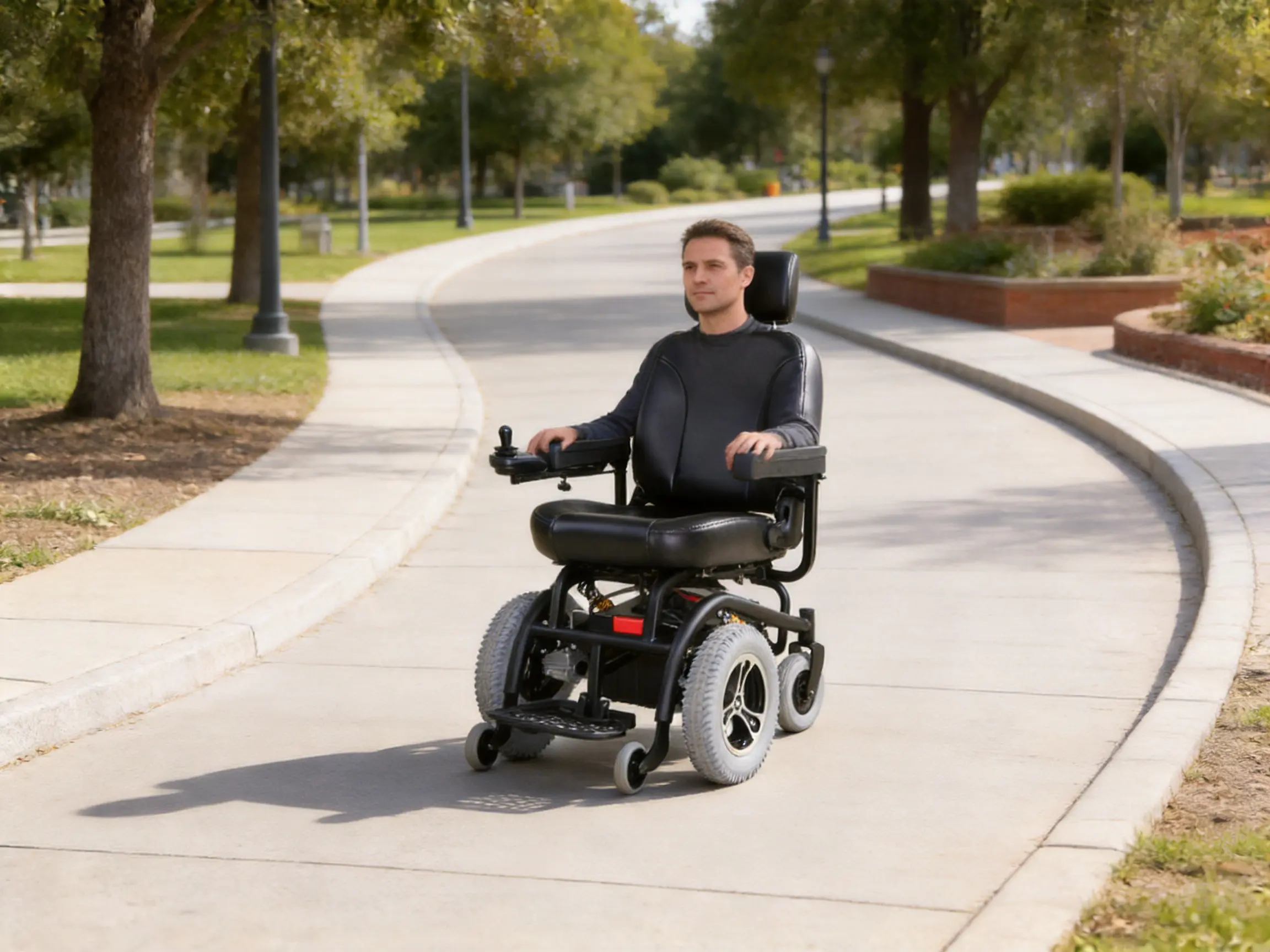
Ride comfort is not determined by suspension alone. It also depends on seat padding, back support, tire pressure, user posture, speed, and the condition of the route. The leather-like cushion seat provides a more supportive and comfortable surface than a basic unpadded platform. The adjustable seat back allows the user or caregiver to select a more suitable seating angle for driving, resting, or longer periods of use.
Anti-tip wheels add another layer of protection. These smaller wheels are intended to help limit excessive rearward movement in situations where the chair encounters a slope or uneven transition. They should not be treated as a substitute for careful driving. Safe operation still requires appropriate speed, attention to terrain, and compliance with the manufacturer’s instructions.
Powertrain, Controller, and Braking System
The wheelchair uses two 24-volt, 320-watt motors. A twin-motor arrangement allows the drive system to deliver power through both sides of the chassis and supports independent wheel control. This is useful for maneuverability because the motors can work together during forward travel and at different rates during turning.
For an outdoor power wheelchair, the motor system must balance torque, speed, battery consumption, and thermal performance. A higher-power motor may offer stronger hill-climbing potential, but it may also consume more energy under demanding conditions. The 320-watt motors are specified for the chair’s intended mobility role, with the overall system supported by a 24-volt battery pack.
The 24-volt, 50-amp motor controller is a central part of the driving system. It receives input from the user control interface and regulates power delivered to the motors. Smooth controller calibration can improve starting, stopping, turning, and low-speed maneuvering. A quality controller can also make the chair feel more predictable, which is especially valuable for first-time users.
The product specification identifies a PG controller from the United Kingdom. This component is presented as part of the chair’s control architecture and reflects the importance of using established electrical control technology in a powered mobility product. The controller should be protected from moisture, impact, and unauthorized modification. Servicing should be performed by qualified technicians using compatible parts.
Electromagnetic Braking
The electromagnetic brake is designed to engage when the drive system is not actively propelling the chair. This type of braking can help hold the chair in place when the user releases the control input, subject to the operating conditions and design of the complete system.
Electromagnetic braking offers a practical advantage over systems that depend only on manual intervention. A user does not have to reach for a separate hand brake during ordinary powered operation. The chair can transition from powered movement to a controlled stationary condition when the control is released.
Braking performance can be affected by slope, surface condition, tire condition, battery status, and mechanical wear. Users should test the brake in a safe open location and should not rely on the chair’s brake to replace parking procedures. When stopped on an incline, additional caution is necessary, and the chair should not be left unattended in an unsafe position.
Battery Capacity, Charging, and Travel Range
The iPower Sport FWD uses two 12-volt, 40 Ah lead-acid batteries connected to form a 24-volt system. Lead-acid batteries remain common in mobility equipment because they are widely available, familiar to service professionals, and generally straightforward to replace. Their established supply chain can be useful for distributors and after-sales service networks.
The stated range is 30–40 km, or approximately 19–25 miles. This is a substantial travel distance for many daily mobility needs. It may allow a user to complete local errands, visit community facilities, travel through a neighborhood, or spend extended time outdoors without recharging during the day.
Range figures are influenced by many variables. A heavier load, repeated hill climbing, rough terrain, frequent acceleration, low temperatures, underinflated tires, and aging batteries can all reduce the distance available from a full charge. For this reason, users should plan journeys with a reserve rather than treating the maximum range as a guaranteed travel distance.
The charger is specified as a DC 24 V 5 A unit with AC input from 115 to 230 volts. This input range supports use in many electrical environments, although the correct plug, local electrical requirements, and safety practices must be confirmed before operation. The stated charging time is approximately 6–8 hours.
Regular charging habits can extend battery service life. Users should normally recharge after use according to the product manual, avoid leaving the battery deeply discharged for extended periods, and keep the charging area dry and well ventilated. The charger should be connected and disconnected in the correct order, and damaged cables or connectors should not be used.
Lead-acid batteries are heavier than many modern lithium battery systems. This contributes to the chair’s overall transport weight, but it also provides a familiar and cost-conscious battery option for many markets. Buyers who prioritize easy battery replacement, established servicing, and an economical initial system may find this configuration attractive.
Seating, User Support, and Daily Comfort
A mobility device is used for extended periods, so seating quality is a practical performance factor rather than an optional luxury. The iPower Sport FWD includes a leather-like cushion seat intended to offer a more comfortable contact surface during daily travel. The material is also suitable for straightforward cleaning when maintained according to the manufacturer’s care instructions.
The adjustable seat back allows the seating position to be adapted to individual preference. A more upright position may help with visibility and active driving, while a slightly reclined position may be preferred during rest. Adjustments should be made securely, and the user should remain within the intended seating position while the chair is moving.
The seating system should be evaluated in relation to user height, body shape, posture, transfer method, and expected use time. Retailers and caregivers should help users select a position that supports comfortable control access and clear visibility. Correct seating can also help distribute pressure more evenly and reduce fatigue on longer journeys.
Although the product has a stated weight capacity of 120 kg, this value should include the user, clothing, carried items, and any accessories. Exceeding the rated capacity can affect stability, braking, motor performance, range, and component durability. It can also create unnecessary safety risks.
Foldable Design and Practical Transportation
Transportability is a major consideration for users who want to combine powered mobility with car travel, family outings, shopping trips, or longer journeys. The product is described as foldable, which is intended to make storage and transportation more convenient than a fully fixed-frame outdoor wheelchair.
A folding structure may help reduce the space required in a vehicle or storage room. It can also make the chair easier to organize when not in use. Nevertheless, the listed heaviest part weighs approximately 56 kg, so the chair should not be assumed to be lightweight. Users should plan for safe loading with a ramp, hoist, lift, vehicle carrier, or assistance from another person.
Before transporting the wheelchair, the user should switch off the power, secure or remove loose accessories, protect the control unit, and follow the recommended folding procedure. The folded chair should be restrained so that it cannot move during vehicle travel. It should never be used as a passenger seat unless it has been specifically approved for that purpose and properly secured by an appropriate transportation system.
This combination of folding capability and heavy-duty construction creates a useful balance. Very lightweight chairs may be easier to lift but can provide less outdoor stability or lower capacity. Larger fixed chairs may offer strength but can be difficult to store. The iPower Sport FWD aims to bridge these needs by providing outdoor-oriented equipment with a folding-oriented design.
Advantages Compared with Simpler Competitor Models
More Outdoor-Oriented Wheel and Suspension Design
Many basic electric wheelchairs are designed primarily for indoor movement or smooth paved areas. They may use smaller wheels, limited suspension, and a lighter frame. The iPower Sport FWD is differentiated by its large pneumatic front tires, suspension arrangement, anti-tip wheels, and outdoor-focused specifications. These elements can improve usability on routes that include minor surface irregularities.
Longer Stated Travel Range
Compact indoor power chairs often prioritize low weight and small dimensions over long-distance travel. With a stated range of 30–40 km, the iPower Sport FWD offers more potential for full-day outdoor use. The actual result depends on operating conditions, but the battery capacity gives the product a stronger range profile than many entry-level alternatives.
Higher Load Capacity
The 120 kg capacity places the wheelchair in a more robust category than many lightweight folding models. This can expand its suitability for a broader group of users while allowing room for everyday clothing and limited personal belongings. Capacity should always be checked against the complete load, but the rating indicates a design intended for more demanding daily use.
Dual-Motor Performance
Two 320-watt motors provide balanced propulsion across the drive system. Compared with a single-motor configuration, a dual-motor setup can offer more consistent drive distribution and enhanced maneuvering potential. It also supports the front-wheel-drive architecture that distinguishes the product from many conventional rear-drive chairs.
Comfort Features for Longer Trips
The adjustable seat back, cushioned seating, pneumatic tires, and suspension work together to make the chair more appropriate for extended journeys. A low-cost model may offer only a basic seat and rigid frame. The additional comfort features can reduce fatigue and make the product more suitable for shopping, visiting, outdoor recreation, and community travel.
Broad Electrical Compatibility
The charger’s stated AC input range of 115–230 volts is useful for international distribution and for customers who travel between regions with different electrical standards. The correct local connection and charger configuration must still be confirmed, but the specified range gives distributors greater flexibility than a charger designed for only one voltage environment.
Manufacturing Strengths and Production Capability
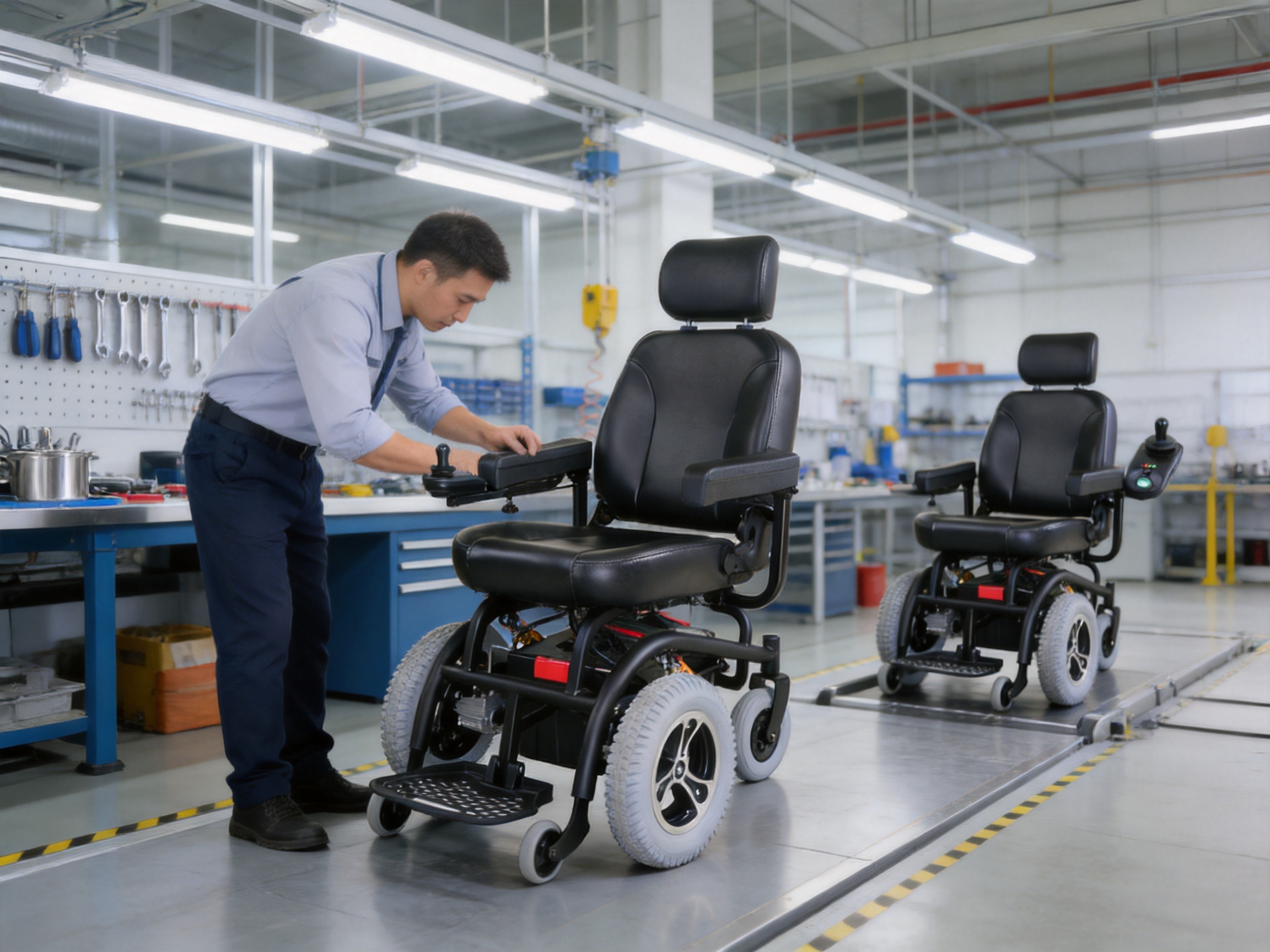
Suzhou Sweetrich Vehicle Industry Technology Co., Ltd. is described as a high-tech mobility manufacturer established in 2011. The company operates in Suzhou Industrial Zone in Jiangsu, China, and has a factory covering approximately 30,000 square meters on a 60-acre site. Its stated experience includes more than ten years of research, development, and production involving mobility scooters and power wheelchairs.
Manufacturing scale is important in the mobility equipment sector because a dependable product requires coordination across mechanical design, welding or frame construction, electrical assembly, battery integration, upholstery, quality inspection, packaging, and after-sales support. A company with dedicated facilities and accumulated product experience can develop repeatable processes rather than relying only on small-batch assembly.
The company’s focus on intellectual property indicates an interest in developing its own product technologies and design solutions. For a wheelchair such as the iPower Sport FWD, this may include chassis layout, folding mechanisms, suspension integration, control placement, seating configuration, and the relationship between motor, controller, and battery systems.
Advanced manufacturing in mobility products is not limited to automated machinery. It also includes design verification, component matching, process documentation, operator training, inspection standards, traceability, and corrective action. Each of these activities can influence the final user experience.
Product Development and Engineering Coordination
A powered wheelchair is a system product. Its performance depends on how the chassis, wheels, motors, controller, batteries, charger, brakes, seat, and folding components work together. Engineering teams must consider stability, center of gravity, turning behavior, ground clearance, cable routing, battery access, serviceability, and user controls at the same time.
For the iPower Sport FWD, the front-wheel-drive design requires careful coordination between tire size, steering geometry, suspension movement, motor output, and anti-tip protection. The folding function adds another design challenge because the frame must support repeated folding and unfolding without compromising structural integrity or electrical connections.
Well-coordinated product development can reduce the likelihood of problems caused by isolated component choices. For example, a motor may have adequate power on paper but perform poorly if the controller settings, battery capacity, tire size, or transmission arrangement are not properly matched. A complete-system approach is therefore an important manufacturing strength.
Controlled Assembly Processes
Controlled assembly helps ensure that each wheelchair is built consistently. Mechanical fasteners should be installed with appropriate torque, electrical connectors should be seated securely, cables should be routed away from moving parts, and battery terminals should be protected against accidental contact. Brake, motor, controller, and charger connections require particular attention because errors may affect safety or reliability.
Seat installation, suspension fitting, wheel alignment, and folding mechanism adjustment also influence the product’s operation. A professional production line can use work instructions and inspection points to reduce variation between units. Final inspection may include checks of forward and reverse movement, turning, braking response, folding operation, charger connection, control response, and visible finish quality.
Quality Management and Reliability
The company states that it follows strict production management and scientific product design principles. In practice, quality-oriented production should involve incoming inspection of key components, in-process checks, final functional testing, packaging verification, and documentation of any nonconforming parts.
Reliability is especially important for mobility products because users may depend on them for essential daily activities. A wheelchair must not only look well finished; it must maintain dependable performance across repeated charging cycles, regular folding, steering inputs, braking events, and outdoor use.
Manufacturers can strengthen reliability by selecting compatible motors and controllers, protecting electrical systems from vibration, using suitable frame materials, checking weld quality, securing battery compartments, and inspecting tire and suspension installation. Preventive maintenance and user education then complete the reliability process after the product leaves the factory.
International Market Experience
Sweetrich products are described as being exported to America, Europe, Japan, Australia, the Middle East, Russia, and other markets. International distribution requires awareness of different customer expectations, electrical systems, packaging requirements, language needs, service practices, and regulatory environments.
Export experience can help a manufacturer improve documentation, spare-parts planning, packaging protection, and communication with distributors. It can also provide feedback from varied climates and usage conditions. However, buyers should always verify that the specific model and configuration meet the legal, safety, labeling, and market requirements applicable in their destination.
The supplied product information identifies the devices as non-medical products for the US market. This wording is important. The wheelchair should be presented as mobility equipment rather than as a medical treatment device, and claims about medical outcomes should not be made without appropriate evidence and authorization.
Maintenance and Long-Term Ownership
Routine maintenance helps preserve performance and supports user safety. Tires should be inspected for damage and maintained at the recommended pressure. Pneumatic tires can lose air gradually, so pressure checks should be part of regular use. Uneven wear may indicate alignment, loading, or suspension issues.
The battery system should be charged using the specified charger. Battery terminals should be kept clean and secure, while signs of swelling, leakage, overheating, damaged cases, or unusual odor should be treated as reasons to stop using the batteries and contact a qualified service provider.
Users should periodically inspect the frame, folding points, seat attachment, arm supports, foot support, anti-tip wheels, and visible fasteners. Any looseness, unusual noise, change in steering behavior, or reduction in braking performance should be investigated before continued operation.
The control system should be kept dry and protected from impact. Although the wheelchair is designed for outdoor use, outdoor capability does not mean unrestricted exposure to rain, flooding, mud, or pressure washing. Water can damage electronic components and connectors. The product manual should be followed regarding weather limits and cleaning procedures.
Scheduled professional servicing can identify wear before it becomes a major problem. Service intervals may include inspection of motors, brakes, bearings, suspension, wiring, battery performance, charger output, and structural fasteners. Distributors with trained technicians can provide additional value by offering setup, maintenance, replacement parts, and user instruction.
Choosing the Product for Different Users
The iPower Sport FWD may be appropriate for users who need powered mobility for outdoor errands, residential travel, shopping, community activities, and moderate-distance journeys. It can also be considered by caregivers and families who want a chair with a higher capacity and stronger outdoor equipment than a small indoor model.
Potential buyers should evaluate the user’s weight, height, seating needs, transfer ability, hand control, typical terrain, storage space, vehicle access, and expected travel distance. The user should be able to operate the control system safely or have a trained caregiver available to assist.
The wheelchair may be less suitable for customers who require a very lightweight chair that can be lifted easily without assistance. The 56 kg heaviest-part specification means that transport planning is important. It may also be less suitable for extremely rough terrain, deep sand, standing water, or slopes beyond the recommended limit.
Retailers should demonstrate the chair in a safe area and explain acceleration, steering, braking, charging, folding, and battery care. A test drive can reveal whether the user is comfortable with the front-wheel-drive turning behavior and whether the seating position provides adequate control access.
Safety Considerations
Users should read the product instructions before operation and receive practical training. Initial driving should take place on a flat, open surface away from traffic and pedestrians. The user should practice starting, stopping, reversing, turning, and controlling speed before attempting slopes or crowded areas.
Seat belts or positioning supports should be used when supplied or recommended. Loose clothing, bags, and accessories should be kept away from wheels, suspension components, and folding joints. The user should maintain a stable seated position and avoid standing on the foot support or reaching excessively while the chair is moving.
Slopes should be approached straight on whenever possible. Turning across a slope can increase the risk of instability. The maximum stated gradient is 10 degrees, but actual safe operation may require a lower limit depending on surface condition, load, tire pressure, and weather.
The chair should not be driven through deep water or used during conditions that could expose the electrical system to significant moisture. When crossing roads or using public areas, users must follow local accessibility and traffic rules. Visibility accessories, reflective elements, and appropriate lighting may be advisable depending on the environment and time of day.
Value for Distributors and Mobility Providers
For distributors, the product offers a combination of recognizable selling points: heavy-duty capacity, outdoor tires, suspension, dual motors, electromagnetic braking, a long stated range, adjustable seating, and a foldable-oriented design. These features allow the chair to address more than one customer segment.
The product can be positioned as an upgrade from a basic indoor power chair, an alternative to some larger fixed-frame models, or a practical outdoor option for users who need more range. Its lead-acid battery system may also simplify sourcing and service for businesses that already support traditional mobility equipment.
A manufacturer with export experience and a dedicated production base can support distributors through product documentation, technical communication, spare-parts planning, and configuration assistance. Long-term cooperation is strengthened when the supplier provides consistent quality, clear specifications, responsive service, and realistic communication about product capabilities.
Distributors should avoid overstating performance. Range, gradient, speed, and weight capacity should be presented as stated specifications subject to operating conditions. Clear communication builds customer trust and reduces the risk of unsuitable purchases.
Frequently Asked Questions
What type of product is the iPower Sport FWD?
It is a heavy-duty folding electric wheelchair intended primarily for outdoor mobility and everyday powered travel. It includes front-wheel drive, large pneumatic tires, suspension, anti-tip wheels, an adjustable seat back, and a cushioned seat.
What is the maximum user weight?
The stated weight capacity is 120 kg, or approximately 265 lb. This limit should include the user, clothing, personal belongings, and any accessories carried on the chair.
How far can it travel on one charge?
The stated range is approximately 30–40 km, or 19–25 miles. Actual range depends on terrain, user weight, tire pressure, battery condition, temperature, speed, slopes, and driving habits.
How fast can the wheelchair travel?
The listed maximum forward speed is 8 km/h, or approximately 5 miles per hour. Users should select a lower speed in crowded spaces, near obstacles, on unfamiliar surfaces, and in areas with pedestrians.
Is the wheelchair suitable for hills?
The listed maximum driving gradient is 10 degrees. The actual safe gradient depends on traction, surface condition, load, battery charge, tire pressure, and weather. Users should avoid slopes that feel unstable or exceed local safety recommendations.
What type of batteries does it use?
The wheelchair uses two 12-volt, 40 Ah lead-acid batteries, forming a 24-volt battery system. Lead-acid batteries are widely used and familiar to many mobility service providers.
How long does charging take?
The stated charging time is approximately 6–8 hours. Charging should be performed with the specified charger and in accordance with the product instructions.
Can the wheelchair be transported in a car?
The product is described as foldable, which may make storage and transportation more convenient. However, the listed heaviest part weighs approximately 56 kg. Safe vehicle loading may require two people or a ramp, lift, hoist, or suitable carrier.
What makes the front-wheel-drive design useful?
Front-wheel drive places the main powered wheels at the front, which can support outdoor maneuvering and help the chair approach minor surface transitions with the large front wheels leading. Users should practice turning and obstacle negotiation before regular operation.
Does the chair have suspension?
Yes. The specifications identify front suspension and rear suspension support. Together with pneumatic tires, the suspension is intended to improve ride comfort and wheel contact over ordinary outdoor irregularities.
Is the product a medical device?
The supplied information describes the product as a non-medical device for the US market. It should be used as mobility equipment and should not be marketed as providing medical treatment or a guaranteed medical outcome.
What maintenance does it require?
Regular checks should include tire pressure, tire condition, battery connections, charger cables, brakes, folding points, suspension, fasteners, control operation, and anti-tip wheels. Professional servicing is recommended when unusual noise, loose parts, reduced range, or braking changes occur.
Conclusion
The iPower Sport FWD is designed to provide a practical balance between outdoor capability, user comfort, travel range, and transport flexibility. Its large pneumatic front tires, front-wheel-drive layout, suspension system, anti-tip wheels, dual motors, electromagnetic brake, adjustable seat back, and cushioned seating distinguish it from simpler indoor-oriented electric wheelchairs.
The stated 30–40 km range and 120 kg capacity give the product a useful profile for daily outdoor mobility, while the 8 km/h maximum speed supports efficient travel in suitable environments. The 24-volt lead-acid battery system remains a familiar and serviceable solution for many international markets. The foldable design can improve storage and transportation convenience, although the 56 kg heaviest-part specification means that appropriate handling equipment or assistance may be necessary.
Beyond the product’s specifications, the manufacturer’s experience in mobility scooters and power wheelchairs, dedicated factory resources, international export background, and stated focus on quality and research provide important support for long-term product development. A complete manufacturing approach—covering engineering, component matching, assembly control, testing, documentation, and after-sales service—helps convert individual features into a reliable mobility platform.
For users and distributors seeking an outdoor-oriented power wheelchair with heavy-duty capacity and a broad feature set, the iPower Sport FWD offers a strong combination of capability and practicality. As with all powered mobility equipment, the best results depend on correct fitting, responsible operation, regular maintenance, realistic route planning, and careful adherence to safety instructions.
References
1. Product specification sheet for the iPower Sport FWD heavy-duty electric wheelchair, supplied materials.
2. Manufacturer information concerning mobility scooter and power wheelchair production, supplied company profile.
3. General principles of powered wheelchair operation, battery charging, tire maintenance, and user safety, industry guidance materials.
4. General considerations for outdoor mobility equipment design, including suspension, braking, drive systems, seating, and transportability.
5. General battery-care practices for lead-acid powered mobility equipment, service and maintenance guidance.