
 +86-(0)512-82283871

Content
- 1 Designed for Practical Heavy-Duty Mobility
- 2 Four-Wheel Stability and Outdoor Control
- 3 Pneumatic Tires for a More Comfortable Ride
- 4 Rear Suspension and Chassis Comfort
- 5 Comfort-Focused Seating for Longer Use
- 6 Dual-Motor Performance and Smooth Power Delivery
- 7 Electronic Braking for Controlled Stops
- 8 Lead-Acid Battery System
- 9 Range and Daily Travel Planning
- 10 Transport and the Heaviest Part
- 11 Advantages Compared with Basic Compact Wheelchairs
- 12 Advantages Compared with Very Lightweight Travel Models
- 13 Advantages Compared with Three-Wheel Mobility Platforms
- 14 Manufacturing and Engineering Strengths
- 15 Advanced Product Design Approach
- 16 Quality-Oriented Assembly Considerations
- 17 International Supply and Customer Support
- 18 Use Cases for the Power Wheelchair
- 19 Maintenance for Reliable Operation
- 20 Safe Operating Practices
- 21 Who Should Consider This Model?
- 22 Technical Specification Table
- 23 Questions and Answers
- 23.1 What type of product is this?
- 23.2 What is the maximum speed?
- 23.3 How far can it travel on one charge?
- 23.4 What is the maximum user weight?
- 23.5 Is the wheelchair suitable for outdoor use?
- 23.6 What kind of batteries does it use?
- 23.7 How long does charging take?
- 23.8 Does it have suspension?
- 23.9 What braking system does it use?
- 23.10 Is the seat adjustable?
- 23.11 Is it a medical device?
- 23.12 How heavy is the heaviest part?
- 23.13 What makes it different from a basic indoor wheelchair?
- 23.14 Who manufactures the product?
- 24 Conclusion
- 25 References
- 26 Product: iPower Sport Hot popular four wheels power remote electronic wheelchair in dubai
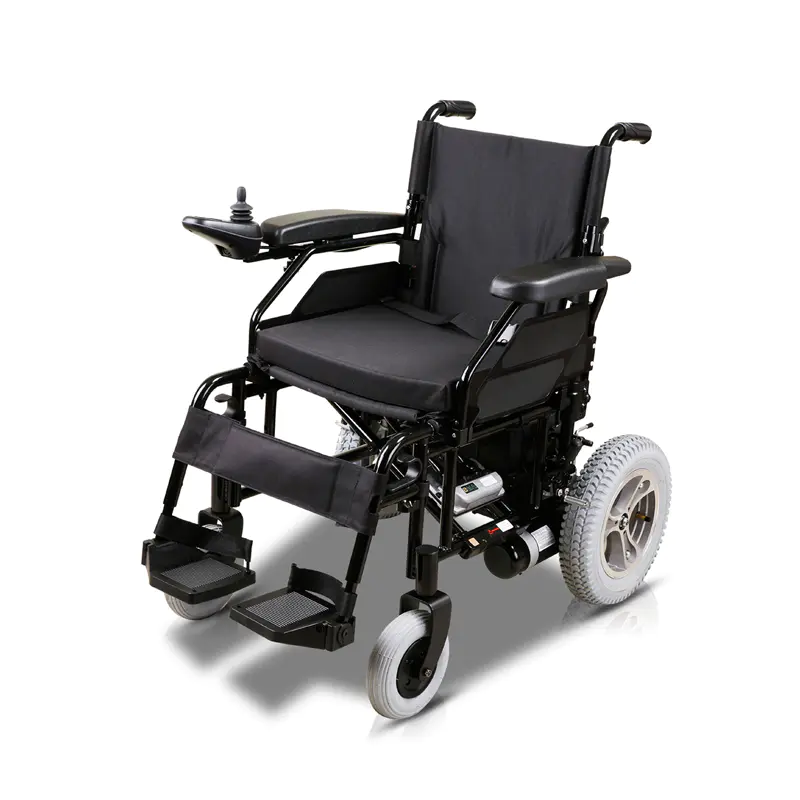
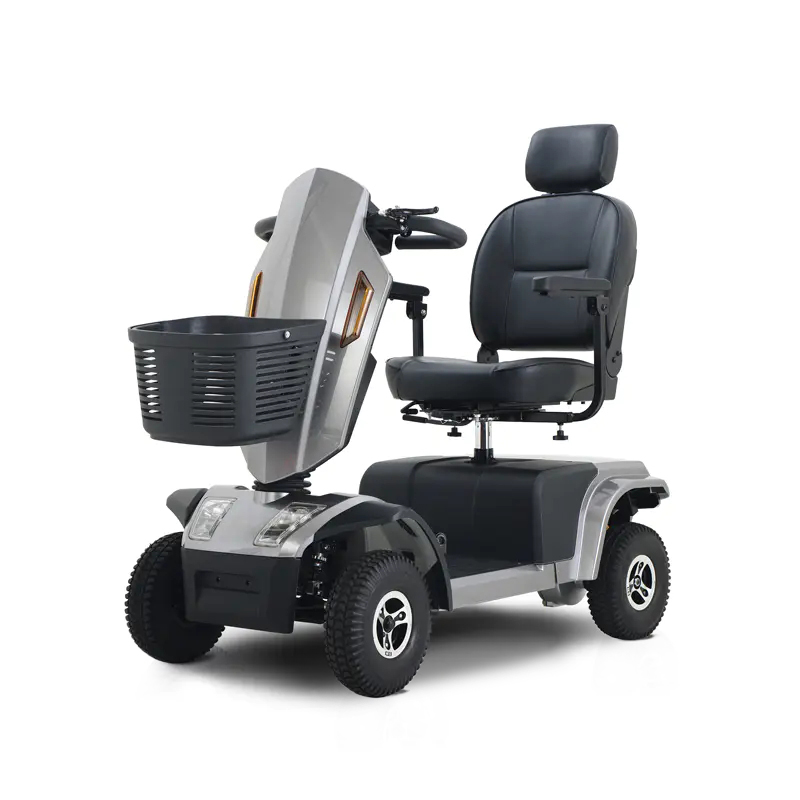
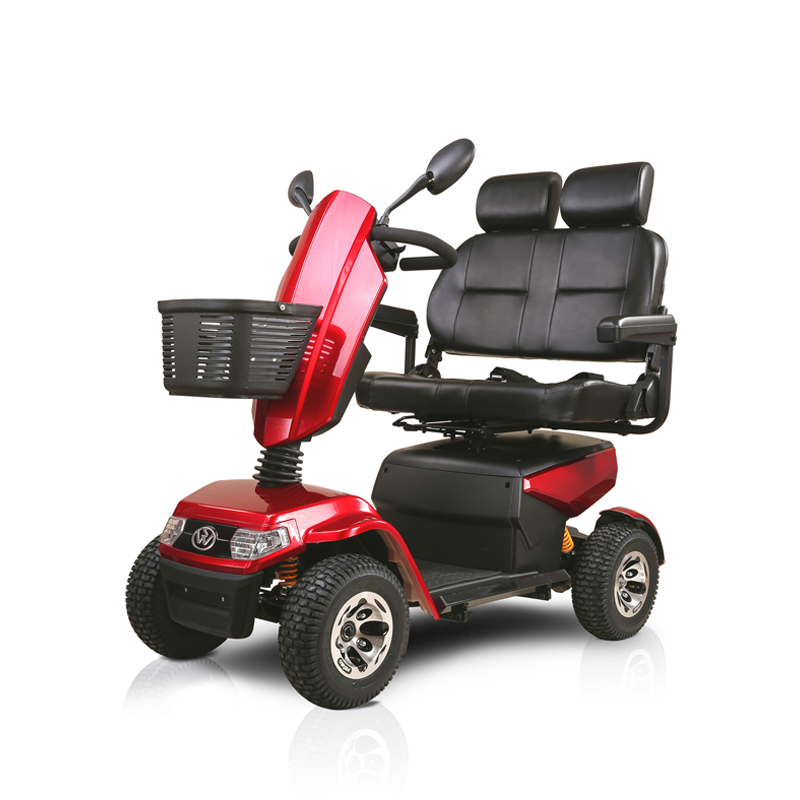
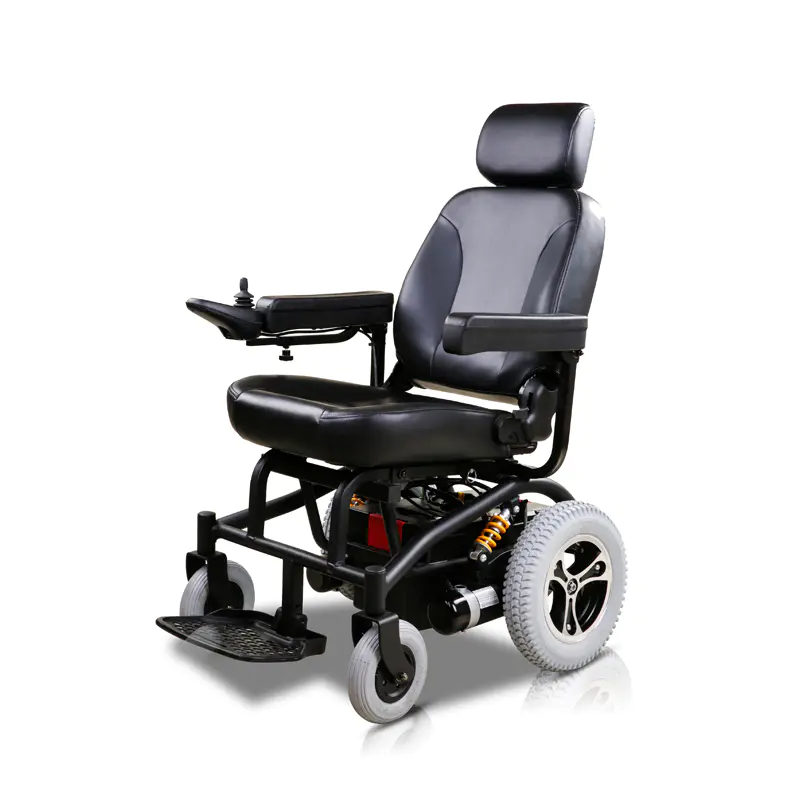
For people who need dependable powered mobility, a wheelchair must provide more than basic movement. It should offer stability, useful travel range, responsive controls, comfortable seating, reliable braking, and enough ground clearance to manage different outdoor surfaces. The iPower Sport four-wheel power wheelchair is designed around these practical requirements, combining a robust chassis with large pneumatic tires, rear suspension, electromagnetic braking, and dual-motor drive.
This model is positioned as a heavy-duty mobility solution for users who want greater independence in daily life. It is suitable for outdoor travel, neighborhood transportation, accessible commercial areas, large properties, and other environments where a lightweight indoor wheelchair may not be adequate. Its four-wheel layout gives the vehicle a stable footprint, while the suspension system and pneumatic tires help improve comfort on uneven surfaces.
The wheelchair has a maximum forward speed of 8 km/h, a stated driving range of 30 to 40 km under suitable operating conditions, and a weight capacity of up to 120 kg. Two 320 W motors provide propulsion, while a 24 V controller manages acceleration, speed, and directional response. The result is a practical balance between performance, comfort, and controllability.
Designed for Practical Heavy-Duty Mobility
The main strength of this power wheelchair is its focus on real-world usability. Many compact electric wheelchairs are primarily intended for smooth indoor floors, short trips, or occasional transport. Their smaller wheels, limited suspension, and lightweight frames may become less comfortable or less capable when used on pavement joints, outdoor paths, mild slopes, or rougher ground.
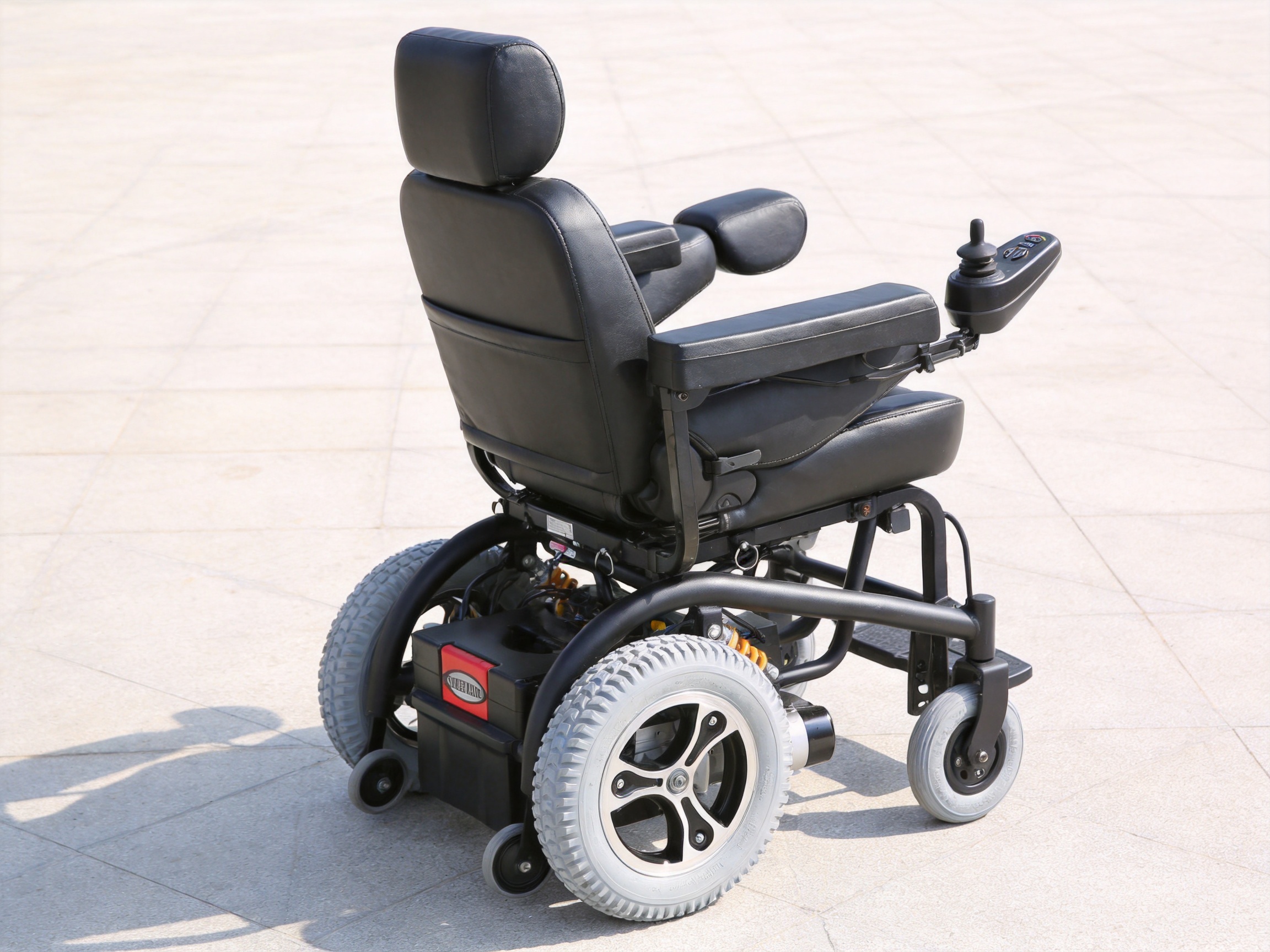
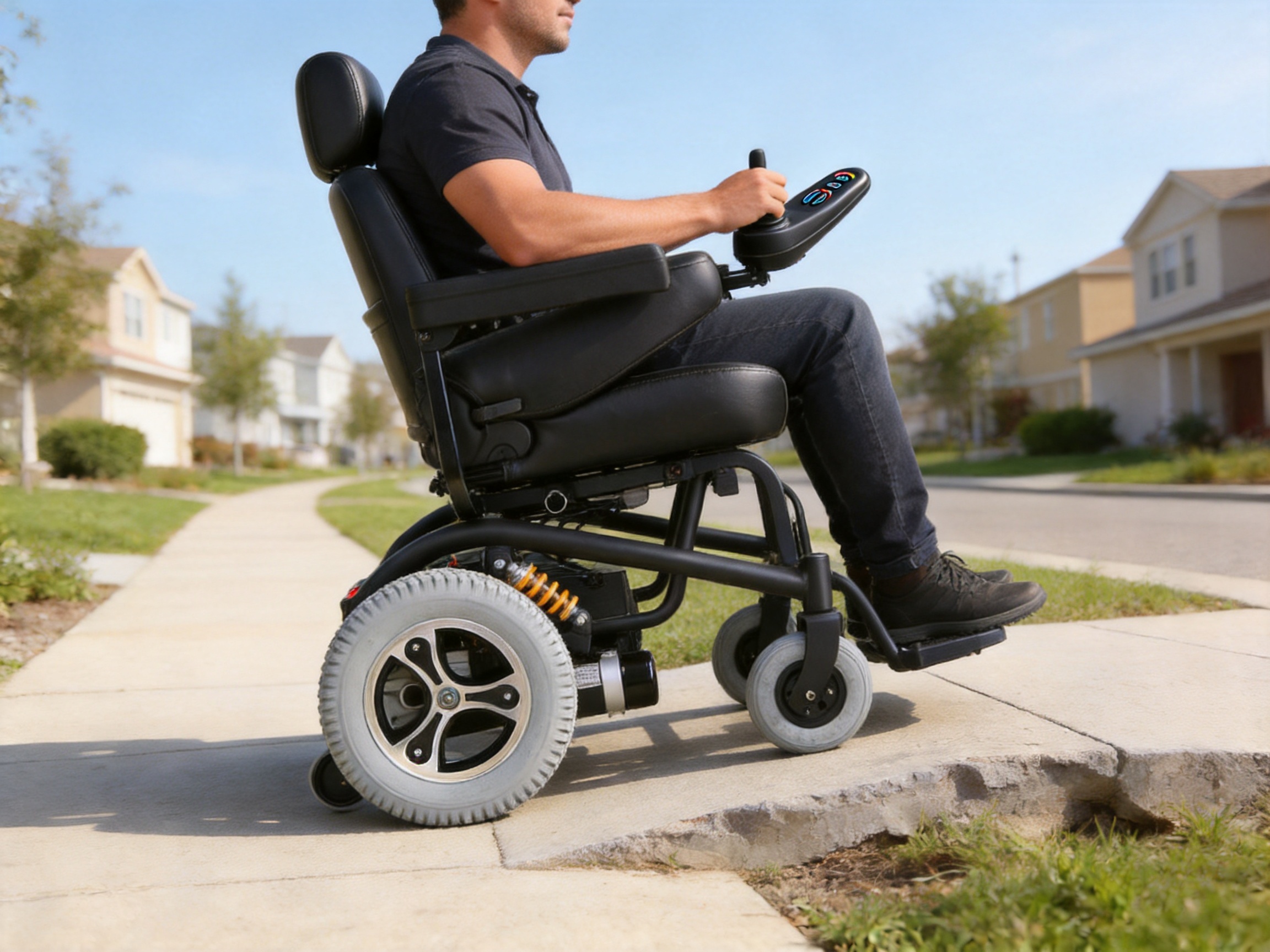
The iPower Sport takes a different approach. Its larger rear tires, front tires, rear suspension, anti-tip wheels, and four-wheel configuration are intended to create a more secure ride for outdoor use. This makes the wheelchair particularly suitable for users who require a stable powered platform rather than a minimal, ultra-light travel chair.
The overall dimensions are approximately 980 mm long, 600 mm wide, and 1,180 mm high. This footprint gives the chair a substantial presence without making it excessively wide for a heavy-duty model. The width may be suitable for many accessible entrances and paths, although users should always compare the chair’s dimensions with their home doors, ramps, elevators, storage areas, and transportation arrangements before purchase.
A maximum user weight of 120 kg, or approximately 265 lb, provides useful capacity for a broad range of adults. Weight capacity should always be considered together with clothing, personal belongings, accessories, and the operating environment. Staying within the specified limit supports safe handling, efficient braking, and proper motor performance.
Four-Wheel Stability and Outdoor Control
Four-wheel power wheelchairs are often selected by users who prioritize stability. Compared with narrow three-wheel mobility platforms, a four-wheel design can provide a broader base of support and predictable handling during straight-line travel. It can also feel more reassuring when the user is driving over outdoor surfaces or making gradual changes in direction.
The iPower Sport uses two drive motors, one on each side of the vehicle. This arrangement helps deliver balanced power to the drive wheels and supports controlled movement at low and moderate speeds. Dual-motor drive can also be useful when climbing gentle gradients, maneuvering across slightly uneven ground, or maintaining traction during ordinary outdoor travel.
The stated maximum driving gradient is 10 degrees. Actual performance on a slope depends on several factors, including the user’s weight, battery condition, tire pressure, surface texture, weather, load distribution, and the length of the incline. A gradual, dry, firm slope is a different challenge from a wet, loose, or sharply changing surface. Operators should use appropriate caution and follow safe driving practices on all inclines.
Anti-tip wheels add another layer of stability support. They are not a substitute for responsible driving, but they can help reduce the risk of excessive rearward tipping when the wheelchair encounters a change in elevation or travels on a gradient within its rated capability. The rear suspension also helps the chassis respond more smoothly to ordinary surface variations.
iPower Sport Hot popular four wheels power remote electronic wheelchair in dubai
Pneumatic Tires for a More Comfortable Ride
The wheelchair is equipped with 8-inch by 2.5-inch front tires and 14-inch by 3-inch rear tires. The larger rear tires are particularly important for outdoor performance because larger wheels can roll over small surface irregularities more effectively than very small wheels. They can also help maintain a smoother ride over pavement transitions, compact paths, and minor obstacles that may feel abrupt on a compact indoor chair.
Pneumatic tires contain air and therefore provide a degree of natural cushioning. When correctly inflated, they can absorb some vibration before it reaches the chassis and seat. This can contribute to improved comfort during longer trips, especially when combined with the rear suspension system. Tire pressure should be checked regularly, since underinflation can affect handling and range, while overinflation can reduce cushioning and traction.
Large pneumatic tires also support better outdoor confidence. They are suited to firm paved areas, accessible walkways, private roads, and similar surfaces. However, no powered wheelchair should be treated as an all-terrain vehicle. Deep mud, loose sand, standing water, steep uneven ground, and surfaces outside the manufacturer’s intended operating conditions may reduce safety and performance.
The combination of different front and rear tire sizes reflects a practical engineering decision. Smaller front tires support steering and help maintain a manageable overall footprint, while the larger rear tires provide drive traction and rolling comfort. This configuration is a useful alternative to chairs that use small solid wheels throughout the vehicle.
Rear Suspension and Chassis Comfort
Suspension is an important feature for users who spend meaningful amounts of time outdoors. Without suspension, impacts from cracks, thresholds, uneven paving, and compacted surfaces can transfer directly through the frame and seat. The iPower Sport includes rear suspension to help moderate these movements and provide a more comfortable ride.
Rear suspension can also help keep the drive wheels in contact with the ground. Maintaining contact is important for traction and controlled power delivery. When a wheel loses contact over an uneven section, the motor may not be able to deliver power as effectively. A properly designed suspension system helps the wheelchair respond more consistently to ordinary changes in the ground surface.
Suspension performance should be considered alongside tire pressure, user weight, and driving speed. Even a well-equipped wheelchair will feel less comfortable if it is driven too quickly over rough ground. Smooth operation begins with selecting an appropriate speed, anticipating surface changes, and avoiding abrupt steering or braking.
Comfort-Focused Seating for Longer Use
The model includes a leather-like cushion seat intended to support comfortable daily use. Seating comfort is essential because powered wheelchair users may remain seated for extended periods. A well-padded seating surface can reduce pressure from the frame and provide a more pleasant experience during neighborhood travel, shopping trips, outdoor visits, and other activities.
The adjustable seat back gives users an opportunity to find a more suitable sitting position. Individual preferences vary, and posture needs can change depending on the duration of a trip, clothing, body shape, and the type of activity. An adjustable backrest can help the user find a position that feels more natural than a fixed back.
Seat adjustment should be made while the wheelchair is stationary. Users should confirm that the backrest is securely positioned before driving. Comfort features are most effective when combined with appropriate posture, regular changes in position when possible, and professional advice where a user has specific seating or positioning requirements.
The chair’s seating design is intended for mobility comfort rather than medical treatment. The supplied product information identifies the device as non-medical for the United States market. It should therefore not be presented as a medical device, rehabilitation system, or substitute for clinical assessment. Customers with specialized positioning needs should consult a qualified healthcare or seating professional before selecting a powered wheelchair.
Dual-Motor Performance and Smooth Power Delivery
Two 24 V, 320 W motors provide the driving force. The motors are supplied in a dual configuration, with one motor working on each side. This approach supports balanced propulsion and helps the wheelchair move with controlled power on ordinary paved surfaces and mild outdoor gradients.
Dual motors can provide several practical advantages over a single-motor arrangement. They may improve torque distribution, support more consistent movement, and help the chair maintain useful performance when carrying a heavier user within its rated capacity. They also allow the drive system to work naturally with directional controls, making it possible to adjust the speed and direction of each side through the controller.
Motor output is only one part of overall performance. The battery condition, tire pressure, terrain, temperature, load, and driving style all influence acceleration and travel range. The 320 W rating should therefore be understood as a component specification rather than a guarantee of identical performance in every environment.
The maximum forward speed is 8 km/h, equivalent to approximately 5 miles per hour. This speed is suitable for practical outdoor mobility while still allowing the operator to maintain a reasonable level of control. Users should reduce speed in crowded areas, around corners, near doorways, on slopes, and whenever visibility or surface conditions are limited.
Electronic Braking for Controlled Stops
The power wheelchair uses an electromagnetic brake system. Electromagnetic braking is commonly used in powered mobility equipment because it can engage when the drive control is released or when power is interrupted. This supports controlled stopping and helps keep the chair stationary when it is not being driven.
Braking performance depends on surface conditions, slope, load, tire condition, and system maintenance. Operators should not rely on the brake system alone on a steep slope or unstable surface. Parking should be performed on firm, level ground whenever possible, and the wheelchair should be switched off according to the operating instructions when it is left unattended.
Electronic braking also complements the dual-motor system. Smooth acceleration and gradual deceleration reduce unnecessary stress on the drivetrain and can make the wheelchair easier to control. Good driving technique includes releasing the control gradually, allowing adequate stopping distance, and avoiding sudden changes in direction.
Lead-Acid Battery System
The wheelchair uses two 12 V, 40 Ah lead-acid batteries connected to create a 24 V system. Lead-acid batteries remain widely used in mobility equipment because they are familiar, readily serviceable, and capable of delivering the current required by electric drive motors. Their established use also makes replacement and maintenance procedures relatively straightforward in many markets.
The stated driving range is approximately 30 to 40 km, or 19 to 25 miles. This figure should be regarded as an indicative range rather than a guaranteed distance for every trip. Range is affected by rider weight, speed, gradient, surface quality, tire pressure, temperature, battery age, stop-and-start driving, and the use of accessories.
The charger specification is DC 24 V, 5 A, with an AC input range of 115 to 230 V. Charging time is listed as approximately 6 to 8 hours. Users should charge the batteries in a suitable, ventilated location and use the designated charger. The charging area should be protected from excessive moisture, heat, open flame, and sources of ignition.
Lead-acid batteries are heavier than many newer lithium battery systems. This additional weight contributes to the wheelchair’s overall mass and affects transport requirements. However, it can also provide a stable energy platform for a heavy-duty vehicle. Customers who regularly lift or load the chair should take the listed heaviest-part weight into account when planning transportation.
Range and Daily Travel Planning
A potential range of 30 to 40 km gives the chair useful capacity for many daily journeys. A user may be able to travel around a residential neighborhood, visit nearby shops, attend appointments, or explore accessible outdoor areas without recharging after every short trip. The practical range will depend on how the wheelchair is used and how carefully the batteries are maintained.
For reliable travel planning, users should consider the return journey rather than only the outbound distance. A route with hills, frequent stops, rough pavement, or strong wind may consume more energy than a level route. It is sensible to leave a battery reserve rather than operating until the battery is fully depleted.
Regular charging habits can support longer battery life. Batteries should not be left unused for extended periods without following appropriate storage and charging procedures. If the wheelchair will not be used for some time, the owner should follow the battery supplier’s recommendations for storage, periodic charging, and temperature conditions.
Transport and the Heaviest Part
The listed heaviest part weighs approximately 56 kg, or 123 lb. This information is important for families, caregivers, distributors, and users who need to move the wheelchair between locations. A vehicle lift, ramp, loading platform, or suitable transport system may be required.
Compared with some folding travel chairs, a heavy-duty four-wheel model may require more planning for transportation. Its advantage is a more substantial chassis, larger tires, suspension, and higher outdoor capability. Customers should evaluate the balance between transport convenience and driving performance before ordering.
When transporting the chair, it should be secured according to the transport equipment manufacturer’s instructions. Loose movement inside a vehicle can damage the wheelchair and create a safety risk. Batteries should also be handled in accordance with applicable transport and storage requirements.
Advantages Compared with Basic Compact Wheelchairs
The iPower Sport has several characteristics that can distinguish it from basic compact electric wheelchairs. Its larger rear tires are better suited to outdoor surfaces than very small indoor wheels. The rear suspension can provide a more forgiving ride than a rigid frame. The 120 kg weight capacity offers practical support for users who may exceed the capacity of lightweight travel chairs.
The dual 320 W motors also provide a more substantial drive system than the small motors commonly found in entry-level indoor chairs. This does not mean that the wheelchair should be used outside its specified conditions, but it does indicate a design emphasis on useful outdoor propulsion and steady movement.
The electromagnetic brake, anti-tip wheels, adjustable seat back, and four-wheel layout further support controlled daily operation. These features are particularly relevant to users who want more than a basic platform for short indoor distances.
Another point of differentiation is the balance between performance and simplicity. The wheelchair uses established lead-acid battery technology, a conventional 24 V electrical system, and a straightforward dual-motor configuration. These elements can make the product easier for distributors and service personnel to understand and maintain than a highly specialized system with uncommon components.
Advantages Compared with Very Lightweight Travel Models
Lightweight travel wheelchairs are valuable when frequent lifting, folding, or airline-style transport is the primary requirement. However, reducing weight often involves smaller wheels, a lighter frame, less suspension, and lower load capacity. Those design choices can limit comfort and confidence on outdoor surfaces.
The iPower Sport is intended for a different use profile. It prioritizes stable outdoor movement, seating comfort, range, and heavy-duty construction. The result is a chair that may be more appropriate for a user who drives regularly around a property, neighborhood, accessible park, commercial area, or paved outdoor route.
Customers should not select a wheelchair based solely on its lightest transport weight. The better choice depends on the user’s daily priorities. If a chair must be lifted into a car every day, low weight may be decisive. If the chair will be driven outdoors for longer periods, tire size, suspension, range, seating, and chassis stability may be more important.
Advantages Compared with Three-Wheel Mobility Platforms
Three-wheel platforms can offer a tight turning circle and may be convenient in certain indoor environments. However, some users prefer the more stable feel of a four-wheel design, particularly when traveling outdoors or when carrying a larger body weight within the rated capacity.
The four-wheel configuration of this model creates a broader support base and can provide more predictable straight-line tracking. The anti-tip wheels and rear suspension further reinforce its emphasis on stability. While turning space should still be considered, the design is intended to deliver a confident balance between maneuverability and outdoor support.
Four-wheel stability does not eliminate the need for careful driving. Users should avoid sharp turns at speed, keep both hands or the prescribed control interface positioned correctly, and slow down before changing direction. The benefits of the chassis are maximized when the chair is operated within its rated specifications.
Manufacturing and Engineering Strengths
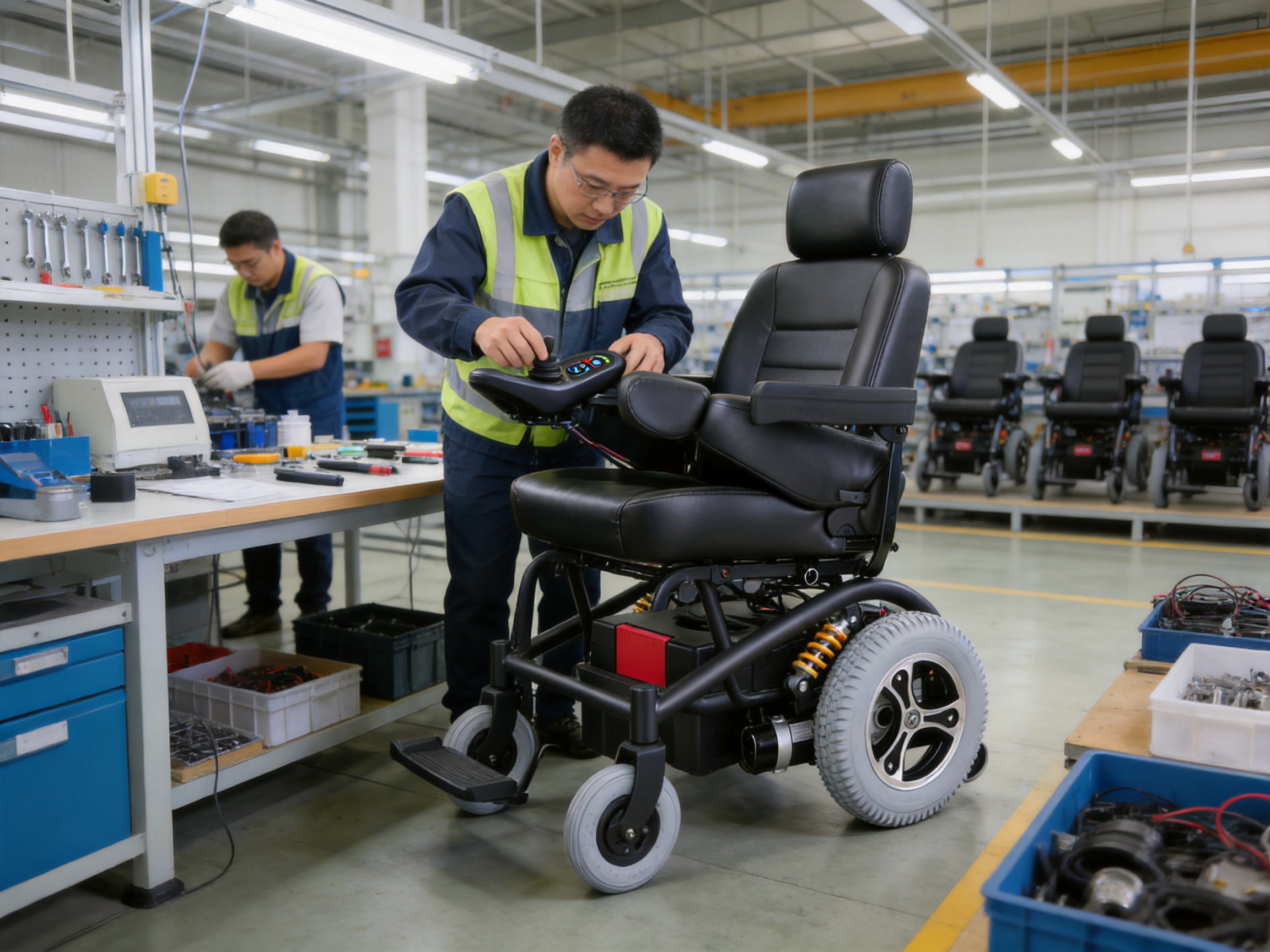
The product is manufactured by Suzhou Sweetrich Vehicle Industry Technology Co., Ltd., a high-tech mobility company based in Suzhou Industrial Zone, Jiangsu, China. Established in 2011, the company has accumulated more than ten years of experience in the research, development, and production of mobility scooters and power wheelchairs.
The company operates across a 60-acre site with a 30,000-square-meter factory. This scale provides a foundation for organized production, component management, assembly operations, quality control, and product development. A dedicated manufacturing environment can help coordinate the different stages required to produce a powered mobility vehicle, from frame construction and electrical integration to final inspection.
The company’s stated focus on research and development is important in a product category where comfort, reliability, safety, and ease of control must work together. Mobility equipment is not simply a collection of independent components. The chassis, motors, controller, batteries, brakes, tires, seat, and suspension must function as a coordinated system.
The company also owns intellectual property rights for its electric scooters and power wheelchairs. Intellectual property ownership can reflect investment in product design, engineering solutions, and the development of proprietary mobility technologies. It also supports a consistent product platform and can help the manufacturer refine future models based on engineering experience.
Advanced Product Design Approach
The manufacturing strength behind this wheelchair is reflected in the integration of several systems. The large rear tires must work with the motor output and rear suspension. The controller must regulate the dual motors smoothly. The electromagnetic brakes must respond appropriately to the drive system. The seat and backrest must be mounted securely to the chassis while providing practical comfort.
Scientific product design, as identified by the company, involves more than adding features. It requires selecting specifications that support a coherent use case. In this model, the 8 km/h speed, 10-degree rated gradient, 30 to 40 km stated range, 120 kg weight capacity, and four-wheel chassis form a package aimed at dependable personal mobility.
Production management is equally important. A well-organized factory can establish repeatable assembly methods, inspect incoming components, monitor electrical connections, verify mechanical fasteners, and conduct final checks before shipment. Consistency is especially valuable for mobility products because users depend on them for everyday transportation and independence.
The company reports strict production management and a commitment to reliability and quality. These principles are relevant to international customers who may need consistent specifications across multiple orders. They are also important for distributors that require dependable products, clear technical information, replacement parts, and stable cooperation with a factory.
Quality-Oriented Assembly Considerations
A power wheelchair requires careful assembly across mechanical, electrical, and user-contact areas. The frame must support the specified load. Wheel alignment must be appropriate for stable movement. Tires need to be fitted correctly and inflated to suitable levels. Motors and controllers must be connected securely. Battery wiring must be protected and correctly configured for the 24 V system.
Brake operation is another critical inspection point. The electromagnetic brake should engage and release in coordination with the control system. The anti-tip wheels should be installed securely, and the adjustable seat back should lock into its intended positions. A final inspection process helps identify issues before the product reaches the customer.
Factory quality management should also include attention to finish quality, packaging, labeling, manuals, charger compatibility, and shipment preparation. These details influence the customer’s first experience and can reduce avoidable service problems after delivery.
Because the company exports to America, Europe, Japan, Australia, the Middle East, Russia, and other markets, its production and documentation processes must support different distribution environments. Export experience can help a manufacturer understand varying customer expectations, voltage requirements, packaging needs, service structures, and market-specific product considerations.
International Supply and Customer Support
The company’s international export experience is a strength for wholesalers, mobility retailers, project buyers, and regional distributors. A manufacturer with established overseas relationships is more familiar with the requirements of international communication, production scheduling, packing, shipment coordination, and commercial documentation.
Long-term cooperation is particularly valuable in the mobility sector. Retailers and distributors often need more than a single shipment. They may require product training, technical specifications, spare parts, replacement batteries, service guidance, and assistance with future orders. A factory that emphasizes customer relationships can be better positioned to support these ongoing needs.
The company states that it follows the principles of quality first, credit above, and customer supreme. These principles support a business approach based on product consistency, responsible communication, and service cooperation. While every buyer should conduct its own inspection and due diligence, a clear quality philosophy is a positive foundation for supplier evaluation.
Use Cases for the Power Wheelchair
The wheelchair can serve users who need powered mobility for residential, community, and outdoor environments. It may be suitable for travel across paved neighborhoods, shopping areas, accessible public spaces, private grounds, and long indoor corridors where its dimensions can be accommodated.
Its 30 to 40 km stated range may be useful for users who want to combine several short journeys into one outing. The adjustable seat back and cushion seat can support longer periods of use, while the suspension and pneumatic tires are designed to make outdoor movement more comfortable.
It may also be appropriate for care facilities, accessible accommodation providers, outdoor venues, retirement communities, and mobility equipment retailers seeking a robust four-wheel product. Buyers in these sectors should consider user profiles, storage conditions, charging facilities, staff training, maintenance capabilities, and local regulations.
The product should be selected according to the user’s physical abilities and environment. A professional assessment may be appropriate for users with significant postural, transfer, pressure-management, or control requirements. The wheelchair’s standard features may not meet every specialized clinical need.
Maintenance for Reliable Operation
Routine maintenance helps preserve performance and safety. Tire pressure should be checked regularly, and tires should be inspected for cuts, excessive wear, embedded objects, or other damage. Pneumatic tires should be inflated according to the applicable operating guidance rather than adjusted by appearance alone.
The battery terminals and wiring should remain clean, dry, and securely connected. The charger should be inspected for damaged cables, loose plugs, or signs of overheating. Charging should stop if unusual odors, excessive heat, or visible damage is observed, and qualified service personnel should be consulted.
The seat, backrest, arm supports, and frame fasteners should be checked periodically. Any unusual looseness, noise, vibration, or change in steering response should be investigated before continued use. Braking behavior should also be monitored, especially if the wheelchair begins to roll after the control is released or requires more distance to stop.
Cleaning should be performed with suitable materials. Excessive water should not be directed at the controller, motors, battery compartments, charger connections, or other electrical components. The wheelchair should be stored in a dry, secure location and protected from extreme temperatures where possible.
Safe Operating Practices
Before driving, the user should ensure that the batteries have sufficient charge, the tires are in good condition, and the seat and controls are correctly positioned. The route should be checked for obstacles, steep transitions, loose surfaces, and areas with limited visibility.
Speed should be reduced around pedestrians, entrances, corners, ramps, and crowded spaces. Users should approach thresholds and surface changes slowly and as directly as possible. Sudden steering movements can affect stability, especially when traveling on a slope or uneven surface.
The wheelchair should not be driven through deep water or exposed to conditions that may damage the electrical system. Wet grass, mud, loose gravel, and slippery surfaces can reduce traction and braking performance. Users should avoid conditions beyond their skill level or the wheelchair’s intended operating capability.
When transferring into or out of the chair, the power should be switched off and the wheelchair should be positioned on stable, level ground. Where appropriate, a caregiver or trained assistant should provide support. The wheelchair should not be used as a passenger seat in a moving vehicle unless it has been specifically approved and secured for that purpose.
Who Should Consider This Model?
This power wheelchair may be a strong choice for adults who prioritize outdoor stability, useful range, comfortable seating, and a durable four-wheel platform. It is especially relevant to users who find compact indoor chairs too limited but do not require a fully specialized clinical seating system.
It may also suit distributors looking for a heavy-duty product with a clear specification package, established electrical components, and support from an experienced export manufacturer. The combination of dual motors, pneumatic tires, rear suspension, electromagnetic braking, and lead-acid batteries provides a practical configuration for a wide range of ordinary mobility applications.
Users who prioritize the lowest possible transport weight, frequent folding, airline travel, or extremely tight indoor maneuvering may prefer a different type of product. The correct decision depends on the user’s daily environment and the balance between outdoor capability and portability.
Technical Specification Table
| Specification | Details |
|---|---|
| Product type | Four-wheel power wheelchair |
| Category | Heavy-duty wheelchair |
| Overall dimensions | 980 mm L × 600 mm W × 1,180 mm H |
| Maximum forward speed | 8 km/h, approximately 5 mi/h |
| Maximum driving gradient | 10 degrees |
| Stated driving range | 30–40 km, approximately 19–25 miles |
| Weight capacity | 120 kg, approximately 265 lb |
| Suspension | Rear suspension |
| Front tire size | 8 × 2.5 inches |
| Rear tire size | 14 × 3 inches |
| Brake system | Electromagnetic brake |
| Battery system | Two 12 V 40 Ah lead-acid batteries |
| Charger | DC 24 V 5 A; AC input 115–230 V |
| Charging time | Approximately 6–8 hours |
| Motors | Two 24 V 320 W motors |
| Motor controller | 24 V 50 A controller |
| Heaviest part | 56 kg, approximately 123 lb |
| Market note | Non-medical device for the United States market |
Questions and Answers
What type of product is this?
It is a heavy-duty four-wheel electric power wheelchair designed for personal mobility. It combines dual motors, pneumatic tires, rear suspension, electromagnetic braking, and a cushioned adjustable seat back.
What is the maximum speed?
The listed maximum forward speed is 8 km/h, or approximately 5 miles per hour. Users should drive more slowly in crowded areas, on slopes, around corners, and on uneven or slippery surfaces.
How far can it travel on one charge?
The stated driving range is approximately 30 to 40 km, or 19 to 25 miles. Actual range varies according to rider weight, terrain, speed, battery condition, tire pressure, temperature, and driving style.
What is the maximum user weight?
The listed weight capacity is 120 kg, or approximately 265 lb. This limit should include the user, clothing, personal belongings, and any accessories carried on the wheelchair.
Is the wheelchair suitable for outdoor use?
Its large pneumatic tires, rear suspension, four-wheel layout, anti-tip wheels, and dual motors are intended to support outdoor mobility on suitable firm surfaces. It should not be treated as an unrestricted off-road vehicle, and users should avoid deep water, mud, loose terrain, and unsafe slopes.
What kind of batteries does it use?
The wheelchair uses two 12 V 40 Ah lead-acid batteries, forming a 24 V battery system. Lead-acid technology is widely used in mobility equipment and can be serviced through established battery supply channels.
How long does charging take?
The listed charging time is approximately 6 to 8 hours. Charging should be performed with the designated charger in a dry, ventilated, and appropriate location.
Does it have suspension?
Yes. The wheelchair has rear suspension, which helps reduce the effect of ordinary surface irregularities and contributes to a more comfortable outdoor ride.
What braking system does it use?
It uses an electromagnetic brake system. Users should still drive responsibly, maintain safe stopping distances, and park on stable, level ground whenever possible.
Is the seat adjustable?
The product includes an adjustable seat back and a leather-like cushion seat. Adjustments should be made while the wheelchair is stationary, and the backrest should be secured before driving.
Is it a medical device?
The supplied product information identifies it as a non-medical device for the United States market. Users with specialized seating, positioning, or clinical mobility needs should seek professional advice before purchase.
How heavy is the heaviest part?
The heaviest part is listed at approximately 56 kg, or 123 lb. Buyers should plan suitable loading equipment, vehicle access, storage, and assistance for transportation.
What makes it different from a basic indoor wheelchair?
It offers larger rear pneumatic tires, rear suspension, dual 320 W motors, a higher 120 kg capacity, electromagnetic braking, and a four-wheel outdoor-oriented chassis. These features are intended to provide greater stability and comfort than a minimal indoor model.
Who manufactures the product?
The product is manufactured by Suzhou Sweetrich Vehicle Industry Technology Co., Ltd., a Suzhou-based mobility manufacturer established in 2011. The company operates a 30,000-square-meter factory on a 60-acre site and exports mobility products to multiple international markets.
Conclusion
The iPower Sport four-wheel power wheelchair is designed for users who need more than short-distance indoor mobility. Its heavy-duty configuration combines a stable four-wheel chassis, large pneumatic tires, rear suspension, anti-tip wheels, a cushioned adjustable seat back, dual 320 W motors, electromagnetic braking, and a practical 30 to 40 km stated range.
Compared with lightweight indoor or travel models, it places greater emphasis on outdoor comfort, stability, load capacity, and dependable daily performance. The 120 kg capacity and 8 km/h maximum speed make it a practical option for many adult users, while the 24 V lead-acid battery system offers familiar operation and established serviceability.
Its value also depends on the manufacturing organization behind it. Suzhou Sweetrich Vehicle Industry Technology Co., Ltd. brings more than a decade of mobility product experience, a substantial production facility, research and development capabilities, intellectual property ownership, export experience, and a stated commitment to strict production management and customer cooperation.
For buyers seeking a robust powered wheelchair for suitable paved outdoor routes, residential areas, accessible facilities, and everyday independence, this model offers a balanced combination of performance and comfort. As with any powered mobility product, final selection should consider the user’s body size, seating needs, transport arrangements, charging environment, route conditions, and local requirements.
References
Product specification sheet for the four-wheel power wheelchair, including dimensions, speed, range, capacity, motor, battery, charger, tire, brake, and suspension information.
Manufacturer profile and company information supplied for Suzhou Sweetrich Vehicle Industry Technology Co., Ltd.
General principles of powered wheelchair operation, battery charging, tire maintenance, braking, and outdoor mobility safety.
General engineering considerations for four-wheel mobility platforms, pneumatic tires, rear suspension, dual-motor drive systems, and electromagnetic braking.
General guidance for evaluating mobility equipment according to user capacity, intended environment, transportation requirements, and seating needs.