
 +86-(0)512-82283871
Content
- 1 Understanding the Purpose of an Outdoor Power Wheelchair
- 2 Key Product Specifications
- 3 Dual-Motor Performance for Outdoor Travel
- 4 Large Tires, Rear Suspension, and Surface Adaptability
- 5 Adjustable Seating for Different Users
- 6 Joystick Control and User Accessibility
- 7 Electromagnetic Braking and Controlled Stopping
- 8 Battery Capacity, Charging, and Travel Range
- 9 Weight Capacity and Heavy-Duty Construction
- 10 Optional Features and Configuration Flexibility
- 11 Advantages Compared with Simpler Mobility Products
- 12 Manufacturing Strengths and Product Development Approach
- 13 Quality Management and Reliability Considerations
- 14 Maintenance Recommendations
- 15 Safety Practices for Outdoor Use
- 16 Transport, Storage, and Everyday Practicality
- 17 Who May Benefit from This Model?
- 18 How to Compare the Chair with Competitors
- 19 Purchasing Checklist
- 20 Q&A
- 20.1 Is the iPower GTS Plus a medical device?
- 20.2 What is the maximum user weight?
- 20.3 How fast can it travel?
- 20.4 What is the expected driving range?
- 20.5 Can it travel outdoors?
- 20.6 Does it have suspension?
- 20.7 Can the joystick be used on either side?
- 20.8 What type of batteries does it use?
- 20.9 How long does charging take?
- 20.10 What kind of braking system is installed?
- 20.11 Is the chair easy to transport?
- 20.12 Are lights included?
- 20.13 Is the power tilt and lift system included?
- 20.14 What makes this model different from a basic indoor chair?
- 20.15 How should the tires be maintained?
- 20.16 Where can customers obtain more information?
- 21 Conclusion
- 22 References
- 23 Product: iPower GTS Plus More popular type second hand off road light power electric electronic wheelchair for the elderly
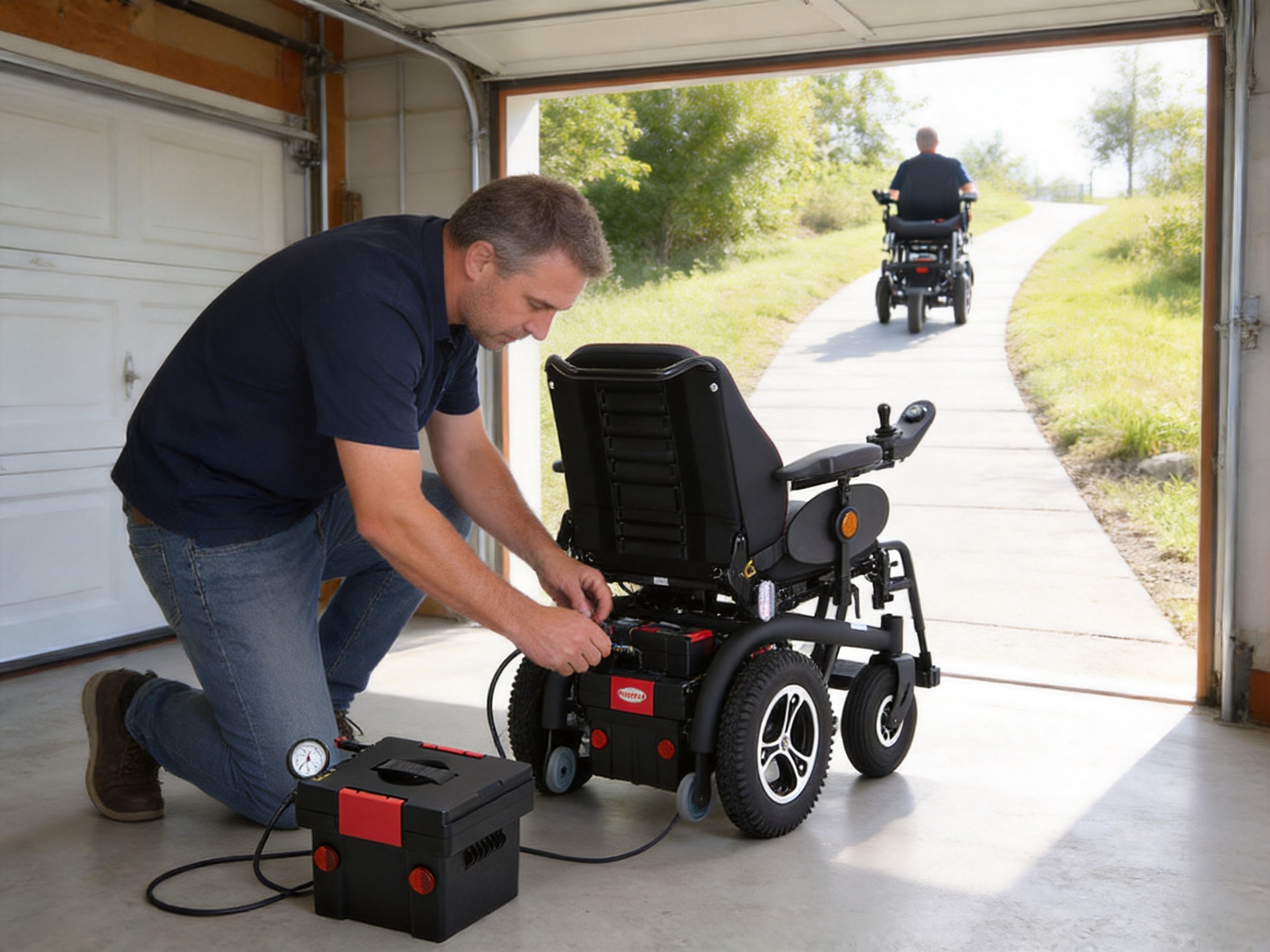
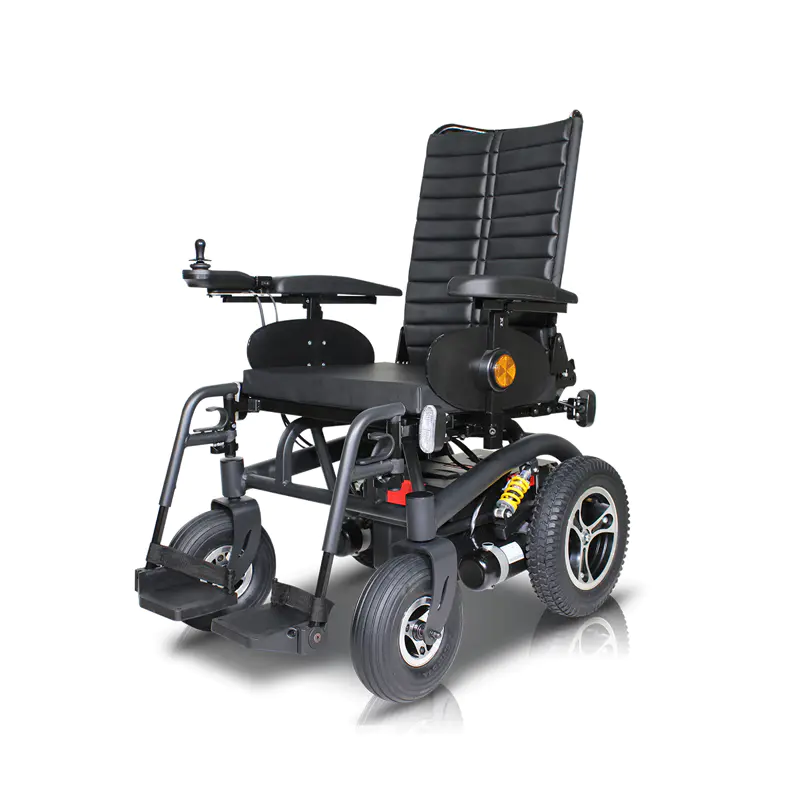
For people who need dependable powered mobility beyond smooth indoor floors, an outdoor-capable power wheelchair can make a meaningful difference in everyday independence. The iPower GTS Plus is designed for users who want a stable, powerful, and adaptable electric wheelchair for neighborhood travel, paths, ramps, and other outdoor environments. Its configuration combines a high-output dual-motor system, large pneumatic tires, rear suspension, adjustable seating elements, and a joystick control system that can be positioned for either side.
This model belongs to the heavy-duty wheelchair category and is intended to support users who need greater performance than a basic indoor power chair can provide. It has a stated weight capacity of 136 kilograms, or 300 pounds, a maximum forward speed of 8 kilometers per hour, and a stated driving range of approximately 30 to 40 kilometers under suitable operating conditions. These specifications make it suitable for a wide variety of mobility requirements, although actual performance depends on user weight, terrain, temperature, tire pressure, battery condition, and driving habits.
The product is identified as a non-medical device for the United States market. It should therefore be considered a mobility product rather than a substitute for professional medical advice, rehabilitation assessment, or a clinical seating evaluation. Before purchase, users should confirm that the chair’s dimensions, control layout, seat configuration, battery system, and intended operating environment match their individual needs.
Understanding the Purpose of an Outdoor Power Wheelchair
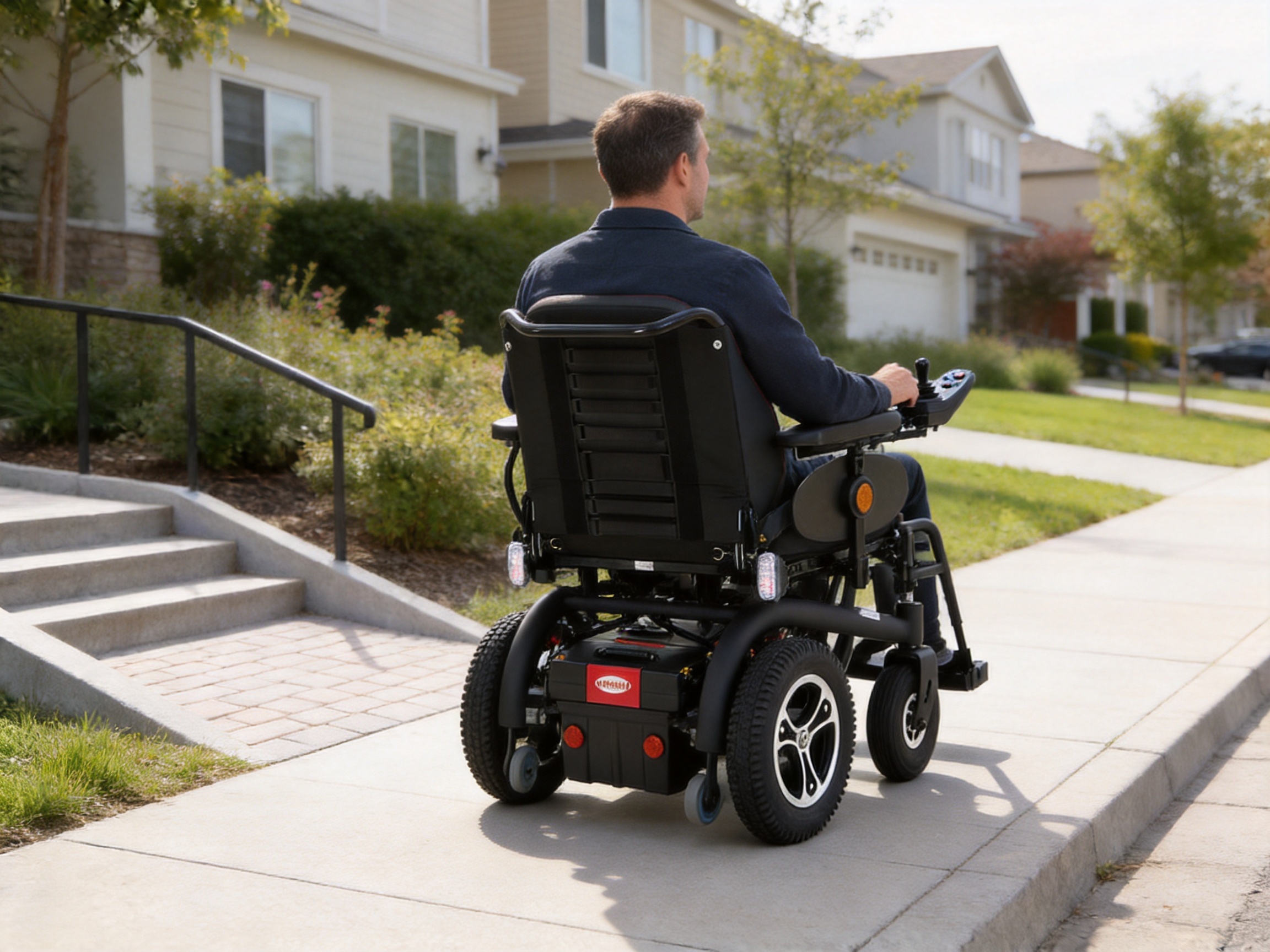
Traditional manual wheelchairs can be difficult to propel over long distances, slopes, loose surfaces, and uneven outdoor ground. Lightweight indoor power chairs may be easy to maneuver in a home or office, but they are not always designed for extended outdoor use. An outdoor-oriented power wheelchair must provide a combination of traction, motor power, ground clearance, stability, seating comfort, and braking control.
The iPower GTS Plus is configured around these requirements. It uses two 350-watt motors, for a total motor rating of 700 watts. This dual-motor arrangement gives the chair dedicated drive power for the left and right sides. In practical terms, a dual-motor platform can support controlled turns and provide useful traction when traveling across surfaces that are more demanding than polished indoor floors.
The chair also uses a 10-inch front wheel and 14-inch pneumatic rear tires. Larger tires generally roll more comfortably over small surface imperfections than very small solid casters. Pneumatic tires can also provide a degree of cushioning, although they require regular pressure checks and may be affected by punctures. The combination of a relatively large front wheel and larger rear tires is an important part of the model’s outdoor-oriented design.
Rear suspension further contributes to the platform’s intended use. Suspension does not eliminate every impact, and it cannot make an unsafe surface safe. However, it can help the chair respond more smoothly when traveling over minor irregularities, compacted paths, driveway transitions, or other outdoor surfaces. A properly adjusted seat, correct tire pressure, and sensible driving speed remain essential for comfort and stability.
Key Product Specifications
| Specification | Stated Information |
|---|---|
| Product type | Heavy-duty electric power wheelchair |
| Overall dimensions | 1045 mm long × 625 mm wide × 1080 mm high |
| Maximum forward speed | 8 km/h, approximately 5 miles per hour |
| Maximum driving gradient | 10 degrees |
| Stated driving range | 30–40 km, approximately 19–25 miles |
| Weight capacity | 136 kg, approximately 300 pounds |
| Suspension | Rear suspension |
| Front tire | 10 × 3 inches |
| Rear tires | 14 × 3 inches, pneumatic |
| Brake system | Electromagnetic brake |
| Battery system | Two 12-volt 40-amp-hour lead-acid batteries |
| Charger | DC 24V, 5A; AC 115–230V input |
| Charging time | Approximately 6–8 hours |
| Motor system | Two 24V, 350W motors |
| Motor controller | 24V/50A controller system |
| Heaviest part | Stated as 59 kg in the product information |
Specifications are useful for initial comparison, but they should not be viewed in isolation. A chair with a higher motor rating is not automatically the best choice for every person. The most suitable model depends on the user’s posture, transfer method, home layout, transportation arrangements, local terrain, and ability to operate the controls safely.
Dual-Motor Performance for Outdoor Travel
One of the most important advantages of the iPower GTS Plus is its 700-watt total motor package. The chair uses two 24-volt, 350-watt motors. This arrangement is intended to provide the driving force needed for a heavier outdoor platform while maintaining independent drive on both sides.
Dual motors can be particularly useful when the chair is turning, climbing a moderate incline, or crossing a surface where one wheel may temporarily encounter more resistance than the other. Each motor drives its respective side, and the control system manages movement according to joystick input. This supports a compact turning response and allows the chair to maneuver without the need for a large turning circle.
The stated maximum forward speed is 8 kilometers per hour. This is approximately 5 miles per hour, making the chair suitable for controlled travel around residential areas, public paths, shopping environments, and other locations where local regulations permit powered wheelchair use. Speed should always be adjusted to the surface, visibility, pedestrian traffic, slope, weather, and the operator’s confidence.
Motor performance is also influenced by battery condition. A fully charged battery may deliver stronger performance than a partially charged or aged battery. Cold temperatures, heavy loads, underinflated tires, repeated hill climbing, and rough surfaces can reduce the available range. For this reason, users should plan outdoor routes with a reserve of battery capacity rather than relying on the maximum published figure.
Compared with a basic indoor power chair, the dual-motor system and larger tires give this model a stronger outdoor focus. Compared with a very large commercial or institutional chair, its width of 625 millimeters may offer a more manageable footprint for residential paths and standard access points. However, users should measure doorways, ramps, elevators, vehicle loading areas, and storage locations before ordering.
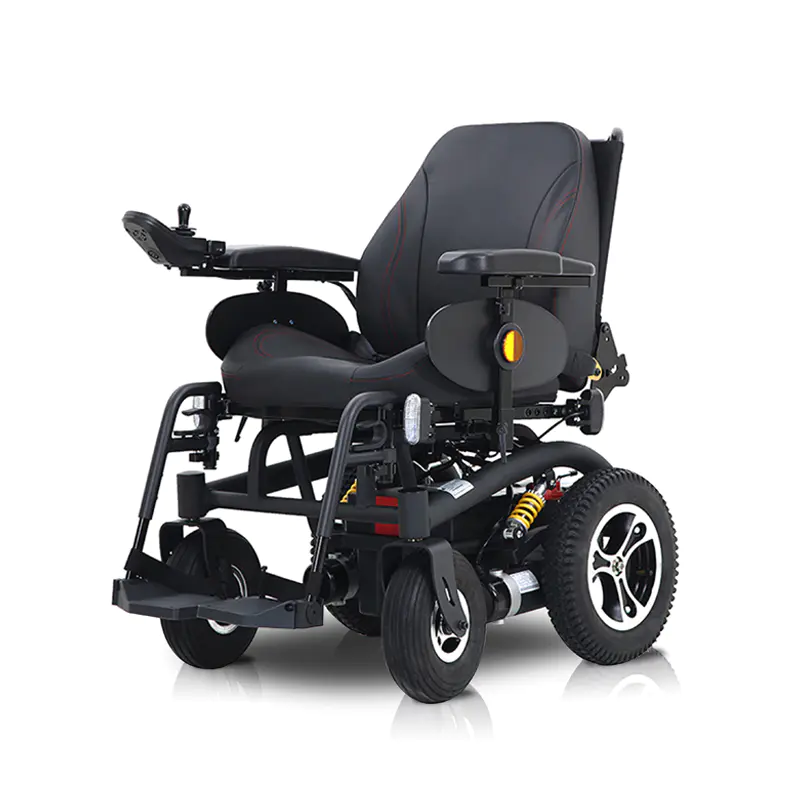
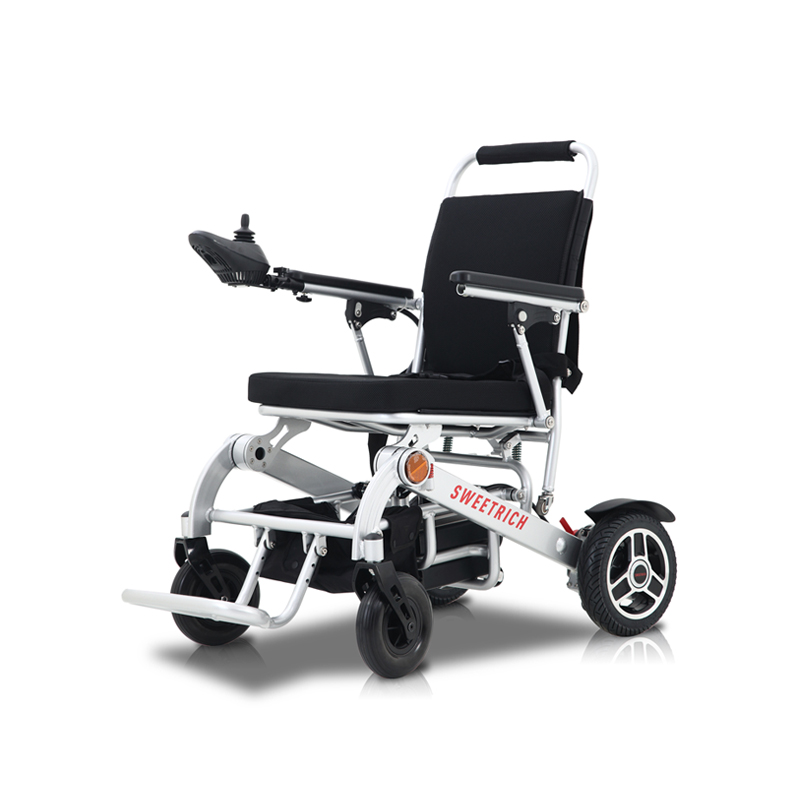
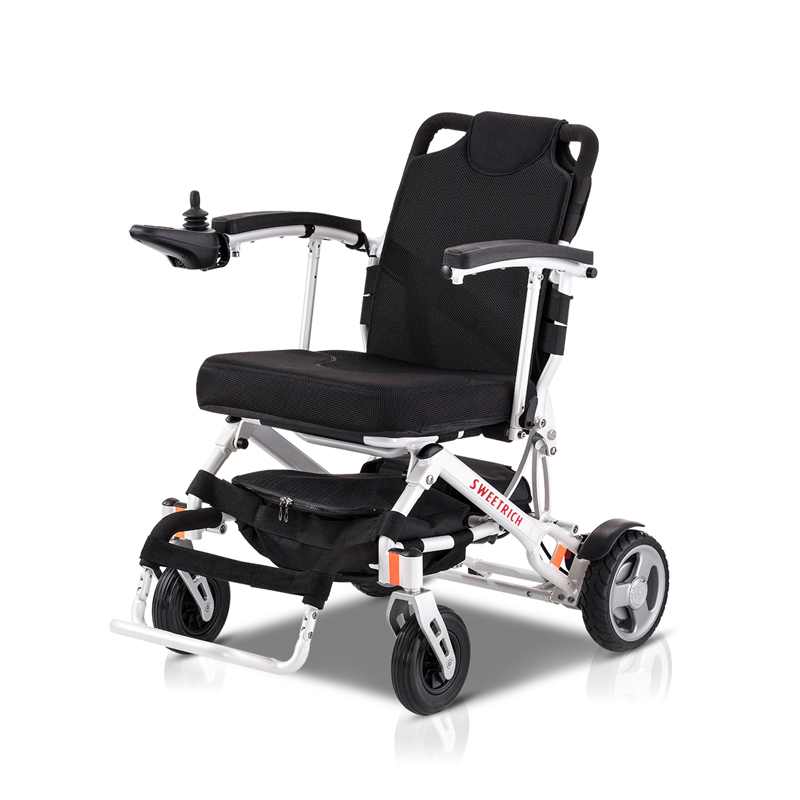
iPower GTS Plus More popular type second hand off road light power electric electronic wheelchair for the elderly
Large Tires, Rear Suspension, and Surface Adaptability
Wheel size has a direct effect on how a power wheelchair responds to outdoor surfaces. Small wheels can drop into shallow gaps or catch on uneven edges more easily. Larger wheels are generally better able to roll over minor obstacles and transitions. The 10-inch front wheel helps the chair move across ordinary outdoor irregularities, while the 14-inch rear pneumatic tires support traction and rolling comfort.
Pneumatic tires contain air and can absorb some vibration from the ground. They may provide a more comfortable ride than rigid solid tires in certain conditions, particularly on compacted paths, paved walkways, and mildly uneven ground. Their performance depends on maintaining the recommended pressure. Low pressure can increase rolling resistance and reduce handling precision, while excessive pressure can make the ride firmer and reduce the tire’s ability to conform to the surface.
Because pneumatic tires can be punctured, owners should inspect them regularly. A basic maintenance routine should include checking pressure, examining the tread, looking for cuts, and confirming that wheel fasteners are secure. Users who frequently travel on rough ground should consider carrying an appropriate repair solution or arranging access to service support.
The rear suspension is another feature that separates this model from simpler designs. Suspension can reduce the effect of small bumps and help keep the chair’s drive wheels engaged with the ground. This may improve ride quality and traction when the chair travels over a mildly uneven surface. It is not designed to authorize travel over dangerous terrain, steep cross slopes, deep mud, loose gravel, or obstacles beyond the chair’s capability.
The stated maximum driving gradient is 10 degrees. This figure should be interpreted carefully. A slope’s surface condition, length, direction, moisture, load, battery level, and stopping space all affect safe operation. A short, dry, straight ramp may be easier to manage than a longer slope with a cross angle or slippery surface. Users should avoid exceeding the manufacturer’s guidance and should follow local accessibility and safety recommendations.
Adjustable Seating for Different Users
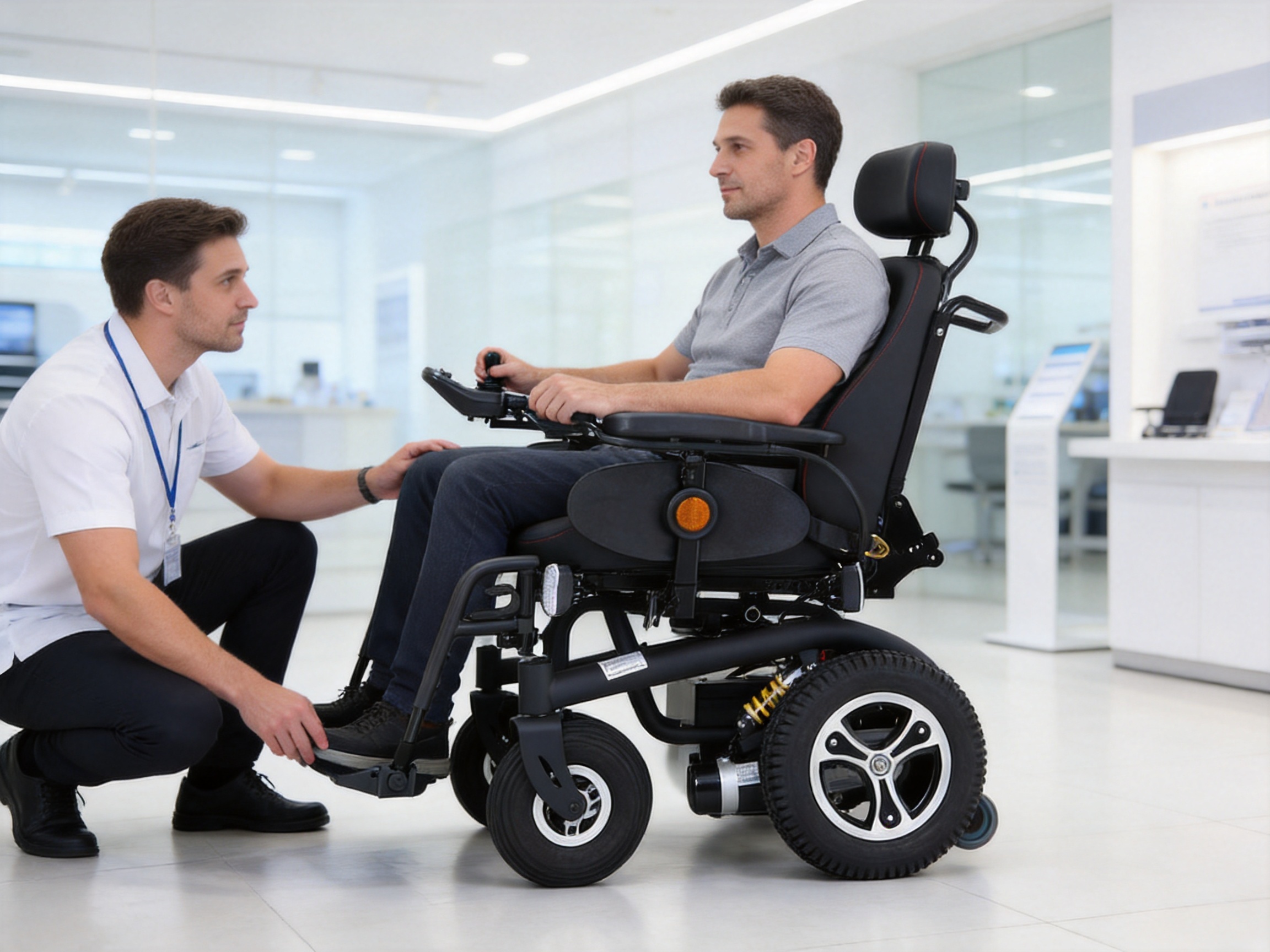
Adjustability is a significant advantage for a power wheelchair intended for a broad range of users. The iPower GTS Plus includes adjustable seat width and adjustable armrest height. These features can help accommodate differences in body size, clothing, posture, and transfer technique.
Seat width affects both comfort and positioning. A seat that is too narrow may create pressure at the hips and restrict clothing or movement. A seat that is too wide may provide insufficient lateral support and may make joystick operation or arm positioning less natural. The ability to adjust the seat width allows the chair to be configured more closely to the user’s body than a completely fixed seating system.
Armrest height adjustment can also improve comfort. The armrests should support the user’s forearms without forcing the shoulders upward or allowing the arms to hang unsupported. Proper arm position can reduce fatigue during extended driving and may help the user operate the joystick more accurately. Adjustments should be completed carefully and checked before use.
Seating comfort is not only a matter of softness. It includes posture, pressure distribution, hip alignment, back support, leg position, arm support, and the user’s ability to see and reach the controls. Individuals with significant posture or pressure-management needs should seek a professional seating assessment. The standard adjustment range may not replace a customized clinical seating system.
The chair’s width of 625 millimeters gives it a relatively compact external profile for a heavy-duty outdoor model, but the actual usable seat width should be confirmed with the supplier. Buyers should also request any available information about seat height, cushion dimensions, backrest angle, footrest configuration, and armrest clearance when those measurements are important to the purchase decision.
Joystick Control and User Accessibility
The joystick is the primary interface between the user and the chair. The product supports joystick use on either side, which is valuable for people who have stronger or more reliable control on one side of the body. It can also benefit users who need to change the control position during transfers or who share the chair with different seating preferences.
An optional swing-away controller mount is available. A swing-away design can make lateral transfers easier by moving the control module out of the way. It may also reduce the risk of the joystick being struck when the user approaches a table or desk. The exact mechanism and compatibility should be confirmed before ordering, especially if the user has limited arm movement or relies on a particular transfer technique.
Joystick operation should be practiced in a safe, open area before outdoor travel. The user should learn how small movements affect speed and direction, how to stop smoothly, and how the electromagnetic brake responds when the joystick is released. New users should begin at low speed and avoid crowded areas until they are comfortable with acceleration, turning, reversing, and obstacle awareness.
The controller should be protected from unnecessary moisture, impact, and contamination. Although outdoor mobility products may be used in a variety of conditions, electronic controls are not automatically waterproof. Users should follow the operating and cleaning instructions supplied with the chair and avoid leaving the controller exposed to heavy rain or standing water.
Electromagnetic Braking and Controlled Stopping
The iPower GTS Plus uses an electromagnetic brake system. This type of brake is commonly associated with powered mobility equipment because it can engage when the drive command is released. It is intended to help the chair stop and remain stationary during normal operation.
Braking performance is affected by slope, load, tire condition, surface material, and battery or controller status. The operator should never rely on the brake alone to hold the chair on an unsuitable incline. When parked, the user should select a stable, level location whenever possible and follow the manufacturer’s parking instructions.
Before each journey, the operator should confirm that the joystick returns correctly, the chair starts and stops as expected, and there are no unusual noises or warning indicators. If the chair rolls unexpectedly, stops unevenly, or behaves differently from normal, it should not be used until it has been inspected by a qualified service provider.
Electromagnetic braking is an important advantage over a basic free-rolling mobility device because it integrates braking with the electronic drive system. However, it is one part of a complete safety system. Safe driving habits, route planning, visibility, appropriate speed, and regular maintenance remain equally important.
Battery Capacity, Charging, and Travel Range
The chair is equipped with two 12-volt, 40-amp-hour lead-acid batteries. Together, the batteries provide the 24-volt electrical system required by the motors and controller. Lead-acid batteries are widely used in mobility equipment because they are familiar, serviceable, and available through many mobility product channels.
The stated driving range is 30 to 40 kilometers, or approximately 19 to 25 miles. This is a useful planning reference, not a guaranteed distance for every operating situation. Range testing is normally performed under defined conditions, while real-world use can involve hills, repeated stops, uneven surfaces, heavy loads, tire pressure changes, and temperature variations.
Charging is specified at approximately 6 to 8 hours. The charger is listed as DC 24V/5A with AC 115–230V input, giving it compatibility with a broad range of common electrical supplies when used correctly. Users should charge the batteries in a dry, ventilated area and use the charger intended for the chair.
Battery longevity depends on charging habits and storage conditions. Users should avoid allowing the batteries to remain deeply discharged for extended periods. The chair should be charged according to the supplier’s instructions after use or when the battery indicator shows that charging is needed. If the product is stored for a long time, the batteries should be maintained according to the battery manufacturer’s recommendations.
Lead-acid batteries are heavier than many modern lithium battery systems. That weight contributes to the overall mass of the wheelchair, but it can also provide a stable low center of gravity. Buyers who need frequent vehicle transport should consider the chair’s total weight, battery removal options, loading equipment, and the stated heaviest-part weight. The product information lists the heaviest part as 59 kilograms, although buyers should confirm this figure because the listed equivalent pound value appears inconsistent.
Weight Capacity and Heavy-Duty Construction
The stated weight capacity is 136 kilograms, or 300 pounds. This capacity is an important advantage for users who require more support than a standard lightweight power chair can offer. It also allows the chair to accommodate the user’s clothing, personal items, and certain accessories, provided the combined load remains within the manufacturer’s limit.
Weight capacity should not be interpreted as an invitation to overload the chair. Excess weight can affect braking distance, range, climbing ability, tire performance, and stability. Heavy items should be stored securely and positioned as recommended by the supplier. Concentrating weight too far forward, backward, or to one side may change the chair’s handling characteristics.
A heavy-duty design often provides a stronger overall platform, but greater strength may come with additional weight. This is why the chair’s dimensions and component weights should be evaluated together. A model may fit through a doorway yet still be difficult to lift into a vehicle. Owners should plan how the chair will be transported, stored, serviced, and charged.
The iPower GTS Plus measures 1045 millimeters in length, 625 millimeters in width, and 1080 millimeters in height. These dimensions should be compared with the user’s home entrances, interior corridors, elevator doors, accessible ramps, and storage area. Buyers should also measure the turning space near beds, bathrooms, kitchen counters, and seating areas.
Its relatively narrow width may be helpful in residential environments, while the outdoor wheel and suspension configuration supports travel beyond the home. This balance between a manageable footprint and heavy-duty capability is one of the product’s strongest practical advantages.
Optional Features and Configuration Flexibility
The product information identifies several optional features. These include a swing-away controller mount, a light package, and a power tilt and lift system described as an upcoming option in the supplied material. Optional equipment may allow the chair to be configured for different users, climates, travel patterns, and care requirements.
A light package can improve visibility in low-light conditions and may help other people see the chair. It should not be considered a replacement for reflective clothing, route lighting, or compliance with local traffic and mobility regulations. Users should confirm what the light package includes and whether it is installed at the factory or supplied separately.
A swing-away joystick mount can support transfers and improve approach clearance. It is especially relevant to users who transfer from the side or need to position the chair close to a desk, dining table, or vehicle seat. The compatibility of this option with the user’s preferred joystick side should be confirmed in advance.
The listed power tilt and lift option may be useful for users who need changes in seating position or additional assistance with posture. Because the supplied information indicates that this feature was planned or forthcoming, customers should request current availability, operating limits, maintenance requirements, and compatibility before including it in a purchase agreement.
Configuration flexibility can help the chair serve users with different requirements, but every added component may affect weight, balance, power consumption, and service needs. A knowledgeable supplier should explain the effect of each option rather than treating accessories as interchangeable additions.
Advantages Compared with Simpler Mobility Products
The iPower GTS Plus offers several characteristics that distinguish it from a basic indoor power wheelchair or a lightweight travel chair.
Outdoor-Oriented Drive System
The 700-watt total motor package is designed for more demanding travel than a small indoor chair. The dual 350-watt motors provide a strong foundation for outdoor movement, moderate slopes, and heavier user loads.
Large Wheel Configuration
The 10-inch front wheel and 14-inch pneumatic rear tires are larger than the wheels commonly found on compact indoor products. This configuration supports smoother rolling over ordinary outdoor imperfections and helps maintain traction on appropriate surfaces.
Rear Suspension
Rear suspension can improve comfort and ground contact on mildly uneven terrain. It gives the platform a more outdoor-focused character than a rigid chair designed solely for smooth floors.
Adjustable Seating
Adjustable seat width and armrest height make the chair more adaptable to different body sizes and postural preferences. These adjustments may improve comfort and driving control over longer periods.
Side-Selectable Joystick
The ability to position the joystick for either side supports users with different strength, reach, or coordination patterns. It also provides greater flexibility during transfers and seating assessments.
Heavy-Duty Capacity in a Manageable Footprint
The 136-kilogram capacity is paired with a stated width of 625 millimeters. This combination may appeal to users who need stronger support but still need to navigate residential environments. Suitability must be verified through actual measurements.
Wide-Voltage Charger Input
The charger is specified for AC 115–230V input. This broad input range can be convenient for customers operating in different electrical markets, provided the charger is used according to the correct local electrical requirements.
Manufacturing Strengths and Product Development Approach
The manufacturer, Suzhou Sweetrich Vehicle Industry Technology Co., Ltd., is described as a high-tech company established in 2011 in Suzhou Industrial Zone, Jiangsu, China. The company operates from a site covering approximately 60 acres and has a stated factory area of 30,000 square meters. More than ten years of experience in researching, developing, and producing mobility scooters and power wheelchairs gives the company a focused background in the powered mobility sector.
A specialized manufacturing history can be valuable because mobility products require the integration of mechanical structures, motors, electronic controllers, battery systems, seating components, braking systems, and user-interface controls. A company that concentrates on these products can develop knowledge across the entire mobility platform rather than treating the wheelchair as a collection of unrelated parts.
The company states that it owns intellectual property rights for its electric scooters and power wheelchairs. Intellectual property can reflect investment in product design, control systems, chassis arrangements, and user-oriented features. It may also support the company’s ability to refine products for different markets and applications.
The company also describes its products as incorporating advanced control technology and driving systems. In the iPower GTS Plus, the motor controller, joystick, electromagnetic brake, battery system, and dual-motor drive must work together to create predictable movement. The value of this integration lies not only in individual component ratings but also in how consistently the complete system responds.
Scientific product design and strict production management are identified as company priorities. For a power wheelchair, production quality should include accurate frame assembly, reliable wiring, secure battery connections, correct controller installation, dependable wheel alignment, and inspection of moving components. Consistency is particularly important because a small assembly problem can affect steering, braking, range, or user confidence.
The manufacturer reports that its products are exported to America, Europe, Japan, Australia, the Middle East, Russia, and other markets. International distribution can indicate experience with varied customer expectations, operating conditions, packaging requirements, and product configurations. Customers should still confirm the exact compliance documentation, warranty terms, service arrangements, and market-specific instructions that apply to the model being purchased.
Quality Management and Reliability Considerations
Reliability in a powered wheelchair is built through the interaction of design, materials, manufacturing control, testing, maintenance, and user education. No mobility product is maintenance-free, and no specification sheet can guarantee identical performance in every environment. Nevertheless, a company’s production discipline and experience can contribute to more consistent products.
The manufacturer’s stated quality-first approach is relevant to buyers who depend on a wheelchair for daily activities. Quality should be evaluated through clear specifications, traceable component information, practical service support, replacement-part availability, and transparent warranty conditions. Before purchase, customers should ask how warranty claims are handled, where service is performed, and which parts are considered routine replacements.
Important service items may include batteries, chargers, tires, inner tubes, joystick modules, controllers, electromagnetic brake components, armrest hardware, suspension parts, and seat adjustments. The availability of these parts can influence the chair’s useful life. A product that can be repaired and supported over time may offer better long-term value than a cheaper product with limited service access.
Quality also includes packaging and delivery preparation. A power wheelchair should be protected from impact during transportation, and movable components should be secured. Upon delivery, the buyer should inspect the frame, wheels, controls, armrests, foot supports, batteries, charger, and accessories before regular use. Any shipping damage should be reported promptly.
Maintenance Recommendations
Regular maintenance helps preserve safety, performance, and battery range. The owner’s manual should always take priority, but a general maintenance routine can include the following areas.
Tires and Wheels
Check pneumatic tire pressure regularly and keep the tires within the recommended range. Inspect for cuts, punctures, uneven wear, and embedded objects. Confirm that wheel fasteners are secure and that the wheels rotate without abnormal resistance.
Batteries and Connections
Inspect the battery compartment and connections for corrosion, looseness, or damage. Charge the batteries using the supplied charger and avoid placing the charger where it can be exposed to water or excessive heat. Battery performance should be monitored over time, particularly if the range drops noticeably.
Joystick and Controller
Keep the joystick and controller clean and dry. Test forward, reverse, turning, and stopping in a safe area. If the joystick feels loose, sticks, or fails to return to neutral, discontinue use until the issue has been assessed.
Braking and Suspension
Pay attention to changes in stopping behavior, unusual suspension noise, or increased vibration. A qualified technician should inspect mechanical or electronic faults rather than the owner attempting unauthorized repairs.
Frame and Seating
Inspect the frame, seat supports, armrests, adjustment points, and fasteners. Confirm that the seat width and armrest settings remain secure. Any crack, bending, loose hardware, or unexpected movement should be treated as a reason for professional inspection.
Safety Practices for Outdoor Use
Users should become familiar with the chair in a controlled environment before traveling outdoors. Practice starting and stopping, reversing, turning in confined spaces, crossing thresholds, and using the joystick at different speeds. A caregiver or trained professional can assist during initial practice when appropriate.
Outdoor routes should be evaluated in advance. Consider curb cuts, ramp angles, cross slopes, surface quality, drainage grates, loose gravel, wet leaves, traffic crossings, and available stopping areas. A route that is technically passable may still be unsuitable if it leaves no room to turn or stop safely.
Always approach slopes directly rather than at an angle when possible. Avoid sudden turns on inclines, and do not exceed the stated maximum gradient. Wet, icy, sandy, or muddy surfaces can reduce traction even when the slope itself is within the stated limit.
Users should maintain visibility around pedestrians and vehicles. The optional light package may assist in low-light conditions, but users should also consider reflective materials and local rules. When traveling near roads, the operator should follow applicable traffic and accessibility regulations.
Seat belts, positioning supports, and other safety accessories should be used if supplied or recommended for the user’s situation. The user should maintain a stable posture and keep hands, clothing, and objects away from moving wheels. Children and pets should not be carried unless the chair is specifically designed and approved for that purpose.
Because the product is described as non-medical for the United States market, it should not be represented as a treatment device. People with medical, neurological, orthopedic, or postural conditions should consult an appropriate healthcare or rehabilitation professional when determining whether the chair is suitable.
Transport, Storage, and Everyday Practicality
Transport planning is essential for any heavy-duty power wheelchair. The chair’s overall weight, battery weight, and heaviest-part weight should be confirmed before purchase. A vehicle lift, ramp, adapted van, or other loading solution may be required. Improper lifting can injure the user or caregiver and can damage the chair.
The chair should be secured during vehicle transport using equipment suitable for its weight and design. The operator should not assume that a standard passenger-car trunk can accommodate the product. Buyers should measure the vehicle opening and interior space and should check the vehicle lift’s rated capacity.
For home storage, the chair should be kept in a dry location away from extreme temperatures. The charger and batteries should be protected from moisture. If the chair is stored for a long period, the owner should follow the battery maintenance instructions to prevent avoidable capacity loss.
The dimensions may allow the chair to function in many residential settings, but users should not rely only on the width measurement. The turning radius, armrest position, footrest projection, doorway approach angle, and floor transitions all affect actual maneuverability. A simple home measurement plan can prevent problems after delivery.
Who May Benefit from This Model?
The iPower GTS Plus may be suitable for adults who require powered mobility and expect to travel both indoors and outdoors. It may be particularly relevant to users who prioritize outdoor performance, need a 136-kilogram weight capacity, prefer a side-selectable joystick, or require adjustable armrest and seating dimensions.
It may also suit users who want a chair with larger wheels and rear suspension rather than a minimal travel chair. The model can be considered by families seeking a robust platform for neighborhood activities, accessible paths, shopping areas, and regular outdoor appointments.
It may be less suitable for users who need an extremely lightweight chair for frequent lifting, a highly compact folding design for air travel, advanced clinical seating customization, or specialized standing and rehabilitation functions. The optional tilt and lift system should not be assumed to be included unless it is clearly specified in the purchase agreement.
How to Compare the Chair with Competitors
When comparing this model with other power wheelchairs, buyers should consider the complete package rather than focusing on one headline specification. Motor wattage, tire size, weight capacity, range, width, battery type, seat adjustability, controller location, braking, suspension, warranty, and service support should all be reviewed together.
A competing chair may be lighter but have a lower weight capacity. Another may have a longer claimed range but use a different battery configuration. A third may have more seating functions but be wider and harder to transport. The strongest choice depends on the user’s priorities.
The iPower GTS Plus has a balanced outdoor specification: dual 350-watt motors, large tires, rear suspension, electromagnetic braking, adjustable seating, a 136-kilogram capacity, and a stated range of up to 40 kilometers. Its advantage is not that it is the ideal chair for every person, but that it combines several practical outdoor features in one platform.
Buyers should request a complete quotation that identifies the standard equipment, optional equipment, battery specifications, charger, seat configuration, joystick position, warranty coverage, delivery terms, and after-sales service. This makes comparisons more accurate and reduces the risk of assuming that an accessory is included when it is not.
Purchasing Checklist
Before ordering, confirm the user’s weight and any additional carried load. Verify that the stated capacity is sufficient and that the seating dimensions can accommodate the user comfortably.
Measure every doorway, corridor, elevator, ramp, storage space, and vehicle access point. Compare these measurements with the chair’s overall dimensions and turning requirements.
Discuss terrain. Identify whether the chair will be used on pavement, compacted paths, slopes, grass, gravel, or mixed surfaces. Ask the supplier whether the intended terrain is appropriate.
Confirm battery and charger details, including charging time, replacement availability, storage instructions, and expected service life.
Select the joystick side based on the user’s strongest and most reliable hand. Ask whether the swing-away mount is available and whether it supports the chosen configuration.
Clarify the status of the optional light package and power tilt and lift system. Do not assume that a feature described as optional or forthcoming is included in the standard price.
Request current photographs, a user manual, warranty information, spare-part details, and service contact information before finalizing the purchase.
Q&A
Is the iPower GTS Plus a medical device?
The supplied information describes it as a non-medical device for the United States market. It is a powered mobility product. Users with medical or postural needs should seek professional advice about suitability.
What is the maximum user weight?
The stated weight capacity is 136 kilograms, or approximately 300 pounds. The combined weight of the user, clothing, carried items, and accessories should remain within the manufacturer’s limit.
How fast can it travel?
The stated maximum forward speed is 8 kilometers per hour, or approximately 5 miles per hour. The operator should select a lower speed when conditions are crowded, uneven, wet, or unfamiliar.
What is the expected driving range?
The listed range is 30 to 40 kilometers, or approximately 19 to 25 miles. Actual range varies with load, terrain, temperature, tire pressure, battery age, speed, and driving style.
Can it travel outdoors?
Its dual motors, large tires, rear suspension, and 10-degree stated maximum gradient give it an outdoor-oriented configuration. It should be used only on surfaces and slopes that are appropriate and safe for the chair.
Does it have suspension?
Yes. The product information lists rear suspension.
Can the joystick be used on either side?
Yes. The joystick is available for use on both sides. A swing-away controller mount is also listed as an optional feature.
What type of batteries does it use?
It uses two 12-volt, 40-amp-hour lead-acid batteries. The complete battery system operates at 24 volts.
How long does charging take?
The stated charging time is approximately 6 to 8 hours. Charging should be performed with the intended charger in a dry and ventilated location.
What kind of braking system is installed?
The chair uses an electromagnetic brake system. Users should still park on stable surfaces and follow safe operating procedures, especially on slopes.
Is the chair easy to transport?
It is a heavy-duty wheelchair and should not be assumed to be lightweight. The heaviest part is listed as 59 kilograms in the supplied information. Buyers should confirm the complete transport weight and arrange suitable loading equipment.
Are lights included?
A light package is listed as an optional feature. Buyers should confirm whether it is included in the selected configuration or must be ordered separately.
Is the power tilt and lift system included?
The supplied material identifies a power tilt and lift system as an optional feature described as forthcoming. Availability and specifications should be confirmed directly before ordering.
What makes this model different from a basic indoor chair?
Its dual 350-watt motors, large front and rear tires, rear suspension, heavy-duty capacity, and outdoor-focused configuration give it capabilities beyond those typically associated with a simple indoor chair.
How should the tires be maintained?
Check pneumatic tire pressure regularly, inspect for damage and wear, and keep the tires at the pressure recommended by the manufacturer. Underinflated or damaged tires can affect range, handling, and safety.
Where can customers obtain more information?
Product and company inquiries can be directed to Sweetrich Mobility through the contact information supplied with the product listing. Buyers should request current specifications, configuration details, warranty terms, and service arrangements.
Conclusion
The iPower GTS Plus is designed as a capable outdoor power wheelchair for users who need more than basic indoor mobility. Its strongest features include a dual 350-watt motor system, 136-kilogram weight capacity, 10-inch front wheel, 14-inch pneumatic rear tires, rear suspension, electromagnetic braking, adjustable seat width, adjustable armrest height, and a joystick that can be arranged for either side.
These features create a practical balance between outdoor performance and everyday usability. The stated width of 625 millimeters may help the chair fit into many residential environments, while its heavy-duty drive system and larger tires support travel on appropriate outdoor surfaces. Optional accessories provide additional configuration possibilities, although their availability must be confirmed.
The manufacturer contributes more than a product specification sheet. Its stated history in mobility product development, dedicated manufacturing facilities, intellectual property, international market experience, and quality-focused production approach provide a foundation for ongoing product support and refinement. Customers should still complete their own assessment of dimensions, service, warranty, compliance, and clinical suitability before purchasing.
For a user seeking a robust electric wheelchair for independent travel, the iPower GTS Plus deserves consideration as an outdoor-oriented platform. The best results will come from selecting the correct seating configuration, learning the controls, maintaining the tires and batteries, planning routes carefully, and using the chair within its stated operating limits.
References
1. Product specification sheet for the iPower GTS Plus heavy-duty power wheelchair, including dimensions, motor system, battery information, tire sizes, braking system, range, and weight capacity.
2. Manufacturer company information supplied for Suzhou Sweetrich Vehicle Industry Technology Co., Ltd., including company history, factory details, product development activities, and international market coverage.
3. General principles of powered wheelchair operation, battery maintenance, tire inspection, safe slope travel, and mobility equipment servicing.
4. General accessibility and rehabilitation considerations for selecting seating dimensions, joystick position, transfer clearance, and outdoor mobility equipment.