
 +86-(0)512-82283871

Content
- 1 Understanding the Product Concept
- 2 Key Technical Specifications
- 3 Performance Advantages of the Four-Wheel Layout
- 4 Motor and Drive System
- 5 Range and Battery Planning
- 6 Suspension, Tires, and Ride Comfort
- 7 Braking and Operational Safety
- 8 Capacity and Practical User Fit
- 9 Advantages Compared with Lighter or More Basic Alternatives
- 10 User Comfort and Everyday Convenience
- 11 Manufacturing and Engineering Strengths
- 12 Production Quality and Process Considerations
- 13 Maintenance Requirements
- 14 Choosing the Product for Different Environments
- 15 Purchasing and Distributor Considerations
- 16 Responsible Interpretation of Product Specifications
- 17 Company Background and Market Experience
- 18 Frequently Asked Questions
- 18.1 What type of product is the iPower Sport?
- 18.2 What is its maximum forward speed?
- 18.3 What is the stated travel range?
- 18.4 How much weight can the chair support?
- 18.5 Does the product have suspension?
- 18.6 What type of batteries does it use?
- 18.7 How long does charging take?
- 18.8 Can it be transported in a car?
- 18.9 Is it suitable for indoor use?
- 18.10 Can it climb any 10-degree slope?
- 18.11 What are the main advantages over a lightweight travel chair?
- 18.12 Is the product a medical device in the United States?
- 18.13 Who manufactures the product?
- 18.14 What should be checked before every trip?
- 19 Final Assessment
- 20 References
- 21 Product: iPower Sport Hot popular four wheels power remote electronic wheelchair in dubai
Choosing a power wheelchair is an important decision for users who need dependable daily transportation, comfortable seating, stable handling, and sufficient battery range. A suitable model must do more than move forward and backward. It should provide a balanced combination of traction, suspension, braking performance, operating range, user support, and long-term practicality. For users who travel across residential streets, commercial areas, paved outdoor paths, and moderately uneven surfaces, a robust four-wheel configuration can offer a valuable combination of stability and confidence.
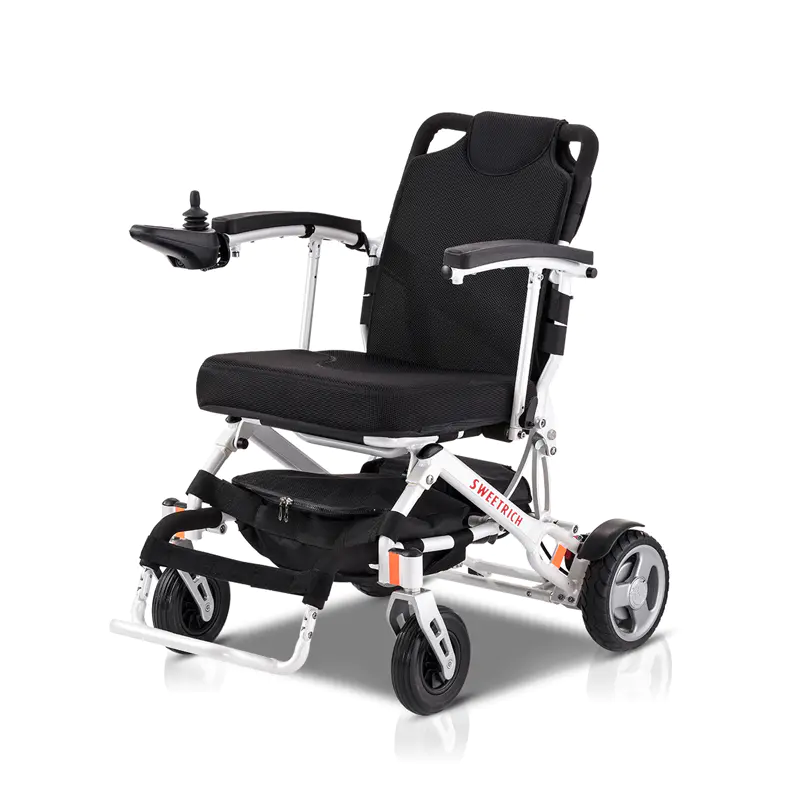
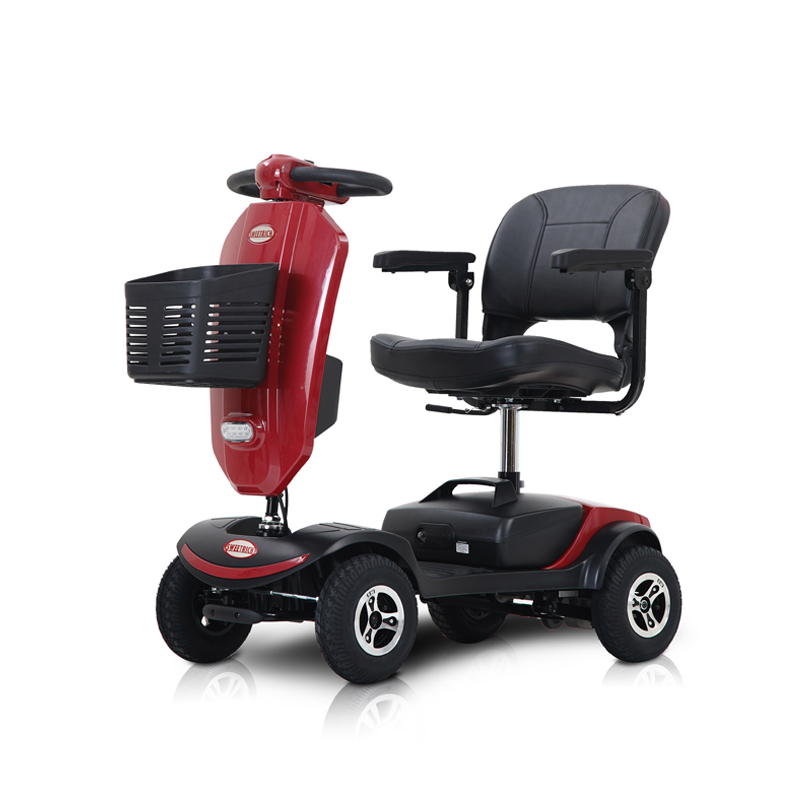
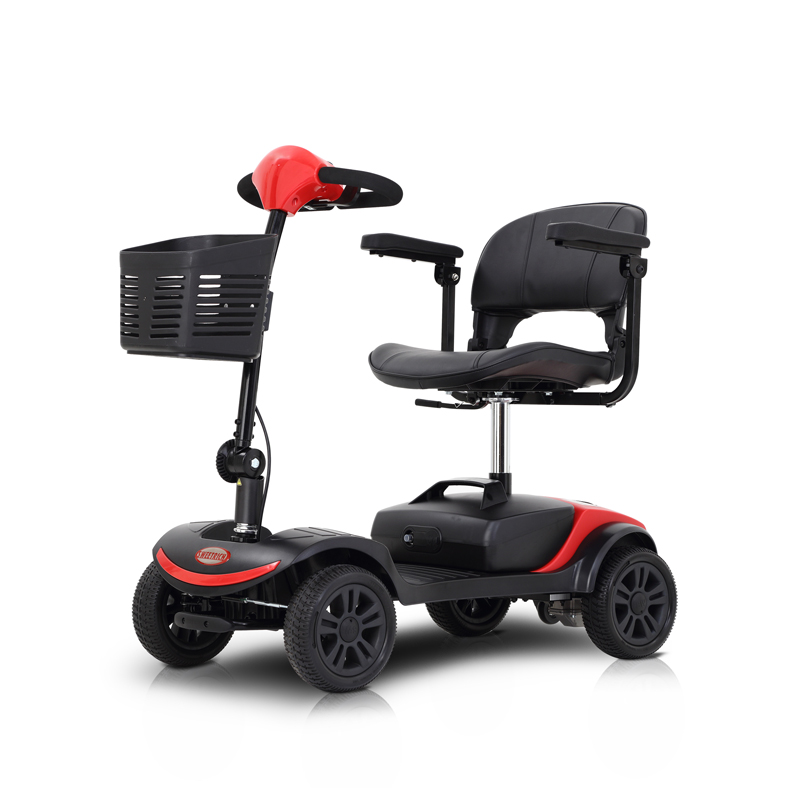
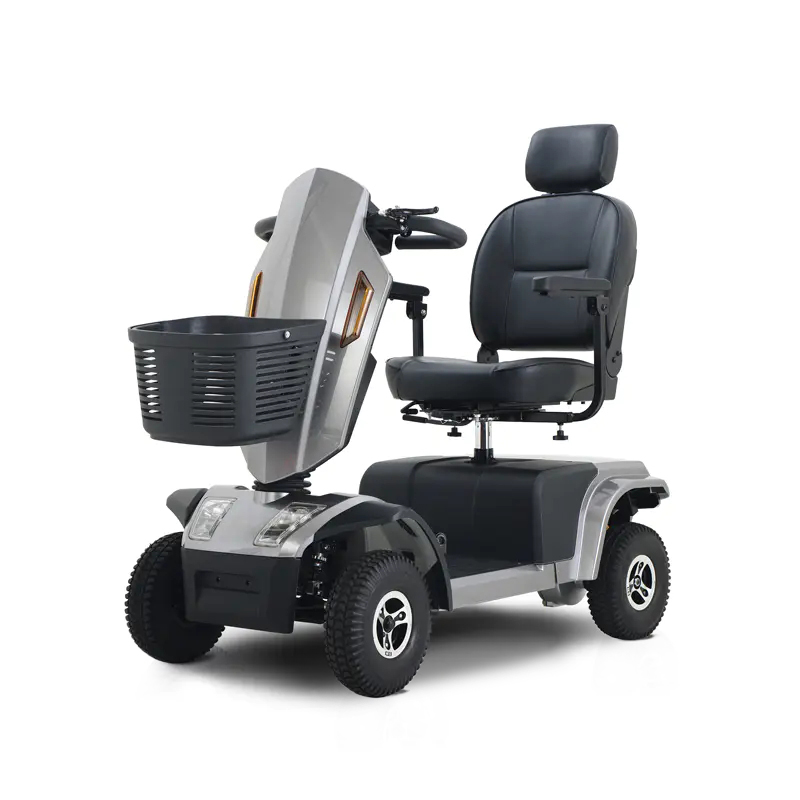
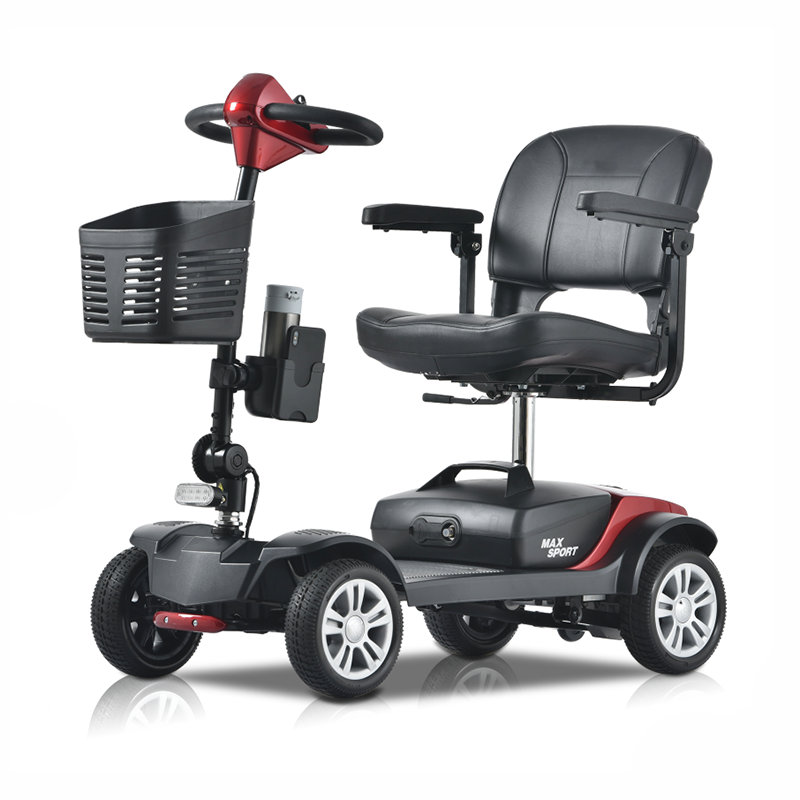
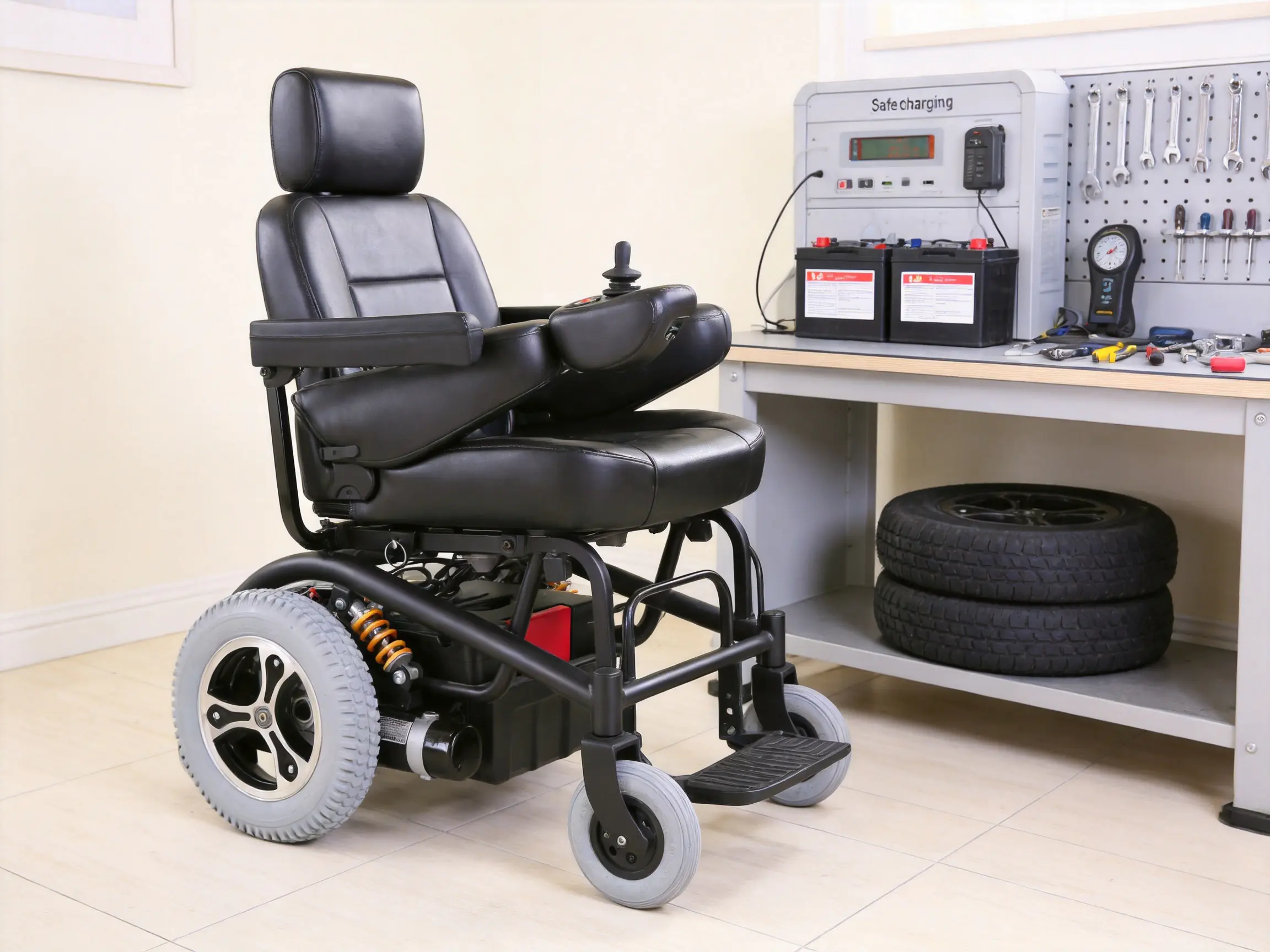
The iPower Sport is a heavy-duty four-wheel power wheelchair designed around these practical requirements. It combines large pneumatic tires, rear suspension, anti-tip wheels, a supportive seat, electromagnetic braking, twin 320-watt motors, and a lead-acid battery system. With a maximum forward speed of 8 km/h, a stated driving range of 30–40 km, and a weight capacity of 120 kg, it is intended for users who want more capability than a compact indoor chair while still requiring a manageable and user-oriented mobility platform.
This article examines the product’s construction, performance characteristics, comfort features, operating system, safety elements, maintenance considerations, and potential advantages over lighter or less fully equipped alternatives. It also discusses the manufacturing capabilities of Suzhou Sweetrich Vehicle Industry Technology Co., Ltd., the company behind the product, including its factory infrastructure, engineering focus, production management, and international market experience.
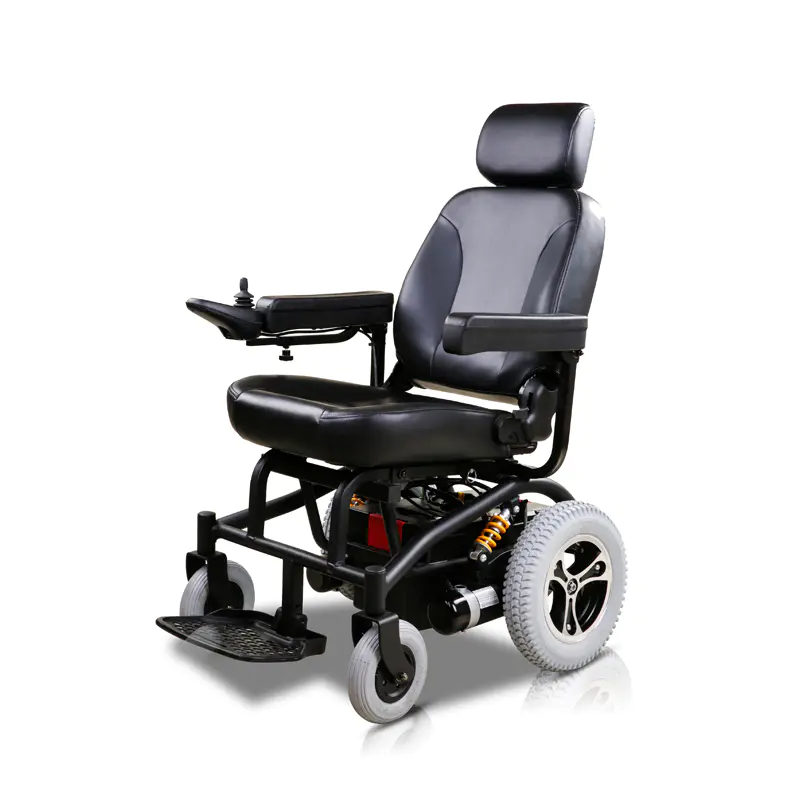
iPower Sport Hot popular four wheels power remote electronic wheelchair in dubai
Understanding the Product Concept
The iPower Sport belongs to the heavy-duty power wheelchair category. Unlike a basic transport chair, which is generally pushed by an attendant, this type of product is designed for independent powered movement. The user operates the chair through an electronic control system, allowing forward, reverse, steering, speed adjustment, and braking functions to be managed from the seated position.
The four-wheel design is particularly relevant for users who prioritize stability. Four contact points distribute the chair’s weight across the ground and can help provide a planted feel during ordinary outdoor use. This configuration is suitable for users who may travel over smooth pavement, driveway transitions, compact paths, and other surfaces where a small indoor chair may feel limited.
The product’s relatively large rear tires and front tires also contribute to its outdoor-oriented design. The front tires measure 8 by 2.5 inches, while the rear tires measure 14 by 3 inches. Larger rear tires can improve ground contact and help the chair roll more comfortably over minor surface irregularities. Pneumatic construction may also provide a softer ride than small solid wheels, although tire pressure must be checked regularly.
The model is not presented as a medical device for the United States market. Buyers, distributors, and users should therefore review local regulations, intended-use requirements, labeling rules, and transportation policies before purchase or resale. Product specifications and market approvals can vary by country, and a dealer should confirm whether the model is appropriate for the intended environment.
Key Technical Specifications
The following table summarizes the principal specifications supplied for the iPower Sport. Actual performance can vary according to user weight, terrain, temperature, tire pressure, battery age, driving style, load distribution, and maintenance condition.
| Specification | Supplied Information |
|---|---|
| Product type | Four-wheel power wheelchair |
| Category | Heavy-duty wheelchair |
| Dimensions | 980 × 600 × 1180 mm, length × width × height |
| Maximum forward speed | 8 km/h, approximately 5 mi/h |
| Maximum driving gradient | 10 degrees |
| Stated driving range | 30–40 km, approximately 19–25 miles |
| Weight capacity | 120 kg, approximately 265 lb |
| Suspension | Rear suspension |
| Front tires | 8 × 2.5 inches |
| Rear tires | 14 × 3 inches |
| Brake system | Electromagnetic brake |
| Battery system | Two 12-volt, 40 Ah lead-acid batteries |
| Charger | DC 24 V, 5 A; AC 115–230 V input |
| Charging time | Approximately 6–8 hours |
| Motors | Two 24-volt, 320-watt motors |
| Motor controller | 24-volt, 50-amp controller |
| Heaviest component | 56 kg, approximately 123 lb |
The specifications show that this is a substantial mobility platform rather than an ultra-light folding chair. Its strongest qualities are likely to be outdoor stability, motorized traction, seating support, range, and load capacity. At the same time, the stated heaviest-part weight of 56 kg means that buyers should plan carefully for loading, transportation, storage, and possible stair access.
Performance Advantages of the Four-Wheel Layout
One of the product’s most important advantages is its four-wheel arrangement. A four-wheel power wheelchair can provide a stable base for users who prefer a steady ride and a broader sense of support. Compared with smaller two-wheel or highly compact mobility products, the four-wheel structure is better suited to users who place greater emphasis on stability than on minimum turning size or ultra-light portability.
The wheel layout also works together with the product’s anti-tip wheels. Anti-tip wheels are positioned to help reduce the risk of rearward tipping during particular operating situations. They should not be considered a replacement for careful driving, appropriate speed control, or attention to slopes. However, they are a useful part of the overall chassis design and can give users an additional layer of protection during normal operation.
The model’s 10-degree maximum driving gradient is a notable specification for a product in this category. A rated gradient indicates the steepness that the drive system and chassis may be designed to approach under specified conditions. It does not mean every user should attempt every slope at the stated limit. Inclines should be assessed according to surface condition, length, moisture, load, battery charge, and the user’s ability to control the chair. Wet grass, loose gravel, polished floors, and cross-slopes may be considerably more difficult than a clean, dry, straight incline.
Large rear pneumatic tires can also improve the chair’s ability to maintain contact with the ground. Pneumatic tires may absorb some vibration and provide a more compliant ride than narrow, rigid wheels. Their performance depends on correct inflation. Tires that are underinflated may increase rolling resistance and reduce range, while tires that are overinflated may produce a harsher ride and reduce traction on certain surfaces.
Motor and Drive System
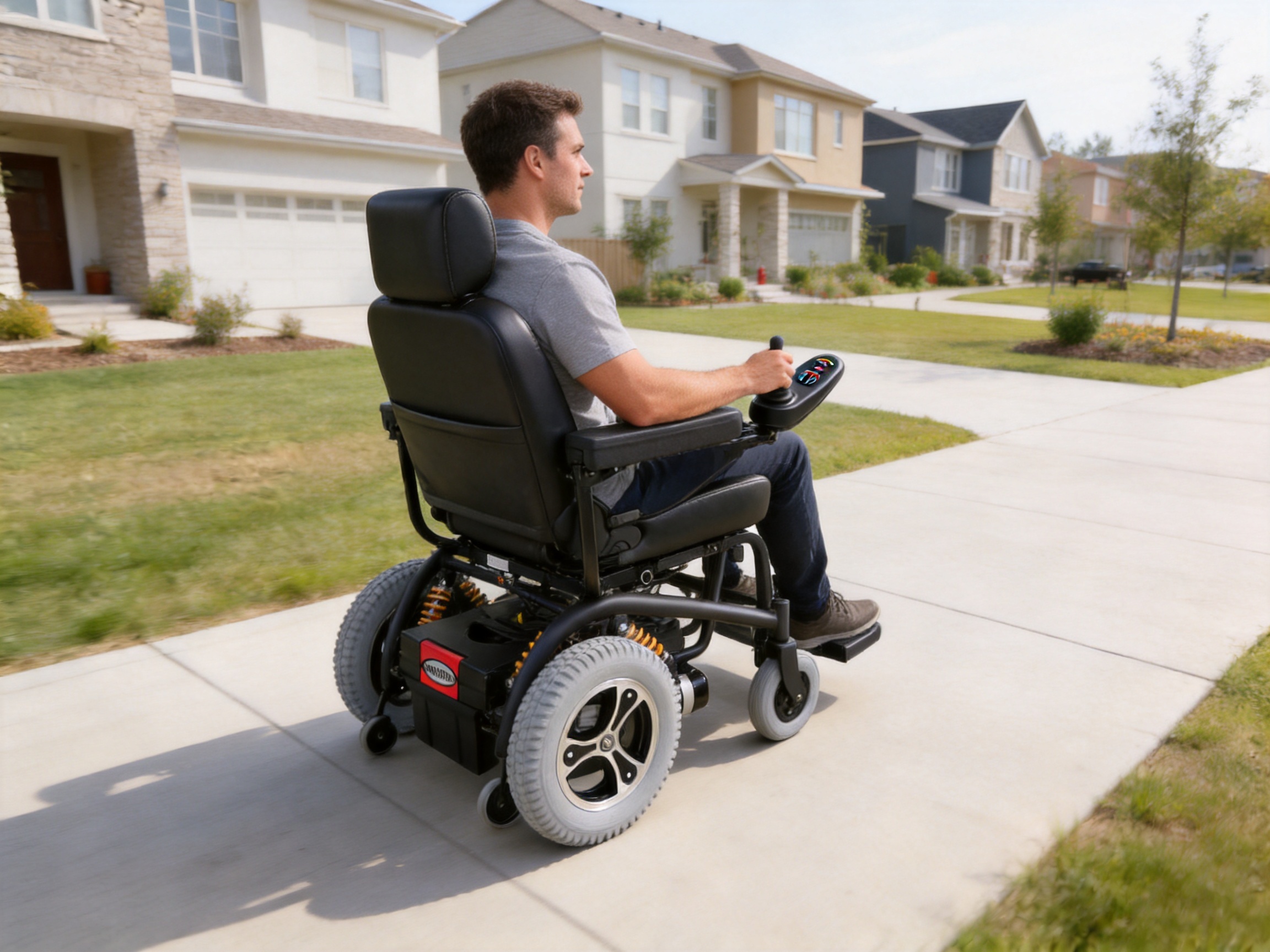
The iPower Sport uses two 24-volt, 320-watt motors. A twin-motor configuration allows the left and right sides of the chair to be powered independently. This arrangement is common in powered mobility products because it supports differential steering and can help the chair respond smoothly to directional commands.
Independent drive motors can be beneficial when maneuvering in outdoor spaces, approaching ramps, or navigating areas where the surface is not perfectly uniform. The motors work with the control system to regulate speed and direction. Users can generally expect the chair to be most efficient when operated with gradual acceleration, smooth steering, and a speed appropriate for the environment.
The 24-volt, 50-amp motor controller is another important part of the system. The controller manages electrical power between the batteries, user controls, and motors. A properly matched controller can contribute to predictable response and efficient power delivery. It also allows the product to be configured around its motor rating and battery architecture rather than relying on a generic low-power drive system.
Compared with basic mobility chairs equipped with smaller motors, the twin 320-watt arrangement suggests a stronger emphasis on outdoor usability and heavier-duty operation. This does not mean that the product should be driven through conditions outside its design limits. Instead, it indicates that the model has been configured to provide useful drive power for its stated 120 kg capacity and outdoor-oriented wheel system.
Users should remember that maximum speed and motor power are not the same as usable speed in every environment. A clear, flat surface may allow operation near the maximum forward speed, while a crowded walkway, ramp, narrow passage, or uneven trail requires a slower setting. Safe performance depends on the complete system, including tires, batteries, brakes, suspension, frame, and operator judgment.
Range and Battery Planning
The product uses two 12-volt, 40 Ah lead-acid batteries. Connected as a 24-volt system, these batteries provide the electrical energy needed for the twin motors and control electronics. Lead-acid batteries remain widely used in mobility products because they are familiar, widely serviceable, and generally available through mobility equipment suppliers.
The stated driving range is 30–40 km, or approximately 19–25 miles. This is a useful range for planned daily journeys, shopping trips, residential travel, and outdoor recreation. However, published range figures are normally measured under controlled or favorable conditions. Real-world range may be lower when the chair is heavily loaded, used on inclines, driven at high speed, operated on soft surfaces, or exposed to cold temperatures.
Battery care is essential to maintaining useful range. Users should follow the supplied charging instructions and use the specified charger. The listed charger accepts AC input from 115 to 230 volts and provides DC 24 volts at 5 amps, making it suitable for a range of electrical markets when correctly configured. The stated charging time is approximately 6–8 hours, so overnight charging can be a practical routine for many users.
Lead-acid batteries are heavier than some newer battery chemistries. That additional weight contributes to the product’s total mass, but it can also provide a familiar and cost-conscious energy solution. Buyers who prioritize easy lifting or airline transport should ask whether alternative battery configurations are available and whether the complete chair has been approved for the intended transportation method.
For best battery life, the chair should not be stored for extended periods with a deeply discharged battery. Storage conditions should be dry and within the temperature range recommended by the battery manufacturer. Battery terminals, cables, and connectors should be inspected for corrosion, looseness, or physical damage. Any unusual heating, swelling, leakage, or odor should be treated as a reason to stop using the battery system and obtain qualified service.
Suspension, Tires, and Ride Comfort
Ride comfort is influenced by the seat, tire construction, wheel size, suspension, frame geometry, and driving speed. The iPower Sport includes rear suspension, which is intended to help manage vibration and impact transmitted through the rear wheels. Rear suspension can be especially useful when traveling over surface transitions, expansion joints, compact outdoor paths, or moderately uneven pavement.
The leather-liked cushion seat is designed to provide a more supportive and comfortable seating surface than a simple flat board or thin fabric sling. A cushioned seat can improve comfort during longer trips and may help the user maintain a more stable position while steering. The seat material should be cleaned according to the supplier’s care instructions, and users should avoid harsh chemicals that could damage the covering.
The adjustable seat back provides another practical advantage. Users differ in torso length, posture, flexibility, and preferred seating angle. An adjustable backrest allows the chair to be configured more appropriately for the individual, although adjustment should be performed securely and within the product’s intended range. The seat should remain firmly locked before operation.
Suspension does not eliminate the need for careful route selection. Deep potholes, high curbs, loose stones, flooded areas, and steep side slopes may still create hazards. The best results come from combining the chair’s suspension features with moderate speed and a clear understanding of the route.
Compared with rigid-frame chairs that have small solid wheels, a model with pneumatic tires and rear suspension may deliver a less jarring outdoor experience. This can be particularly valuable for users who spend significant time traveling across mixed surfaces. It may also reduce the fatigue associated with continuous vibration, although individual comfort will depend on body position, seat adjustment, and personal needs.
Braking and Operational Safety
The product is equipped with an electromagnetic brake system. Electromagnetic braking is commonly integrated with powered mobility controls so that the chair can slow or stop when the user releases the control input. This type of system is valuable because it can help prevent unwanted rolling when the drive command is removed.
Braking performance depends on battery condition, controller function, motor condition, tire contact, slope, and surface quality. Before each journey, the user should confirm that the chair starts, stops, and changes direction as expected. Any delay, unusual noise, uncontrolled movement, or failure to stop should be investigated before further use.
A responsible operating routine includes reducing speed before turns, maintaining a safe distance from pedestrians and vehicles, avoiding sudden directional changes on slopes, and checking the route before crossing thresholds. The maximum rated gradient should never be treated as a target for routine driving. If a slope feels unstable, the safest choice is to turn back or use an alternative route.
Anti-tip wheels, electromagnetic brakes, and suspension work as parts of a complete safety system, but none of them removes the need for training and supervision when appropriate. New users should practice in a spacious, low-traffic area. They should become familiar with acceleration, deceleration, turning radius, reverse movement, obstacle clearance, and battery indicators before traveling in public areas.
Dealers and caregivers should also explain safe transfer procedures. The power should be switched off during transfers unless the manufacturer’s instructions specify otherwise. The chair should be positioned on a stable, level surface, and the user should not use removable armrests, controls, or seat components as unintended lifting points.
Capacity and Practical User Fit
The stated weight capacity is 120 kg, equivalent to approximately 265 lb. This figure should include the user and any carried items. Clothing, shopping bags, portable oxygen equipment, personal accessories, and other loads should be considered when determining whether the chair is suitable.
Operating close to the maximum capacity can affect acceleration, stopping distance, range, climbing performance, and tire wear. Users who regularly carry additional items should allow a reasonable margin below the published limit. The seating dimensions, armrest position, and foot placement should also be evaluated, because weight capacity alone does not determine whether a chair is physically comfortable.
The dimensions are listed as 980 mm long, 600 mm wide, and 1180 mm high. The 600 mm width may be suitable for many residential corridors and commercial spaces, but measurements should be taken before purchase. Doorways, elevator entrances, vehicle ramps, bathroom access points, and storage areas can vary considerably. Turning space is also important, especially where furniture or narrow hallways are present.
Potential buyers should consider how the chair will be transported. The heaviest part is listed as 56 kg, which is substantial for one person to lift. A suitable ramp, loading platform, powered hoist, accessible vehicle, or assistance from multiple trained people may be needed. The product’s outdoor strength should therefore be balanced against the user’s transportation and storage resources.
Advantages Compared with Lighter or More Basic Alternatives
Compact mobility products often prioritize low weight, small dimensions, and ease of storage. Those qualities can be valuable for indoor use, travel, or occasional transport. However, lightweight models may have smaller tires, less suspension, lower weight capacities, shorter ranges, and less capability on uneven outdoor surfaces.
The iPower Sport offers a different balance. Its design places greater emphasis on stability, outdoor rolling quality, seating support, and range. Large rear tires can provide more confidence on ordinary outdoor pavement than very small wheels. Rear suspension can help moderate vibration. Twin motors can provide a more substantial drive system than a compact single-motor platform. A 120 kg capacity may also accommodate users who need a stronger chassis than a lightweight travel chair can provide.
Compared with a basic manual wheelchair, the product provides independent powered movement without requiring the user to propel the chair by hand or depend continuously on an attendant. This can support greater personal autonomy for users who have limited upper-body strength or endurance.
Compared with a simple indoor power chair, the iPower Sport’s wheel dimensions, battery capacity, suspension, and outdoor-oriented configuration may make it better suited to longer journeys and mixed surfaces. Nevertheless, it may be less convenient to lift, store, or transport. The right choice depends on the user’s priorities rather than on a single specification.
Compared with some mobility scooters, a power wheelchair may offer a more supportive seated driving position and a configuration that is familiar to users who require wheelchair-style seating. Scooters may provide larger foot platforms or different steering arrangements, while power wheelchairs may be more suitable for users who need close control from a seated position. A professional assessment may be helpful when posture, transfers, or special seating needs are involved.
User Comfort and Everyday Convenience
Comfort should be considered over the entire duration of a journey, not only during a short showroom test. The adjustable seat back, cushioned seating surface, stable wheelbase, and rear suspension all contribute to the product’s comfort-oriented design. Users should adjust the seat position so that the control input can be operated without excessive shoulder movement or leaning.
The controller should be positioned where it is easy to access but protected from accidental impact. The user should have a clear view of the route and be able to release the control input quickly. If a user has reduced hand strength, tremors, or limited coordination, the control arrangement should be evaluated by a qualified mobility professional.
Storage is another practical consideration. Users should determine whether personal items can be carried securely without interfering with steering, the battery compartment, the wheels, or the seat back. Excessive weight placed high on the chair may affect stability, especially on slopes or during turns.
Weather exposure should also be managed carefully. The chair is an electrical product and should not be left in heavy rain or standing water. Controls, charging sockets, connectors, and battery compartments should be kept dry. If the chair becomes wet, it should be switched off and allowed to dry fully before charging or continued operation, subject to the manufacturer’s instructions.
Manufacturing and Engineering Strengths
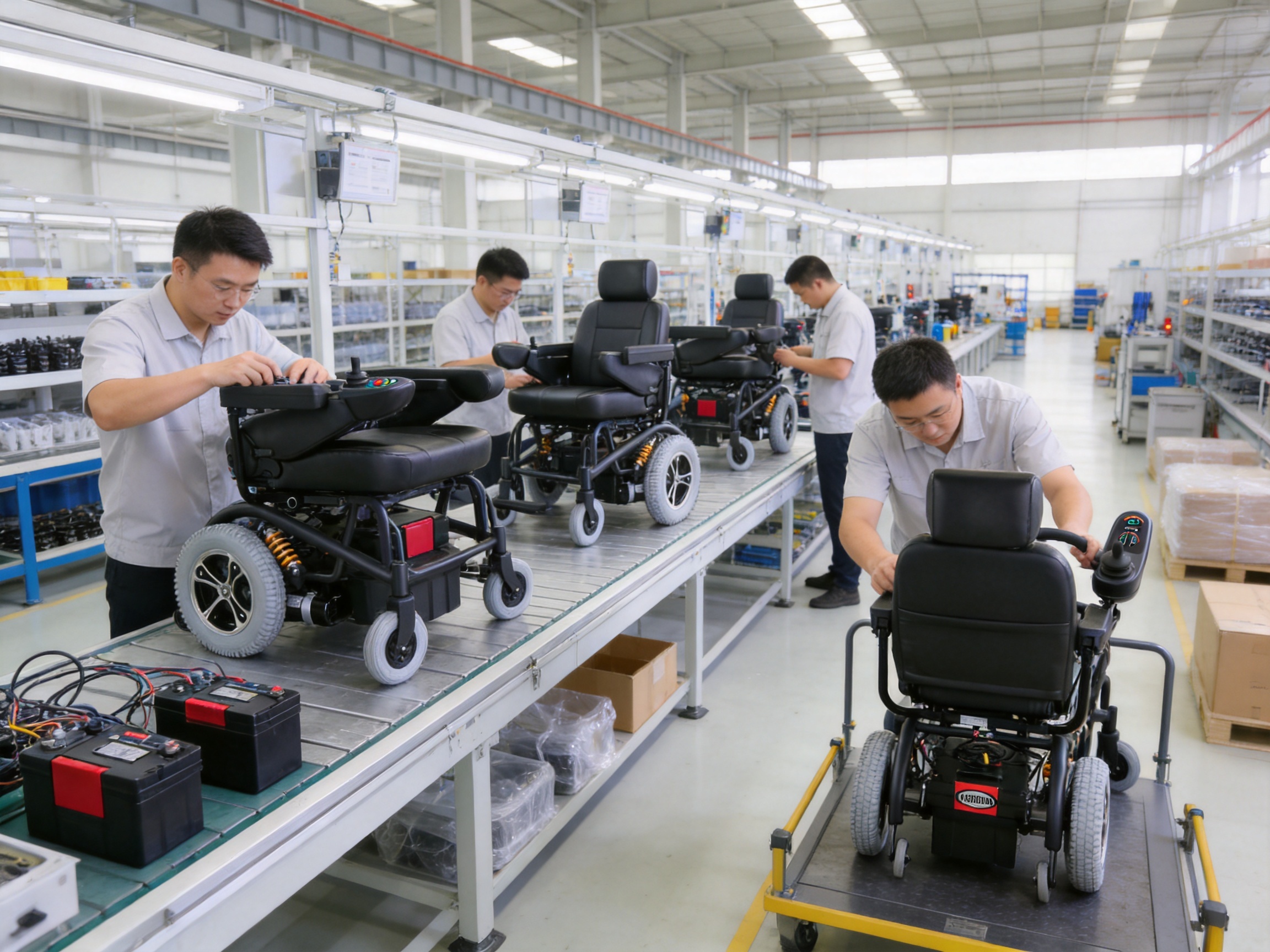
Suzhou Sweetrich Vehicle Industry Technology Co., Ltd. is described as a high-tech manufacturer based in Suzhou Industrial Zone, Jiangsu, China. Established in 2011, the company has accumulated more than ten years of experience in the research, development, and production of mobility scooters and power wheelchairs.
The company’s reported site covers approximately 60 acres and includes a 30,000-square-meter factory. A factory of this scale can support dedicated areas for product development, component management, assembly, inspection, testing, packaging, and logistics. The ability to organize these activities within a structured industrial facility is important for maintaining production consistency as product volumes increase.
Manufacturing strength in mobility equipment depends on more than assembly capacity. It also involves design discipline, electrical integration, mechanical alignment, quality control, supplier coordination, and after-sales support. A power wheelchair must bring together the frame, motors, controller, batteries, charger, brakes, suspension, wheels, seat, and user controls. Each part must function correctly on its own and as part of the complete system.
The company states that it owns intellectual property rights for its electric scooters and power wheelchairs. In practical terms, in-house product knowledge and intellectual property can support more consistent model development, design refinement, and technical communication. It may also help the manufacturer respond to distributor requirements or adapt products for different markets.
The company’s stated focus on scientific product design and advanced control technology is relevant to the iPower Sport’s configuration. The twin-motor drive system, electronic controller, electromagnetic brake, battery charger, suspension, and anti-tip structure require coordinated engineering. Successful integration is essential to achieving predictable operation and user confidence.
Strict production management is another stated company priority. For mobility products, production management should include documented assembly procedures, incoming component checks, torque control, wiring inspections, brake verification, charger testing, functional driving tests, and final appearance inspection. Buyers and distributors should request current quality documents and test records where required by their market or procurement process.
The company’s international sales experience is also a potential strength. Its products are reported to be exported to America, Europe, Japan, Australia, the Middle East, Russia, and other markets. International distribution requires attention to packaging, electrical compatibility, technical documentation, spare parts, language requirements, and regional regulations. Experience across multiple markets can help a manufacturer understand the practical needs of overseas distributors.
Production Quality and Process Considerations
A reliable mobility product begins with controlled design specifications. The manufacturer must define the intended load, motor output, battery configuration, braking behavior, wheel dimensions, frame geometry, and environmental use conditions. These details provide the basis for purchasing components and verifying finished products.
Frame and chassis production require accurate alignment. If the wheels are not correctly aligned, the chair may pull to one side, wear tires unevenly, or require more power to move in a straight line. Suspension mounting points must also be installed securely, and fasteners should be tightened according to approved procedures.
Electrical assembly requires particular care. Battery cables must have suitable ratings and secure terminals. Connectors should be properly seated and protected from unnecessary strain. The controller should be mounted in a position that supports cooling and protects it from impact or moisture. Wiring should be routed away from moving components, sharp edges, heat sources, and areas where it could be pinched.
Functional testing should include forward and reverse operation, steering response, electromagnetic braking, speed control, charger operation, battery connection, and basic safety functions. A production line may also include inspection of seat adjustment, armrest security, tire condition, suspension movement, anti-tip wheel position, and fastener security.
Packaging is especially important for a product with a substantial frame and electrical system. Proper internal protection can reduce the risk of shipping damage to the controller, seat, wheels, handles, and body panels. Export packaging should account for vibration, repeated handling, humidity, and extended storage before final delivery.
These process considerations demonstrate why the manufacturer’s factory organization and engineering experience matter. The customer receives not merely a collection of components but a complete mobility system that must operate safely and consistently after transport, assembly, charging, and routine use.
Maintenance Requirements
Regular maintenance can preserve performance and improve service life. Before use, the operator should visually inspect the tires, seat, control system, battery cables, and frame. The tires should be checked for low pressure, cuts, punctures, or unusual wear. Pneumatic tires require a suitable pressure gauge and should be inflated according to the recommended specification.
The electromagnetic brake should be tested in a safe, open area. If the chair continues to roll when the control input is released, the product should not be used on slopes or in traffic until it has been inspected by a qualified technician.
Battery terminals should remain clean and secure. Lead-acid batteries can lose capacity over time, particularly when repeatedly discharged deeply, left unused without proper charging, or exposed to unsuitable temperatures. A significant reduction in range may indicate battery aging, tire pressure problems, increased mechanical resistance, or an electrical issue.
Moving parts, suspension components, wheel fasteners, and seat adjustment mechanisms should be inspected periodically. Lubrication should only be applied where specified. Excess lubricant can attract dust and may contaminate braking or electrical components.
The chair should be cleaned with a soft, lightly damp cloth unless the supplier provides different instructions. High-pressure water should not be directed at the controller, motor housings, battery compartment, charging socket, or control panel. The product should be stored in a dry location with adequate clearance around the wheels and controls.
Maintenance records can be useful for private users, caregivers, fleet operators, and dealers. Recording battery replacement dates, tire changes, inspections, and repairs helps identify recurring problems and supports better fleet planning.
Choosing the Product for Different Environments
The iPower Sport may be a strong candidate for users who travel regularly across paved outdoor routes and require a higher-capacity power wheelchair. It may also suit retirement communities, residential developments, accessible resorts, care facilities, and mobility equipment rental operations, provided the operating environment and local rules are appropriate.
For indoor use, the 600 mm width should be compared with the narrowest doorway and the tightest turning area. A product can be comfortable in open rooms but difficult to operate in small bathrooms or narrow corridors. Buyers should measure the complete route rather than relying only on the published width.
For outdoor use, route quality should be evaluated in advance. Smooth pavement, properly maintained sidewalks, and compact pathways are more suitable than deep mud, loose sand, sharp gravel, or waterlogged ground. The large tires and suspension provide useful support, but they do not transform the chair into an all-terrain vehicle.
For commercial or institutional buyers, the product may be evaluated as part of a broader mobility program. Important factors include user training, charging arrangements, storage, spare batteries, replacement tires, technical support, warranty response, and local service capability. A capable product is most useful when supported by a practical maintenance and parts plan.
Purchasing and Distributor Considerations
Distributors should confirm the exact model configuration before placing an order. Details such as seat dimensions, control layout, battery type, charger plug, color, packaging, accessory availability, and labeling may vary by production batch or destination market.
Electrical compatibility should be checked carefully. Although the supplied charger specification lists an AC input range of 115–230 volts, the plug style, frequency, certification, and local electrical requirements still need confirmation. The charger should never be replaced with an unapproved unit simply because its voltage appears similar.
Distributors should also ask about warranty terms, spare-parts availability, technical manuals, service training, battery replacement procedures, and shipping damage claims. A clear parts program can reduce downtime and improve customer satisfaction.
For export markets, product documentation should be translated accurately and should identify operating limits, charging instructions, slope guidance, battery safety, maintenance requirements, and warnings. Marketing claims should remain consistent with verified test data and the regulations of the destination country.
Private buyers should receive a practical demonstration before purchase. The demonstration should include starting, stopping, steering, reversing, slope behavior, charger connection, seat adjustment, battery indicator use, and safe transfer. If the user has a disability affecting posture, vision, hearing, strength, or coordination, professional assessment is recommended.
Responsible Interpretation of Product Specifications
Specifications are valuable tools, but they should be interpreted in context. The 8 km/h maximum speed describes the upper forward speed under suitable conditions; it does not establish a safe speed for every route. The 30–40 km range provides an estimate for planning, but it does not guarantee the same distance in cold weather or on steep terrain.
The 10-degree gradient rating should be understood as a technical limit subject to conditions and testing methods. A slope’s surface, length, direction, and stopping area are all important. A side slope can be more challenging than a straight incline, and a downhill route requires careful speed management even when the chair can climb the same route.
The 120 kg capacity is a total load rating rather than a recommendation to operate continuously at the limit. Additional cargo should be minimized, and heavy objects should be positioned low and securely. Improperly placed cargo can influence stability and steering.
The 56 kg heaviest-part figure should be considered before ordering. Customers who need frequent vehicle transport may prefer a lighter folding model, a modular chair with smaller components, or a powered loading solution. The iPower Sport’s heavier construction is connected to its stability and outdoor capability, but that same construction creates transportation demands.
Company Background and Market Experience
Suzhou Sweetrich Vehicle Industry Technology Co., Ltd. presents itself as a manufacturer focused on mobility scooters and power wheelchairs. Its stated mission centers on improving the well-being, convenience, independence, and dignity of elderly and disabled people. This focus is directly relevant to product development because mobility equipment must serve real daily needs rather than only meet abstract technical targets.
The company reports that it has developed long-term partnerships with customers around the world. Such relationships can support a better understanding of regional preferences, distributor expectations, replacement-part needs, and user feedback. Long-term cooperation is particularly important in mobility equipment because customers often require support long after the initial purchase.
The company also emphasizes quality first, business credibility, and customer service. These principles are meaningful when they are reflected in measurable practices such as traceable production, consistent inspection, timely technical support, clear documentation, and dependable after-sales communication.
Its international market coverage includes America, Europe, Japan, Australia, the Middle East, Russia, and other regions. This range suggests experience with varied climates, road conditions, electrical systems, distribution models, and customer requirements. Each destination market remains responsible for its own compliance assessment, but international experience can provide a useful foundation for export cooperation.
For buyers evaluating a supplier, the company’s factory area, product development experience, intellectual property, production management, and export history are relevant indicators. They should be considered together with current certifications, quality records, warranty policies, and the ability to support the specific model being purchased.
Frequently Asked Questions
What type of product is the iPower Sport?
The iPower Sport is a four-wheel powered wheelchair in the heavy-duty category. It is designed for independent electronic operation and includes outdoor-oriented features such as large pneumatic tires, rear suspension, anti-tip wheels, and twin motors.
What is its maximum forward speed?
The stated maximum forward speed is 8 km/h, or approximately 5 miles per hour. Users should select a lower speed when driving near pedestrians, entering buildings, making turns, crossing uneven ground, or operating on slopes.
What is the stated travel range?
The stated range is 30–40 km, or approximately 19–25 miles. Actual range depends on user weight, terrain, battery age, tire pressure, temperature, speed, and driving habits.
How much weight can the chair support?
The stated weight capacity is 120 kg, or approximately 265 lb. This figure should include the user and carried items. Buyers should also confirm that the seat dimensions and support arrangement are suitable for the intended user.
Does the product have suspension?
Yes. The supplied specifications identify rear suspension. The suspension works with pneumatic tires and the cushioned seat to help improve ride comfort over suitable outdoor surfaces.
What type of batteries does it use?
The product uses two 12-volt, 40 Ah lead-acid batteries. Together, they form the 24-volt battery system used by the motors and electronic controls.
How long does charging take?
The stated charging time is approximately 6–8 hours. Users should use the specified charger and follow the battery manufacturer’s instructions for charging, storage, and replacement.
Can it be transported in a car?
Transportation depends on the vehicle, loading equipment, and the user’s ability to handle a product whose heaviest part is listed as 56 kg. A ramp, hoist, accessible vehicle, or assistance from trained people may be required. Buyers should plan transportation before purchase.
Is it suitable for indoor use?
It may be used indoors where there is sufficient width and turning space. The listed width is 600 mm, but buyers should measure doorways, elevators, hallways, and storage locations in advance.
Can it climb any 10-degree slope?
No. The 10-degree figure is a stated maximum driving gradient, not a recommendation for all conditions. Surface quality, moisture, load, battery level, slope length, and driving direction all affect safety. Users should avoid slopes that feel unstable or exceed local operating guidance.
What are the main advantages over a lightweight travel chair?
The main potential advantages are a higher 120 kg capacity, larger rear tires, rear suspension, anti-tip wheels, twin 320-watt motors, electromagnetic braking, and a stated range of up to 40 km. These features support a more outdoor-oriented design, although the chair is heavier and less convenient to lift than many compact travel models.
Is the product a medical device in the United States?
The supplied product information identifies it as a non-medical device for the United States market. Buyers and distributors should confirm the current regulatory status, intended-use classification, labeling, and import requirements for their specific market before purchase.
Who manufactures the product?
The product is associated with Suzhou Sweetrich Vehicle Industry Technology Co., Ltd., a mobility manufacturer based in Suzhou, Jiangsu, China. The company reports experience in developing and producing mobility scooters and power wheelchairs since 2011.
What should be checked before every trip?
Users should check tire condition and pressure, battery charge, control response, electromagnetic braking, seat-back security, visible wiring, wheel fasteners, and the route ahead. Any unusual behavior should be addressed before the chair is used in public or on slopes.
Final Assessment
The iPower Sport is designed for users who need a substantial four-wheel power wheelchair with a clear emphasis on stability, outdoor mobility, comfort, and operating range. Its large pneumatic tires, rear suspension, anti-tip wheels, cushioned seat, adjustable seat back, electromagnetic brake, twin 320-watt motors, and 24-volt lead-acid battery system create a well-rounded specification for everyday powered travel.
Its principal advantages over smaller and lighter alternatives are its stronger outdoor orientation, higher stated weight capacity, larger rear wheel format, suspension support, and longer potential travel range. These qualities may make it a practical choice for users who find compact indoor chairs too limited or who want a more stable platform for paved outdoor journeys.
The main trade-off is portability. With a heaviest-part weight of 56 kg, the chair requires thoughtful transportation, loading, and storage planning. Its dimensions should also be compared with the user’s home, vehicle, and regular travel routes.
The manufacturer’s reported factory scale, engineering experience, intellectual property, international export activity, and focus on production management provide a credible foundation for the product’s development and supply. Buyers should still verify current documentation, market compliance, warranty coverage, spare-parts support, and user fit before making a final decision.
When matched with the right user, route, and support plan, the iPower Sport can provide a strong balance between powered independence, outdoor confidence, seating comfort, and practical everyday range.
References
1. Product specification sheet for the iPower Sport four-wheel power wheelchair, including dimensions, motor system, battery configuration, tire sizes, braking system, range, capacity, and charging information.
2. Manufacturer information supplied for Suzhou Sweetrich Vehicle Industry Technology Co., Ltd., including company history, factory area, product development activities, intellectual property, international markets, and manufacturing principles.
3. General mobility equipment maintenance practices covering pneumatic tire inspection, lead-acid battery care, electromagnetic brake testing, electrical connector inspection, and safe storage.
4. General user-safety principles for powered wheelchairs, including slope assessment, speed control, obstacle awareness, transfer precautions, and route planning.
5. General accessibility and mobility-equipment purchasing considerations, including doorway measurement, vehicle loading, seat fit, user capacity, distributor support, and local regulatory review.