
 +86-(0)512-82283871
Content
- 1 Product Overview and Intended Positioning
- 2 Key Specifications
- 3 Folding Design and Transport Convenience
- 4 Four-Wheel Stability and Everyday Maneuverability
- 5 Powertrain, Motor, and Controller
- 6 Battery Options, Charging, and Range
- 7 Safety-Oriented Braking and Suspension
- 8 Advantages Over Conventional Competitor Categories
- 9 Wholesale and Distribution Value
- 10 Manufacturing Capability and Engineering Strength
- 11 International Experience and Market Support
- 12 Comfort, Accessibility, and User Experience
- 13 Maintenance and Ownership Considerations
- 14 How to Present the Product to Customers
- 15 Recommended Customer Profiles
- 16 Frequently Asked Questions
- 16.1 What type of product is the S1 PLUS?
- 16.2 What is the maximum speed?
- 16.3 What is the scooter’s driving range?
- 16.4 What battery does the scooter use?
- 16.5 How long does charging take?
- 16.6 What is the weight capacity?
- 16.7 How heavy is the scooter?
- 16.8 Does the scooter have suspension?
- 16.9 What type of brakes does it use?
- 16.10 What are the scooter’s dimensions?
- 16.11 Is the S1 PLUS suitable for steep hills?
- 16.12 How does it compare with a three-wheel travel scooter?
- 16.13 Is it a medical device?
- 16.14 Who manufactures the product?
- 17 Conclusion
- 18 References
- 19 Product: S1 PLUS All Weather Wholesale Four Wheels Electric Folding Mobility Scooter in Walmart
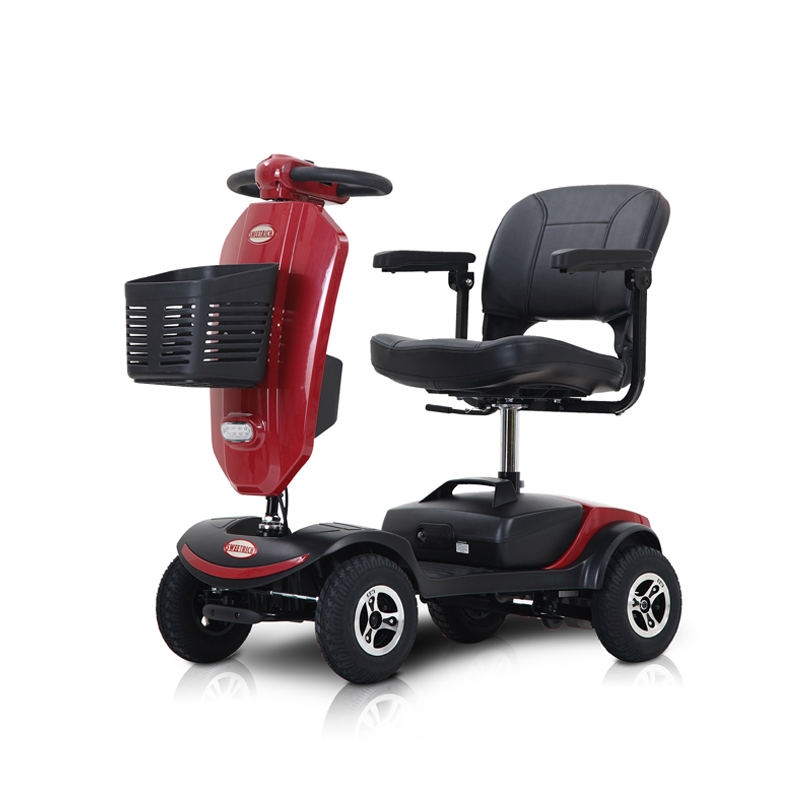
All-Weather Four-Wheel Folding Mobility Scooter for Portable Everyday Travel
Mobility scooters continue to develop as users seek greater independence, convenient transportation, and practical support for everyday travel. A modern scooter must do more than move from one location to another. It should be stable, manageable, comfortable, durable, and suitable for the changing demands of real-world use. For distributors and mobility-product retailers, it should also offer a balanced specification, recognizable user benefits, efficient handling, and a product configuration that can serve a broad range of customers.
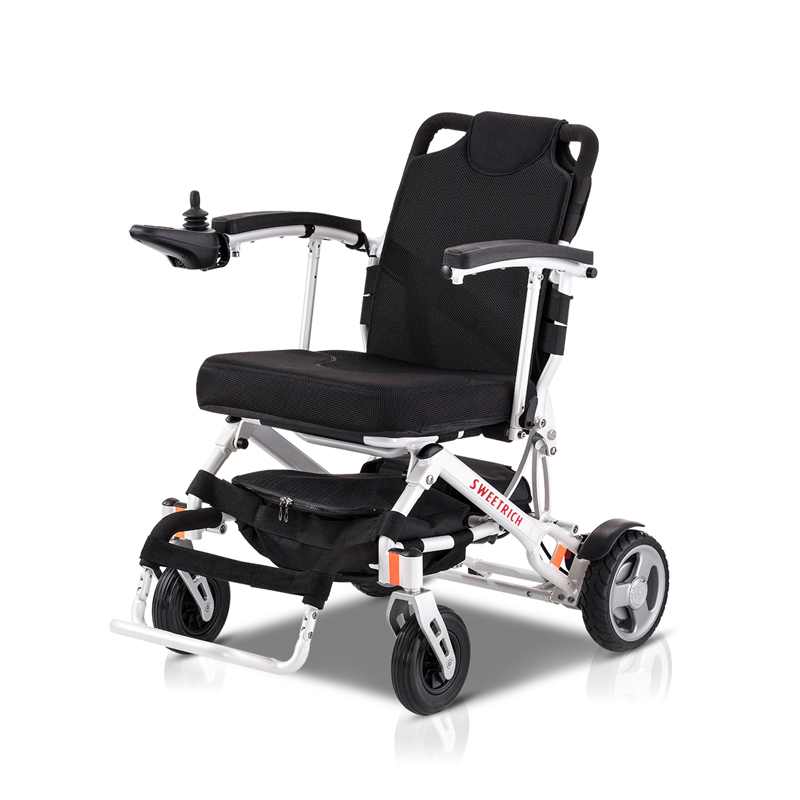
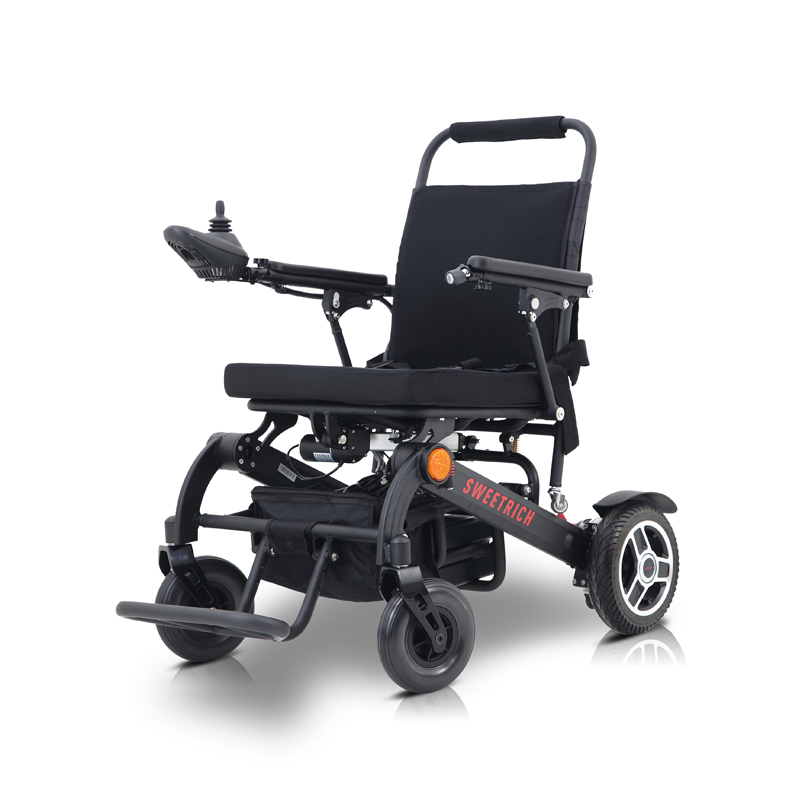
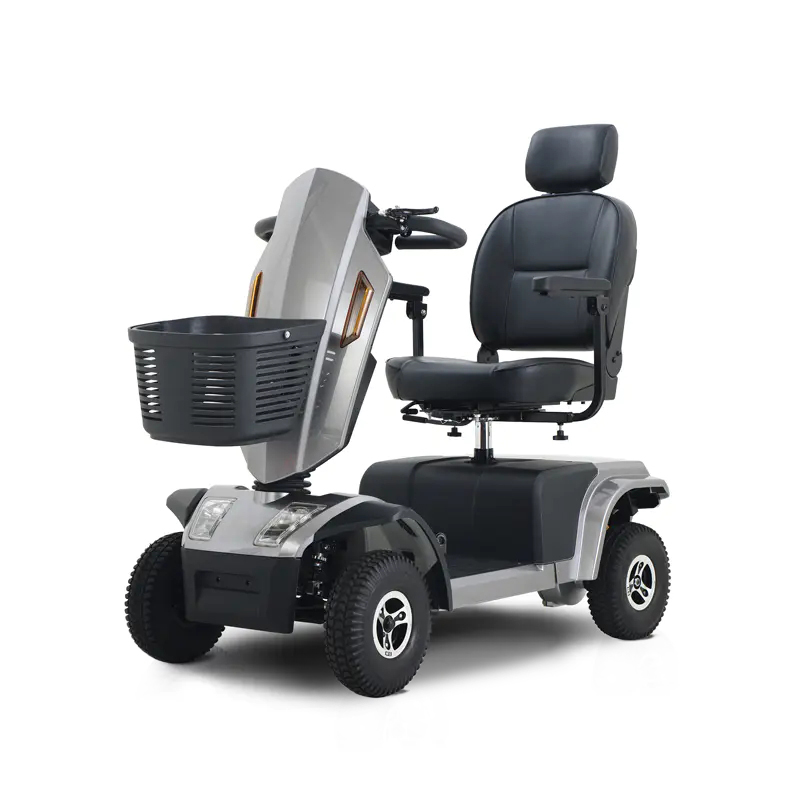
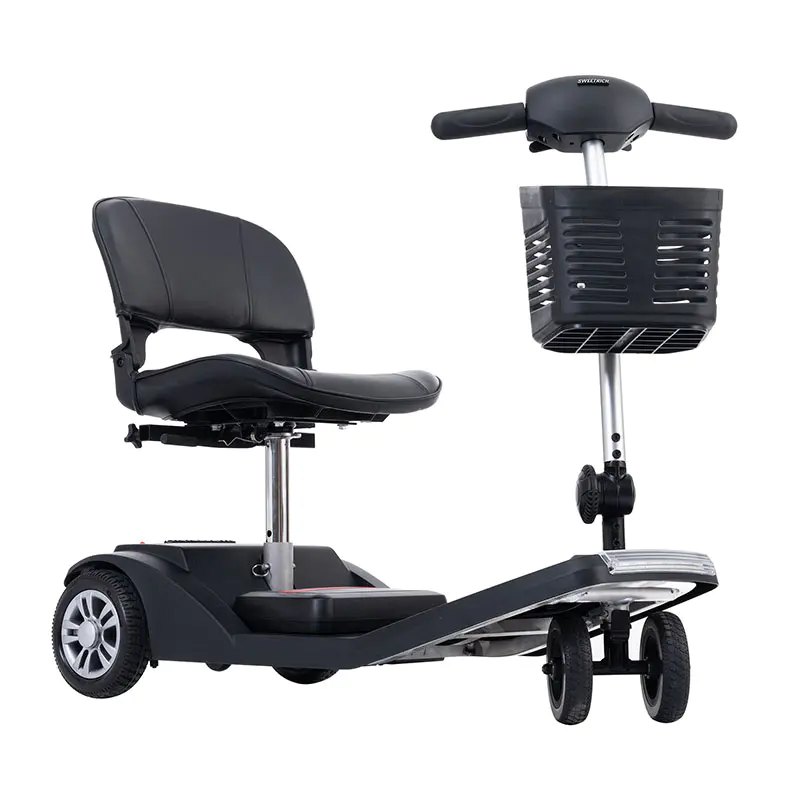
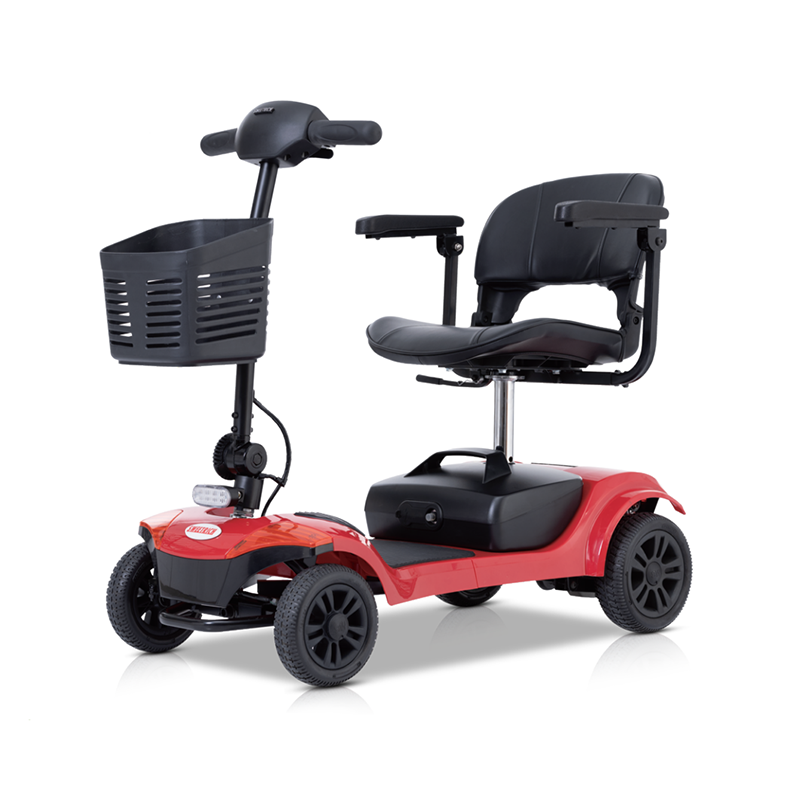
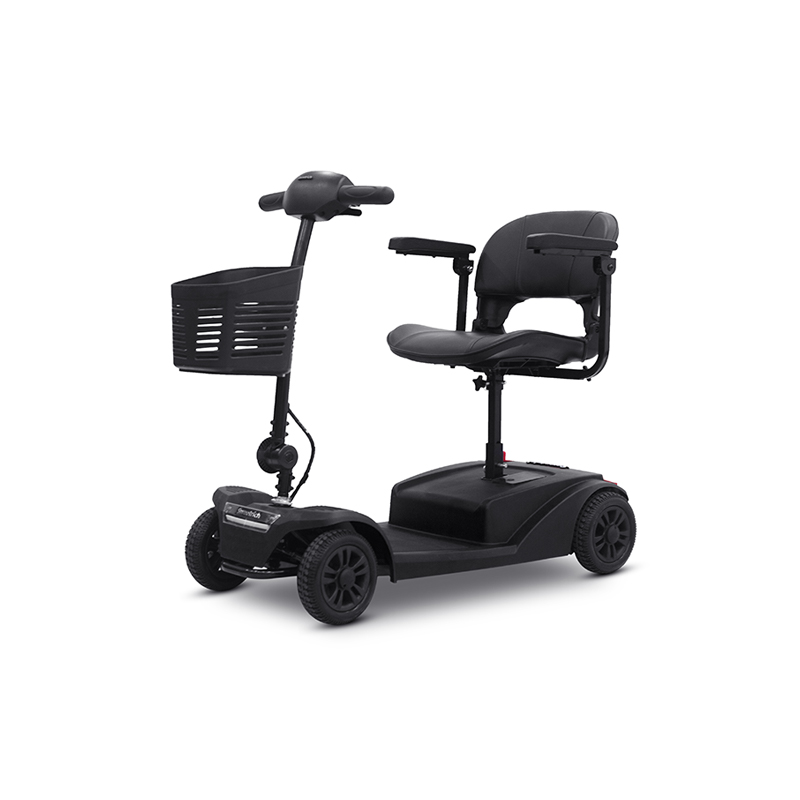
The S1 PLUS is a four-wheel electric folding mobility scooter designed for travel-oriented use. It combines a compact folding concept with a 5-mile-per-hour maximum speed, rear suspension, electromagnetic braking, a 300-pound weight capacity, and a practical driving range of approximately 9.5 to 15.5 miles, depending on configuration and operating conditions. Its relatively manageable heaviest component weight of 63 pounds supports easier loading and handling than many larger mobility scooters.
As a non-medical device intended for the United States market, the S1 PLUS is positioned as a personal mobility and transportation product rather than a clinical treatment device. Its value comes from combining portability and everyday usability in one four-wheel platform. This makes it relevant for shopping trips, community travel, outdoor paths, vehicle transport, and other routine activities where a user wants powered mobility without the size and complexity of a full-scale scooter.
For wholesale buyers, the product also represents a practical category opportunity. Travel scooters are often selected by consumers who prioritize folding convenience, compact storage, and straightforward operation. At the same time, they must provide enough stability and performance to inspire confidence. The S1 PLUS addresses these requirements with a configuration that emphasizes transportability without abandoning the advantages of four-wheel construction.
Product Overview and Intended Positioning
The S1 PLUS belongs to the travel smart scooter category. This category generally serves users who need a scooter for personal transportation but do not want a permanently assembled, oversized, or difficult-to-transport vehicle. The folding structure allows the scooter to be more adaptable to homes, vehicle trunks, storage rooms, and retail delivery operations.
Its overall dimensions are listed as 1,110 millimeters in length, 525 millimeters in width, and 920 millimeters in height. In imperial terms, this is approximately 43.7 inches long, 20.7 inches wide, and 36.2 inches high. These dimensions create a relatively narrow footprint compared with many heavy-duty mobility scooters. A narrower body can be useful in domestic spaces, retail aisles, sidewalks, and other locations where excessive width creates inconvenience.
The four-wheel layout is an important part of the product’s identity. Compared with a three-wheel design, four wheels can provide a broader support base and a more reassuring feeling during low-speed maneuvering. The layout is particularly appropriate for users who place a high value on balanced handling and stability. It also supports a practical travel-scooter format without requiring the larger chassis commonly associated with high-capacity outdoor models.
The product reaches a maximum forward speed of 8 kilometers per hour, or approximately 5 miles per hour. This speed is suitable for ordinary personal mobility applications, including movement around residential areas, shopping environments, parks, paved paths, and access routes. The speed profile is intended for controlled mobility rather than high-speed transport, which helps align the scooter with the expectations of users who prioritize confidence, visibility, and ease of operation.
The S1 PLUS is also specified with a maximum driving gradient of 12 degrees. Actual performance on an incline may vary according to rider weight, battery condition, surface quality, weather, tire pressure, and the length of the slope. Nevertheless, the stated gradient capability indicates that the product is designed for more than completely flat indoor floors. Users and distributors should always evaluate local terrain and follow the operating instructions supplied with the product.
S1 PLUS All Weather Wholesale Four Wheels Electric Folding Mobility Scooter in Walmart
Key Specifications
| Specification | Product Information |
|---|---|
| Product type | Four-wheel electric folding mobility scooter |
| Category | Travel smart scooter |
| Overall dimensions | 1,110 × 525 × 920 mm |
| Maximum forward speed | 8 km/h, approximately 5 mi/h |
| Maximum driving gradient | 12 degrees |
| Maximum driving range | 15–25 km, approximately 9.5–15.5 miles |
| Weight capacity | 136 kg, approximately 300 lb |
| Suspension | Rear suspension |
| Tire size | 9 × 3 inches front and rear |
| Brake system | Electromagnetic brake |
| Battery configuration | Lead-acid 12V 12Ah or 20Ah, two units; 20Ah option available |
| Charger | DC 24V 2A, AC 100–240V input |
| Charging time | Approximately 6 hours |
| Motor | 24V/300W |
| Motor controller | 24V/50A dynamic controller |
| Heaviest part | 28.5 kg, approximately 63 lb |
Folding Design and Transport Convenience
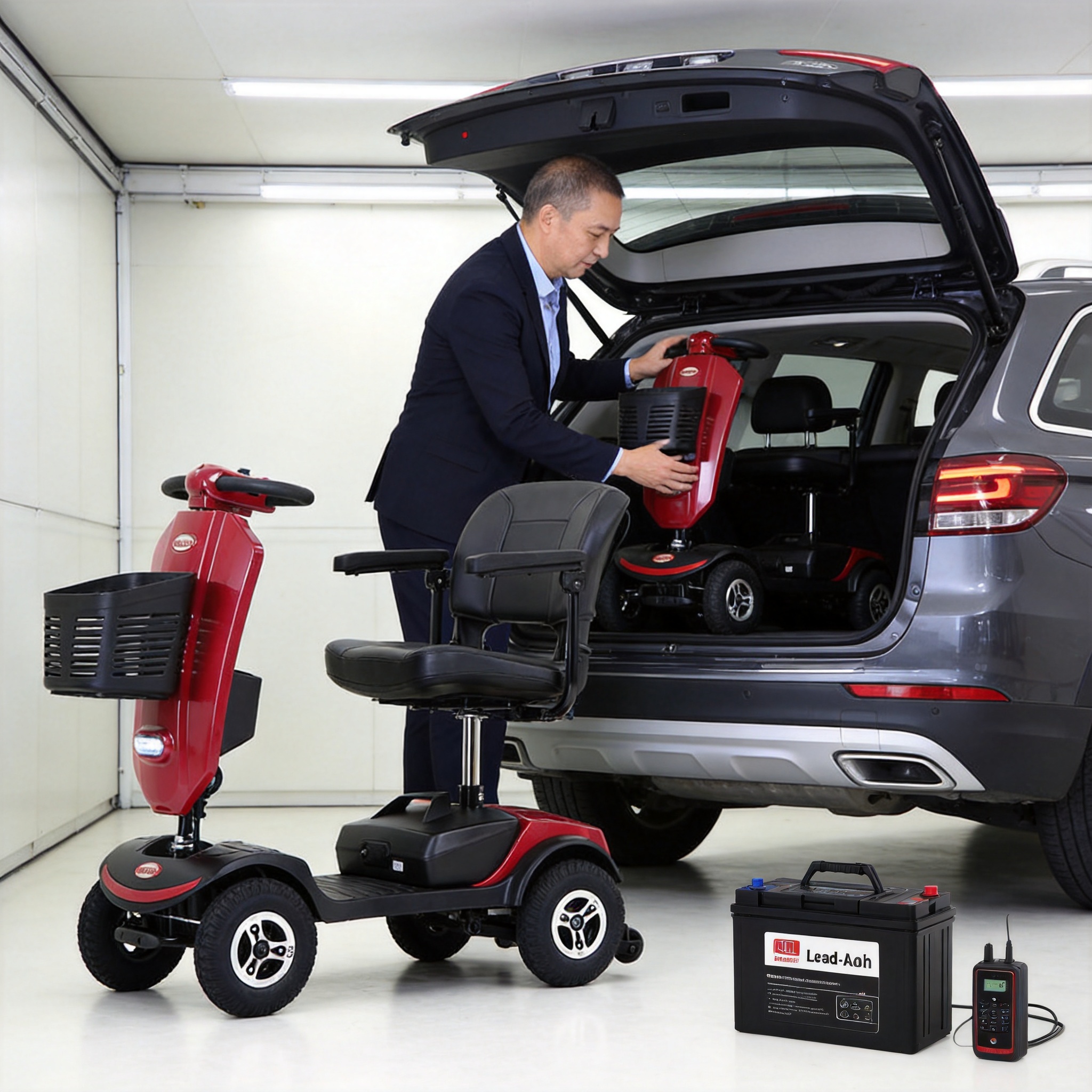
Portability is one of the strongest reasons consumers choose a travel scooter. A scooter may have excellent range and power, but if it is difficult to place in a vehicle or store at home, it may not be used as often as intended. The folding design of the S1 PLUS responds directly to this challenge by making the product more adaptable to transport and storage routines.
A folding scooter can be useful for customers who travel by car, visit family members, take vacations, or need to store their mobility device in a limited space. The folding concept also supports users who want to transition between powered mobility and conventional transportation. Instead of requiring a dedicated vehicle lift or a permanently accessible storage area, a folding travel scooter may be handled within a wider range of transport arrangements.
The listed heaviest part is 28.5 kilograms, or approximately 63 pounds. This is still a substantial weight, and users should consider their individual lifting ability before attempting to load or unload the scooter. However, the figure is meaningful for wholesale positioning because it communicates a more manageable handling profile than many large mobility scooters. Distributors can present the product as portable while still explaining that assistance or appropriate loading equipment may be advisable for some users.
The folding structure also offers inventory and delivery advantages. Retailers may be able to organize boxed units more efficiently than fully assembled, larger products. Service departments may find that a compact configuration is easier to move through a warehouse or workshop. For online sellers and distributors, the travel-oriented format may also help serve customers who specifically search for folding, lightweight, or portable mobility scooters.
Portability does not mean that every user will find the scooter effortless to lift. Product weight, battery configuration, vehicle height, and the user’s physical ability all matter. A responsible sales presentation should therefore describe the scooter as transport-friendly and space-conscious rather than universally effortless to carry. This accurate positioning helps build customer trust and reduces the risk of mismatched expectations.
Practical Benefits of Folding Construction
For home storage, the scooter can be placed in a garage, entry area, storage room, or other designated location with less permanent floor occupation than a larger non-folding model. In a vehicle, the folding format can help customers preserve passenger or luggage space. For distributors, it creates a clear point of difference when comparing the product with traditional full-size mobility scooters.
Folding construction can also improve the product’s appeal to active users. Some customers may not need a scooter continuously throughout the day. They may use it when walking distances become tiring, when visiting large public spaces, or when traveling through areas that would otherwise require prolonged standing or walking. A portable design allows the scooter to be included in more travel plans.
When handled correctly, the folding feature also supports a simpler ownership experience. Customers can establish a repeatable routine: unfold the scooter, inspect the controls and battery level, use the scooter, then fold it for transport or storage. Clear instructions and proper training remain important, but the underlying design supports an easy-to-understand ownership process.
Four-Wheel Stability and Everyday Maneuverability
The S1 PLUS uses four wheels measuring 9 by 3 inches at both the front and rear. The matching tire dimensions create a consistent visual and mechanical configuration. Four-wheel construction may be especially appealing to users who want a stable platform for ordinary travel and who feel more comfortable with a broad wheelbase than with a narrow three-wheel arrangement.
Four-wheel scooters are commonly selected for their balanced handling characteristics. Two front wheels and two rear wheels distribute the scooter’s support points across the chassis. This can help create a composed feeling during straight-line movement and controlled turns. Although every mobility scooter has operating limits, the four-wheel design gives the S1 PLUS a clear advantage in perceived stability over some compact three-wheel alternatives.
The product’s width of 525 millimeters is also relevant. A mobility scooter must balance stability with access. A chassis that is too wide may be difficult to use in homes, elevators, narrow aisles, or vehicle loading spaces. A chassis that is too narrow may not offer the same reassuring stance. The S1 PLUS occupies a practical middle ground for a travel scooter by combining four-wheel support with a relatively compact overall width.
At a maximum speed of approximately 5 miles per hour, the scooter is designed for deliberate movement rather than aggressive acceleration. This makes it suitable for users who want controlled mobility around pedestrians and common travel environments. The operating experience will depend on the surface, slope, rider input, and load, but the performance specification is aligned with ordinary personal transportation.
Retailers should explain that maneuverability depends on the environment. The scooter may perform well in open areas and appropriately sized pathways, while tight turns, crowded spaces, steep cross-slopes, loose surfaces, or uneven terrain require greater attention. Users should maintain a safe speed, keep both hands available for control, and avoid conditions beyond the scooter’s intended operating range.
Powertrain, Motor, and Controller
The S1 PLUS is equipped with a 24-volt, 300-watt motor. This motor specification is appropriate for a compact travel scooter intended to deliver dependable low-speed propulsion. It provides the power needed for everyday movement while remaining consistent with the scooter’s portable format and 5-mile-per-hour maximum speed.
The motor is paired with a 24V/50A dynamic motor controller. The controller is a central part of the electrical system because it manages the relationship between user input, battery output, and motor response. A well-matched controller contributes to predictable acceleration, controlled stopping behavior, and efficient management of the available electrical power.
For the user, the value of the powertrain is not limited to the motor’s wattage. The complete system includes the battery, wiring, controller, throttle or operating controls, braking system, drive wheels, and chassis. These components must work together to create a smooth and dependable experience. The S1 PLUS specification reflects an integrated system approach rather than treating the motor as an isolated feature.
The 24-volt platform is also practical for a compact scooter. It provides a straightforward electrical architecture that can be supported by the listed battery and charger configuration. For distributors, a standardized voltage system may simplify product training, spare-parts discussions, and service documentation, subject to the manufacturer’s procedures and approved replacement components.
Controlled Performance for Travel Use
A travel scooter does not need the same power profile as a heavy-duty outdoor vehicle. Its main tasks are to provide reliable movement, manageable dimensions, and predictable operation. The S1 PLUS motor and controller combination is therefore suited to the product’s intended role. It supports a controlled performance profile that emphasizes accessibility and practical transportation rather than extreme speed or heavy off-road use.
Performance will naturally vary with battery charge, rider weight, gradient, surface condition, temperature, tire condition, and use of accessories. The maximum values in the specification should be treated as reference points, not guarantees for every operating situation. Clear communication of these variables is an important part of responsible product distribution.
Battery Options, Charging, and Range
The S1 PLUS uses a lead-acid battery configuration based on two 12-volt batteries. The listed options include 12Ah and 20Ah capacities, with the 20Ah configuration identified as optional. The battery selection influences the scooter’s usable range, weight, charging behavior, and overall operating profile.
The stated maximum driving range is approximately 15 to 25 kilometers, or about 9.5 to 15.5 miles. This range reflects the available configuration and operating conditions. A lower-capacity battery may provide a shorter travel distance, while the optional 20Ah arrangement may support the upper portion of the stated range under suitable conditions. Actual range is influenced by rider weight, terrain, temperature, tire pressure, stop-and-start driving, battery age, and maintenance.
Lead-acid batteries remain familiar in mobility applications because they are widely understood, relatively straightforward to service through established supply channels, and compatible with many existing mobility-scooter systems. They can provide a practical value proposition for distributors serving customers who prioritize purchase economy and proven battery technology.
The charger is specified as DC 24V/2A with AC 100–240V input. The broad AC input specification supports compatibility with common electrical systems in different markets, although distributors and users must ensure that the supplied charger, plug configuration, and local requirements are appropriate for the intended destination. The listed charging time is approximately six hours.
For daily use, charging habits are important. Customers should use the designated charger, connect it according to the instructions, and allow sufficient charging time before a planned trip. Battery performance can decline when batteries are repeatedly left in a deeply discharged state or stored under unsuitable conditions. Retailers can add value by providing clear guidance on charging routines, storage, inspection, and replacement planning.
Range Planning for Real-World Users
Range should be considered as a planning tool rather than a fixed promise. A customer traveling on level, smooth ground at moderate speed may obtain a different result from a customer traveling up slopes, carrying a heavier load, or frequently stopping and starting. Weather conditions can also affect performance. For this reason, users should plan a reserve rather than relying on the maximum published distance.
For distributors, explaining range factors helps position the product accurately against competing models. Some scooters may advertise a higher maximum range but use larger batteries, heavier frames, or less portable designs. The S1 PLUS emphasizes a practical balance between range and transportability. It is intended for routine local and travel use rather than extended expedition-style journeys.
Safety-Oriented Braking and Suspension
The S1 PLUS uses an electromagnetic brake system. Electromagnetic braking is commonly used in powered mobility products because it can engage when drive power is released, helping the scooter slow and stop in a controlled way. This type of system supports a straightforward operating experience, particularly for users who may prefer not to manage a separate manual brake lever.
The braking system is part of the total control design. Safe stopping also depends on speed, slope, surface condition, battery state, tire condition, rider behavior, and the mechanical condition of the scooter. Users should familiarize themselves with acceleration and stopping characteristics in an open, safe area before entering crowded or unfamiliar environments.
Rear suspension is included to help improve comfort and contact with the riding surface. Suspension can reduce the harshness transmitted through the frame when traveling over minor surface imperfections. It may also support a more composed ride on appropriately maintained paths. Suspension is not a substitute for avoiding potholes, curbs, loose terrain, or obstacles outside the scooter’s intended capability.
The combination of four wheels, rear suspension, and electromagnetic braking creates a coherent travel-scooter package. Each feature addresses a different part of the ownership experience: the wheel layout supports stability, suspension contributes to ride comfort, and the brake system supports controlled stopping. Together, they distinguish the S1 PLUS from very basic compact scooters that may omit suspension or use a less stable configuration.
Responsible Use and Operating Limits
As a non-medical device for the United States market, the S1 PLUS should be presented as a mobility aid for personal transportation and not as a medical treatment device. Product suitability depends on the user’s physical ability, balance, vision, reaction time, environment, and ability to understand and operate the controls. Professional advice may be appropriate for customers with complex mobility needs.
Users should read the operating manual, inspect the scooter before use, check the battery level, verify tire condition, and ensure that the folding mechanism is fully secured before driving. They should use appropriate caution on ramps, slopes, wet surfaces, uneven pavement, and areas with pedestrian traffic. The stated weight capacity of 300 pounds includes the rider and should not be exceeded.
Advantages Over Conventional Competitor Categories
Every mobility scooter has a particular design purpose. A large outdoor scooter may provide higher capacity, more substantial suspension, and longer range, but it may be difficult to transport and store. A very small three-wheel travel scooter may be easy to maneuver but may not provide the same four-wheel support. A manual wheelchair may be light in some configurations but requires physical pushing or assistance. The S1 PLUS competes by occupying a useful middle position between these categories.
Compared with Larger Full-Size Scooters
The first major advantage is portability. Large scooters can be comfortable and powerful, but they often require a vehicle lift, ramp, trailer, or a dedicated transport vehicle. Their size can also make indoor storage challenging. The S1 PLUS folding architecture and 63-pound heaviest part provide a more transport-conscious alternative for customers who still want powered mobility and a 300-pound capacity.
The second advantage is a more compact footprint. At 525 millimeters wide, the S1 PLUS is designed with access and storage in mind. This can make it more appropriate for ordinary homes, shopping environments, and travel situations where a full-size chassis would be inconvenient. The product does not attempt to replace heavy-duty outdoor scooters; instead, it offers a practical option for users whose main priorities are portability and everyday travel.
Compared with Three-Wheel Travel Scooters
Three-wheel scooters can offer a tight turning circle, but some customers prefer the more balanced stance of four wheels. The S1 PLUS provides four-wheel support while maintaining a travel-oriented width and folding format. This combination may appeal to users who are willing to accept a slightly different turning profile in exchange for a greater sense of stability.
The four-wheel design can also be a persuasive retail advantage for families and caregivers. A customer may feel more confident recommending a scooter with four contact points, particularly when the intended user values steadiness. The product should still be operated within its limits, but its architecture gives distributors a clear feature to explain when comparing compact models.
Compared with Basic Folding Scooters
Some basic folding scooters focus almost exclusively on minimum weight and compactness. They may have smaller wheels, limited suspension, lower weight capacities, or fewer comfort-oriented features. The S1 PLUS offers a broader specification, including 9-inch tires, rear suspension, electromagnetic braking, and a 300-pound capacity.
This makes the product more than a simple last-mile device. It remains transport-conscious, but it also provides features associated with a more complete mobility platform. The result is a product that can serve users who need a foldable format without wanting the most stripped-down configuration available.
Compared with Manual Mobility Options
Manual wheelchairs and transport chairs can be useful in many situations, but they require the user or a companion to provide physical propulsion. The S1 PLUS uses an electric motor and controller, allowing the user to travel under powered operation. This can support greater independence for customers who have difficulty walking longer distances or who cannot comfortably propel a manual chair.
The choice between products depends on the individual’s needs, environment, and preferences. The S1 PLUS is not intended to replace every manual or powered mobility device. Its advantage is that it gives users a self-propelled travel option in a folding four-wheel format.
Wholesale and Distribution Value
For wholesale customers, product value includes more than technical specifications. A successful mobility product must be understandable to consumers, practical to stock, supported by manufacturing capability, and adaptable to different sales channels. The S1 PLUS offers a clear retail story: a four-wheel folding scooter designed for users who want portable electric mobility.
The product’s specification supports several sales messages without requiring exaggerated claims. Distributors can emphasize folding convenience, a compact width, a 300-pound capacity, rear suspension, electromagnetic braking, and a choice of battery capacities. These features are easy to organize into product listings, showroom displays, brochures, and dealer training materials.
The product may be suitable for specialty mobility retailers, rehabilitation-equipment distributors, senior-lifestyle retailers, travel-product suppliers, and online dealers. Because it is categorized as a non-medical device for the United States market, sellers should use accurate language and avoid implying that the scooter diagnoses, treats, or cures a medical condition.
Inventory planning can also benefit from the model’s travel orientation. Consumers frequently search for products using terms such as folding scooter, portable mobility scooter, lightweight travel scooter, four-wheel mobility scooter, and electric scooter for transport. The S1 PLUS can be presented around these practical search and purchasing needs while still maintaining a technically accurate description.
Battery options may provide additional wholesale flexibility. Some customers may prioritize a lower initial weight or cost, while others may prefer the optional 20Ah configuration for greater travel potential. Distributors should clearly identify which battery arrangement is included in each order and explain how the selected configuration affects range and weight.
Manufacturing Capability and Engineering Strength
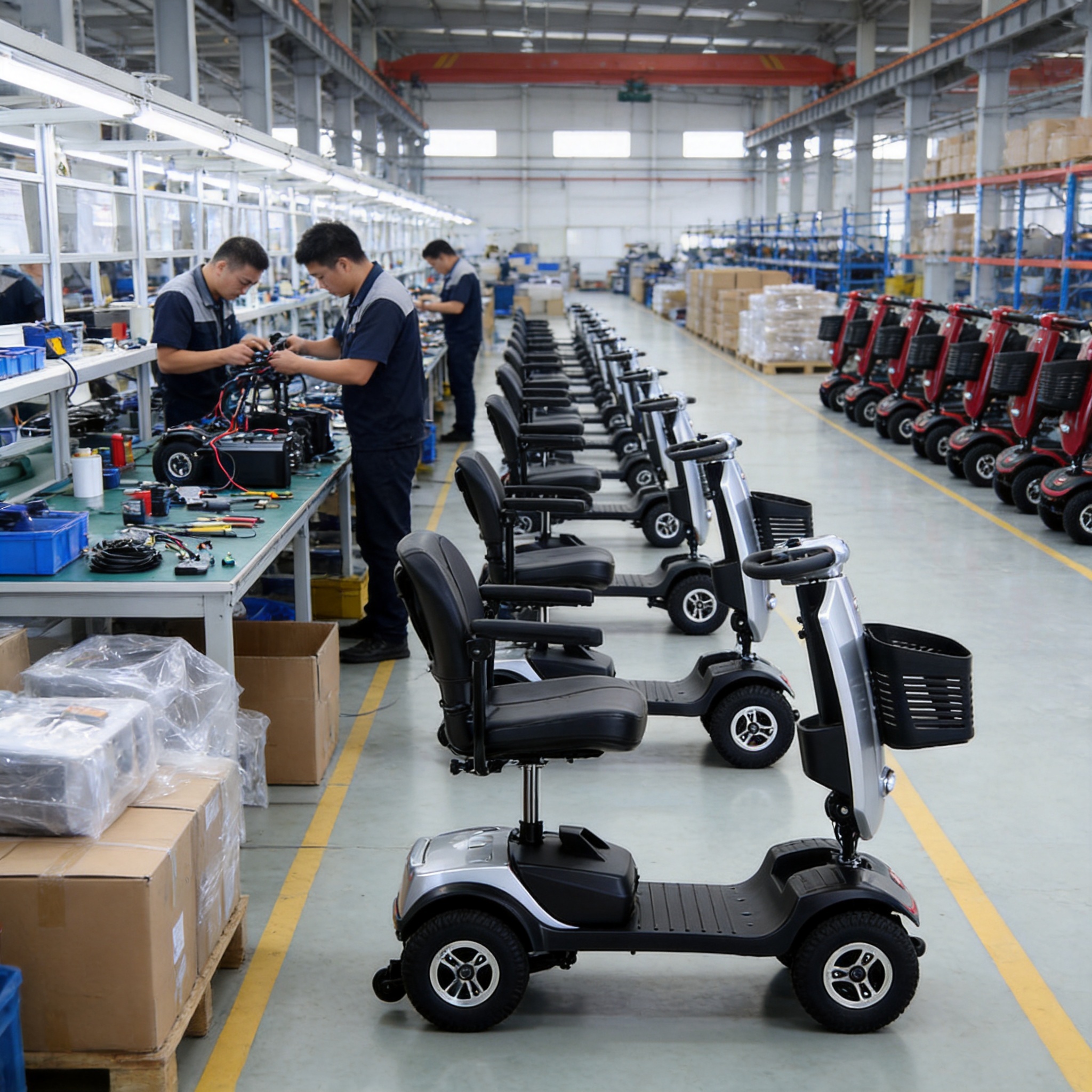
The S1 PLUS is produced by Suzhou Sweetrich Vehicle Industry Technology Co., Ltd., a high-tech company located in Suzhou Industrial Zone, Jiangsu, China. The company was established in 2011 and operates a facility covering approximately 60 acres, including a 30,000-square-meter factory. This scale provides a substantial foundation for product development, assembly, quality management, and wholesale cooperation.
The company has accumulated more than ten years of experience in the research, development, and production of mobility scooters and power wheelchairs. Long-term specialization is important in this sector because mobility products require coordination among mechanical design, electrical systems, ergonomics, battery integration, braking, control technology, and production consistency.
Sweetrich states that it owns intellectual property rights for its electric scooters and power wheelchairs. This indicates an emphasis on developing and controlling product solutions rather than simply relying on generic designs. In practical terms, internal product knowledge can support improvements in chassis design, folding mechanisms, control systems, user comfort, and manufacturing repeatability.
The company’s product-development focus is centered on improving the well-being, convenience, independence, and dignity of elderly and disabled people. This user-centered purpose is relevant to the S1 PLUS because travel scooters must be designed around real routines. A product may be technically functional, but it is more valuable when its controls, transport arrangements, comfort features, and operating characteristics support everyday life.
Integrated Product Development
Mobility scooter manufacturing requires more than attaching a motor to a frame. The design must account for the interaction between structure, battery placement, wheel position, braking, suspension, folding, and control response. The S1 PLUS specification demonstrates this type of integrated thinking. Its four-wheel format supports stability, its folding structure supports portability, its battery options address range, and its controller manages the power system.
Advanced manufacturing in this context means developing a repeatable process in which design intent is carried consistently through material preparation, component production, assembly, testing, inspection, and final packaging. A stable process is particularly important for wholesale buyers because distributors need product consistency across multiple orders and sales territories.
Sweetrich describes its production approach as being supported by strict production management and scientific product design. These principles are relevant to quality assurance because a mobility scooter must perform reliably across repeated cycles of use. Consistent assembly, appropriate inspection, accurate wiring, secure fasteners, and correct control-system integration all contribute to the final customer experience.
Quality and Process Management
The company’s stated quality philosophy places quality first, credit above, and customer service at the center of business relationships. For wholesale customers, this philosophy can be meaningful when supported by responsive communication, clear documentation, consistent specifications, and practical after-sales cooperation.
Quality should be understood as a process rather than a single final inspection. It begins with product design and continues through component selection, supplier coordination, assembly standards, functional checks, packaging, and customer support. A well-managed process can reduce variation and help ensure that the scooter delivered to a distributor matches the product specification presented in sales materials.
For the S1 PLUS, process discipline is especially important because the product combines folding mechanics with an electrical drive system. The folding structure must operate correctly, the chassis must remain secure in its unfolded position, and the electrical system must work in harmony with the motor, controller, battery, charger, and electromagnetic brake. These relationships require careful assembly and functional verification.
International Experience and Market Support
Sweetrich reports that its mobility products are exported to America, Europe, Japan, Australia, the Middle East, Russia, and other markets. International experience can help a manufacturer understand the varied expectations of distributors, retailers, users, and regulatory environments. It can also support better communication regarding packaging, product documentation, market positioning, and service requirements.
A manufacturer with experience across multiple regions may be better prepared to work with different voltage environments, transportation arrangements, customer preferences, and channel structures. The S1 PLUS charger specification includes AC 100–240V input, but distributors should confirm the exact configuration and market suitability for each order.
Global distribution also reinforces the importance of consistent product information. Dimensions, battery options, range, weight capacity, charging time, and operating limitations should be communicated accurately across catalogs and sales platforms. Consistency reduces confusion for dealers and helps customers compare models responsibly.
For wholesale cooperation, the company’s location in Suzhou Industrial Zone provides access to an established manufacturing environment and industrial supply network. The combination of a dedicated factory, product-development experience, and export history offers a foundation for long-term business relationships. Buyers should still conduct their own due diligence regarding order terms, inspection procedures, documentation, service arrangements, and market-specific requirements.
Comfort, Accessibility, and User Experience
Comfort is a central factor in mobility-scooter adoption. Customers are more likely to use a scooter consistently when they feel secure, supported, and able to operate it without unnecessary difficulty. The S1 PLUS addresses comfort through its travel-oriented seating platform, rear suspension, four-wheel layout, and controlled operating speed.
The rear suspension can help reduce the direct transmission of minor bumps through the frame. The 9-inch tires provide a practical contact surface for ordinary paved routes and suitable outdoor paths. Together, these features can make routine journeys more pleasant than they might be on a rigid, very small scooter with minimal wheel diameter.
Accessibility also includes the relationship between the scooter and its surroundings. A compact width can support access through more doorways and around more interior spaces than a wide outdoor model. The folding function can assist with vehicle transport and storage. The 5-mile-per-hour speed is appropriate for a wide range of controlled personal-mobility environments.
Ease of use should not be confused with the absence of a learning period. New users should practice starting, stopping, reversing, turning, and managing slopes in a safe location. Retailers and family members can support this process by explaining the controls, checking the folding mechanism, and helping the user develop safe travel habits.
Maintenance and Ownership Considerations
Regular maintenance supports the performance and service life of any mobility scooter. Owners should keep the scooter clean and dry, inspect the tires, check the folding structure, monitor battery condition, and follow the manufacturer’s maintenance recommendations. The electromagnetic brake and electrical controls should be checked if the scooter behaves differently from normal.
Lead-acid batteries require appropriate charging and storage practices. Users should avoid unauthorized chargers and should not modify the electrical system. Battery replacement should use compatible components and follow the manufacturer’s specifications. Distributors can strengthen customer relationships by keeping commonly requested service items available or by guiding customers toward approved service support.
Tire condition is also important. Underinflation, damage, or excessive wear can affect handling, energy consumption, braking distance, and comfort. The wheels should be inspected before use, especially when the scooter is used outdoors or transported frequently. Fasteners and folding joints should be checked according to the service schedule.
Because the scooter is designed for transport, repeated folding and unfolding should be performed correctly. Users should avoid forcing the mechanism, carrying the scooter by unsuitable parts, or driving before confirming that the scooter is securely unfolded. Proper handling helps protect the frame and contributes to safe operation.
How to Present the Product to Customers
A strong sales presentation should begin with the customer’s travel routine. Ask whether the scooter will be used mainly indoors, outdoors, in shopping centers, around a neighborhood, or for vehicle-based travel. Ask how the scooter will be transported, who will load it, what distances are expected, and whether the user needs a four-wheel configuration for added confidence.
The S1 PLUS can then be introduced as a balanced solution. Its key message is not maximum power or extreme range. Its key message is useful electric mobility in a folding four-wheel platform. This positioning helps the product stand apart from both oversized outdoor scooters and minimal compact models.
Retail language should remain precise. The scooter can be called portable, folding, travel-oriented, four-wheel, electric, and suitable for everyday mobility. Sellers should explain that the 9.5-to-15.5-mile range is dependent on battery configuration and operating conditions. They should also state that the 300-pound capacity includes the rider and that the scooter is a non-medical device.
Images, demonstrations, and showroom displays can help customers understand the folding process, overall dimensions, wheel layout, and control arrangement. A practical demonstration should include safe unfolding, battery placement, charger connection, brake response, and controlled movement. These demonstrations can reduce uncertainty and increase customer confidence.
Recommended Customer Profiles
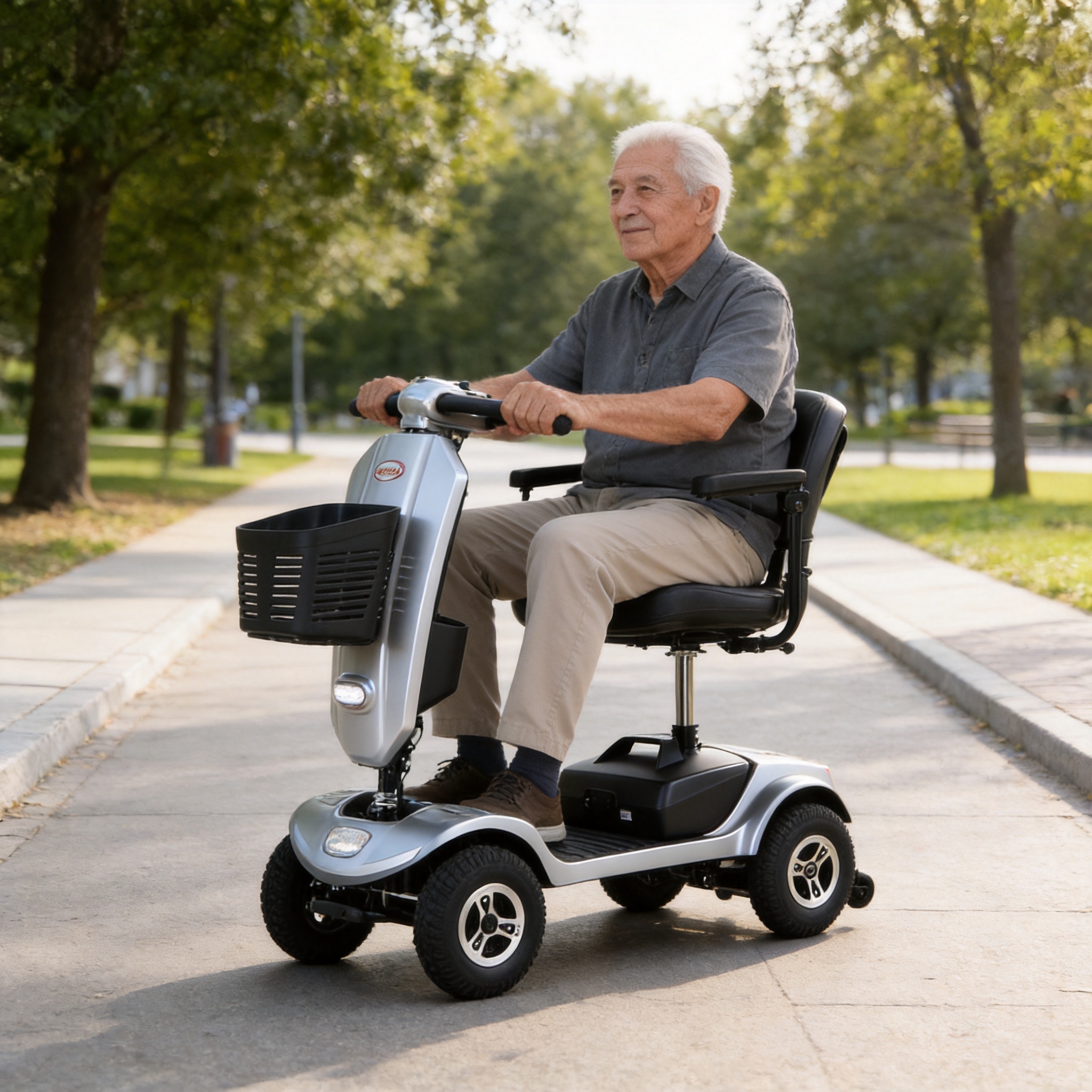
The S1 PLUS may be appropriate for adults who need powered assistance for routine travel and who value a transport-friendly design. It may suit customers who have difficulty walking long distances but can operate a scooter safely and independently. It may also be relevant to travelers who need mobility support at shopping centers, leisure destinations, residential communities, or family visits.
It can be considered by users who prefer four-wheel stability but do not want the size of a heavy-duty scooter. It may also appeal to caregivers and families who are looking for a product that can be stored or transported more easily than a full-size model. The 300-pound capacity expands the potential customer base compared with lower-capacity compact scooters.
However, no single mobility product is suitable for every individual. Users who require specialized seating, advanced medical positioning, very high ground clearance, extensive outdoor range, or heavy-duty performance may need a different type of vehicle. A proper assessment should consider the person, the environment, the intended distance, and the method of transportation.
Frequently Asked Questions
What type of product is the S1 PLUS?
The S1 PLUS is a four-wheel electric folding mobility scooter in the travel smart scooter category. It is intended for personal transportation and is described as a non-medical device for the United States market.
What is the maximum speed?
The listed maximum forward speed is 8 kilometers per hour, or approximately 5 miles per hour. Users should select a safe speed based on the environment, surface, visibility, traffic, and personal ability.
What is the scooter’s driving range?
The stated driving range is approximately 15 to 25 kilometers, or 9.5 to 15.5 miles. The actual distance depends on battery capacity, rider weight, terrain, temperature, tire condition, speed, and stop-and-start operation.
What battery does the scooter use?
The scooter uses two 12-volt lead-acid batteries. The listed configurations include 12Ah and 20Ah capacities, with the 20Ah option available as an upgrade or alternative configuration. Buyers should confirm the exact battery arrangement included in their order.
How long does charging take?
The listed charging time is approximately six hours. Charging should be completed with the designated charger and according to the manufacturer’s instructions.
What is the weight capacity?
The maximum listed weight capacity is 136 kilograms, or approximately 300 pounds. This capacity includes the rider and should not be exceeded.
How heavy is the scooter?
The heaviest listed part weighs 28.5 kilograms, or approximately 63 pounds. This supports a more transport-friendly design than many larger mobility scooters, but some users may still need assistance or suitable loading equipment.
Does the scooter have suspension?
Yes. The S1 PLUS includes rear suspension to help improve ride comfort over suitable surfaces and minor pavement irregularities.
What type of brakes does it use?
The scooter uses an electromagnetic brake system. Users should practice stopping in a safe area and follow all operating and maintenance instructions.
What are the scooter’s dimensions?
The listed dimensions are 1,110 millimeters long, 525 millimeters wide, and 920 millimeters high. The dimensions may be relevant when checking doorways, storage areas, vehicle space, and transport arrangements.
Is the S1 PLUS suitable for steep hills?
The listed maximum driving gradient is 12 degrees. Actual hill performance varies with rider weight, battery charge, surface conditions, temperature, and slope length. Users should avoid slopes and surfaces that exceed their ability or the manufacturer’s operating guidance.
How does it compare with a three-wheel travel scooter?
The S1 PLUS uses four wheels, which may provide a broader and more reassuring support base than some three-wheel travel scooters. A three-wheel model may have a tighter turning circle, so customers should compare the intended environment and their personal preferences before selecting a product.
Is it a medical device?
The supplied product information identifies the S1 PLUS as a non-medical device for the United States market. It should be presented as a personal mobility and transportation product, not as a device that diagnoses, treats, or cures a medical condition.
Who manufactures the product?
The product is manufactured by Suzhou Sweetrich Vehicle Industry Technology Co., Ltd., also known as Sweetrich Mobility. The company is based in Suzhou, Jiangsu, China, and has experience in the research, development, and production of mobility scooters and power wheelchairs.
Conclusion
The S1 PLUS presents a balanced approach to personal electric mobility. Its primary strengths are its folding structure, four-wheel configuration, compact width, 300-pound capacity, rear suspension, electromagnetic braking, and selectable lead-acid battery capacity. Together, these features make it a practical candidate for customers who want powered transportation without the size and handling burden of a full-size mobility scooter.
Its advantage over competing product categories lies in the combination of features. Larger scooters may offer greater outdoor capability but can be difficult to transport. Very small scooters may be easy to store but may provide less stability, lower capacity, or fewer comfort features. The S1 PLUS aims to occupy the useful middle ground: portable enough for travel, stable enough for everyday use, and sufficiently equipped for regular local mobility.
For wholesale buyers, the product is supported by a manufacturer with more than a decade of mobility-industry experience, a substantial factory site, international export experience, intellectual-property ownership, and a stated commitment to strict production management and customer service. These manufacturing strengths provide a foundation for distributor cooperation and consistent product positioning.
When accurately presented and matched to the right user, the S1 PLUS can serve as a dependable travel-oriented mobility solution. Its value is not based on one isolated specification, but on the interaction of portability, four-wheel support, controlled electric performance, practical range, user comfort, and manufacturer experience.
References
1. Sweetrich Mobility. S1 PLUS Product Specification Sheet. Product dimensions, performance, battery, motor, braking, suspension, and capacity information.
2. Suzhou Sweetrich Vehicle Industry Technology Co., Ltd. Company Profile. Manufacturing history, factory information, product-development focus, and international market experience.
3. Manufacturer’s Product Information. Travel Smart Scooter Category and Non-Medical Device Positioning for the United States Market.
4. Mobility Scooter Operating and Maintenance Principles. General guidance concerning battery charging, tire inspection, braking, safe operation, and storage.
5. Electric Mobility Product Distribution Practices. General considerations for wholesale product positioning, customer education, inventory planning, and after-sales support.