
 +86-(0)512-82283871
Content
- 1 Why Does Adjustable Design Matter for Seniors?
- 2 How Do Adjustable Armrests Support a More Natural Sitting Position?
- 3 Can Adjustable Armrests Make Getting On and Off Easier?
- 4 How Do Adjustable Tillers Help Position the Hands?
- 5 Why Does Tiller Angle Matter During Everyday Riding?
- 6 How Are Adjustable Armrests and Tillers Connected?
- 7 What Does This Mean for a 4 Wheel Travel Scooter?
- 8 How Can Adjustable Components Improve the Relationship Between Rider and Scooter?
- 9 What Should Be Considered When Choosing Adjustable Positions?
- 10 Why Is Adjustable Design an Important Part of Travel Scooters?
A Travel Scooter for Seniors needs to fit the rider as well as provide a practical way to move from one place to another. People may have different arm lengths, sitting habits, shoulder positions, and preferred riding postures. A fixed seat or control position may therefore feel comfortable for one person but less suitable for another.
Adjustable design offers a simple way to deal with this difference. Instead of asking the rider to adapt completely to a fixed structure, certain parts of the scooter can be positioned around the rider. Armrests and tillers are two clear examples. One supports the arms while seated, while the other determines where the hands meet the controls.
Although they serve different purposes, both are closely related to the same idea: creating a more suitable connection between the person and the scooter.
Why Does Adjustable Design Matter for Seniors?
A scooter places the rider in a defined sitting position. The seat determines where the body rests, while the armrests and tiller shape the space around the upper body. When these parts cannot be changed, the rider has fewer options for adjusting the relationship between them.
Small differences in body shape can make that relationship feel different. Arm length affects where the hands naturally fall. Shoulder position affects how the arms rest. Sitting height can change the distance between the body and the controls.
Adjustable parts allow some of these differences to be accommodated without changing the basic structure of the scooter.
The idea is not about adding movement for its own sake. A useful adjustment should have a clear purpose. It may help bring the arms into a more natural resting position, place the hands closer to the controls, or create additional space when entering and leaving the seat.
This approach also changes how scooter comfort can be viewed. Instead of treating the seat as the only part that affects posture, the whole area around the rider becomes relevant.
The seat, armrests, and tiller form a connected space. Adjusting one part can change how the others feel, which makes coordination between these components important.
How Do Adjustable Armrests Support a More Natural Sitting Position?
Armrests give the arms a place to rest during travel. Their position can affect the way the shoulders, elbows, and upper body are held.
When an armrest sits at a suitable height, the arm can rest without requiring unnecessary lifting or downward pressure. A different rider may prefer a slightly different position because of body proportions or sitting habits. Adjustable armrests provide room for that change.
The position also needs to work with the seat back. If the armrests are too high in relation to the seat, the shoulders may remain raised. If they are too low, the arms may rest in a less natural position. Neither situation is necessarily caused by the seat alone. The relationship between the seat and armrests matters.
Width and side position can also influence the sitting space. A rider may prefer the arms to remain closer to the body, while another may need a little more room. Adjustable construction can accommodate some of these differences without requiring a different scooter layout.
A useful adjustment usually has a direct effect on the riding position:
- The arm can rest closer to its natural position.
- The shoulder can remain more relaxed.
- The elbow can have a practical resting point.
- The upper body can stay better aligned with the seat.
These small changes can influence how the scooter feels during ordinary travel. The value comes from the relationship between the rider and the structure, rather than from the adjustment mechanism itself.
Can Adjustable Armrests Make Getting On and Off Easier?
Armrests have another role when the scooter is not moving. Their position can affect how easily the rider enters or leaves the seat.
A fixed armrest may remain beside the body at all times. Depending on the seat arrangement, this can limit the available space around the side of the seat. An adjustable or movable armrest can create more room when access is needed.
This does not mean the armrest should be treated only as an entry aid. During travel, it still provides a resting area for the arms. The useful design challenge is to allow both functions to coexist.
A practical armrest may therefore need to move between two situations:
During riding
- Provides a stable place for the arms.
- Supports the selected sitting position.
- Works with the seat back and body posture.
When entering or leaving
- Allows additional space beside the seat.
- Reduces unnecessary obstruction around the seating area.
- Can return to a secure riding position afterward.
The transition between these situations is important. An adjustment that is useful in one position but awkward to return to may create another problem. The movement should therefore remain simple and predictable.
This also explains why adjustable armrests are not merely a comfort feature. Their position can influence how the rider interacts with the entire seating area.
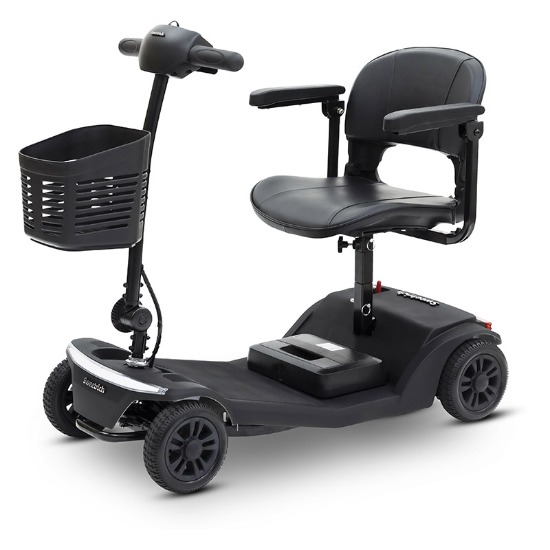
How Do Adjustable Tillers Help Position the Hands?
The tiller creates the main connection between the rider's hands and the scooter controls. Its position therefore has a direct relationship with arm movement and upper-body posture.
A fixed tiller may place the controls at a set distance from the seat. For some riders, that position may feel natural. For others, the hands may need to reach forward more than preferred.
An adjustable tiller allows the control area to move in relation to the rider. Bringing it closer can reduce unnecessary reaching, while moving it farther away can provide additional space for a rider who prefers a more open position.
The angle also matters. Changing the tiller's position can alter the height and direction of the hand placement. This affects the relationship between the hands, elbows, shoulders, and upper body.
A suitable position should allow the rider to interact with the controls without constantly changing the seated posture. The hands need to reach the controls, but the rest of the body should not have to compensate for an unsuitable control position.
This is where the two adjustable components begin to connect. Armrests influence where the arms rest, while the tiller determines where the hands operate the scooter. Their positions need to make sense together rather than being adjusted as completely separate parts.
Why Does Tiller Angle Matter During Everyday Riding?
Tiller position affects more than the distance between the hands and the controls. Its angle also changes the direction in which the hands and arms are positioned during riding.
A tiller that sits too far forward may require the arms to reach outward. A position that comes too close may leave less room between the hands and the upper body. Both situations can change the way the shoulders and elbows are held.
The angle also needs to work with the seat position. A rider sitting farther back may need a different tiller setting from a rider who naturally sits closer to the front of the seat. The same scooter can therefore feel different when the relationship between the seat and tiller changes.
An adjustable tiller provides room for these differences. The adjustment can influence:
the distance between the hands and the body;
- the height of the control area;
- the angle of the arms;
- the amount of forward reaching required.
The purpose is not to create a complicated range of movement. Useful adjustment comes from allowing the control position to match the seated position more naturally.
This becomes particularly relevant during everyday riding. A scooter may be used while sitting upright, during a relaxed journey, or while stopping briefly. A suitable tiller position can help maintain a consistent relationship between the hands and the controls across these situations.
How Are Adjustable Armrests and Tillers Connected?
Armrests and tillers serve different functions, but both occupy the space around the rider's arms.
The armrests provide support when the arms are resting. The tiller determines where the hands need to move when the scooter is being controlled. If the two positions are poorly matched, the arms may need to move between noticeably different positions.
A more coordinated arrangement creates a smoother transition between resting and operating.
For example, an arm can rest naturally along the armrest during a pause. When the scooter begins moving, the hand can move toward the tiller without requiring a large change in shoulder position. The exact setting will vary with the rider and seat position, but the underlying principle remains the same.
| Adjustable Part | Main Position Affected | Practical Role |
|---|---|---|
| Armrests | Arms and shoulders | Provides a suitable resting position |
| Tiller | Hands and upper body | Brings the controls into a practical position |
| Both together | Overall riding posture | Helps coordinate resting and operating positions |
This connection is one reason adjustable design can have a broader effect than a single component might suggest. Each adjustment changes one part of the riding space, while the combined settings influence how the body interacts with the scooter.
The aim is not to create a particular posture for every rider. It is to provide enough flexibility for different natural sitting and hand positions.
What Does This Mean for a 4 Wheel Travel Scooter?
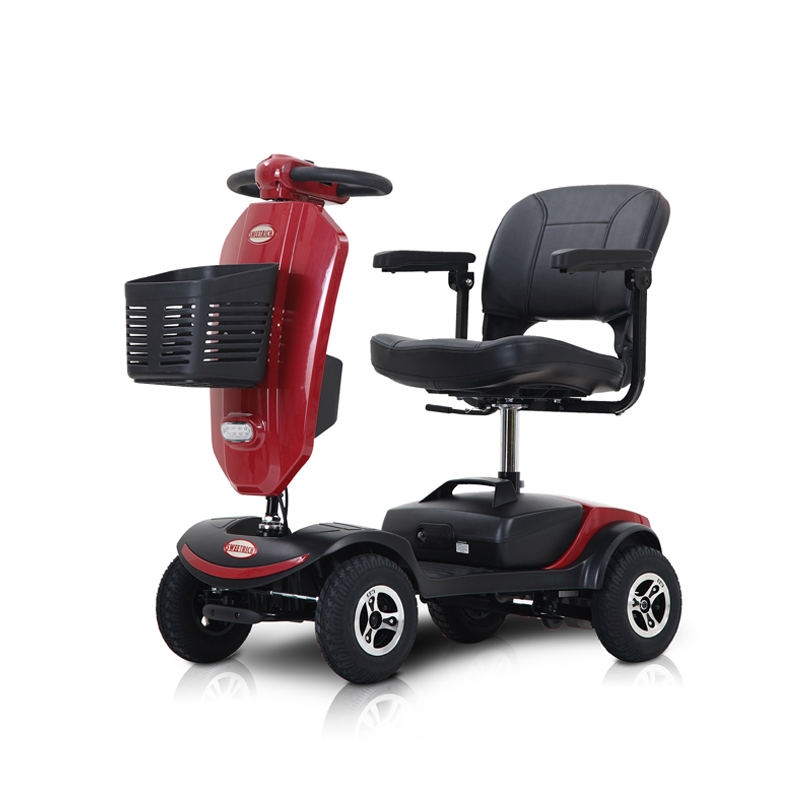
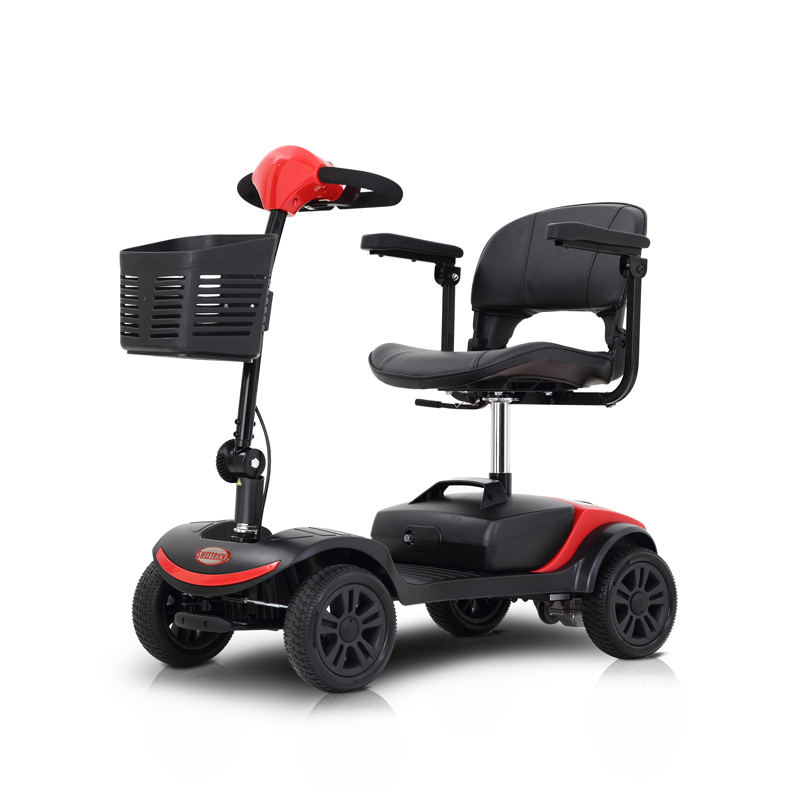
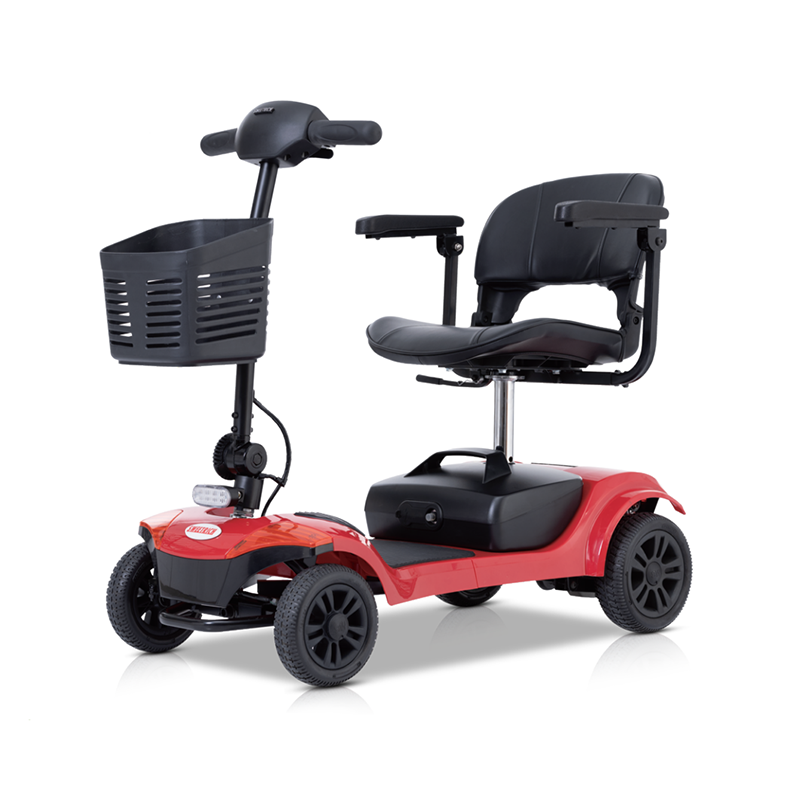
A 4 Wheel Travel Scooter has a four-point wheel arrangement that supports the scooter body during movement. That layout also influences the relationship between the seat, frame, and steering area.
However, wheel arrangement alone does not determine whether the riding position feels suitable. The upper part of the scooter still needs to accommodate the rider's body. Armrests and tillers remain important because they define where the arms can rest and where the hands interact with the controls.
Seat location can influence the distance to the tiller. Armrest position can affect how the arms sit beside the body. These relationships remain relevant regardless of the particular wheel arrangement.
For a portable scooter, the design also needs to maintain a practical balance between adjustability and simplicity. Components that move should not make the seating area unnecessarily complicated. The adjustment should serve a clear purpose and remain stable once the desired position has been selected.
The four-wheel layout can therefore be considered as part of the overall structure rather than the main focus of the adjustment system. The key question remains how the rider fits into the space created by the seat, armrests, and tiller.
How Can Adjustable Components Improve the Relationship Between Rider and Scooter?
A fixed scooter structure places the rider within a predetermined space. Adjustable components create some flexibility within that space.
This difference becomes easier to see when comparing the two main adjustment areas. Armrests respond to the resting position of the arms. Tillers respond to the operating position of the hands. Both can be changed without replacing the complete seating or steering structure.
The resulting relationship can be more adaptable:
- The seat provides the main body support.
- The armrests provide a resting position for the arms.
- The tiller provides a working position for the hands.
Adjustment connects these positions according to the rider's proportions and preferred posture.
This approach is particularly relevant to a Travel Scooter for Seniors because body proportions and sitting preferences can vary considerably between individuals. A fixed arrangement may not provide the same level of comfort for every rider.
Adjustable design does not need to involve a large number of moving parts. Small changes in height, angle, or distance can influence how the upper body interacts with the scooter.
The important point is coordination. An armrest may be comfortable on its own, but the benefit can change when the tiller sits too far away. Likewise, a well-positioned tiller may still feel less natural when the armrests place the arms in an unsuitable resting position.
What Should Be Considered When Choosing Adjustable Positions?
Adjustability becomes useful when the available positions correspond to real differences in riding posture. Excessive movement does not necessarily create a better fit. The adjustment should provide meaningful changes while keeping the structure easy to operate.
Several details deserve attention:
- Position: The selected setting should match the seated posture.
- Stability: Armrests and tillers need to remain secure after adjustment.
- Ease of movement: Changes should not require complicated steps.
- Coordination: Armrest and tiller positions should work together.
- Consistency: The selected setting should remain predictable during ordinary use.
The relationship with the seat should also remain central. A change in tiller angle may affect the hand position, while a change in armrest height may alter the shoulder position. Adjustments therefore work as a connected system rather than as isolated settings.
For a Travel Scooter for Seniors, this approach keeps the design focused on practical use. The purpose of adjustable parts is not to add unnecessary complexity. Their role is to provide enough flexibility for different riders to find a suitable relationship with the scooter.
Why Is Adjustable Design an Important Part of Travel Scooters?
The value of adjustable design can be seen in a simple difference between fixed and adaptable structures. A fixed structure gives the rider one predetermined relationship with the scooter. An adjustable structure allows selected parts to move around differences in body shape and sitting preference.
The armrest deals mainly with where the arms rest. The tiller deals mainly with where the hands operate the controls. Neither component needs to solve every aspect of riding comfort. Their functions are more specific, and their value comes from how they work together.
For a Travel Scooter for Seniors, this can make the seating and control area more adaptable without changing the basic purpose of the scooter. A suitable armrest position can support the resting posture, while an appropriate tiller position can bring the controls into a practical hand position.
The same principle applies to a 4 Wheel Travel Scooter. The wheel layout forms part of the overall structure, but the relationship between the rider and the upper control area still depends on seat, armrest, and tiller positioning.
Adjustable design therefore has a straightforward purpose: allowing the scooter to accommodate different riders rather than requiring every rider to fit the same fixed arrangement. When armrests and tillers are considered together, small adjustments can shape a more natural connection between the person and the machine.