
 +86-(0)512-82283871
Content
- 1 Why Repeated Folding Can Wear a Scooter Mechanism
- 2 How Manufacturers Prepare a Folding Durability Test
- 3 Four Main Checks in a Folding Durability Test
- 4 What Manufacturers Should Record During Testing
- 5 What Happens When a Scooter Fails the Test?
- 6 How Folding Tests Connect to Production Quality Control
- 7 Questions B2B Buyers Should Ask Before Ordering
- 8 Choosing an Electric Foldable Mobility Scooter Manufacturer
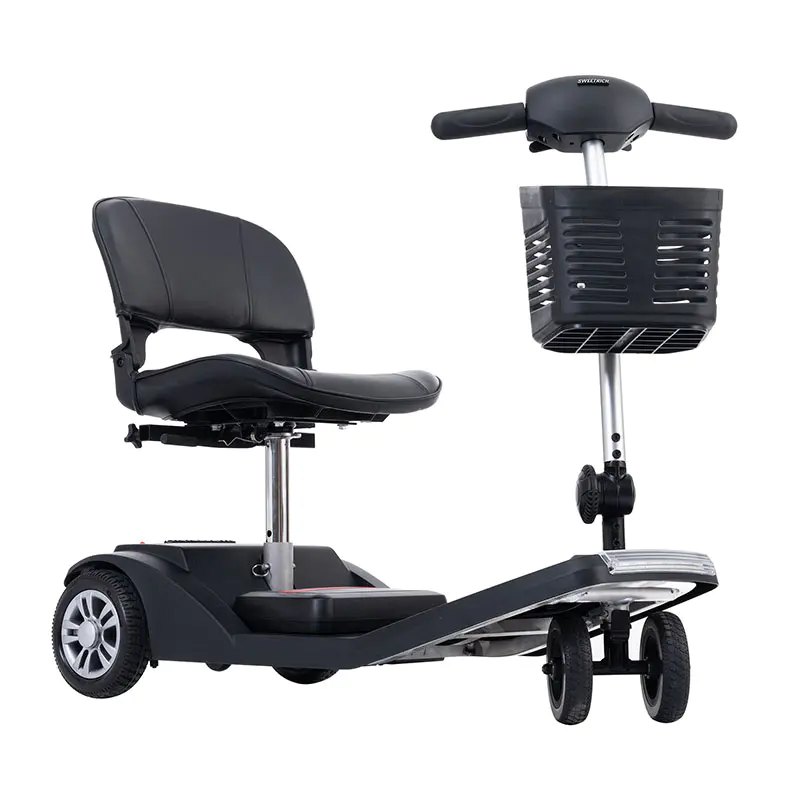
A folding mobility scooter can feel solid when it is new, then become awkward to handle after months of use. The hinge may develop play, the latch may need a harder push, or the frame may stop lining up cleanly. For someone who folds the scooter before putting it into a car, these small changes can soon become a daily annoyance.
A quick showroom demonstration will not reveal this kind of wear. Manufacturers need to repeat the folding process, inspect the moving parts, and record whether anything changes. For importers, distributors, and mobility equipment brands, those records are worth checking before placing a bulk order. Similar-looking scooters can use different hinges and latches, and may have been tested in very different ways.
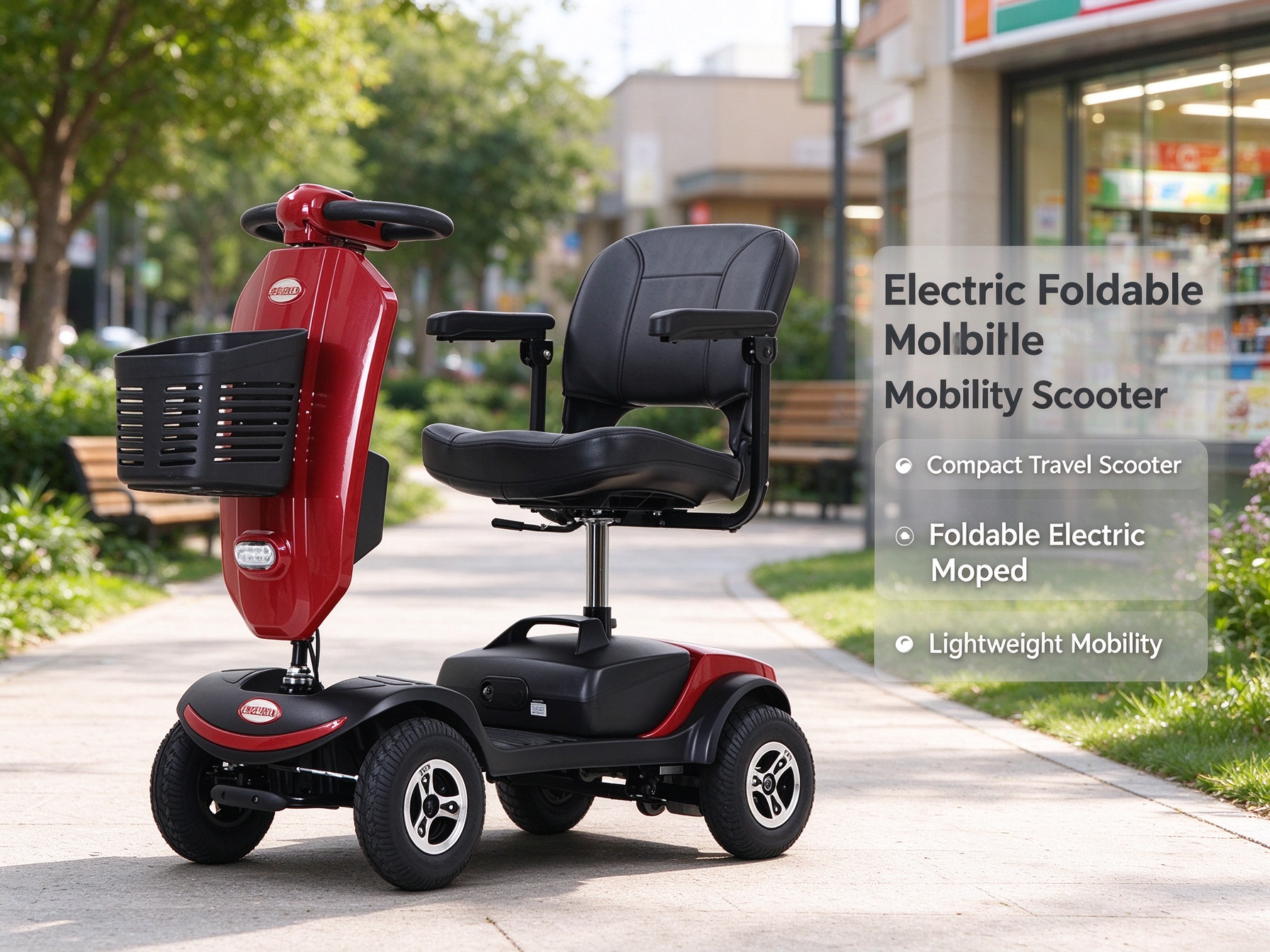
Why Repeated Folding Can Wear a Scooter Mechanism
The folding joint moves every time the scooter is packed away. The hinge rotates, the latch engages, and the frame sections settle into position. That repeated movement creates friction and puts force on pins, brackets, fasteners, and the parts that keep the frame aligned.
Wear may begin with a small change. A pivot pin rubs against its bushing; a screw starts to loosen; or a bracket flexes slightly on each cycle. Later, the latch may not line up as easily, or the scooter may rattle when it is moved. The mechanism can still fold, but that does not mean it is working properly.
How often the scooter is folded matters. A person who travels occasionally may use the mechanism only now and then. Someone who loads a scooter into a car every day will cycle it much more often. Rental units may see even heavier use, and different users may handle the latch in different ways. A useful durability test should reflect the way the product is expected to be used.
How Manufacturers Prepare a Folding Durability Test
The test needs to match the scooter's actual design. A model with one main hinge and a latch will not need exactly the same checks as one with several folding sections or an additional safety catch.
Before testing, inspectors record the scooter's condition. They may check hinge movement, latch engagement, frame alignment, fasteners, visible gaps, and any existing damage. This baseline matters: without it, a team cannot easily tell whether a fault appeared during testing or was already there.
The procedure must also define one complete cycle. In many cases, the scooter is folded using the intended release method, then opened fully and locked again. Moving the hinge partway is not a meaningful substitute for the full operation a user performs.
Cycle targets should have a reason behind them, such as an engineering requirement, customer specification, or expected usage level. No single cycle count proves that every scooter will last a fixed number of years. A useful report names the model, test method, number of completed cycles, inspection points, and any faults found.
Four Main Checks in a Folding Durability Test
1. Repeated Folding and Unfolding
The basic test is simple: fold the scooter, open it, lock it, and repeat. A fixture can keep the movement consistent, or an operator can follow a written procedure. The important thing is to use the same sequence each time and follow the instructions intended for normal operation.
During the test, technicians watch for sticking, uneven movement, rubbing, or a latch that needs more effort to close. Inspections at set intervals can show when a change begins. If the mechanism starts to bind, the team should inspect it instead of pushing on until the target cycle count is reached.
The test should not quietly turn into a misuse test. Forcing the frame shut while the latch is still engaged, for example, creates a different kind of stress. If a manufacturer wants to test that situation, it should be recorded separately.
2. Lock Engagement and Retention
The latch has to secure the frame when the scooter is open. A folding mechanism can move smoothly and still fail to lock properly, so technicians need to check engagement itself, not just whether the handle looks closed.
They inspect whether the locking parts meet in the right position, whether the latch seats fully, and whether it stays engaged during the specified checks. They may also record the force needed to operate it and note any change after repeated cycles. If the scooter has a secondary catch, that part needs checking too.
Ease of operation matters. A latch that takes too much hand strength can frustrate users, while one that feels loose or slips out of position raises a different concern. The aim is a secure lock that users can operate as intended.
3. Hinge Wear and Frame Alignment
After repeated folding, technicians look at the hinge, pivot, fasteners, brackets, and surrounding frame. They check for wear, deformation, loosened hardware, and movement beyond the design limit. They also open the scooter and see whether the frame sections still meet in the right position.
A misaligned frame can make the latch hard to close even when the latch itself is not damaged. That is why replacing the latch without investigating the hinge may solve very little. Measurements and comparisons with the original inspection are more useful than judging the joint by appearance alone.
New clicks, scraping, or rattling are worth investigating, though noise on its own does not prove failure. The technician needs to check whether the sound comes with extra movement, damaged surfaces, or a change in locking performance.
4. Checks Under More Realistic Conditions
Bench testing keeps the procedure consistent, but real handling is less tidy. A scooter may be folded in a cramped space, carried to a vehicle, or handled by someone unfamiliar with the model.
Depending on the product, manufacturers may add transport-related handling or other use-related checks. Those steps should reflect actual risks, not random extra stress. The procedure and conditions need to be recorded so the results can be understood and repeated.
A scooter designed for frequent car travel may have a different use pattern from one intended for a rental fleet. Rental units can be folded often and handled by many people. The test plan should account for that difference.
What Manufacturers Should Record During Testing
A simple pass/fail mark leaves too many questions unanswered. The record should show what was checked and whether the mechanism changed during testing.
|
Test area |
What is checked |
Warning signs |
|---|---|---|
|
Folding cycle |
Full folding and unfolding movement |
Sticking, uneven travel, or extra effort |
|
Locking system |
Engagement and retention |
Partial engagement, slipping, inconsistent closure |
|
Hinge and pivot |
Wear, clearance, fasteners |
Excess movement, damaged surfaces, loose joints |
|
Frame alignment |
Position when the scooter is open |
Misalignment or a latch that no longer lines up |
|
Connected parts |
Brackets, covers, nearby hardware |
Cracks, deformation, rubbing marks |
|
Final operation |
Folding and locking after the test |
New noise, resistance, unreliable engagement |
Inspectors should compare the final condition with the initial record. Photos and measurements can show whether a joint has developed more play or the latch has shifted. A report that names the model and test conditions gives buyers something to assess; a statement saying only that the scooter passed does not.
What Happens When a Scooter Fails the Test?
A failed test should lead to an investigation, not an immediate guess at the fix. If a latch stops lining up, the cause might be a worn pin, a bracket that has moved, or a hinge with too much play. Replacing the latch alone will not help if the frame is the part shifting out of position.
The manufacturer may adjust a component's dimensions, change a material, reinforce a mounting point, or revise the fit between moving parts. The revised mechanism then needs to be checked again. A new part that looks right on the assembly bench has not proved itself until it has gone through the relevant test.
There can be trade-offs. Tightening a hinge may reduce looseness but make folding harder. A stronger latch might add weight or demand more hand force. Engineers need to check the whole mechanism after a change, not just confirm that the original symptom has disappeared.
This matters for OEM orders in particular. If a buyer requests a different frame, hinge, or locking arrangement, the original test results may not fully cover the updated design. The supplier should assess the effect of the change and repeat testing where needed.
How Folding Tests Connect to Production Quality Control
Development testing checks whether the design meets its requirements. Production inspection checks whether the scooters being shipped match that design. Both matter: a sound design can still produce inconsistent units if components vary or assembly is poorly controlled.
Factory checks may cover hinge fit, key dimensions, fastener installation, latch operation, and the finished scooter's folding action. A full-life cycle test on every unit is not always practical; the sampling plan should follow the manufacturer's quality system and the risks involved.
When an inspection finds a problem, the factory should record it, identify affected units where possible, and verify the corrective action. For repeat orders, buyers should also ask how design revisions and production changes are tracked. That helps keep the delivered product consistent with the approved sample.
Questions B2B Buyers Should Ask Before Ordering
A product demo shows that a scooter folds today. It says little about how the mechanism behaved after repeated use. When comparing suppliers, ask a few specific questions:
- How many folding cycles were completed, and why was that target chosen? The supplier should be able to explain the basis for the number.
- What did you inspect before and after the test? Ask about hinge movement, latch engagement, frame alignment, and fasteners.
- How do you confirm the latch is fully engaged? Look for an actual check, not just a visual glance.
- What happens when a test fails? Find out whether the cause is investigated and the revised design is retested.
- How are finished production units checked? Development results do not replace assembly inspection.
- Will the same test cover our customized model? Changes to the frame or folding structure may need extra verification.
A sample report with confidential details removed can answer many of these questions. It should identify the model, cycle count, procedure, results, and any corrective work. If a supplier can offer only a general assurance that the scooter has been tested, it is difficult to compare that claim with another manufacturer's process.
Choosing an Electric Foldable Mobility Scooter Manufacturer
A smooth demonstration is only one small part of the picture. Hinge and latch design, consistent assembly, and the way test results are handled all affect how a scooter performs after repeated use.
When comparing electric foldable mobility scooter manufacturers, ask for records tied to the model you plan to buy. Check what was tested, what changed during the test, and how the factory handles failures. For OEM projects, confirm that the supplier has reviewed any design changes that could affect folding durability.
A factory may discover a problem and need to revise the design. What matters is whether it can explain the cause, show what changed, and provide results from the follow-up test. That is more useful to a B2B buyer than a broad promise that every scooter is built to last.