
 +86-(0)512-82283871
Content
- 1 Match the Control to the Intended User
- 2 Check Proportional Control and Driving Response
- 3 Look at Speed and Sensitivity Adjustments
- 4 Choose a Comfortable Knob and Mounting Position
- 5 Understand Safety Behaviour and Fault Indications
- 6 Verify Electrical Compatibility and Serviceability
- 7 Test the Finished Chair Before Approving a Bulk Order
- 8 Include Joystick Details in the Purchase Specification
- 9 Make Joystick Performance Part of Product Approval
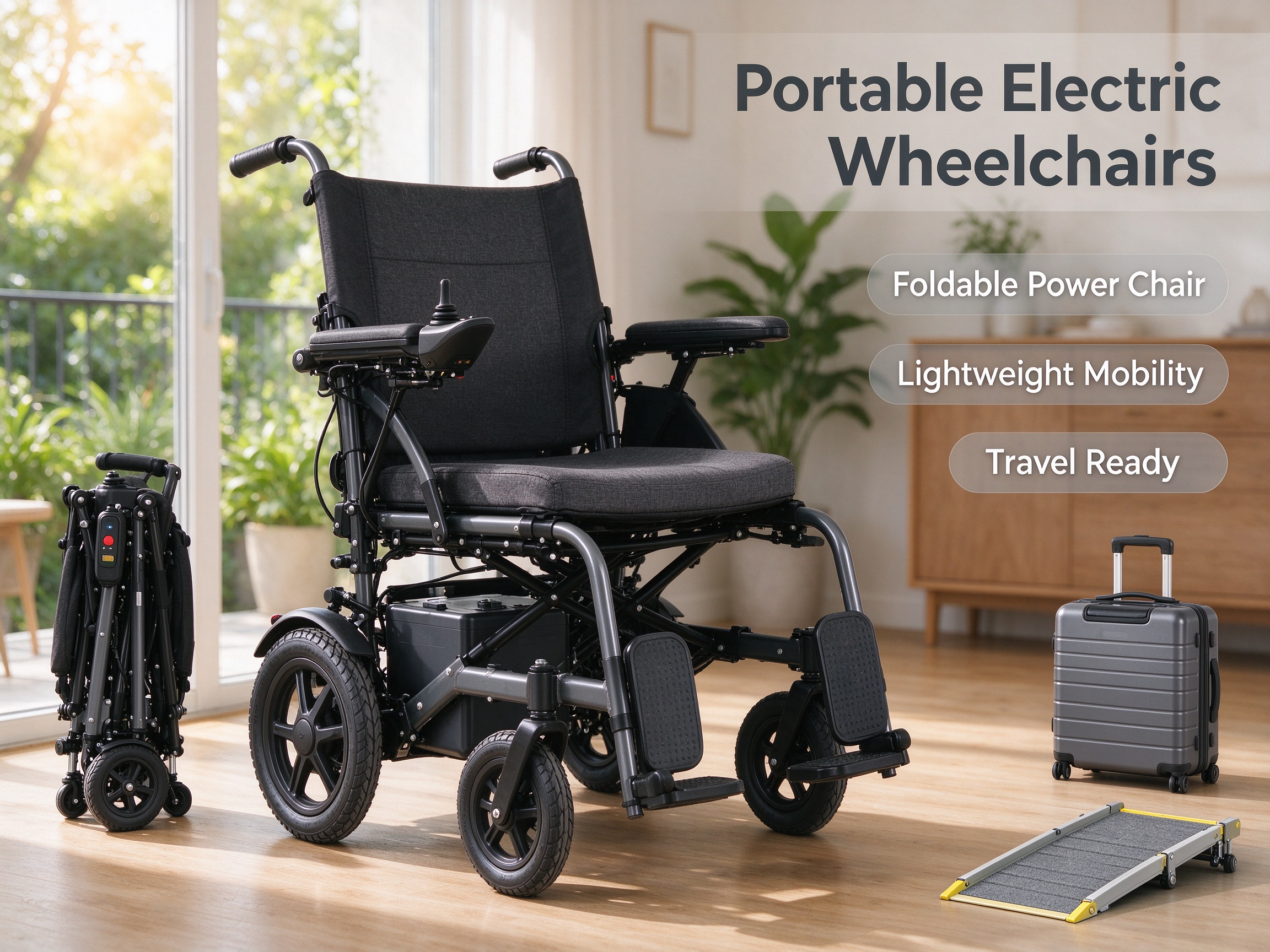
The joystick is one of the parts of a portable electric wheelchair that users notice straight away. It affects how easily the chair turns in a hallway, approaches a table, moves through a shop, or stops near another person. A wheelchair can be compact and easy to fold, yet frustrating to use if the control feels jerky, responds too sharply, or is difficult to reach.
For distributors, importers, and mobility equipment brands, checking that a chair moves forward and backward is not enough. Buyers should assess grip comfort, control response, adjustment options, safety behaviour, electrical compatibility, and after-sales support. These details help determine whether the chair suits its intended users and whether the same experience can be maintained across repeat orders.
Match the Control to the Intended User
There is no single joystick setup that suits every user. Someone who mainly moves around at home may need careful low-speed movement and tight turning. A person using the chair in shopping centres or public buildings may value predictable response in busier spaces. Users with limited hand strength or dexterity may need a joystick that is easy to grip and move.
Before comparing specifications, identify the main use cases:
- Indoor use: Smooth starts, accurate positioning, and manageable turns in narrow spaces.
- Travel and public areas: Clear speed choices and predictable movement around people and furniture.
- Users with limited dexterity: A suitable knob shape, comfortable reach, and manageable stick resistance.
- Outdoor use: Settings that are easy to control when the surface changes, provided the chair itself is designed for that environment.
A highly sensitive joystick is not automatically a better one. Some users like a quick response; others may find it abrupt. Buyers should ask if the control can be configured for the intended user group and whether the setup can be repeated reliably.
Check Proportional Control and Driving Response
Many powered wheelchairs use proportional joystick control. The direction and amount of stick movement influence the chair’s direction and speed, within the limits set by the controller. A small movement should allow slow manoeuvring, while a larger movement requests more speed.
The final response depends on the joystick, controller, drive system, and programming. During a demonstration, check how the chair behaves at small, medium, and larger joystick movements. Pay attention to whether it starts smoothly, turns predictably, and responds consistently when the user changes direction.
Important points include:
- Low-speed control: Can the user make small adjustments without repeated corrections?
- Smooth starts: Does the chair move off without an unexpected surge?
- Turning response: Is it manageable in tight spaces and during changes of direction?
- Neutral return: Does the joystick return to its intended neutral position when released?
- Consistency: Do chairs of the same model behave similarly under the same settings?
A brief showroom drive may not reveal every issue. For bulk orders, buyers should document the control configuration used during sample approval and make sure production units are checked against it.
Look at Speed and Sensitivity Adjustments
Maximum speed and joystick sensitivity are related, but they serve different purposes. A speed setting limits how fast the chair can travel. Sensitivity and response programming influence how the chair reacts to joystick movement, including acceleration, deceleration, and turning behaviour.
Depending on the controller, portable electric wheelchairs may offer multiple speed levels or adjustable response settings. Buyers should confirm which features are actually available on the model being quoted.
|
Feature |
Why it matters |
What to confirm |
|---|---|---|
|
Multiple speed levels |
Lets users choose a suitable pace for different spaces |
Number of levels and how to switch between them |
|
Acceleration setting |
May help limit sudden movement when starting |
Whether it can be adjusted and tested |
|
Deceleration response |
Affects how the chair slows after joystick input changes |
What happens when the stick returns to neutral |
|
Turning response |
Affects manoeuvring in confined spaces |
How the chair turns at different speeds |
|
Controller programming |
Helps tailor the driving response |
Who can change settings and how the final setup is recorded |
Adjustability is useful only if it can be managed safely. If changes require specialist equipment or a trained technician, ask how dealers access that service and whether settings can be locked after configuration.
Choose a Comfortable Knob and Mounting Position
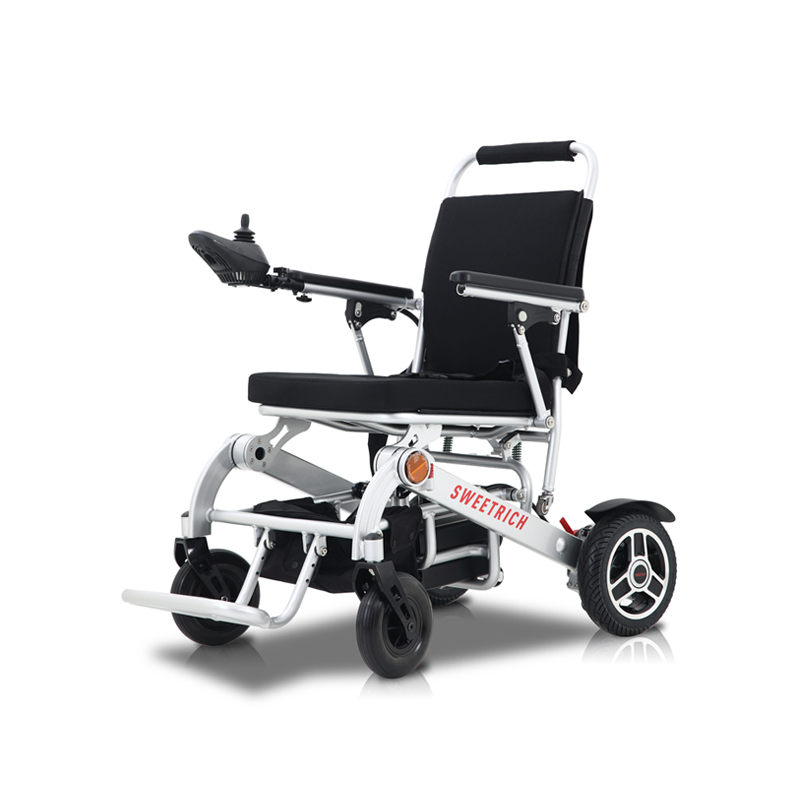
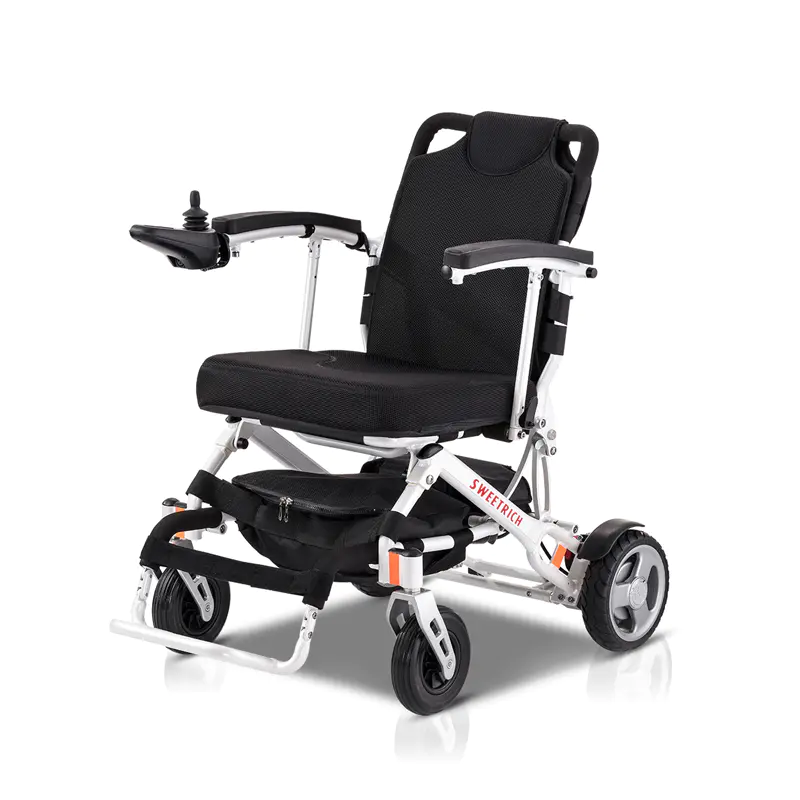
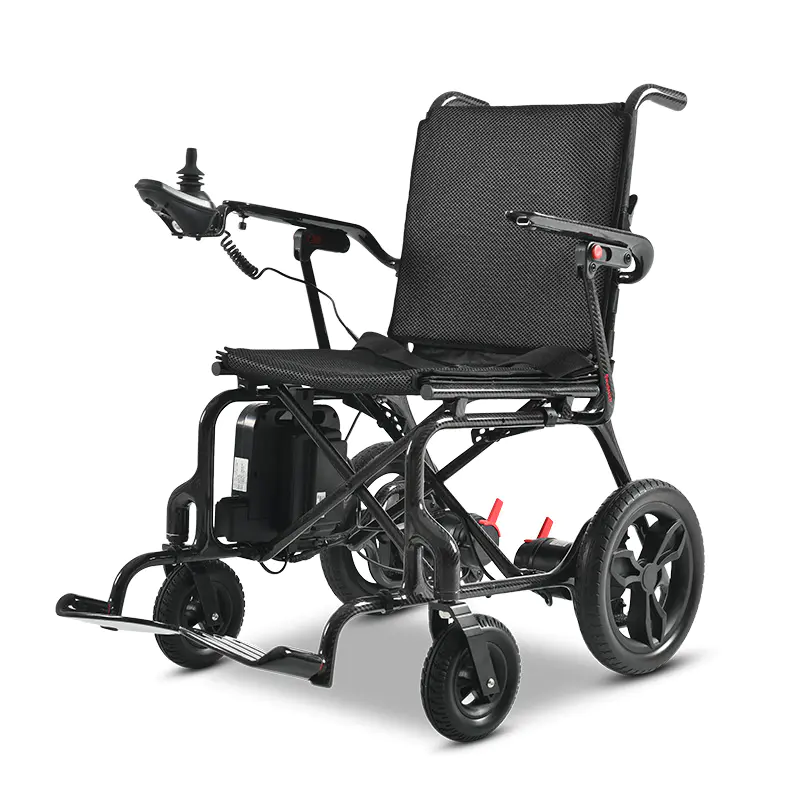
The knob’s size, shape, texture, and height can influence control. A standard ball-shaped grip may suit many users, while others may find an alternative handle easier to manage. Options vary by model, so ask whether different grip styles are available and whether they require a different control configuration.
During evaluation, check whether the joystick is easy to reach from the normal seated position, whether it moves without feeling loose or excessively stiff, and whether the user can move it diagonally as well as forward and backward. The knob should be secure and replaceable if it wears out or is damaged.
Mounting also matters. Confirm whether the control can be installed for left- or right-hand use and whether its position can be adjusted or moved out of the way. A portable chair may be folded, loaded into a vehicle, or handled frequently, so the joystick and its cable should not interfere with folding parts, armrest movement, or detachable batteries.
If the joystick assembly is removable or swing-away, check how it locks in place and how its connector is protected. For bulk orders, specify the required mounting side and configuration on the purchase order. It is easier to resolve layout requirements before production than after delivery.
Control position should also be assessed with the user sitting as they normally would, including the usual cushion and armrest height. A stick that is reachable during a brief demonstration may become tiring if the user has to hold their shoulder forward or keep their wrist at an awkward angle. If the chair has adjustable armrests, test the joystick through the available positions and confirm that the chosen setup does not limit access to the controls.
Understand Safety Behaviour and Fault Indications
The joystick is part of the wheelchair’s control system. Buyers should understand what the chair is designed to do when the stick is released, the chair is switched on, or the controller detects a fault.
Ask the supplier to demonstrate or explain:
- Neutral position: The system should not interpret a neutral joystick as a request to drive.
- Start-up check: Does the controller detect if the joystick is not centred when power is switched on?
- Fault indication: How can the user or service technician identify a control-system problem?
- Restart procedure: What steps does the manual require after a fault or unexpected stop?
- Normal stopping behaviour: Does the chair respond as described in the product documentation when joystick input ends?
Do not assess safety based on a beep or warning light alone. Request the user manual, troubleshooting instructions, and applicable test documents. Any difference between the demonstration and the written instructions should be resolved before model approval.
Also ask which standards and regulatory requirements apply to the exact wheelchair model in the target market. Requirements can vary by jurisdiction and product classification, so buyers should confirm the relevant documents with the supplier instead of relying on a broad compliance claim.
Verify Electrical Compatibility and Serviceability
Joystick response depends on the complete electrical system. The joystick, controller, motors, battery configuration, and wiring must be compatible. A replacement control should not be approved only because its housing looks similar or its connector appears to fit.
Ask the supplier to confirm:
- The joystick and controller models approved for the wheelchair.
- Connector type, pin assignment, and cable length.
- Cable routing and protection when the chair is folded or adjusted.
- Whether replacement joysticks and cables are available as service parts.
- Whether replacing a component requires reprogramming or a functional test.
A documented parts list and wiring diagram help dealers diagnose issues. Buyers should also ask how component or controller revisions are identified, since a change during the product’s life may affect spare-part compatibility.
Check the care instructions for the joystick surface and confirm which cleaning methods are allowed. Do not assume the control assembly is waterproof simply because the wheelchair is promoted for outdoor use. For after-sales planning, clarify the warranty, common replacement parts, troubleshooting resources, and process for reporting a control fault.
Test the Finished Chair Before Approving a Bulk Order
A component-level inspection cannot show the whole driving experience. The same joystick may feel different depending on the chair’s drive layout, motors, wheelbase, tyres, and control programming. Test the joystick on the finished product and follow the manufacturer’s operating instructions.
|
Test scenario |
What buyers should observe |
|---|---|
|
Starting from a stop |
Does movement begin smoothly? |
|
Low-speed manoeuvring |
Can the operator make small position adjustments? |
|
Tight turns |
Does the chair turn predictably without constant overcorrection? |
|
Changing direction |
Is the response manageable when moving between forward and reverse according to the manual? |
|
Releasing the stick |
Does the chair respond as documented? |
|
Folding and unfolding |
Do the joystick, cable, and connectors remain secure? |
|
Repeated manoeuvres |
Does the chair behave consistently across repeated tests? |
Record the chair model, controller version, joystick type, settings, and test results. If possible, involve evaluators who represent the intended customer group. Any abnormal movement, intermittent response, or unexplained difference should be investigated before shipment.
Include Joystick Details in the Purchase Specification
A clear purchase specification reduces the risk of receiving chairs that differ from the approved sample. Avoid writing only “joystick control.” Record the configuration and functions that were tested and agreed.
Include these details where relevant:
- Joystick and controller model, or an approved equivalent.
- Standard knob and any alternative grip options.
- Left- or right-hand mounting configuration.
- Available speed levels and response adjustments.
- Expected start-up, normal-use, and fault behaviour.
- Connector, cable, and replacement-part information.
- Applicable compliance documents and user instructions.
- Sample approval criteria and production inspection points.
Ask the manufacturer to notify you before changing a key control component or its programming. Even when a substitute part looks similar, its response may differ. A basic change-control process helps keep product listings accurate and reduces avoidable problems after delivery.
Make Joystick Performance Part of Product Approval
When comparing joystick controls in portable electric wheelchairs, buyers should assess more than the direction of movement. Grip comfort, low-speed handling, adjustment options, mounting, fault response, electrical compatibility, and parts support all affect daily use.
A documented test on the finished chair gives buyers a clearer basis for comparing suppliers. For bulk purchasing, record the approved configuration and check the same requirements during production. This makes it easier for distributors and mobility brands to evaluate samples, support customers, and maintain a consistent product specification across orders.