
 +86-(0)512-82283871
Content
- 1 Why Spare Parts Availability Matters
- 2 1. Batteries and Battery-Related Components
- 3 2. Tires, Wheels, and Bearings
- 4 3. Chargers and Charging Connectors
- 5 4. Controllers, Throttles, and Electrical Parts
- 6 5. Brakes and Safety-Related Components
- 7 6. Folding Locks, Latches, and Frame Hardware
- 8 7. Motors, Drive Assemblies, and Small Hardware
- 9 Which Spare Parts Should Distributors Stock First?
- 10 How Manufacturers Can Improve After-Sales Support
- 11 Keeping Mobility Travel Scooter Support Manageable
A mobility scooter may work perfectly well when it leaves the factory, but that doesn't mean it will run for years without a repair. Batteries gradually lose capacity, tires wear down, and connectors can loosen after repeated use. Sometimes the problem is more annoying than serious: a customer needs one small replacement part, but nobody has it in stock.
For distributors and wholesalers, this is where after-sales support gets tricky. Keeping every possible component in the warehouse is expensive, especially when you're selling several scooter models. But stocking too little can leave customers waiting while you try to source a part from the manufacturer.
The trick is knowing what you're likely to need. Batteries, chargers, tires, and certain brake parts are sensible items to consider keeping on hand. Controllers, folding locks, and motors may also be necessary, although the right stock level depends on the scooters you sell and the problems that come back often.
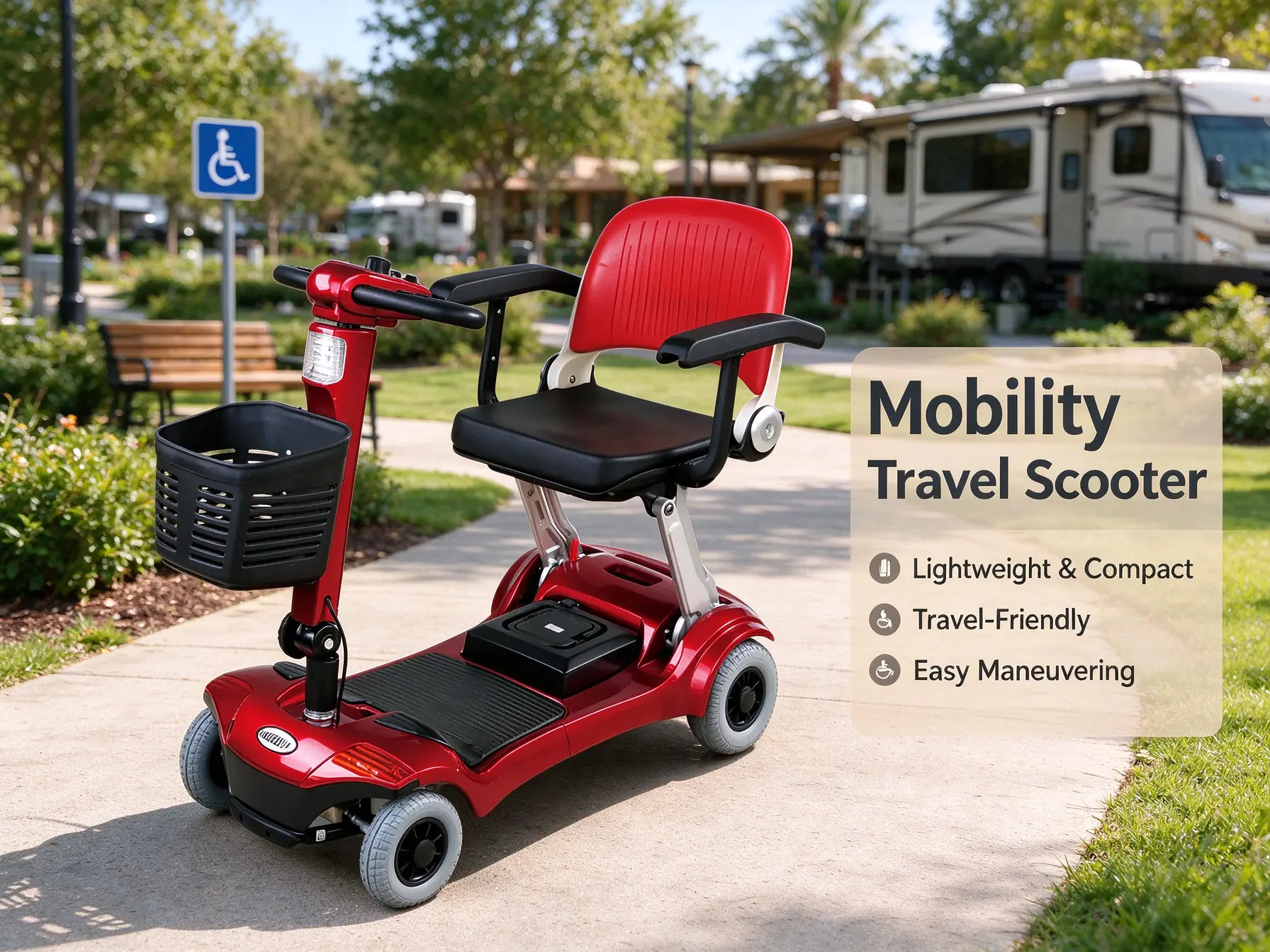
Why Spare Parts Availability Matters
When a customer's scooter breaks down, they generally don't care whether the replacement part is sitting in your warehouse or still at the factory. They just want to know when they can use their scooter again.
For the distributor, every delay means more work. There may be phone calls to answer, shipping arrangements to make, and warranty claims to follow up on. If the part needs to come from overseas, even a straightforward repair can drag on.
Still, buying large quantities of everything isn't the answer. Start by looking at how often parts fail and what happens when they do. A scratched cover probably won't stop someone using the scooter. A failed charger will, and a faulty brake system raises a much more serious concern.
Supplier Delivery time matters, too. A cheap component that arrives in two days is easier to manage than one that takes three weeks to replace. Those differences should influence what you keep in stock.
1. Batteries and Battery-Related Components
Batteries are a regular concern for mobility scooter owners. As they age, they gradually hold less charge, and the scooter may not travel as far as it used to. Frequent use, charging habits, temperature, and storage conditions can all affect battery life.
Travel scooters may use sealed lead-acid or lithium-ion batteries. The two types have different characteristics, so buyers can't simply choose a replacement based on size. Voltage, capacity, battery chemistry, connectors, and charging requirements all need to match the scooter.
There's a catch, though: a shorter travel range doesn't automatically mean the battery has reached the end of its life. A faulty charger, poor electrical connection, or even low tire pressure can contribute to the problem. Replacing the battery without checking these things could mean spending money without fixing the actual fault.
When ordering a replacement, confirm the following details:
- Battery voltage, rated capacity, and chemistry.
- Dimensions and mounting arrangement.
- Connector type and electrical compatibility.
- Charging requirements specified by the manufacturer
Lithium-ion batteries need particular care because the battery management system and charger must be suitable for the scooter. A battery may fit physically but still be incompatible.
For distributors, keeping a record of approved batteries for each model saves a lot of guesswork. It also makes repeat orders easier, especially when customers have owned their scooters for several years and no longer have the original packaging.
2. Tires, Wheels, and Bearings
Tires take a beating over time. They deal with uneven pavements, rough surfaces, repeated turns, and whatever debris ends up on the ground. Wheel bearings can wear, too, and a damaged wheel may affect how the scooter handles.
Some travel scooters use solid tires; others have pneumatic tires. Solid tires don't need air and avoid ordinary punctures. Pneumatic tires provide cushioning but need pressure checks and can develop leaks. The parts a distributor needs will depend on which design their customers use.
Don't assume two similar-looking scooters share the same wheel assembly. Tire diameter, width, axle dimensions, hub design, and mounting hardware can differ, even between models from the same supplier.
|
Part |
Why it may need replacing |
What to check |
|---|---|---|
|
Front tire or wheel |
Wear or physical damage |
Tire size and mounting |
|
Rear drive wheel |
Worn tread or damaged wheel |
Compatibility with the drive system |
|
Inner tube |
Puncture or air leakage |
Tube size and valve type |
|
Wheel bearing |
Noise, rough rotation, or looseness |
Dimensions and specified fit |
|
Wheel fasteners |
Missing or damaged hardware |
Correct type and specification |
One thing service teams shouldn't overlook is the cause of the damage. If a tire keeps wearing unevenly, fitting another tire may only postpone the next repair. Check the wheel and related components before closing the job.
For distributors, common tire sizes and smaller wheel parts are generally easier to justify as stock items than complete assemblies that rarely need replacing.
3. Chargers and Charging Connectors
A customer calls to say the scooter won't charge. Is the charger faulty? Maybe. It could also be the cable, charging port, connector, or battery.
This is why compatible chargers are useful to have available, but it also explains why technicians shouldn't automatically replace the whole unit.
The charger must match the battery chemistry, voltage, charging profile, and connector requirements. Output current also needs to meet the manufacturer's specification. Two plugs may look identical, but the chargers behind them aren't necessarily interchangeable.
Charging connectors can develop problems through repeated plugging and unplugging, pulling on cables, dirt, or rough handling. If the connector is damaged but the charger itself is working, replacing the correct connector component may be enough, provided the manufacturer permits that repair.
Keep the approved charger model and part number on file for every scooter you sell. When customers report charging issues, the service team can use that information to identify a suitable replacement instead of guessing from a product photo.
4. Controllers, Throttles, and Electrical Parts
Electrical faults are harder to diagnose than a worn tire. A scooter may refuse to start, respond inconsistently, or stop moving altogether. Depending on the design, the controller, throttle, power switch, wiring harness, display, or another electrical component could be responsible.
Controllers deserve particular care when ordering. Models with similar frames may use different electrical systems and connectors. Even where the plugs fit, the component may not have the right ratings or configuration.
Before replacing a controller, check the battery, fuse, switch, and wiring connections. These are possible causes of a scooter that won't start, and they're often simpler to address. There's little point in ordering an expensive control module if a loose connection is causing the trouble.
For businesses selling several models, common approved fuses and selected electrical parts may be worth keeping in stock. Controllers and displays can be handled differently if demand is low, provided the factory can supply the correct version without a long delay.
5. Brakes and Safety-Related Components
Brake problems aren't something to leave until the next routine service. If a scooter doesn't brake as expected, it should be taken out of service until the fault has been checked and corrected.
The braking design varies between scooters. Some use electromagnetic braking, others have mechanical components, and some combine different systems. Depending on the model, replacement parts may include brake assemblies, cables, levers, switches, and mounting hardware.
|
Component |
Possible problem |
What needs checking |
|---|---|---|
|
Brake assembly |
Reduced braking performance |
Inspect and repair according to the approved procedure |
|
Cable or lever, if fitted |
Sticking, slack, or visible damage |
Check adjustment and replace damaged parts |
|
Brake switch or sensor |
Inconsistent response or warning |
Test the component and associated wiring |
|
Mounting hardware |
Looseness or damage |
Use the specified replacement hardware |
Not every distributor needs a large quantity of every brake component. What matters is knowing which parts fit the models being sold and how quickly replacements can be obtained.
After a repair, the brakes must be checked according to the manufacturer's service instructions. Simply fitting a new component isn't enough; the scooter needs to be safe to use again.
6. Folding Locks, Latches, and Frame Hardware
Portability is a big part of the appeal of a travel scooter. Depending on the design, the user may fold the frame, remove the battery, detach the seat, or separate the scooter into sections for transport.
Those mechanisms get handled repeatedly. Over time, hinges, locking pins, release handles, and latches may become worn or damaged. A faulty latch can make folding difficult, while damage to a mechanism that secures the frame may affect safe operation.
Ask the manufacturer how these parts are supplied. Some may be available individually; others might only come as part of a complete assembly. That difference affects both the cost of the repair and how long the customer has to wait.
It's also important to identify the exact scooter version. Manufacturers sometimes revise a folding mechanism between production runs, so a part that fitted an earlier model may not fit the current one.
Cracked or bent frame sections need proper assessment. Don't improvise repairs to structural parts or substitute unapproved hardware just to get the scooter back out of the workshop.
7. Motors, Drive Assemblies, and Small Hardware
Motors and drive assemblies are usually more expensive than tires, connectors, or other everyday parts. Keeping several on the shelf may not be worthwhile if failures are uncommon, but distributors should know how to order replacements and what the delivery time looks like.
The drive system may include a motor, gearbox, coupling, drive wheel, and mounting parts. If the scooter makes unusual noises or struggles to move, the drive assembly could be the cause. But battery and controller faults can produce similar symptoms, so a little checking can save the cost of replacing the wrong part.
Small hardware is easier to overlook. A missing washer or retaining clip doesn't cost much, yet it can hold up an entire repair if nobody has the right one.
For rarely used assemblies, arranging supply directly from the factory may be enough. Small hardware can be grouped into labeled kits for individual scooter models. That makes it easier for technicians to find what they need without sorting through boxes of mixed parts.
Which Spare Parts Should Distributors Stock First?
There's no single stock list that suits every business. A distributor selling three scooter models has different requirements from a wholesaler handling a much wider range.
Look at sales volume, repair history, and how quickly the factory can ship replacements. Those figures give a more useful starting point than simply ordering a few of everything.
|
Priority |
Spare parts |
Suggested approach |
|---|---|---|
|
High |
Batteries and compatible chargers |
Keep approved replacements for current models |
|
High |
Tires and common wheel parts |
Stock frequently used sizes |
|
High |
Essential brake components |
Make sure compatible parts can be obtained quickly |
|
Medium to high |
Controllers and throttle assemblies |
Set stock levels using demand and lead time |
|
Medium |
Folding latches and release hardware |
Keep commonly needed or safety-related parts available |
|
Medium |
Motors and drive assemblies |
Hold limited stock or arrange prompt factory supply |
|
Low to medium |
Cosmetic covers and trim |
Order when needed unless demand is consistent |
These priorities should change as more service information becomes available. If a particular controller repeatedly fails, its stock level may need to increase. If a component never needs replacing and the factory ships it quickly, keeping several units in storage may just tie up money.
How Manufacturers Can Improve After-Sales Support
Buyers should discuss spare parts before placing a bulk order, not after the first customer reports a fault. The scooter's purchase price matters, but so does the cost and difficulty of maintaining it over time.
Ask the manufacturer for a clear parts list and confirmation of which components fit each model. Exploded diagrams and wiring diagrams can help technicians identify parts, while troubleshooting and installation instructions make routine repairs easier to handle.
Product revisions are another issue worth discussing. If the factory changes a controller, connector, or folding assembly, distributors need to know which production versions use the old and new designs. Otherwise, they may end up with stock that doesn't fit the scooters they currently sell.
Before ordering, get clear answers to these questions:
- Which parts should we keep in stock for the models we're buying?
- How long does it normally take to ship common replacement parts and larger assemblies?
- Can our service team access the necessary technical documents?
- What happens if a replacement part is defective or a warranty claim is approved?
- Can you identify compatible parts using the scooter's model and serial number?
These details are easier to sort out at the start of a supplier relationship than during a repair dispute.
Keeping Mobility Travel Scooter Support Manageable
A distributor doesn't need every spare part on the shelf. Start with the items customers are likely to need, especially batteries, chargers, common tires, and essential brake components. Keep records of other parts and arrange a reliable supply route for those that are rarely replaced.
Pay attention to what happens after each repair. Which parts are requested repeatedly? Which repairs take too long because stock is missing? How many orders turn out to be incompatible? Even a simple service log can help answer these questions.
Storage and labeling matter as well. Batteries need to be stored and handled according to the manufacturer's instructions, electrical parts should be kept dry, and replacement components should be labeled by model or part number.
For a business selling Mobility Travel Scooters, after-sales support isn't about filling a warehouse with spare parts. It's about knowing what tends to fail, having the right replacements available when they are needed, and being able to get less common parts without unnecessary delays. That takes some planning, but it can save both the distributor and the customer a fair amount of trouble.