
 +86-(0)512-82283871
Content
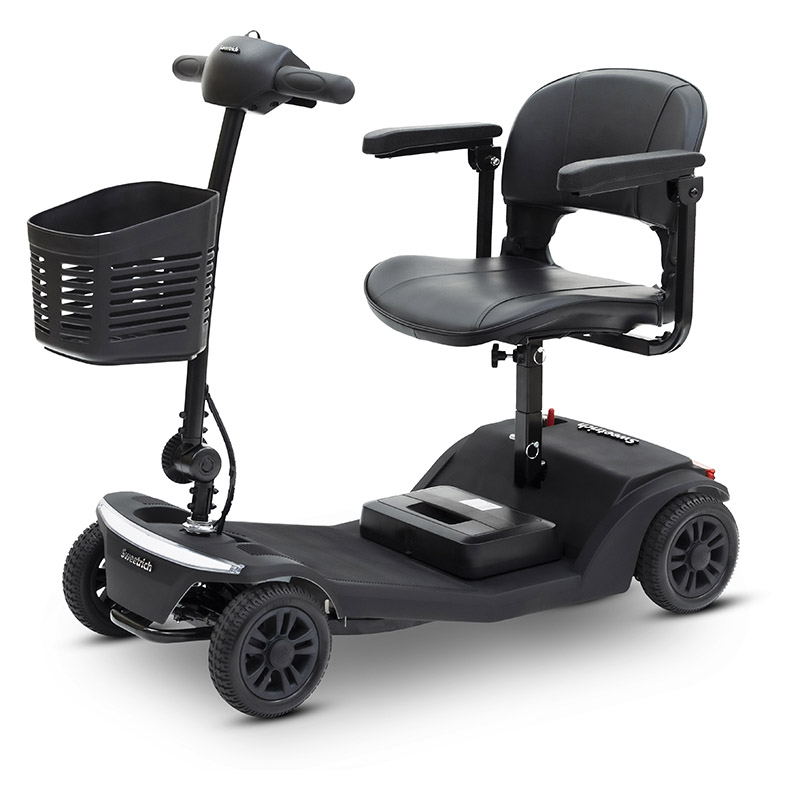
A travel scooter electric provides people with limited mobility a practical way to stay independent while handling everyday activities such as shopping, visiting friends, or traveling. Built with portability in mind, these scooters are typically compact, lightweight, and simple to transport. They can fit into a car trunk, ride-share vehicle, or airline cargo hold while still offering enough power and range for normal daily use. For many users, this balance between mobility and convenience makes travel scooters a reliable solution for maintaining an active lifestyle.
Easy to Fold or Disassemble for Transport
One of the most appealing features of a travel scooter electric is how easily it can be transported. Many models are designed to separate into several manageable parts, often including the seat, battery pack, front frame, and rear drive section. The heaviest component generally weighs between 30 and 45 pounds, allowing users or caregivers to lift each piece individually.
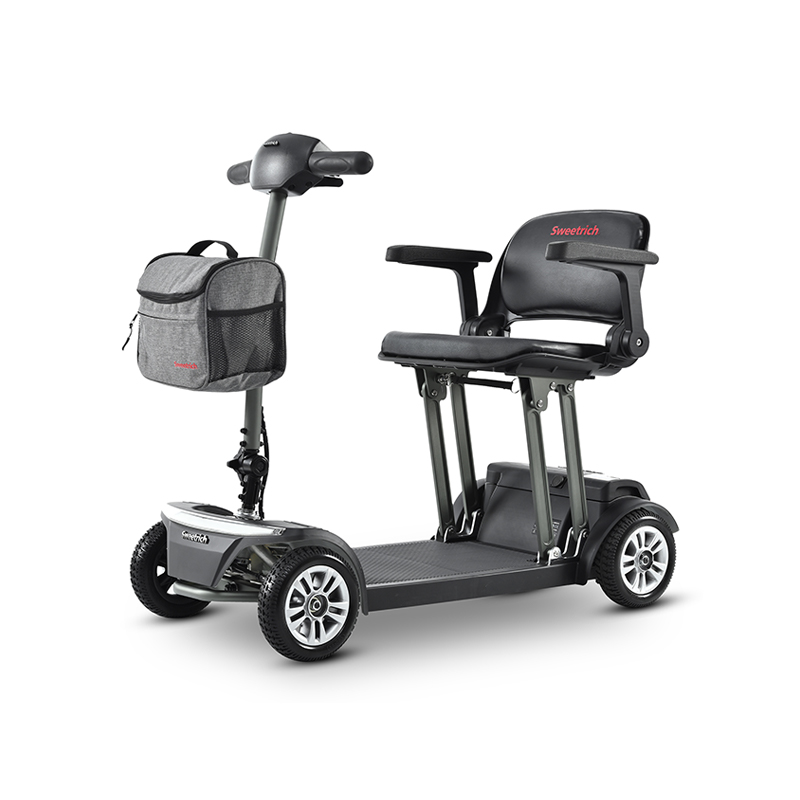
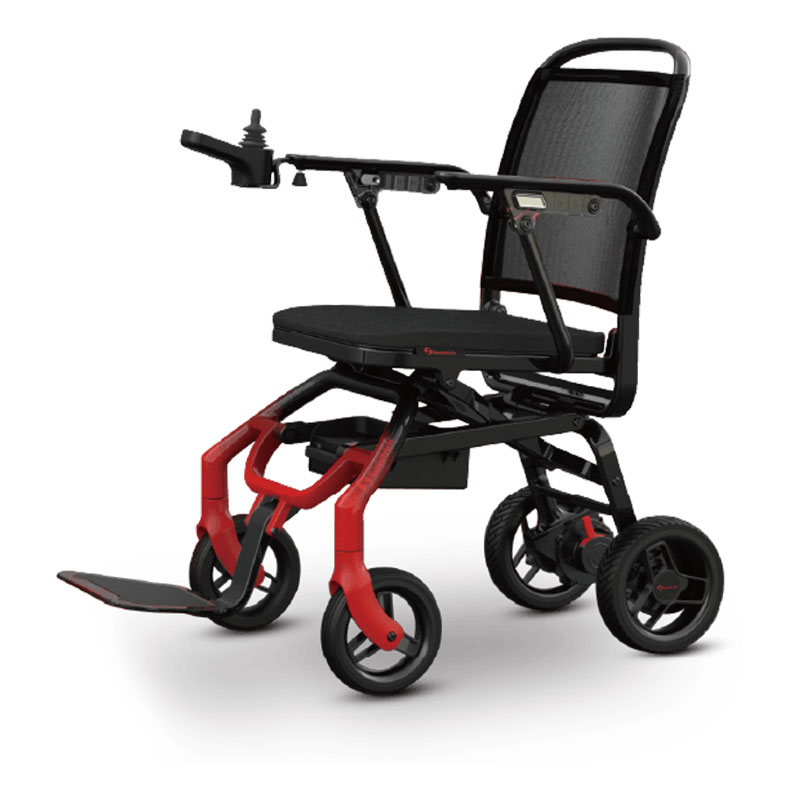
Some scooters use a folding design instead of a multi-part structure. With a single lever or quick-release mechanism, the scooter can collapse into a compact shape similar to a suitcase. This makes it easier to store in small spaces such as apartment closets, hotel rooms, or vehicle trunks. Whether disassembled or folded, the goal is the same: making mobility equipment easier to bring along wherever it is needed.
Three-Wheel vs. Four-Wheel Designs
Travel scooters are commonly available in both three-wheel and four-wheel configurations. Each design offers certain advantages depending on how the scooter will be used.
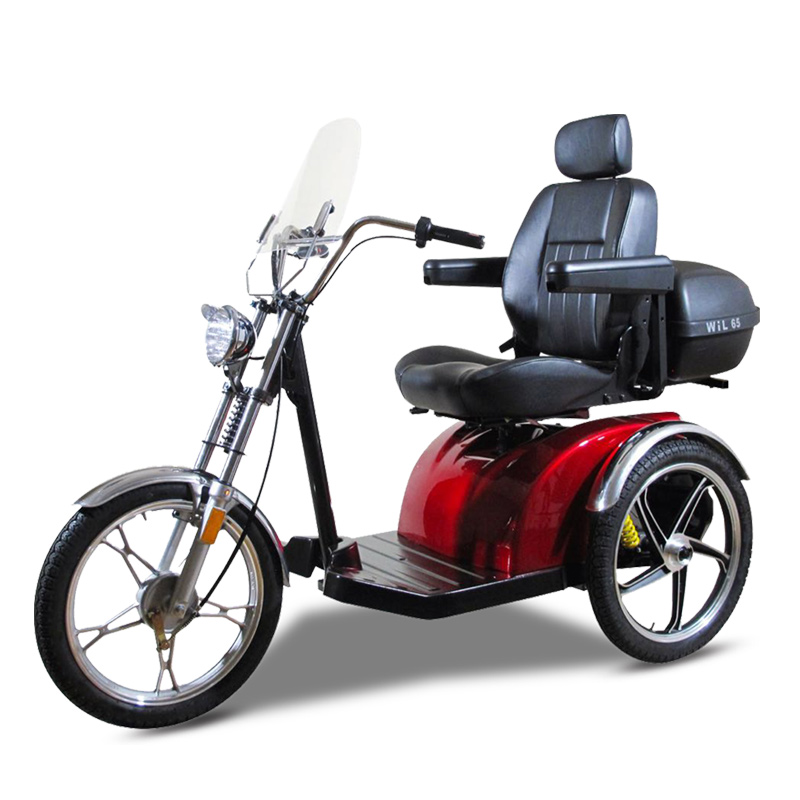
Three-wheel scooters typically have a tighter turning radius, which helps when navigating narrow indoor areas such as grocery store aisles, medical offices, or hallways. The smaller turning circle makes them easier to maneuver in confined spaces.
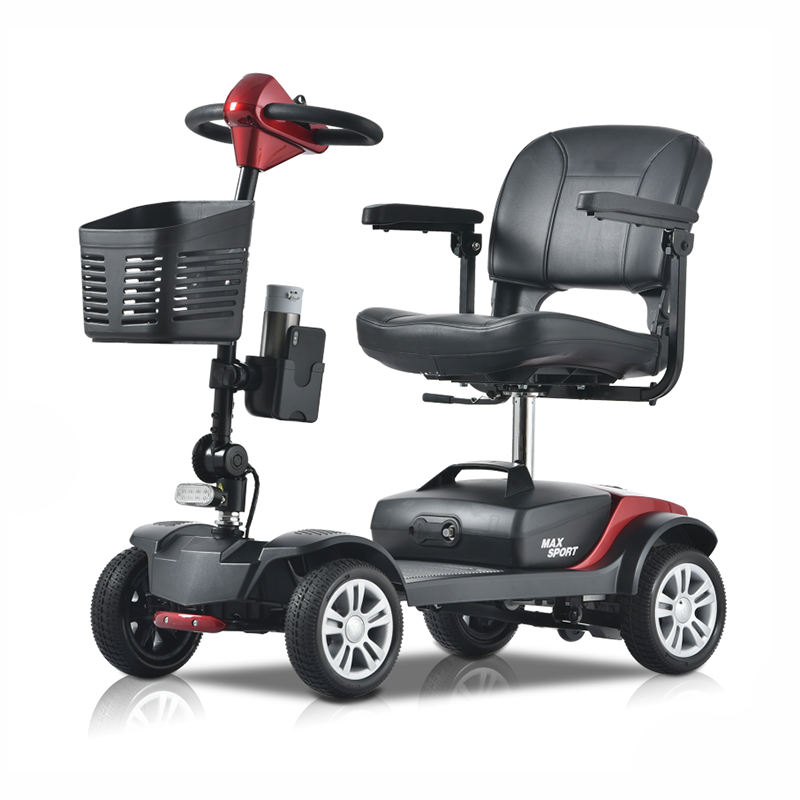
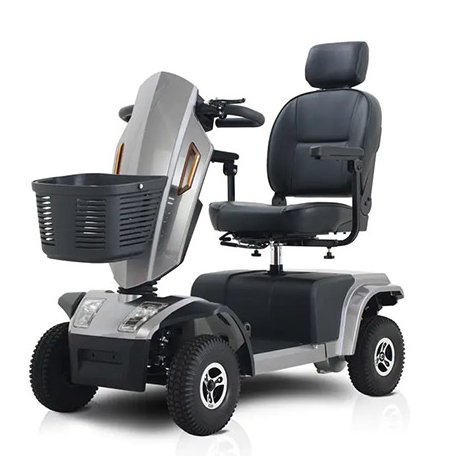
Four-wheel scooters, on the other hand, provide additional stability. The wider base helps maintain balance when traveling across uneven sidewalks, parking lots, or gentle outdoor slopes.
| Design | Key Advantage | Typical Speed |
|---|---|---|
| Three-Wheel | Tighter turning radius for narrow spaces | 4–4.5 mph |
| Four-Wheel | Extra stability on uneven surfaces and slopes | 4–4.5 mph |
Most travel scooters reach a comfortable top speed of around 4 to 4.5 miles per hour, which is suitable for both indoor areas and paved outdoor paths.
Battery Life and Range for Daily Needs
Battery performance is another important consideration when choosing a travel scooter electric. Many models use sealed lead-acid or lithium-ion batteries that provide a range of roughly 8 to 15 miles on a full charge, depending on conditions.
Smooth indoor floors or flat sidewalks generally allow the longest travel distance. Inclines, rough pavement, or frequent stops may slightly reduce the range. To help users monitor battery levels, most scooters include a simple display or indicator that shows the remaining charge.
Some models also allow spare batteries to be swapped in quickly, extending the usable range during longer outings.
Comfort and Safety Features
Even though travel scooters focus on portability, comfort and safety are still important aspects of the design. Many models include padded seats, adjustable armrests, and ergonomic steering controls that help make longer rides more comfortable.
Basic suspension components on the front fork or seat post help absorb small bumps caused by sidewalk joints or doorway thresholds. Delta-style tiller controls are often used because they are easier to grip and operate, especially for users with limited hand strength.
For safety, most travel scooters use automatic electromagnetic braking systems. When the throttle is released, the brakes engage immediately, preventing the scooter from rolling unintentionally on ramps or slopes.
Weight Capacity and Ground Clearance
Standard travel scooters usually support users weighing between 250 and 300 pounds. Some reinforced models can accommodate up to 350 pounds while still maintaining portability.
Ground clearance typically ranges from about 2 to 3.5 inches. This height allows scooters to pass over normal sidewalk cracks and low thresholds, but they are not designed for rough terrain such as grass, gravel, or dirt trails. Understanding these limitations helps users choose the right scooter for their environment and avoid unnecessary wear.
Renting vs. Buying
For people who only need mobility assistance occasionally, renting a travel scooter electric can be a practical option. Rental services are commonly available in many tourist destinations and often provide delivery directly to airports, hotels, or cruise terminals.
Daily or weekly rental rates allow users to test whether a scooter fits their needs before purchasing one. For individuals who require long-term mobility support, however, owning a personal scooter may provide greater convenience and availability.
Airline and Cruise Ship Travel
Travel scooters are often designed with transportation regulations in mind. Lithium-ion batteries under approximately 300 watt-hours usually meet airline requirements when removed from the scooter and carried in the cabin. Lead-acid batteries may travel as checked baggage depending on airline policies.
Contacting the airline in advance—typically at least 48 hours before departure—helps ensure the proper arrangements are made. Arriving early at the airport also provides additional time for inspection or documentation if required.
Real-Life Uses
Travel scooters support a wide range of everyday activities. Some common situations where they are particularly helpful include:
- Grocery shopping and pharmacy visits
- Exploring theme parks, zoos, or outdoor markets
- Walking alongside family members during outings
- Moving around large medical centers or campuses
- Traveling through airports or tourist attractions
Because they are compact and portable, travel scooters make it easier for users to keep up with friends and family without becoming overly fatigued.
Tips for Choosing the Right Scooter
Selecting the right travel scooter involves considering several practical factors:
- Measure the available storage space, such as a car trunk or closet.
- Check the weight of the heaviest component to ensure it can be lifted safely.
- Decide whether indoor maneuverability or outdoor stability is more important.
- Consider the types of paths and surfaces where the scooter will be used.
- Review feedback from users who rely on the scooter for similar activities.
Taking time to evaluate these details can help ensure the chosen scooter fits the user’s daily routine and mobility needs.
A Portable Solution for Everyday Independence
Travel scooters are designed to offer a balance between portability and functionality. While they may not replace heavy-duty scooters built for rugged outdoor terrain, they are well suited for supermarkets, shopping centers, paved sidewalks, and short trips.
The Sweetrich electric scooter reflects this balance by combining a lightweight structure with practical everyday features. Folding or disassembling the scooter typically takes only seconds, allowing it to fit easily into most car trunks without requiring major adjustments to seating arrangements.
Its compact size also makes storage simpler in apartments or hotel rooms. With an optional lithium battery that meets common airline travel guidelines, the scooter can accompany users on longer journeys as well.
For individuals looking for a mobility device that is easy to transport and ready for daily use, the Sweetrich electric scooter offers a straightforward solution that supports greater freedom of movement in everyday life.