
 +86-(0)512-82283871

Content
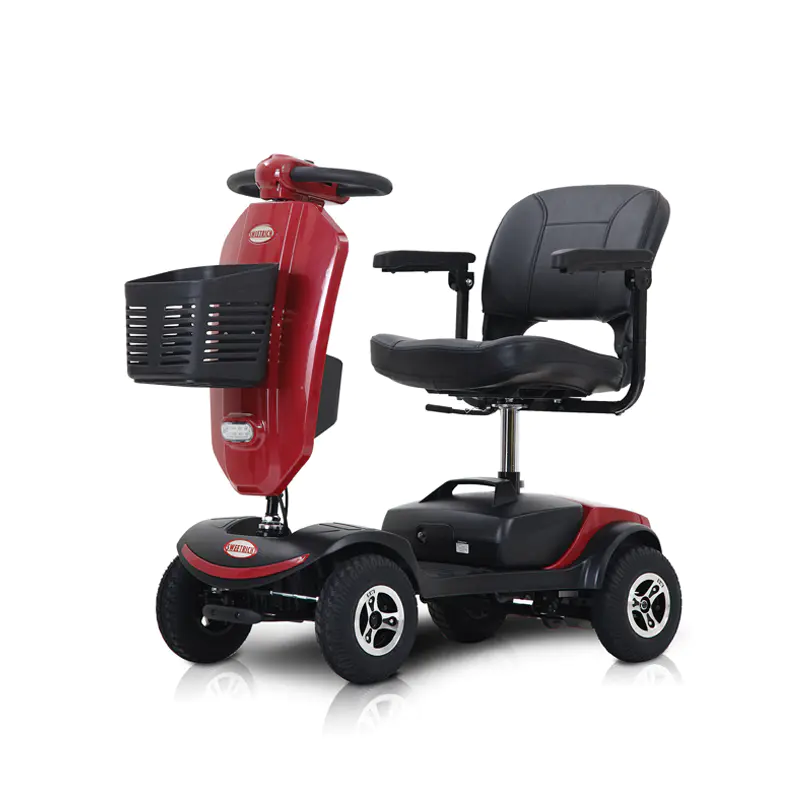
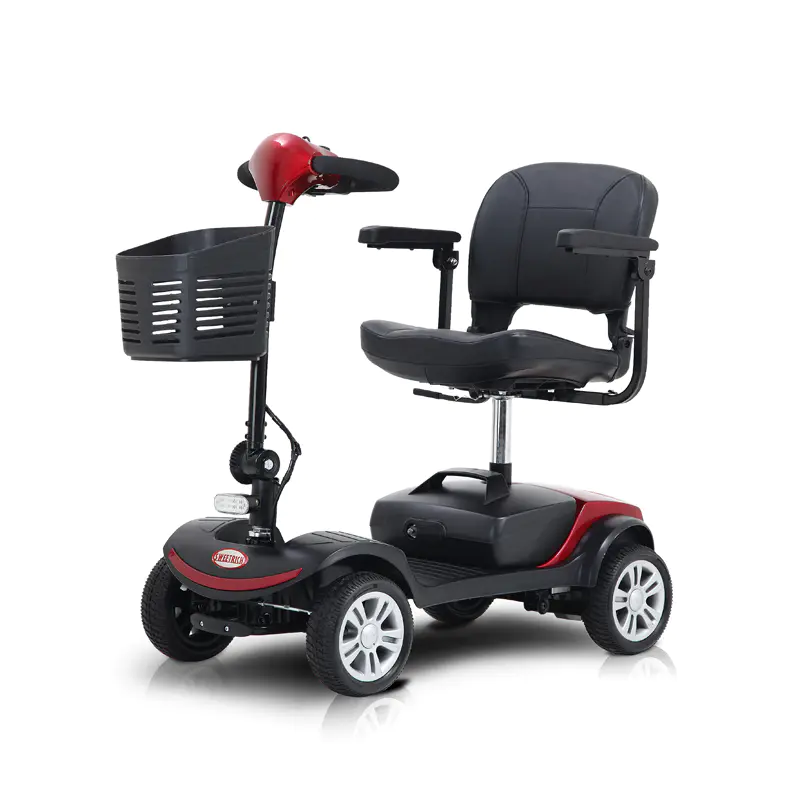
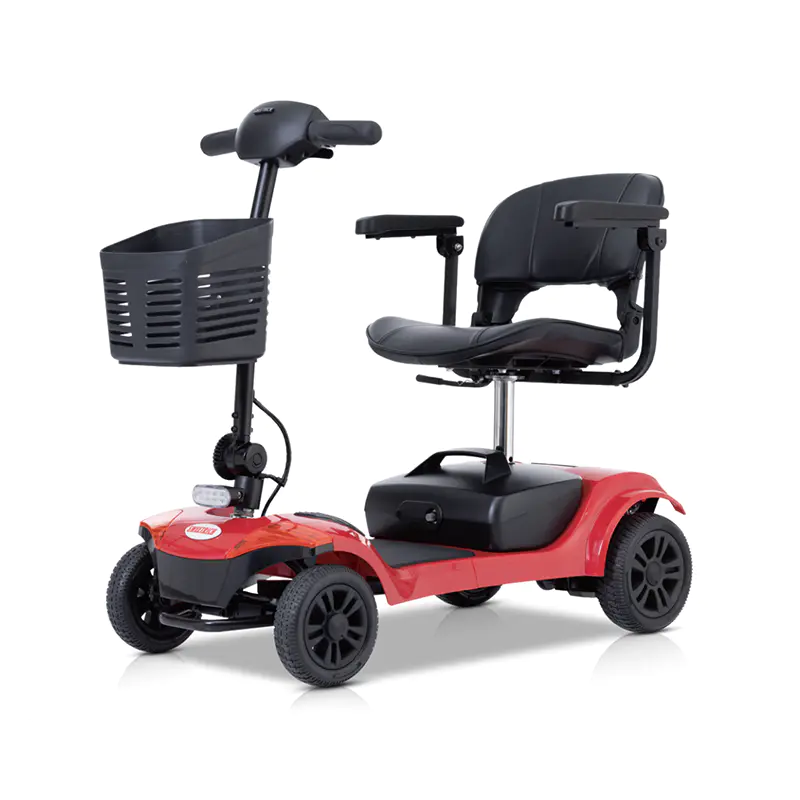
The range on a 4 Wheel Power Scooter is basically how far you can roll before the battery cries uncle. It matters for the everyday stuff—nipping to the shops, popping in on friends, getting around the neighborhood. Manufacturers love to publish an estimated maximum range, but what you actually see depends on who's riding, the route, the weather, and how the scooter's been looked after.
Get a handle on these variables and you'll compare models more sensibly and plan trips with a bit of buffer. Battery capacity matters, sure, but it's only one piece of the puzzle.
Battery capacity and condition
Battery capacity is a big lever on range. Mobility scooters tend to run on sealed lead-acid or lithium-ion packs, and how much energy is sitting in the pack decides how much work the motor can do. Capacity is often listed in amp-hours (Ah); watt-hours (nominal voltage times amp-hours) makes it easier to compare packs at different voltages. What you can actually use also shifts with battery chemistry, temperature, how fast you're draining it, and the scooter's own electrics.
How the battery's holding up counts for as much as the original rating. As a pack ages, its ability to store and deliver energy slips. If the scooter suddenly can't cover a route you know well, look at charging habits, battery age, and any warning lights. Charge and store it the way the manual says, and get the battery tested if the drop-off continues.
Rider weight and cargo
You, plus bags and whatever else you're hauling, all add to the energy the scooter has to move. Heavier loads mean more work during acceleration and on hills. Check the manufacturer's weight limit and add the stuff you usually carry. Going over that rated figure doesn't just hurt range—it messes with handling, braking, how long parts last, and safety.
Terrain and surface conditions
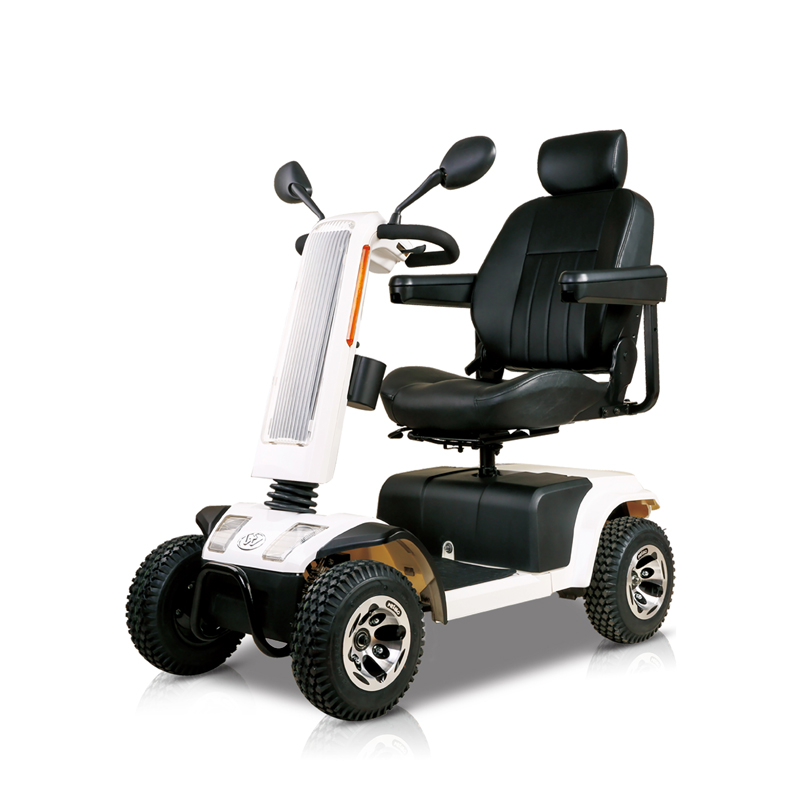
Smooth, level pavement is easy going. Grass, gravel, bumpy paths, or steep climbs? That's a different story. Hills ask for extra power, and rough surfaces crank up rolling resistance and shake the whole thing. Four wheels give you useful stability on the right outdoor routes, but they don't buy you the same range on every surface. Tire type, wheel size, ground clearance, total weight, and motor design all nudge efficiency one way or the other.
Think about where you actually ride. A model that spends its time around shops and paved paths has different needs than one doing longer outdoor runs. Check what the manufacturer says about gradients and surfaces before you take on tough conditions.
Speed and driving style
Rocketing from stop to stop, jerky speed changes, and running flat out all drain the battery quicker. A steady, moderate pace makes range more predictable. Routes full of stops and starts use more energy because the motor keeps shoving the scooter back up to speed. What's efficient depends on the model and conditions, so follow the operating instructions and keep control around pedestrians, traffic, and whatever's in your way.
Temperature and weather
Cold weather can temporarily drag down how much capacity a rechargeable battery has on tap. How much depends on chemistry, temperature, age, and how fast you're draining it. On the flip side, baking-hot conditions hurt battery life if you're storing or running it outside the stated temperature window.
Wind and wet matter too. A strong headwind means more power just to hold speed, and slippery surfaces call for going slower and being extra careful. Leave yourself extra range when the weather turns nasty, and follow the manufacturer's charging and storage advice.
Tires and routine maintenance
Mechanical drag eats into the distance you get from a charge. Underinflated pneumatic tires, tired bearings, brakes that drag, loose bits, or knackered wheels all make the motor work harder. Solid tires don't need pumping up, but they still want checking for wear and damage.
Keep pneumatic tires at the pressure the spec calls for, and book in routine servicing. If range drops out of the blue, or you're also seeing weak acceleration, odd noises, warning lights, or charging gremlins, get a qualified tech to look at it—don't just blame the battery.
Which factors weigh on range?
| Factor | Typical effect | Practical step |
|---|---|---|
| Battery capacity and age | Sets available energy; aging can shrink it | Compare specs and watch battery condition |
| Rider and cargo weight | Heavier loads tend to raise energy use | Stay inside the rated weight limit |
| Hills and rough ground | Usually bumps up power demand | Match the scooter to your regular routes |
| Speed and stop frequency | Frequent acceleration drains more energy | Drive smoothly at a safe pace |
| Temperature | Cold can temporarily cut usable capacity | Leave extra reserve when it's chilly |
| Tires and mechanical state | Added resistance drags efficiency down | Inspect tires and service the scooter regularly |
These things don't act alone. Tweak one and you won't nail down an exact range gain, so treat the table as a rough guide rather than a precise calculation.
Estimate a reliable everyday range
Read the manufacturer's published range as a reference point, not a promise. That number probably rests on specific assumptions about rider weight, speed, temperature, terrain, and battery state. Compare models using the stated test conditions where you can, then see how close those conditions come to how you actually ride.
If you can, run the scooter on a route you know with a typical load. Jot down the distance, terrain, weather, and what the battery indicator says, then repeat the trip to build a realistic picture. Battery readouts aren't always spot on, so don't plan a journey that leans on using nearly every amp you've got.
When you're picking a 4 wheel power scooter, weigh range against comfort, weight capacity, braking, turning space, portability, and how easy it is to get battery replacement and servicing. The model that suits you is the one that covers your daily trips without a fuss and still has something left over for detours, weather that changes on you, and the gradual aging of the battery.