
 +86-(0)512-82283871
Content
- 1 Main Suspension Types Found in Travel 3 Wheel Scooter Designs
- 2 Suspension Features That Reduce Fatigue During Prolonged Operation
- 3 Material Choices and Their Effect on Suspension Performance
- 4 Engineering Factors That Shape Suspension Behavior in 3 Wheel Scooter Applications
- 5 How China Mobility Scooter Manufacturers Approach Suspension Development
- 6 Maintenance Practices That Support Long Term Suspension Effectiveness
- 7 How Suspension Technology Is Evolving for Travel 3 Wheel Scooter Use
- 8 Evaluating Suspension Setup for Comfort in Daily Travel 3 Wheel Scooter Operation
Anyone who spends a few hours on a Travel 3 Wheel Scooter knows that comfort is not a luxury. It is a practical requirement that separates a manageable day out from a tiring ordeal. The human body does not take kindly to continuous vibration. Over the course of an afternoon, small jolts from pavement cracks and uneven surfaces accumulate in joints and muscles, producing soreness that was not there at the start of the trip.
Suspension exists to address this problem. It stands between the wheels and the frame, absorbing the sharpness of road impacts and releasing that energy over a longer time. When suspension works properly, the rider feels a rounded bump rather than a sudden shock. The difference is subtle in the moment but unmistakable after several miles.
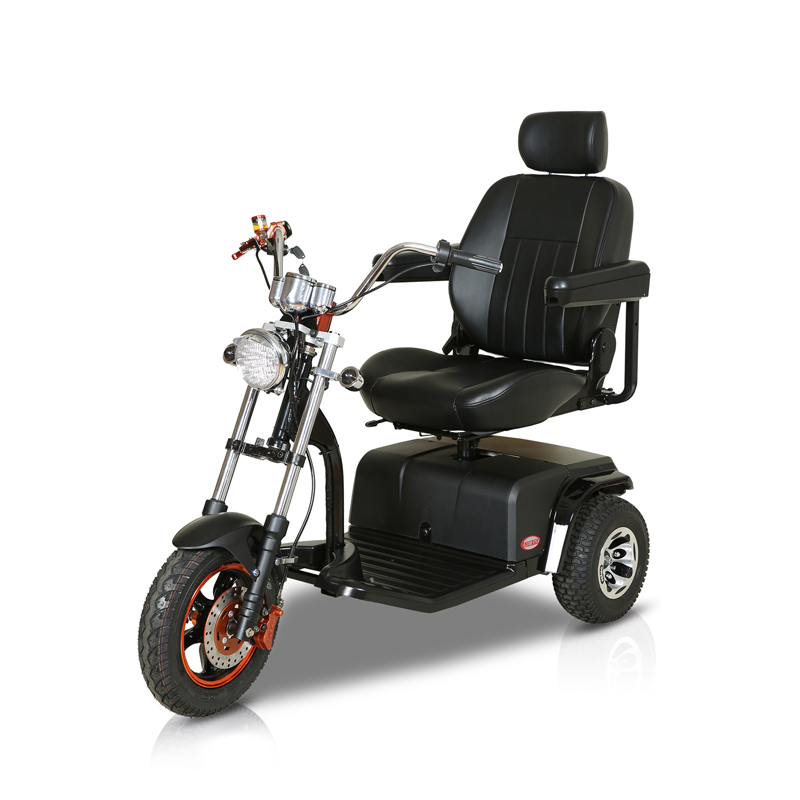
Three-wheeled scooters have a distinctive geometry. Two wheels sit at the back, one at the front, creating a triangular support pattern. Weight distribution falls heavily toward the front during braking and shifts rearward during acceleration. Suspension tuning for this layout requires attention to how the single front wheel interacts with the two rear wheels. The front wheel manages steering and a large share of the load, while the rear pair handles propulsion and lateral balance. A setup that works well on a four-wheel scooter may not transfer directly to three-wheel designs, because the center of gravity moves through a different arc during cornering and the scooter relies more heavily on suspension for stability in turns.
Three aspects of ride quality matter for longer trips. One is the amount of vibration that travels up through the seat. Another is the degree of body lean or sway that occurs when the scooter changes direction. A third concerns how quickly the scooter regains composure after crossing a dip or a speed bump. A suspension arrangement that addresses these three aspects gives the rider a more predictable experience, allowing attention to stay on the road ahead rather than on discomfort.
Main Suspension Types Found in Travel 3 Wheel Scooter Designs
Different 3 Wheel Scooter models approach suspension in varied ways, reflecting different priorities in cost, weight, and intended use.
Front suspension often comes in one of two forms. Telescopic forks use sliding tubes that compress when the wheel hits a bump. They are simple and widely understood. Trailing-link designs pivot the wheel on an arm that swings upward and backward over obstacles. This rearward motion adds a layer of compliance that some users describe as smoother on repeated small bumps, though the difference is more noticeable on rough surfaces than on smooth ones.
Rear suspension shows more variety across models. Independent spring units located near each rear wheel allow each side of the scooter to react to bumps separately. When one rear wheel crosses a manhole cover or a curb edge, the other side remains unaffected. This arrangement reduces the rocking sensation that can occur when both rear wheels are linked by a solid axle or a common spring. Simpler designs use a single beam or leaf spring connecting both rear wheels. These setups cost less and require less maintenance, but they transmit more road feel from one side to the other.
Some scooters combine front and rear suspension into a complete system. Both ends of the vehicle move in response to the road, which reduces the pitching motion that becomes more bothersome over longer distances. When the front wheel strikes a bump, the rear suspension works to settle the vehicle afterward, keeping the rider from being thrown forward and then backward repeatedly. Combined systems often allow some form of adjustment, though the range and ease of that adjustment vary.
Suspension Features That Reduce Fatigue During Prolonged Operation
Fatigue on a long scooter ride does not come from one single cause. It builds gradually. The cumulative effect of thousands of small vibrations, combined with the effort required to maintain balance, wears down energy reserves over time. Good suspension helps on several fronts.
Vibration absorption stands at the center of fatigue prevention. Springs handle the initial impact by compressing and storing energy. They cannot, however, get rid of that energy by themselves. Without dampers, the scooter would continue bouncing up and down long after crossing a bump. Dampers turn kinetic energy into heat through fluid resistance, controlling how quickly the spring returns to its resting position. A well-damped setup prevents the after-bounce that makes longer rides uncomfortable.
Stability improves when the suspension keeps tire tread in consistent contact with the road. Brief moments of lost contact interrupt steering input and braking, causing the rider to correct direction unconsciously. Over time, these micro-adjustments add to physical strain. Good suspension maintains tire grip even on moderately uneven pavement, reducing the need for constant course correction.
Seating posture is indirectly affected by suspension behavior. When the front end dives excessively under braking, the rider slides forward in the seat, changing the angle of the hips and lower back. When the rear squats during acceleration, the rider tips backward against the backrest. Neither position is ideal for extended periods. A suspension setup that controls pitch movement helps keep the rider in a stable seated position, which reduces strain on the lumbar region and makes a noticeable difference after several hours of use.
Material Choices and Their Effect on Suspension Performance
The materials that go into suspension components influence how the system behaves when new and how it holds up over time. Springs, dampers, and connecting parts each contribute to the overall feel of the ride.
Spring steel varies in quality across suppliers. Better grades hold their spring rate longer before settling or losing free height. A spring that sags after a few months effectively lowers the scooter's ride height and reduces available travel. The scooter then bottoms out more frequently, which defeats the purpose of having suspension.
Dampers rely on seals and piston assemblies that face continuous wear. The oil inside a damper gradually degrades with heat and use. Seals harden or crack with age, allowing fluid to escape. A damper that has lost fluid cannot control spring motion effectively, and the ride becomes bouncy. The quality of seals and the type of hydraulic fluid used affect how many miles of use a Travel 3 Wheel Scooter can deliver before damping performance changes noticeably.
Linkages and bushings connect suspension parts to the frame. Rubber bushings provide softness initially and absorb some high-frequency vibration, but they deteriorate with exposure to sunlight and temperature swings. Polyurethane bushings last longer and resist chemicals and weather better, yet they transmit more vibration because they are stiffer. Choosing one material over the other involves weighing immediate ride comfort against long-term durability. Scooters intended for regular outdoor use may benefit from polyurethane components, while those used mostly indoors or on smooth surfaces may be better served by rubber.
Engineering Factors That Shape Suspension Behavior in 3 Wheel Scooter Applications
Several engineering considerations converge when designing suspension for a 3 Wheel Scooter, and each has direct bearing on how the scooter feels during extended use.
Load distribution affects how much the suspension compresses under different conditions. A scooter carrying a heavier rider places more demand on springs and dampers than one carrying a lighter user. Some models allow adjustment of spring preload, which changes the initial compression and helps match the suspension to the actual load. Without this feature, the suspension may work within a narrower range of effectiveness.
Road surfaces in different regions vary widely. Some areas maintain smooth sidewalks and paved paths. Others have cracked sidewalks, rough asphalt, or brick streets that generate far more vibration. Suspension designed for one environment may not perform as well in another. Manufacturers often select spring and damping rates that offer acceptable performance across a broad range of conditions rather than exceptional performance in one specific condition. This compromise means the scooter works reasonably well in many places but may not feel reliable anywhere.
Portability requirements impose limits on suspension travel and complexity. Scooters that fold or disassemble for transport must keep their suspension components within the foldable structure without adding excessive weight or bulk. Longer suspension travel generally requires more space, which conflicts with the compact dimensions needed for easy storage and loading. Designers work within these packaging constraints, choosing components that deliver the possible compliance while keeping the folded scooter manageable. The result is often a suspension system with moderate travel that relies on careful spring and damper tuning rather than long stroke to achieve comfort.
| Characteristic | What It Does for Long Ride Comfort | Common Preferences |
|---|---|---|
| Spring stiffness | Soft springs absorb minor bumps; stiffer springs control load better | Moderate stiffness with gradual rate increase toward end of travel |
| Damping firmness | Light damping allows multiple bounces; heavy damping feels unyielding | Enough damping to stop rebound within one cycle |
| Travel length | Longer travel handles bigger bumps; shorter travel lowers center of gravity | Travel suited to typical road conditions in intended use area |
| Bushing compliance | Softer bushings filter vibration; harder bushings improve steering precision | Balance between road feel and vibration filtering |
How China Mobility Scooter Manufacturers Approach Suspension Development
China Mobility Scooter Manufacturers account for a large share of global production in this category, and their handling of suspension design follows patterns shaped by volume manufacturing, cost management, and responsiveness to different export markets. The scale of operations at these facilities imposes certain constraints. Any design choice must work across thousands of units and maintain reasonable consistency without requiring extensive individual tuning.
Design practices vary from one factory to another. Some operations stick closely to established suspension layouts that have proven themselves over years of production. Changes come slowly and tend to focus on material upgrades or assembly refinements rather than fundamental rethinking of the suspension architecture. Other producers show more willingness to try alternative configurations, especially for models aimed at regions with road conditions that differ markedly from those in their home market. The direction taken often reflects the price bracket the scooter occupies and the typical surfaces its users will encounter.
Integration methods differ across production lines as well. In certain facilities, suspension components arrive from outside suppliers who specialize in springs, dampers, or linkage assemblies. These parts come as finished subassemblies and get attached to the scooter frame during final assembly. Elsewhere, a single supplier provides a complete suspension module that includes all mounting brackets and hardware. That approach simplifies the assembly process and reduces the number of separate parts that require individual quality checks, though it may limit the factory's ability to mix and match components from different sources.
Adjustments for user needs appear at various points in the development cycle. Some manufacturers conduct real-world trials with riders of different weights and heights to observe how suspension settings perform outside the factory. The feedback sometimes leads to changes in spring rates or damping characteristics before a model goes into full production. Other producers rely mainly on indoor testing with standardized loads. That method yields consistent, repeatable results but may miss some of the variability found in everyday use. The choice between these approaches affects the final suspension character that reaches the end user.
Cost remains a factor across nearly all decisions. More sophisticated suspension components with extra adjustment features or higher-grade materials add to production expenses. Manufacturers weigh these added costs against what they believe users will value. For Travel 3 Wheel Scooters aimed at the middle and upper price ranges, additional spending on suspension often makes business sense. For entry-level models, simpler fixed setups are more common, with the understanding that buyers in that segment may care more about affordability than about ride quality.
Maintenance Practices That Support Long Term Suspension Effectiveness
Suspension parts change over time. Springs lose their original height. Dampers leak fluid. Bushings develop play. Regular checks help keep the scooter riding as it did when it was new, or at least close to that condition.
What to look for during inspections: fluid stains on damper bodies, unusual clunks or squeaks during compression, and visible changes in ride height. A damper with oil residue on its outer casing has started to lose fluid and will gradually lose its ability to control spring motion. Springs that have settled reduce ground clearance and cause the scooter to bottom out more often on bumps that used to be manageable. Bushings with surface cracks or excess movement allow slop in the suspension linkage, which affects how precisely the scooter steers and how stable it feels over uneven ground.
Replacement brings up questions of compatibility. Some 3 Wheel Scooter models use suspension parts that are specific to that brand or model, available only through authorized service channels. Others use industry-standard components that can be purchased from multiple suppliers. Knowing which category applies to a particular scooter helps owners plan ahead for maintenance needs. For models with adjustable dampers or preload rings, periodic verification ensures that vibration has not loosened the adjustment locks over time. Set screws and lock rings can drift, changing suspension behavior without the rider noticing.
Signs of changing performance show up during ordinary use. A gradual increase in harshness when crossing known bumps suggests that damping has weakened. A floaty feeling or excessive lean during turns points to reduced spring rate or worn bushings. A tendency to hit the stops on curbs that used to be fine indicates sagging or loss of preload. Paying attention to these changes lets users schedule maintenance before a component fails completely and leaves the scooter uncomfortable or unsafe to ride.
How Suspension Technology Is Evolving for Travel 3 Wheel Scooter Use
Suspension technology in mobility scooters advances slowly, but steady improvements continue to appear. The general direction favors systems that handle varying loads and surface conditions with less need for manual adjustment by the user.
One area of progress involves damping units that respond differently to different movement speeds. These units use internal valving that allows relatively free motion during slow compressions—such as when the scooter leans into a gentle turn—while providing firmer resistance during rapid impacts, like hitting a sharp pavement edge. This speed-sensitive behavior gives a plush feel over surfaces while maintaining control during bigger suspension events. The approach has been used in other types of mobility equipment and is gradually moving into 3 Wheel Scooter applications.
Expectations from the broader mobility market influence development priorities. Users who have previous experience with bicycles, wheelchairs, or cars bring certain ideas about how a scooter ought to ride. Those ideas vary, but a common wish involves less vibration reaching the hands and seat. Manufacturers respond by reducing high-frequency vibration transmission, often through changes in bushing material or by adding isolation layers at mounting points. These modifications do not alter the basic suspension layout but can noticeably improve perceived comfort.
Different use cases call for different suspension characteristics. Riders who stick to paved paths need less suspension travel but benefit from refined low-speed damping that handles small irregularities without transmitting shock. Riders who venture onto gravel or hard-packed dirt value ground clearance and spring rates that handle larger impacts without bottoming out. Some manufacturers offer different suspension configurations for different intended uses rather than attempting one setup that covers every situation. This approach acknowledges that comfort is not an absolute measure—it depends on where and how the scooter gets used.
Evaluating Suspension Setup for Comfort in Daily Travel 3 Wheel Scooter Operation
Figuring out whether a given suspension setup offers enough comfort for daily use involves a mix of observation and direct experience. No lab test can fully capture how a suspension feels to a specific rider on a specific route.
Observation during ordinary trips provides useful information. Riders can note how the scooter handles particular road features that appear regularly on their usual routes. Curb ramps, pavement joints, and patched sections all serve as consistent test points. A setup that handles these familiar obstacles with minimal jarring and without hitting the stops generally works well for that rider's environment.
What to watch for: vibration level felt through the handlebars at normal cruising speed, amount of seat movement during steady riding, and scooter behavior when transitioning between different pavement types. Excessive handlebar vibration suggests the front suspension is not doing enough to filter road input. Excessive seat movement indicates the rear suspension may not match the rider's weight or the damping may be insufficient.
Tire pressure changes the equation considerably. Underinflated tires absorb some bumps that would otherwise reach the suspension, but they reduce handling precision and increase rolling resistance. Overinflated tires transmit more vibration directly to the frame, even with a well-tuned suspension. The same suspension setup can feel comfortable or harsh depending on tire condition and pressure.
Surface temperature also plays a role. Cold pavement transmits more vibration than warm pavement because tires and bushings stiffen at lower temperatures. Wet surfaces change grip characteristics, which affects how the suspension loads during cornering and braking. An evaluation done on a dry summer afternoon may not represent performance on a cold morning. Riders who take these variables into account get a more complete picture of whether their Travel 3 Wheel Scooter suspension delivers the comfort they need for regular use.