
 +86-(0)512-82283871
Content
- 1 What Foldable Structure Means In Scooter Design Systems
- 2 How Foldable Scooter Factory Designs Space Saving Structures
- 3 Material Selection And Its Influence On Folding Behavior
- 4 Storage Behavior In Real Usage Environments
- 5 User Interaction With Folding Mechanism
- 6 Manufacturing Considerations In Foldable Scooter Factory
- 7 Design Balance Between Compactness And Riding Stability
Foldable scooters are often discussed in urban transport because they do not stay in one fixed shape all the time. When in use, they need to feel stable and solid. When not in use, they are expected to shrink into a smaller form that does not take much room. That simple change of state is what makes space saving an important part of the design work.
Inside a Foldable Scooter Factory, this kind of product is usually treated as a balance problem rather than just a mechanical one. The frame must move, but not become loose. It must fold, but not feel fragile. In some industry discussions, design thinking linked with Suzhou Sweetrich Vehicle Industry Technology Co., Ltd. is sometimes mentioned when talking about how compact mobility structures are arranged.
The real challenge is not folding itself, but controlling how the structure behaves while folding and after it is folded.
What Foldable Structure Means In Scooter Design Systems
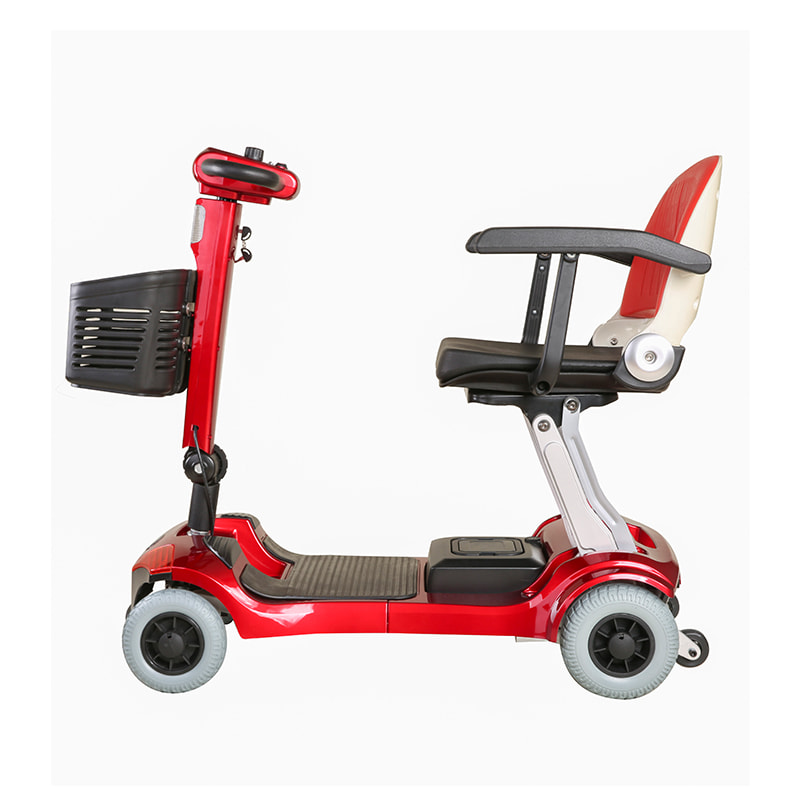
A foldable scooter is built around a frame that can switch between two basic conditions. One condition is for riding, where the structure is fully stretched out and supports movement. The other condition is for storage, where parts of the frame are brought closer together so the overall size becomes smaller.
This shift is not free movement. It is guided movement. The scooter does not collapse or bend randomly. Instead, it follows a fixed path controlled by mechanical connection points. These points decide where the frame can rotate or move.
A typical folding system usually relies on a few simple but important parts:
- main frame that carries weight during use
- joint points that allow controlled bending
- locking points that stop unwanted movement
- guided folding path that limits direction
If these parts are not arranged properly, folding can feel uneven or difficult to control. A smoother system usually feels like it moves along a track, even though there is no visible track.
The purpose of this structure is not only to reduce size, but to keep movement predictable. A predictable folding action makes storage easier and also reduces stress on the frame.
How Foldable Scooter Factory Designs Space Saving Structures
In a Foldable Scooter Factory, space saving design is not created by one feature alone. It comes from how different parts of the scooter are arranged so they work together when the structure changes shape.
One of the things considered is the folding direction of the frame. When the frame folds inward toward its center, the final shape becomes more compact. If it folds outward, it usually occupies more space and becomes harder to store in tight areas.
The handlebar structure also affects storage size. In many designs, the handlebar is not fixed in a single position. It can be lowered or rotated so that it aligns closer with the main body. This reduces the vertical height when the scooter is folded.
The deck area is another point that influences space use. A cleaner deck shape without unnecessary extensions makes it easier for other parts to sit closer together during folding.
Main design considerations often include:
- direction of folding movement
- handlebar alignment after folding
- deck shape and structural simplicity
- placement of hinge points
- stability of the locked folded state
A simple structural comparison can help show how these elements affect storage form:
| Structure Element | Role During Folding | Effect on Stored Shape |
|---|---|---|
| Frame Movement Direction | Guides overall folding path | Controls final compact form |
| Handlebar Adjustment | Reduces vertical space | Makes shape lower and flatter |
| Joint Position | Controls bending behavior | Improves folding smoothness |
| Locking Point | Holds final position | Prevents accidental movement |
Each of these parts works like a small control point. When they are arranged in a balanced way, the scooter does not just fold—it folds in a controlled and predictable shape that is easier to manage in daily use
Material Selection And Its Influence On Folding Behavior
The way a foldable scooter behaves during folding is not only decided by the frame design. The material inside the structure quietly changes how everything feels in use. It affects how the scooter bends, how it returns to shape, and how stable it stays after repeated movement.
A lighter frame material usually makes folding feel less demanding. The scooter can be lifted or adjusted with less effort, especially during quick storage. But lightness alone is not enough. If the structure becomes too flexible, the riding state may feel less steady.
A more rigid material brings a different outcome. The scooter feels more grounded when riding, but the folding action may require more controlled handling. This is why material choice is rarely one-sided. It is adjusted based on how the scooter is expected to be used in daily situations.
In practical observation, material influence often shows up in small details:
- how smoothly the frame closes during folding
- whether joints feel tight or relaxed over time
- how the structure reacts after repeated use
- whether any section feels uneven under pressure
- how stable the folded form remains when carried
Even when the design stays the same, different material behavior can change the overall impression of the product.
Storage Behavior In Real Usage Environments
Foldable scooters are often judged not when they are riding, but when they are stored. This is where space-saving design becomes visible in real life.
At home, storage is usually about fitting into small corners or narrow indoor areas. A folded scooter that becomes compact and flat is easier to place without rearranging the surroundings.
During transport, the scooter is often carried in its folded state. In this condition, stability matters as much as size. If the structure shifts or feels loose, it becomes harder to handle in crowded or moving environments.
Inside vehicles, storage depends on how the folded shape fits with other items. A clean, aligned structure can sit more naturally without needing extra adjustment.
Typical storage situations include:
- indoor placement after use
- carrying during public transport
- storage inside vehicle space
- short stops during travel
- temporary positioning in work or public areas
Each situation changes how the folded scooter is experienced. Some require tight compactness, while others focus more on ease of handling.
User Interaction With Folding Mechanism
The folding process is part of daily interaction, so it needs to feel natural rather than technical. Most users do not think about internal structure. They only notice whether the movement feels smooth or difficult.
A typical folding action follows a simple sequence. A lock is released, the frame moves along a guided direction, and then it is fixed again in the folded position. Even though the system inside is mechanical, the user experience should stay simple.
Several small points affect this experience:
- how much force is needed to start movement
- whether the folding direction feels intuitive
- if the frame moves in a smooth path or with resistance
- how clearly the locking position is felt
- how easy it is to switch back to riding mode
If the folding feels too complicated, users may avoid using it frequently. If it feels too loose, the structure may not feel secure. The balance between these two is what makes the system practical.
Manufacturing Considerations In Foldable Scooter Factory
In production, folding performance is not only checked at the design stage. It is also influenced by how carefully each part is assembled. Even small differences during assembly can change how the folding system behaves later.
Joint alignment is one of the key points. If a joint is slightly off, the folding path may feel uneven or tight. This can affect both movement and long-term durability.
Consistency is another focus. Each unit should respond in a similar way when folded or unfolded. If one scooter feels smooth and another feels stiff, the user experience becomes inconsistent.
During manufacturing, attention is often placed on:
- alignment of folding joints across assemblies
- smoothness of movement during repeated folding
- stability of locking points after use cycles
- balance of frame sections under motion
- overall structural symmetry in folded form
Testing is usually repeated to ensure that movement stays predictable. The goal is not just to make the scooter fold, but to make the folding feel controlled every time.
Design Balance Between Compactness And Riding Stability
Every foldable scooter design carries a quiet compromise. A structure that folds very easily may not always feel the strongest when riding. At the same time, a very rigid riding structure may not fold into a compact shape as smoothly.
This is why design work often focuses on balance rather than extremes. The frame needs enough stiffness to support riding, but also enough flexibility in structure to allow folding without strain or resistance.
Wheel position, frame layout, and joint placement all influence this balance. If weight distribution is uneven, the scooter may feel different in folded and riding states.
Key balance considerations include:
- keeping structure firm during movement
- allowing controlled folding without resistance
- distributing load evenly across frame sections
- avoiding stress concentration near joints
- maintaining stable shape when folded
This balance is not fixed once and for all. It is adjusted through design decisions that respond to how the scooter is expected to be used in daily environments.
Foldable scooters are simple to look at, but the structure behind them is not simple. The ability to save space comes from many small design choices working together quietly. Material, joints, frame layout, and user interaction all play a part in how the final product behaves.
When these elements are arranged in a practical way, the scooter can move between riding and storage without feeling complicated. The folded shape becomes a natural result of structure and movement working in the same direction.