
 +86-(0)512-82283871
Content
- 1 From bicycle bones to scooter skeletons: a short lineage
- 2 Load paths: teaching force where to travel
- 3 The battery box as structural member
- 4 Folding joints: convenience versus continuity
- 5 Torsion and the human gyroscope
- 6 Welds, bonds, and the fear of the invisible
- 7 Corrosion as a structural event
- 8 Fatigue life and the myth of infinite mileage
- 9 Impact testing: replicating the curb drop
- 10 Repairability: extending the relationship
- 11 Modularity and the second-life frame
- 12 Rider weight distribution: fore, aft, and sideways
- 13 Weather shields: ice, water, and ultraviolet light
- 14 Perception of stiffness: psychology meets metallurgy
- 15 Training the eye: spotting trouble before it spreads
- 16 Insurance, liability, and the paper frame
- 17 Cultural dimensions: sharing versus owning
- 18 The horizon: bio-inspired joints and self-healing skins
- 19 Sweetrich Mobility
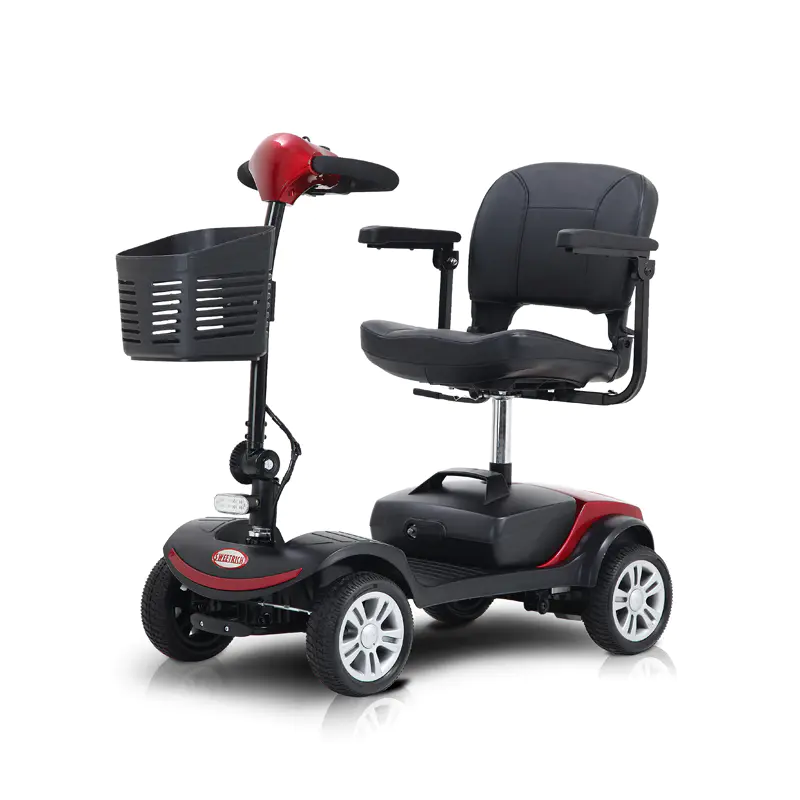
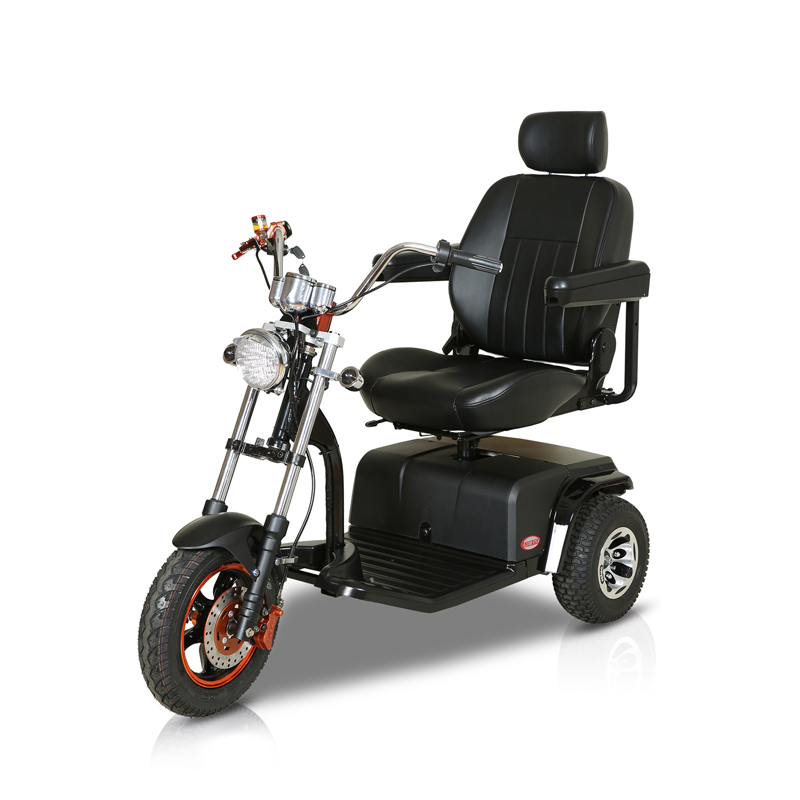
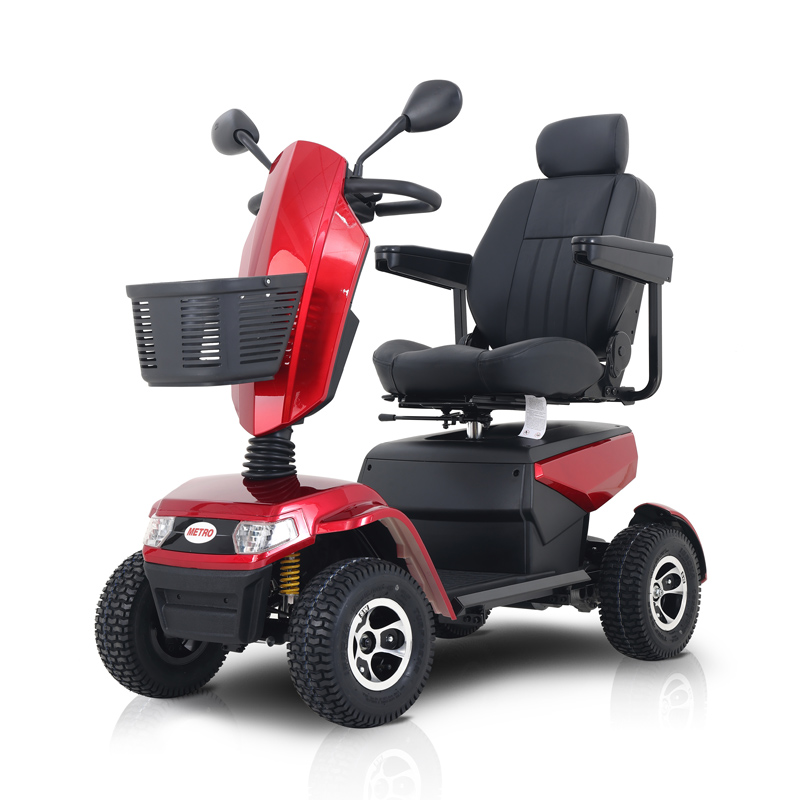
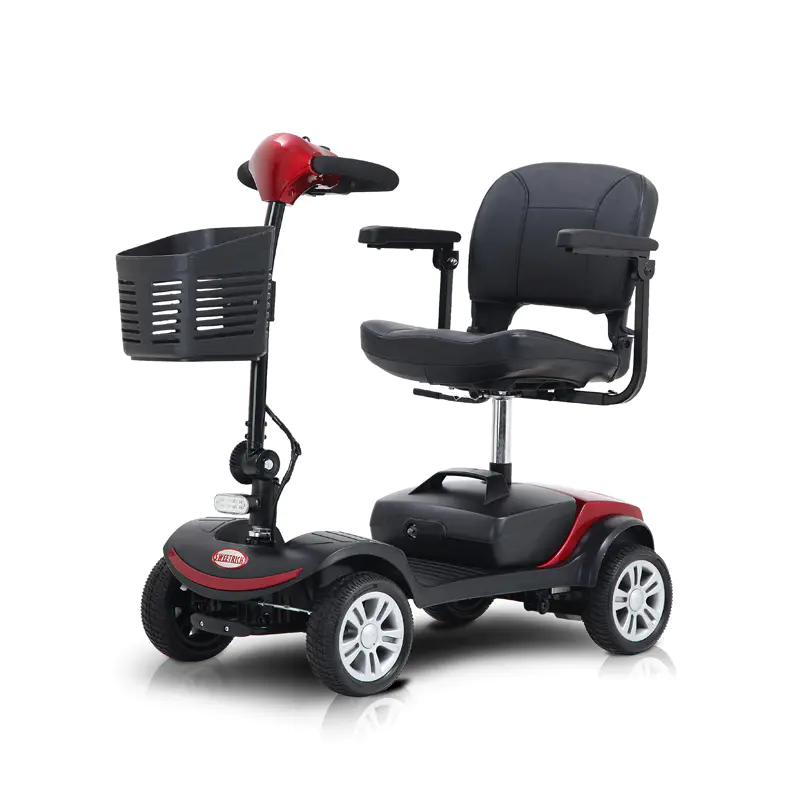
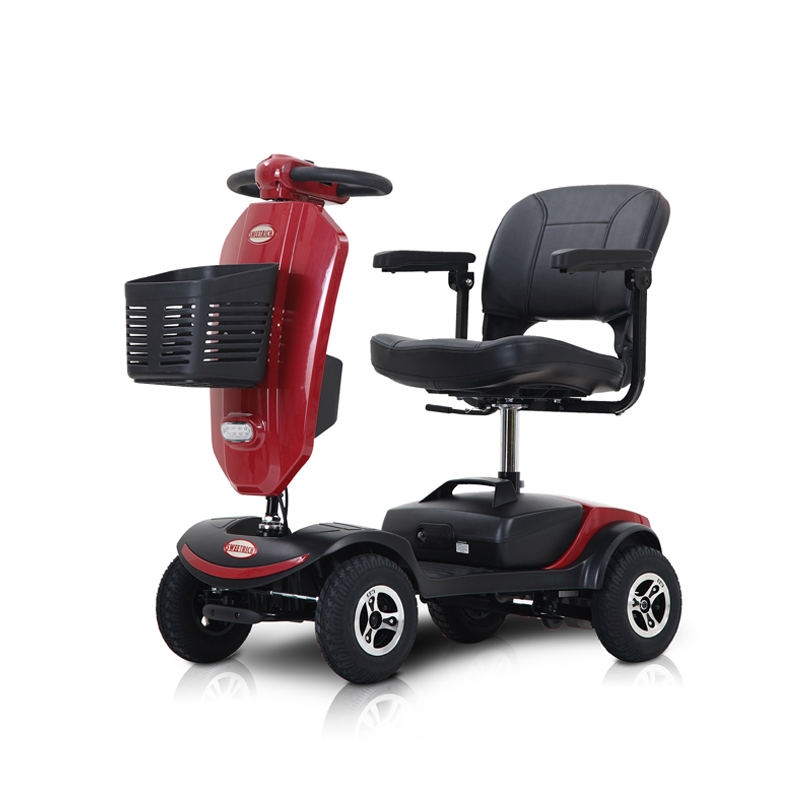
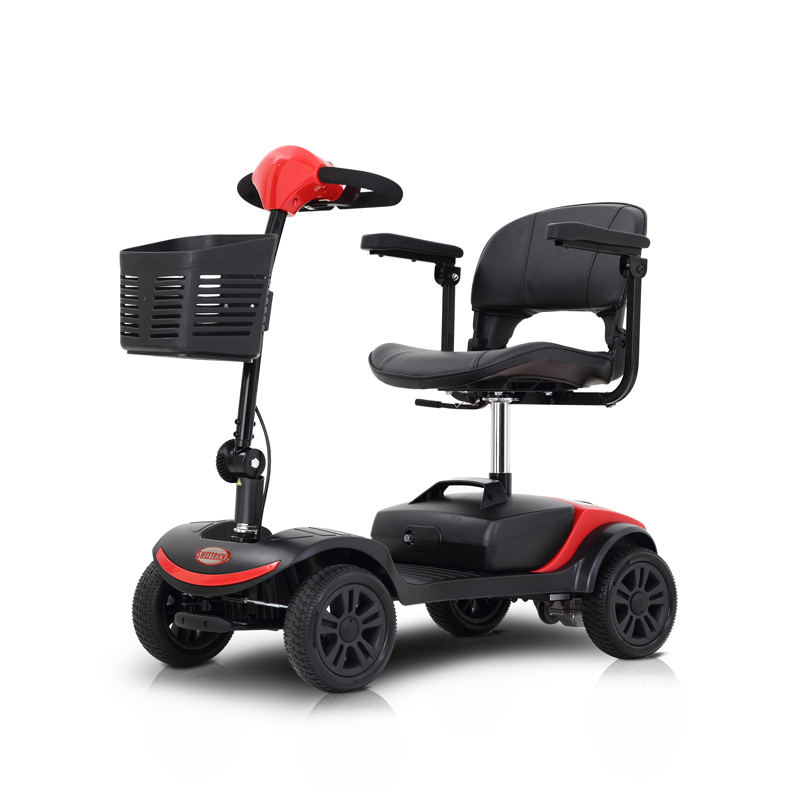
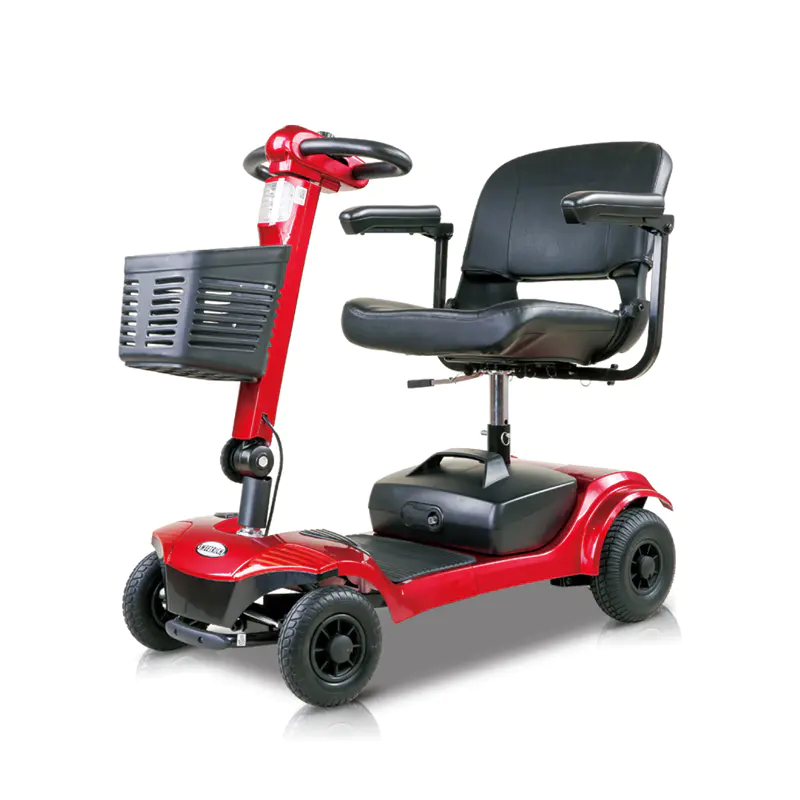
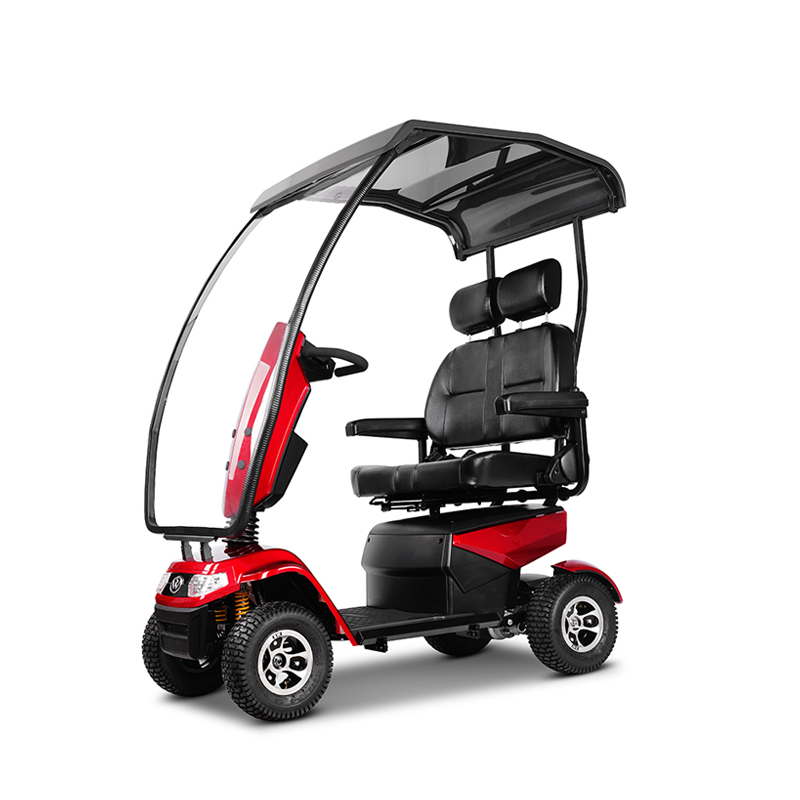
When a rider glides across a plaza on a Wholesale Mobility Scooter, the motor hums, the tires whisper, and the display glows, yet the frame itself says nothing. It is the silent partner, a lattice of tubes, plates, and joints that accepts every curb impact, every sideways jolt, and every subtle shift of body weight. A well-designed frame does not ask for attention; it simply keeps the rider's center of gravity inside a safe polygon while the world tilts, brakes, and accelerates around it. Understanding how that polygon is drawn—and how it can shrink or expand under load—forms the starting point for any conversation about structural safety in electric mobility scooters.
From bicycle bones to scooter skeletons: a short lineage
Early personal mobility devices borrowed bicycle thinking: two triangles, a seat post, and a steering column. Batteries were small, riders were light, and pavement was smooth. Today's scooters carry energy modules that can outweigh the original entire vehicle, plus riders who may balance shopping bags on handlebars or attach child seats fore and aft. The frame must therefore evolve from bicycle bones to scooter skeletons: shapes that accept higher bending moments, wider stance widths, and dynamic loads that arrive diagonally through the steering axis. Recognizing this lineage helps designers avoid repeating assumptions that became obsolete when lead-acid gave way to lithium chemistry and when 12-inch wheels gave way to 14-inch turf-friendly tires.
Load paths: teaching force where to travel
Force is lazy; it follows stiffness. If a designer places a stiff bracket beside a flexible tube, the bracket hogs the load until something yields. A safe frame choreographs load paths so that curb strikes flow toward the largest cross-sections, while vibration finds sacrificial layers that protect the rider's spine. One practical method is to draw "force arrows" on a napkin sketch: push a hypothetical 100-unit load through the steering head, then watch where the arrows crowd together. Crowding indicates stress concentration; spreading indicates generous flow. The exercise costs nothing but minutes, yet it prevents costly redesign after the fatigue crack appears under a footrest weld.
The battery box as structural member
Batteries prefer a rigid enclosure to prevent cell flex, while frames crave a low-mounted mass to keep rollover moments small. Merging these needs turns the battery box into a structural member, a stressed-skin floor that ties left and right rails together. Done well, the box reduces tube count and lowers the center of gravity. Done poorly, it becomes a load path choke point where side impacts crush cells against tubes. Designers often add sacrificial ribs outside the sealed cell compartment; these ribs deform first, buying milliseconds for the rider to regain balance while sparing the energy module from intrusion. The ribs are cheap to replace, the box is not.
Folding joints: convenience versus continuity
Folding mechanisms tempt commuters who must lift a scooter into a trunk, yet every hinge interrupts the load path. A common compromise is a two-stage joint: a primary latch that handles riding loads and a secondary safety pin that engages only during shock events. The pin lives inside a bronze bushing, invisible to the user, but ready to shoulder shear when an unexpected pothole tries to pry the latch open. Maintenance instructions remind owners to rinse road grit from the bushing; otherwise the pin may refuse to seat, and convenience quietly erodes safety. A small rubber plug hides the access hole, balancing weather sealing with serviceability.
Steering head angle and the self-centering instinct Caster wheels on shopping carts flutter because their steering axis sits behind the contact patch. Mobility scooters avoid this by tilting the steering column so the axis meets the ground ahead of the tire center. The angle, often gentle rather than steep, creates a self-centering instinct that pulls the bar straight after each turn. Too little angle and the rider fights wobble at speed; too much and the scooter resists tight cornering in elevators. Frame designers tune this angle by rotating a single CAD plane, but the rider experiences it as confidence while threading between café tables or down a ramp onto a crowded subway platform.
Torsion and the human gyroscope
When the left wheel drops into a drainage groove, the frame twists and the rider's vestibular system becomes a human gyroscope, detecting rotation through inner-ear hairs thinner than spider silk. If the frame twists too little, impact spikes travel up the spine; if it twists too much, the rider senses an alarming sway. Designers aim for a window in between, often by selecting tube shapes that resist bending in the vertical plane yet permit a few degrees of torsion in the horizontal. One approach is an ovalized downtube: tall in the direction of curb loads, narrow in the direction of twist. The tube signals safety by feel rather than by specification, a nuance that emerges only during prototype rides across brick pavers.
Welds, bonds, and the fear of the invisible
A weld bead looks robust, yet its heat-affected zone may harbor micro-cracks that propagate under cyclic loads. Bonded joints spread stress over larger areas but demand surface preparation equal to surgical sterility. Rivets offer a mechanical middle ground, yet each hole becomes a new stress riser. Safe frames often combine methods: welds for primary continuity, adhesive for crack arrest, and rivets for redundancy. Inspectors peer at sectioned samples under magnification, but the rider trusts the unseen. To honor that trust, factories perform periodic tear-down tests, sacrificing one frame from every production batch to verify that theory and reality still overlap.
Corrosion as a structural event
Rust swells with a force that can split tubes from the inside. Coastal riders carry salt spray on their shoes; winter riders track chloride crystals that melt into brine. Designers respond with sealed internal cavities: foam plugs inside tubes, vent holes placed high rather than low, and powder coatings that creep into crevices where spray guns fear to aim. Owners play a role by rinsing the underside after beach outings and by storing the scooter dry-side down so puddles cannot pool inside the steering column. Corrosion is not cosmetic; it is a structural event that happens slowly enough to be ignored until suddenly it is not.
Fatigue life and the myth of infinite mileage
Metal grows tired. Aluminum alloys subjected to millions of micro-strains work-harden, then crack. Steel warns with visible rust, but aluminum offers fewer omens. Designers therefore embed a fatigue life target into the frame: a number of curb strikes, cargo loads, and steering cycles that the scooter should survive before retirement. The number is not stamped on the frame; instead, it guides inspection intervals. A small dimple pressed into an unobtrusive tube signals the inspector to measure wall thickness with an ultrasonic probe. When thickness drops below a threshold, the frame graduates from daily service to backup duty, extending overall fleet life without courting catastrophic failure.
Impact testing: replicating the curb drop
Laboratories hoist frames onto guided sleds and drop them against steel blocks angled to mimic a 45-degree curb strike. Strain gauges glued near welds record micro-volts that convert to stress curves. High-speed cameras capture the moment the tire sidewall buckles, revealing whether the battery box stays within its safety envelope. These tests are not pass-fail rituals; they are conversations between engineers and material, conversations that continue until the stress curve flattens before the displacement curve spikes. The rider benefits indirectly: a frame that survives a thousand lab drops is unlikely to complain about the occasional real-world pothole.
Repairability: extending the relationship
A safe frame acknowledges that accidents happen. Crash bars bolted to the motor housing can be replaced in minutes, while the main backbone lives on. Welded-on cable guides, if crushed, require frame retirement; bolt-on guides can be swapped with a 3 mm hex key. Designers therefore ask: which parts are sacrificial, and which are sacred? The answer is coded into fastener sizes: M5 bolts for sacrificial, M8 for structural, and a red paint dot on heads that must never be removed. Owners learn to read the code during orientation sessions, turning repairability into a shared language rather than a mystery.
Modularity and the second-life frame
When batteries age beyond acceptable range, the scooter may be retired even though the frame remains sound. Modular design allows the backbone to accept newer cell chemistries or different wheel sizes, giving the frame a second life in community-sharing fleets. Attachment points for telemetry boxes or child seats are pre-drilled, so upgrades do not demand new holes that weaken tubes.
| Aspect | Key Point |
|---|---|
| Battery Aging | Scooter may retire due to battery, even if frame is sound. |
| Modular Design | Frame can accept new batteries or different wheel sizes. |
| Upgrade Flexibility | Pre-drilled attachment points allow add-ons without weakening frame. |
| Second-Life Use | Supports community-sharing fleets and extended frame lifespan. |
The second-life concept also reduces environmental impact, turning structural safety into a sustainability story that resonates with municipalities aiming to lower carbon footprints without compromising rider protection.
Rider weight distribution: fore, aft, and sideways
Carrying a weekly shop on the rear rack shifts the center of gravity backward, lightening the steering wheel and increasing the tendency to lift during curb ascent. Designers counter with battery placement slightly forward of the axle and with rack load limits embossed in pictogram form. Side bags present a different challenge: asymmetric weight can twist the frame if the rack lacks triangulation. A simple X-shaped brace beneath the deck converts side loads into tension and compression paths that terminate at the main rails, keeping the scooter tracking straight even when grocery bags differ by several kilograms.
Weather shields: ice, water, and ultraviolet light
Water that reaches bearing seats can freeze overnight, expanding micro-gaps into macro-cracks. Designers add labyrinth seals: overlapping plastic lips that water must navigate like a rat in a maze. Ultraviolet light embrittles exposed nylon parts, so pigment packages include UV stabilizers that migrate to the surface, sacrificing themselves to save the polymer beneath. Riders contribute by parking under shade when possible and by wiping standing water from crevices before it migrates inward. Weather is not an external variable; it is a daily participant in structural safety.
Perception of stiffness: psychology meets metallurgy
Two frames with identical torsional stiffness can feel different if one transmits high-frequency vibration while the other damps it. Riders describe the as "nervous" and the second as "solid," even though both pass laboratory tests. Engineers therefore tune perception by inserting a viscoelastic layer between deck and backbone, a hidden shock absorber that sacrifices a fraction of efficiency for a surplus of confidence. The layer is tuned to the resonant frequency of human forearms, turning metallurgy into psychology and proving that safety is felt as well as measured.
Training the eye: spotting trouble before it spreads
Hairline cracks often begin at weld toes where reflective glare hides the flaw. Training videos teach owners to shine a flashlight parallel to the tube, letting shadows reveal the telltale line that catches a fingernail. Monthly inspections take five minutes but can prevent a roadside failure. Dealers supply a pocket-sized inspection card: green dot for no change, yellow dot for monitor next month, red dot for immediate service. The card turns casual glances into systematic surveillance, extending the frame's life through educated eyes rather than through thicker metal alone.
Insurance, liability, and the paper frame
Behind every physical frame lies a paper twin: test reports, traceable material certificates, and batch numbers linked to frame serials. Insurers audit these documents after crashes, searching for gaps that shift liability from rider to maker.
| Aspect | Key Point |
|---|---|
| Documentation | Every frame has a "paper twin" with test reports, material certificates, and batch numbers. |
| Purpose | Supports traceability and verifies manufacturing quality. |
| Insurance | Audited after incidents to determine liability between rider and manufacturer. |
A safe frame therefore includes a QR code under the deck that stores a digital birth certificate, accessible to investigators yet encrypted against tampering. The code does not add grams, yet it supports the structural story when memory fades and witnesses disagree, turning invisible safety into visible accountability.
Cultural dimensions: sharing versus owning
In sharing fleets, a single frame may encounter riders from 40 kg to 120 kg within the same afternoon. Adjustable suspension preload, operated by a thumb wheel marked in rider-weight icons, lets each user select a stiffness band that keeps the frame within its safe stress envelope. The adjustment range is validated during design so that the lightest setting still prevents bottoming out while the heaviest avoids harsh rebound. Cultural dimensions thus become structural variables, reminding engineers that a frame optimized for a single owner may fail under the democracy of shared mobility.
The horizon: bio-inspired joints and self-healing skins
Research labs are embedding micro-vascular channels into aluminum joints, filled with healing polymers that wick into fatigue cracks when stress releases. Early samples recover up to 80 % of original strength, enough to extend inspection intervals rather than to eliminate them. Other teams are exploring shape-memory alloys that stiffen under sudden load yet relax during casual cruising, offering a single frame that adapts to both sidewalk dawdling and highway-grade cycle paths. These horizons remain experimental, but they hint at a future where structural safety evolves rather than depreciates, turning the frame into a living skeleton that learns from every mile.
Sweetrich Mobility
At Sweetrich Mobility, every frame is regarded as far more than a mere assembly of metal and fasteners—it serves as a dynamic interface facilitating a vibrant interaction between the rider and their surroundings. This structure adapts seamlessly, absorbing impacts and providing comprehensive protection. Through modular design, intelligent material selection, and meticulous attention to ease of maintenance, Sweetrich elevates the frame into a resilient and dependable companion—one capable of anticipating shifts in weight distribution, withstanding weather conditions, and gracefully navigating the unpredictable rhythms of daily life. In this ongoing dialogue between rider, vehicle, and city, the mobility scooter's skeletal framework transforms into an invisible ally, silently cultivating a sense of confidence, freedom, and inner peace for the user with every ride.