
 +86-(0)512-82283871

Content
- 1 Product Overview
- 2 Key Technical Specifications
- 3 Outdoor Performance and Front-Wheel Drive
- 4 Comfort for Daily Use
- 5 Battery System, Charging, and Range
- 6 Motor and Control System
- 7 Electromagnetic Braking and Safety
- 8 Folding Design and Transport Practicality
- 9 Advantages Compared with Typical Compact Power Wheelchairs
- 10 Advantages Compared with Larger Heavy-Duty Mobility Vehicles
- 11 Manufacturing Strengths and Product Development
- 12 Maintenance Recommendations
- 13 Who May Benefit from This Wheelchair?
- 14 Buying and Evaluation Checklist
- 15 User Training and Responsible Operation
- 16 Frequently Asked Questions
- 16.1 What type of product is the iPower Sport FWD?
- 16.2 What is the maximum speed?
- 16.3 What is the stated driving range?
- 16.4 How much weight can the wheelchair carry?
- 16.5 Does the wheelchair use lithium batteries?
- 16.6 How long does charging take?
- 16.7 Can the wheelchair be used outdoors?
- 16.8 Is the chair suitable for steep hills?
- 16.9 What is the benefit of front-wheel drive?
- 16.10 Is the wheelchair easy to lift into a vehicle?
- 16.11 Is the product a medical device?
- 16.12 What maintenance does the wheelchair require?
- 17 Conclusion
- 18 References
- 19 Product: iPower Sport FWD Certificated power suppier used battery electric wheelchair foldable for out door use
Choosing an electric wheelchair is an important decision for users who want greater independence, reliable outdoor performance, and comfortable transportation. A suitable power wheelchair must do more than move from one location to another. It should provide stability on uneven surfaces, predictable braking, sufficient battery range, a supportive seat, practical controls, and a design that can be used in a variety of daily environments.
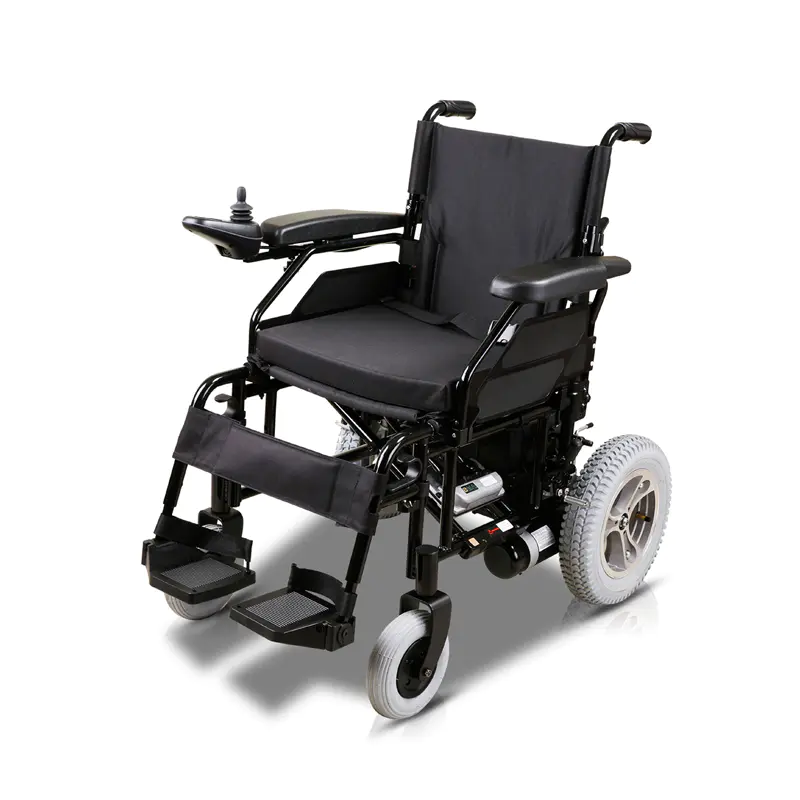
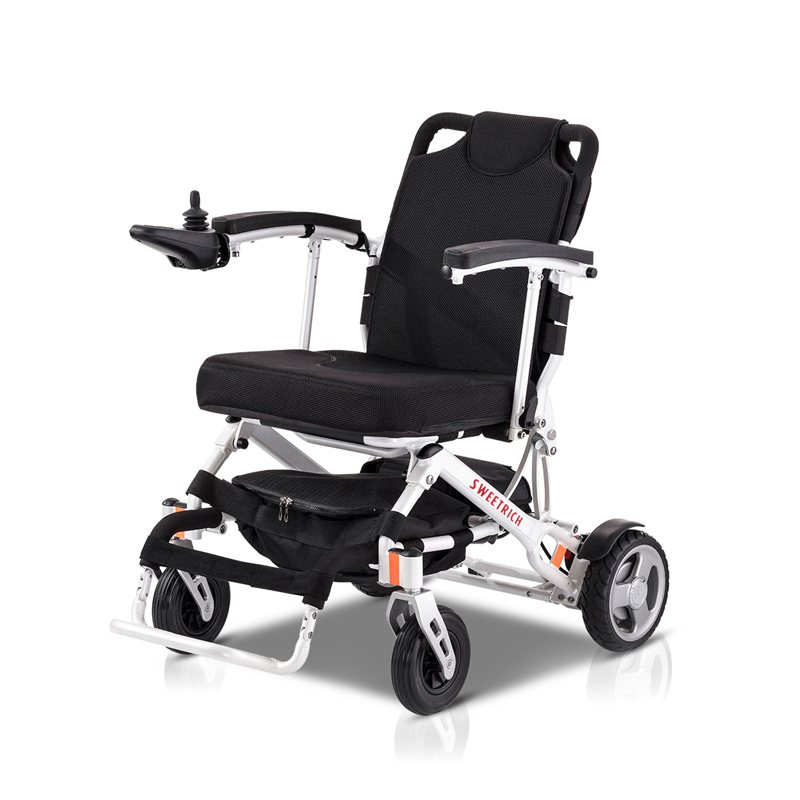
The iPower Sport FWD is a foldable, front-wheel-drive electric wheelchair developed for outdoor use and general mobility applications. It combines large pneumatic tires, front suspension, anti-tip wheels, electromagnetic braking, adjustable seating, and a dual-motor drivetrain. Its lead-acid battery system is designed to deliver an advertised driving range of approximately 30–40 kilometers, or 19–25 miles, under suitable operating conditions.
With a maximum forward speed of 8 kilometers per hour, a rated weight capacity of 120 kilograms, and a maximum driving gradient of 10 degrees, this model is positioned as a heavy-duty power wheelchair for users who need more capability than a compact indoor chair can normally provide. At the same time, its folding structure supports storage and transportation requirements that are often important to families, caregivers, dealers, and mobility providers.
Product Overview
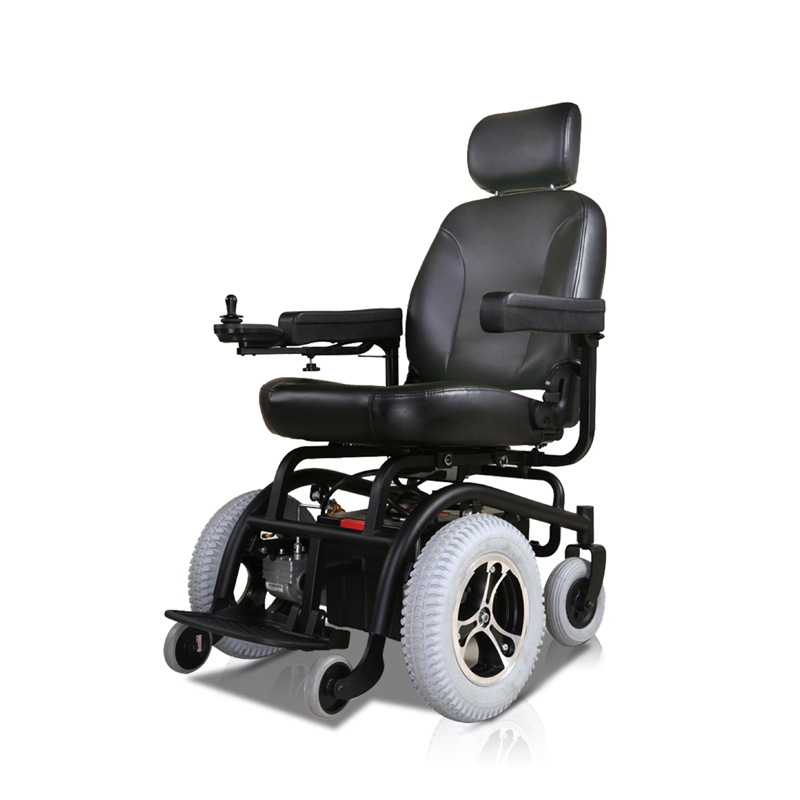
The iPower Sport FWD is designed around a balance of outdoor traction, user comfort, and practical operation. The front-wheel-drive configuration places the powered wheels toward the front of the wheelchair, helping the chair approach small changes in terrain with a stable and purposeful driving response. This layout can be particularly useful in outdoor areas where the user may encounter paths, thresholds, compacted ground, or gently uneven surfaces.
The product includes two 24-volt, 320-watt motors supplied through a 24-volt electrical system. A 24-volt, 50-amp motor controller manages the drive system, while the electromagnetic braking system helps bring the chair to a controlled stop when the controls are released or the system is commanded to stop.
Large 14-inch by 3-inch front pneumatic tires provide a broad contact area and help absorb some of the vibration associated with outdoor surfaces. The rear tires measure 8 inches by 2.5 inches. Front suspension, rear suspension, and anti-tip wheels work together to improve the overall ride experience and add stability during ordinary outdoor driving.
The wheelchair also features a leather-like cushion seat, an adjustable seat back, lead-acid batteries, and a charger compatible with AC input from 115 to 230 volts. These features make the chair suitable for users who need a practical mobility solution for home use, neighborhood travel, shopping areas, parks, facilities, and other accessible environments.
iPower Sport FWD Certificated power suppier used battery electric wheelchair foldable for out door use
Key Technical Specifications
The following table summarizes the principal specifications supplied for this electric wheelchair. Actual performance may vary according to user weight, terrain, temperature, tire pressure, battery condition, driving style, load distribution, and maintenance.
| Specification | Product Detail |
|---|---|
| Product type | Foldable heavy-duty electric wheelchair |
| Drive configuration | Front-wheel drive |
| Overall dimensions | 980 mm L × 600 mm W × 1180 mm H |
| Maximum forward speed | 8 km/h, approximately 5 mi/h |
| Maximum driving gradient | 10 degrees |
| Advertised driving range | 30–40 km, approximately 19–25 miles |
| Weight capacity | 120 kg, approximately 265 lb |
| Front tire size | 14 inches × 3 inches, pneumatic |
| Rear tire size | 8 inches × 2.5 inches |
| Suspension | Front and rear suspension features |
| Brake system | Electromagnetic brake |
| Battery system | Two 12-volt, 40-amp-hour lead-acid batteries |
| Charger | DC 24V, 5A; AC 115–230V input |
| Charging time | Approximately 6–8 hours |
| Motors | Two 24V, 320W motors |
| Motor controller | 24V, 50A controller |
The supplied product information lists the heaviest part as 56 kilograms and also includes a 35-pound figure. Because these figures are not equivalent, buyers and distributors should confirm the exact component weight with the manufacturer before planning lifting, vehicle loading, or caregiver handling procedures. This is especially important for users who require a genuinely portable wheelchair.
Outdoor Performance and Front-Wheel Drive
Outdoor mobility places different demands on a wheelchair than indoor operation. Floors inside homes and commercial buildings are generally smooth and level, while outdoor surfaces may include paving joints, compacted paths, minor slopes, rough pavement, driveway transitions, and uneven ground. The iPower Sport FWD is designed with several features intended to improve its performance in these conditions.
Front-wheel drive gives the chair a distinctive turning and climbing behavior. The powered wheels at the front can help the wheelchair maintain forward progress when approaching small obstacles or changes in surface level. For many users, this arrangement can feel confident and responsive in outdoor environments. It is still essential to approach curbs, steep transitions, and uneven surfaces only where the route is accessible and within the limits of the product.
The maximum listed gradient is 10 degrees. This specification should not be interpreted as a recommendation to drive on every slope measuring 10 degrees. Surface condition, moisture, loose material, user weight, battery charge, direction of travel, and the transition at the top or bottom of the slope can substantially affect safety. A gradual, firm, dry, accessible route is always preferable to a short but steep incline.
The large front pneumatic tires are one of the wheelchair’s notable outdoor features. Compared with smaller solid wheels often found on compact indoor chairs, the 14-inch pneumatic tires can provide improved cushioning and more effective passage over ordinary surface irregularities. Pneumatic tires also require regular pressure checks. Incorrect pressure can influence comfort, steering response, traction, range, and tire life.
Suspension further supports the outdoor design. The product information specifies front suspension and also identifies rear suspension among its features. This combination can reduce the transmission of vibration to the seat and frame when the wheelchair travels across common outdoor surfaces. Suspension does not eliminate the need for careful driving, but it can contribute to a more comfortable and controlled ride.
Anti-Tip Support
Anti-tip wheels are an important safety-oriented feature for a powered wheelchair. They help reduce the possibility of the chair tipping backward during certain movements, particularly when negotiating an incline or accelerating from a stationary position. Their effectiveness depends on correct adjustment, proper maintenance, and appropriate driving behavior.
Anti-tip wheels should not be used as a substitute for route planning. Users should avoid unstable ground, unprotected edges, stairs, deep potholes, and slopes that exceed the wheelchair’s operating limits. Caregivers and dealers should explain the purpose of anti-tip wheels and ensure that they remain correctly installed.
Comfort for Daily Use
A wheelchair that performs well mechanically must also support the user comfortably during ordinary travel. The iPower Sport FWD includes a leather-like cushion seat and an adjustable seat back. These components help create a more adaptable seating position for different users and daily activities.
The adjustable backrest allows the user or caregiver to select a seating angle that feels appropriate for the journey. A more upright position may be useful for conversations, dining, and steering visibility, while a slightly adjusted position may improve relaxation during longer periods of sitting. The ideal position depends on the user’s body shape, posture, mobility needs, and professional guidance where applicable.
The cushion seat provides a softer contact surface than an unpadded seat. It can contribute to general comfort during short trips and extended periods of use. However, a standard cushion should not automatically be regarded as a clinical pressure-management system. Users with specific postural or skin-integrity needs should consult an appropriate healthcare professional or seating specialist.
The 600-millimeter overall width is a practical feature for many users. A relatively narrow frame can help with access through suitable doorways, corridors, elevators, and aisles, although the actual usable clearance depends on the environment and the wheelchair’s turning behavior. Buyers should measure their home, vehicle, ramps, and storage areas before purchase.
The chair’s 1180-millimeter height and 980-millimeter length provide a substantial frame while retaining a manageable overall footprint. The design is therefore positioned between highly compact indoor power chairs and larger outdoor mobility vehicles. This balance may appeal to users who want an outdoor-capable wheelchair without selecting a much larger full-size platform.
Battery System, Charging, and Range
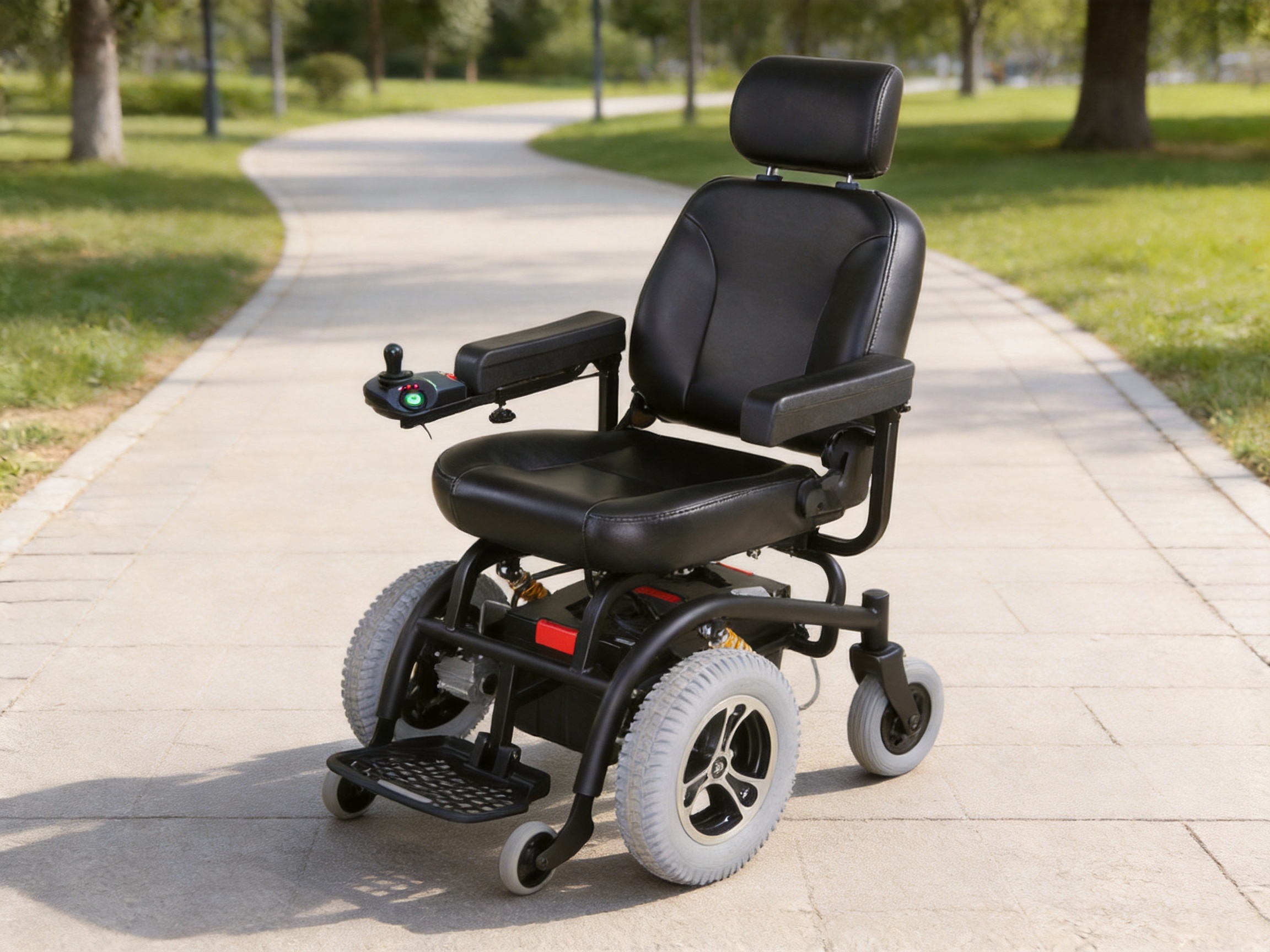
The wheelchair uses two 12-volt, 40-amp-hour lead-acid batteries connected to create a 24-volt power system. Lead-acid batteries remain widely used in mobility products because they are familiar to service providers, comparatively economical, and capable of supplying the current needed by compact electric drive systems.
The advertised driving range is 30–40 kilometers, or approximately 19–25 miles. This range can be useful for planned day trips, local errands, campus travel, facility use, and neighborhood mobility. Range figures are normally measured under controlled conditions and should not be treated as a guaranteed distance for every user.
Several factors affect real-world range. A heavier total load requires more energy, especially on slopes. Cold temperatures can reduce battery output. Frequent starts and stops, soft ground, underinflated tires, strong wind, and aggressive acceleration may also reduce the distance available from one charge. Good battery maintenance and smooth driving can help users obtain more consistent performance.
The supplied charger is rated at DC 24V and 5A, with AC input from 115 to 230 volts. The stated charging time is approximately 6–8 hours. Charging overnight may be convenient for many users, but the charger should be used in a dry, ventilated location according to the manufacturer’s instructions. The charging area should be free from excessive heat, water, and combustible materials.
Lead-Acid Battery Advantages and Considerations
Compared with lithium battery systems, lead-acid batteries are generally heavier. This can affect the total weight of the wheelchair and may make lifting more demanding. They can also require careful charging and replacement planning. Nevertheless, lead-acid technology offers several practical benefits, including broad availability, established service knowledge, and a well-understood operating profile.
For distributors and fleet operators, a lead-acid system can simplify procurement because replacement batteries and service procedures are familiar in many markets. For individual users, it is important to follow the charging schedule, avoid fully depleting the batteries whenever possible, and arrange replacement when capacity declines significantly.
Battery terminals, wiring, and connectors should be checked during routine maintenance. Loose connections can cause intermittent operation, reduced performance, or heat generation. Any unusual odor, swelling, leakage, excessive heat, or charging fault should be treated seriously, and the wheelchair should be inspected by a qualified technician.
Motor and Control System
The iPower Sport FWD is equipped with two 24V, 320W motors. Dual motors provide independent drive power to the left and right sides of the wheelchair. This arrangement is common in powered wheelchairs because it allows the chair to turn within a compact area and provides a direct method of controlling each drive wheel.
The 24V, 50A motor controller regulates power delivery between the batteries, controls, and motors. A properly matched controller helps support smooth acceleration, responsive steering, and consistent operation. The controller also works as part of the broader electrical protection system, although users should still avoid water exposure, unauthorized modifications, and overload conditions.
The control interface is intended to allow the user to regulate speed and direction with minimal physical effort. Users should begin in an open, level area and practice starting, stopping, reversing, and turning before entering crowded or unfamiliar environments. Caregivers should also understand how to switch off the system and respond if the user becomes disoriented or needs assistance.
Two-wheel drive systems can offer a useful combination of maneuverability and outdoor capability. Compared with some larger four-wheel platforms, a dual-motor wheelchair may be easier to steer in tighter areas. Compared with a basic rear-wheel-drive indoor chair, the front-wheel-drive configuration and larger front tires are intended to provide a more outdoor-oriented driving experience.
Electromagnetic Braking and Safety
The electromagnetic brake is designed to engage when the drive system is not actively propelling the chair. This type of brake can help prevent unwanted rolling when the user releases the control or stops the wheelchair. It is especially valuable when a powered chair is used on gentle gradients or when the user needs to pause during travel.
Braking performance depends on the condition of the electrical system, battery charge, motor controller, tires, and mechanical components. Users should test the brakes in a safe area before every unfamiliar journey. If the wheelchair continues to roll after the control is released, produces unusual noises, or behaves differently from normal, it should not be used until inspected.
Safety also depends on the user’s driving habits. Seat belts or positioning supports should be used if supplied or recommended. The user should keep hands, feet, clothing, and personal items clear of the wheels and moving parts. The chair should not be overloaded beyond its 120-kilogram rated capacity, and the load should be distributed in a stable manner.
Although the wheelchair is intended for outdoor use, it should not be submerged or operated through deep water. Rain, puddles, and wet surfaces may affect traction and electrical components. If the chair becomes wet, it should be turned off, dried appropriately, and inspected before continued use.
Folding Design and Transport Practicality
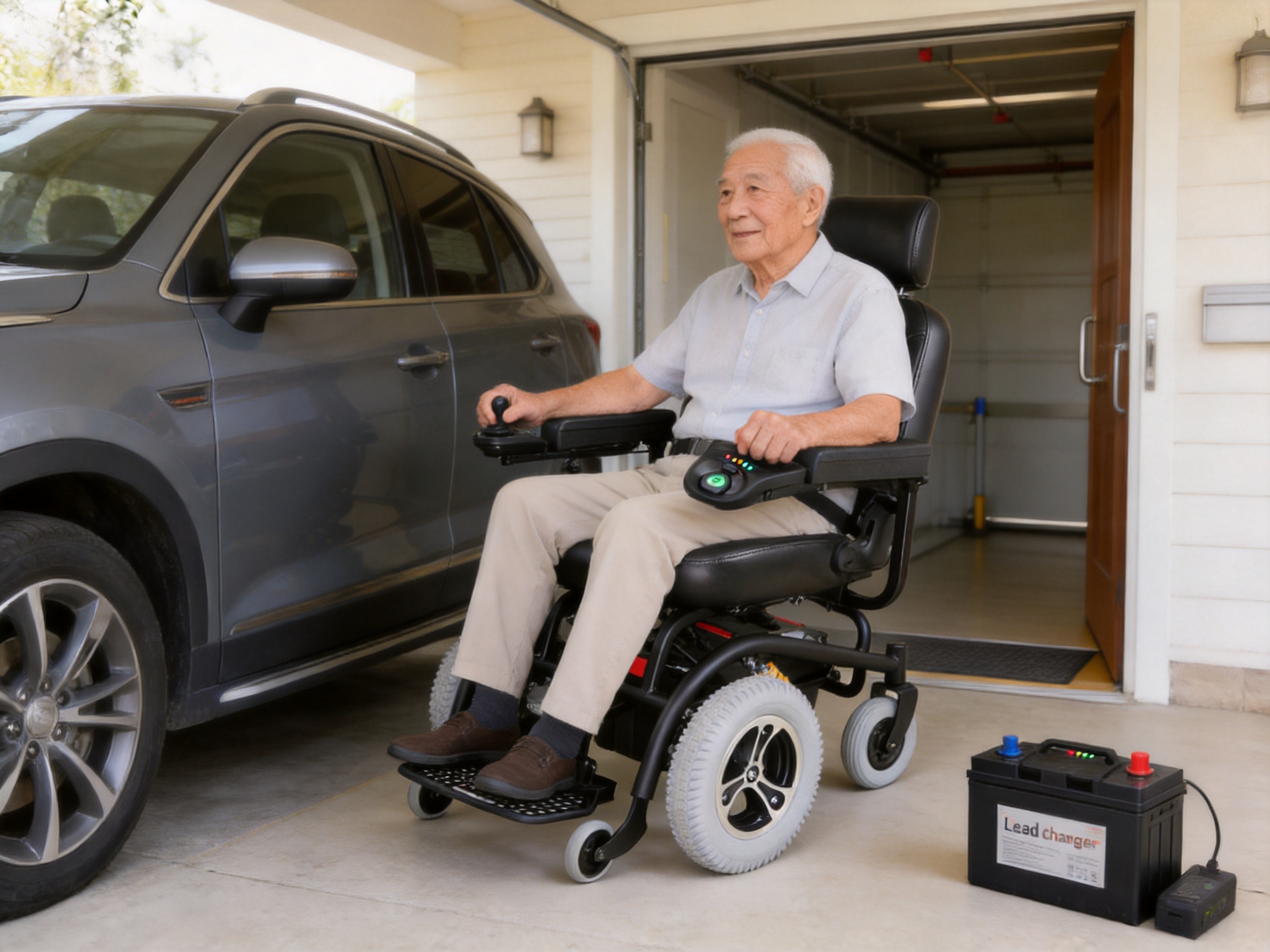
Folding capability is one of the most important advantages for users who need to combine electric wheelchair travel with vehicle transportation or limited storage space. A foldable chair can be stored more easily in a garage, apartment, entryway, or transport area than a rigid full-size wheelchair, provided the folded dimensions and weight are suitable for the user’s situation.
Folding can also help families and mobility dealers manage inventory, demonstrations, and delivery. A chair that can be reduced for storage may require less dedicated space and can be more convenient for service appointments. However, folding does not necessarily mean lightweight. The stated heaviest-part information should be confirmed before purchase, particularly if a user expects to place the wheelchair into a car without a ramp or lift.
When preparing the wheelchair for transport, the frame should be fully secured in the folded or transport position. The chair should not be left loose in a vehicle where it could move during braking or turning. If a vehicle restraint system is required, it should be compatible with the wheelchair and installed according to applicable safety guidance.
Users should inspect hinges, locking points, release mechanisms, and frame connections regularly. Folding components must be clean and free of obstruction. The wheelchair should never be operated unless the frame is fully opened and locked into its intended driving position.
Advantages Compared with Typical Compact Power Wheelchairs
The iPower Sport FWD offers several characteristics that can distinguish it from smaller indoor-focused electric wheelchairs. The first is its outdoor-oriented tire and suspension package. Large pneumatic front tires, front and rear suspension features, and anti-tip wheels provide a more substantial foundation for ordinary outdoor travel than a minimal indoor model with small solid wheels.
The second advantage is its potential travel range. With an advertised range of up to 40 kilometers, the chair is designed for longer outings than many compact products intended mainly for short indoor journeys. Actual results will vary, but the battery capacity and dual-motor configuration provide a practical basis for local and recreational travel.
The third advantage is the 120-kilogram weight capacity. This rating gives the wheelchair a heavy-duty position within the compact and mid-size mobility category. Buyers should remember that the capacity includes the user and any carried items, but the rating can still make the product appropriate for a wider range of body types than lower-capacity travel chairs.
The fourth advantage is the combination of comfort and adjustability. A leather-like cushion seat and adjustable seat back can make the chair more adaptable for daily use. Some highly portable chairs prioritize folding size above seating support. This model attempts to retain a more supportive seating arrangement while still offering a folding structure.
The fifth advantage is the front-wheel-drive platform. The layout may provide useful traction and obstacle approach characteristics for outdoor paths and uneven but accessible surfaces. It also supports a compact turning concept through dual-motor control, helping the chair remain useful in environments where a larger outdoor vehicle may be difficult to maneuver.
Advantages Compared with Larger Heavy-Duty Mobility Vehicles
Full-size mobility vehicles can provide substantial ground clearance, larger batteries, and high outdoor stability, but they may be difficult to store or transport. The iPower Sport FWD offers a more compact alternative for users who do not need the footprint of a large scooter or extended-base power chair.
Its 600-millimeter width can be easier to accommodate in many indoor and semi-outdoor spaces. A larger vehicle may require wider doors, a bigger transport vehicle, or a dedicated storage area. The folding design may provide additional flexibility for users who travel by car or who share storage space with other household equipment.
The wheelchair format also benefits users who need a seated driving position with direct hand control and powered movement rather than a conventional walking aid. Unlike a manual wheelchair, it does not require the user to push the rear wheels. Unlike some scooters, it offers a wheelchair-style seating arrangement and a compact dual-motor platform.
These advantages do not make the chair suitable for every user or every surface. A large outdoor mobility vehicle may remain preferable for long-distance use on rough terrain, heavy loads, or routes with significant ground clearance requirements. The right choice depends on the user’s environment, transport arrangements, physical abilities, and intended travel pattern.
Manufacturing Strengths and Product Development
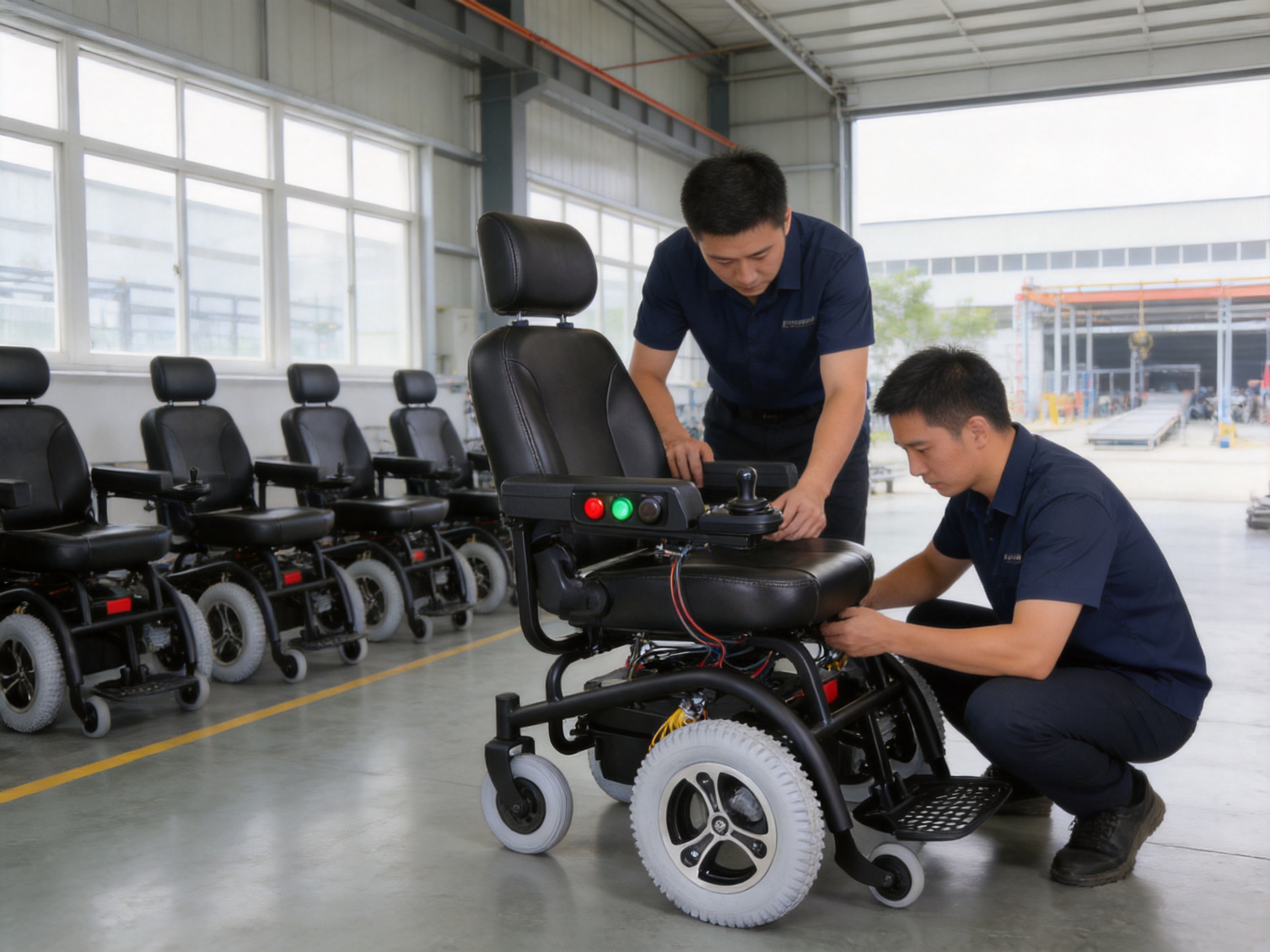
The product is manufactured by Suzhou Sweetrich Vehicle Industry Technology Co., Ltd., a high-tech mobility company located in Suzhou Industrial Zone, Jiangsu, China. The company was established in 2011 and operates a factory covering approximately 30,000 square meters within a larger 60-acre site.
More than a building, a modern mobility manufacturing facility represents a coordinated system of product research, engineering, component sourcing, assembly, inspection, testing, packaging, and after-sales support. The company’s stated focus on mobility scooters and power wheelchairs enables it to develop experience in the specific requirements of powered personal transportation.
Specialization is important in this sector because a power wheelchair is an integrated product. Battery performance, motor output, controller programming, frame geometry, tire selection, suspension behavior, braking, seating, folding mechanisms, and user controls must work together. A manufacturer with dedicated experience can apply lessons from product development and field feedback across multiple model generations.
The company states that it owns intellectual property related to electric scooters and power wheelchairs. Intellectual property can support the development of proprietary frame structures, folding solutions, control layouts, drive systems, and other product features. It may also help a manufacturer maintain consistency across product lines and respond to customer requirements in different markets.
Research and Development Approach
Effective research and development begins with understanding real user needs. Elderly users and people with disabilities may require simple controls, stable seating, predictable braking, comfortable suspension, and a manageable overall footprint. Caregivers and families may prioritize folding, storage, charging, reliability, and service access. Dealers may need consistent specifications, packaging, spare parts, and technical support.
The iPower Sport FWD reflects several of these considerations. Its adjustable backrest addresses seating adaptability. Its electromagnetic brake supports controlled stopping. Its pneumatic tires and suspension respond to outdoor comfort requirements. Its folding structure addresses transport and storage. Its dual-motor system provides powered traction and maneuverability.
Product development should also consider the differences between markets. The company reports exports to America, Europe, Japan, Australia, the Middle East, Russia, and other regions. International distribution requires attention to electrical input requirements, user expectations, documentation, packaging, service procedures, and market-specific regulations.
For the United States market, the supplied product content identifies the device as non-medical. Buyers, importers, and distributors should verify all applicable regulatory, labeling, safety, and transportation requirements before placing the product on the market or recommending it for a particular use.
Production Management and Quality Focus
The company describes its production management as strict and its product design as scientific and reliability-oriented. In practical terms, quality management for a power wheelchair should include incoming component checks, controlled assembly procedures, wiring inspection, battery and charger verification, brake testing, drive testing, folding-mechanism inspection, and final appearance review.
Consistency is especially important for a product with two motors and an electronic controller. Differences in motor installation, tire pressure, connector security, or brake adjustment can affect steering and driving behavior. A disciplined manufacturing process helps reduce variation between units and supports more predictable dealer setup and service.
Final product inspection should also confirm that the wheelchair folds and unfolds correctly, that safety locks engage, that the control system responds as intended, and that no cables are pinched during frame movement. Packaging should protect the chair from impact and moisture during international transportation.
Quality does not end when the product leaves the factory. Spare parts availability, technical documentation, warranty handling, troubleshooting support, and dealer training all contribute to the practical quality perceived by the user. A reliable mobility product is supported by an equally reliable service structure.
Maintenance Recommendations
Regular maintenance can help preserve comfort, range, safety, and service life. Tire pressure should be checked according to the recommended value. Pneumatic tires that are underinflated can increase rolling resistance and reduce range, while overinflated tires may provide a harsher ride and reduce contact with the surface.
The frame, suspension components, anti-tip wheels, and folding joints should be inspected for looseness or damage. Fasteners should be checked during scheduled service. If the chair develops unusual play, rattling, pulling to one side, or difficulty folding, it should be removed from service until the cause is identified.
Battery terminals and electrical connectors should remain clean and secure. The charger should be inspected for damaged cables or plugs. Users should use only a compatible charger and should not alter the electrical system without professional authorization.
The seat and backrest should be kept clean and checked for damage. A torn cushion cover, loose backrest, or deteriorated support surface can reduce comfort and may affect the user’s posture. Cleaning products should be suitable for the material and should not be applied directly to electrical controls.
After driving through damp conditions, the wheelchair should be dried before storage. The chair should be stored in a clean, dry location away from extreme temperatures. Lead-acid batteries may lose charge during extended storage, so the owner should follow the recommended maintenance-charging procedure.
Who May Benefit from This Wheelchair?
The iPower Sport FWD may benefit users who need powered mobility for indoor and outdoor daily activities and who place value on range, suspension, comfortable seating, and folding convenience. It may be suitable for neighborhood travel, shopping centers, accessible parks, residential communities, care facilities, and travel between buildings.
It may also be appropriate for mobility dealers seeking a versatile heavy-duty wheelchair for users who want more outdoor capability than a basic compact chair. The 120-kilogram capacity, dual motors, pneumatic tires, and electromagnetic braking system create a specification package that can serve a broad segment of the mobility market.
Potential buyers should evaluate their individual requirements carefully. Users who need very low lifting weight, fully enclosed weather protection, advanced clinical seating, high ground clearance, or very steep hill performance may require a different solution. A professional seating assessment may be appropriate for users with complex posture, pressure, or transfer needs.
Buying and Evaluation Checklist
Before purchasing, measure the narrowest doorway, elevator entrance, storage area, and vehicle opening through which the wheelchair must pass. Confirm both the folded and unfolded dimensions, as well as the weight of removable and non-removable components.
Confirm the user’s total weight, including clothing, bags, and accessories, against the 120-kilogram capacity. Ask the distributor about the supplied control configuration, battery replacement options, warranty coverage, spare parts, service intervals, and delivery inspection procedures.
Review the intended routes. Identify slopes, rough surfaces, thresholds, wet areas, road crossings, and locations where the chair may need to be lifted or transported. A wheelchair should be selected according to the real environment rather than specifications alone.
Ask whether local technicians are trained to service the motors, controller, electromagnetic brakes, folding mechanism, suspension, and lead-acid batteries. Service access can be just as important as initial purchase price when the product is used frequently.
User Training and Responsible Operation
Every user should receive practical instruction before independent operation. Training should include starting and stopping, speed adjustment, forward and reverse driving, turning, braking, slope management, battery charging, folding, unfolding, and emergency procedures.
New users should practice at low speed in an open, level area. They should learn how the front-wheel-drive configuration responds when turning and how the chair behaves on different surfaces. Familiarity reduces anxiety and helps the user make smoother control inputs.
Users should plan routes that comply with local accessibility and traffic rules. Visibility accessories, reflective materials, and appropriate lighting may be useful for outdoor travel, depending on local conditions and regulations. The wheelchair should not be driven in traffic lanes unless legally permitted and specifically appropriate.
Passengers, children, pets, and heavy items should not be carried unless the product is specifically designed and approved for that purpose. The center of gravity can change when objects are placed on the chair, potentially affecting stability, braking, and steering.
Frequently Asked Questions
What type of product is the iPower Sport FWD?
It is a foldable front-wheel-drive electric wheelchair in the heavy-duty category. It is designed for powered mobility and includes outdoor-oriented features such as pneumatic tires, suspension, anti-tip wheels, and an electromagnetic brake.
What is the maximum speed?
The listed maximum forward speed is 8 kilometers per hour, or approximately 5 miles per hour. Actual speed may vary according to operating conditions, battery charge, user weight, terrain, and control settings.
What is the stated driving range?
The advertised range is 30–40 kilometers, or approximately 19–25 miles. Real-world range depends on terrain, slope, load, temperature, tire pressure, battery condition, and driving style.
How much weight can the wheelchair carry?
The listed weight capacity is 120 kilograms, or approximately 265 pounds. This should include the user and any items carried on the wheelchair. The rating should not be exceeded.
Does the wheelchair use lithium batteries?
No. The supplied specifications identify two 12-volt, 40-amp-hour lead-acid batteries. Lead-acid batteries are widely serviceable but are generally heavier than lithium alternatives.
How long does charging take?
The stated charging time is approximately 6–8 hours. Users should charge the batteries with the compatible charger in a dry, ventilated location and follow the manufacturer’s charging instructions.
Can the wheelchair be used outdoors?
Yes. The product is designed with outdoor use in mind and includes large front pneumatic tires, suspension, anti-tip wheels, and a 10-degree maximum listed driving gradient. Outdoor routes should remain firm, accessible, and within the product’s operating limits.
Is the chair suitable for steep hills?
The listed maximum gradient is 10 degrees, but this is not a guarantee that every 10-degree slope is safe. Surface quality, moisture, load, battery charge, and slope transitions all affect performance. Users should avoid slopes that feel unstable or exceed local accessibility guidance.
What is the benefit of front-wheel drive?
Front-wheel drive places the powered wheels at the front of the wheelchair. This can provide a responsive driving feel and useful approach characteristics for certain outdoor surfaces. Users should practice turning and obstacle approach in a safe area before regular use.
Is the wheelchair easy to lift into a vehicle?
The wheelchair is foldable, which can make storage and transport more convenient. However, folding does not necessarily mean lightweight. The supplied information contains inconsistent heaviest-part weight figures, so buyers should confirm the exact lifting weight and folded dimensions before purchase.
Is the product a medical device?
The supplied product content identifies it as a non-medical device for the United States market. Buyers and distributors should independently verify all applicable local requirements and determine whether additional assessment is needed for a particular user.
What maintenance does the wheelchair require?
Routine care includes checking tire pressure, inspecting wheels and suspension, examining the folding mechanism, maintaining battery connections, testing the brakes, protecting the electronics from water, and charging the batteries correctly. Professional service should be arranged when unusual behavior occurs.
Conclusion
The iPower Sport FWD is designed to combine the practicality of a folding electric wheelchair with the outdoor capability of a larger mobility platform. Its main strengths include front-wheel drive, dual 320-watt motors, a 120-kilogram weight capacity, large pneumatic front tires, suspension, anti-tip wheels, electromagnetic braking, adjustable seating, and an advertised range of up to 40 kilometers.
Compared with a basic indoor power chair, it offers a more outdoor-focused specification package. Compared with a larger mobility vehicle, its 600-millimeter width and folding structure may provide greater convenience for storage, transportation, and everyday access. Its lead-acid battery system is familiar and serviceable, although buyers should account for battery weight and charging requirements.
The manufacturer adds value through specialized mobility experience, a dedicated production facility, product development capabilities, stated intellectual property ownership, international market experience, and a focus on quality management. These strengths support the development of mobility products intended to improve independence, comfort, and convenience for elderly users and people with disabilities.
As with any powered wheelchair, the best results depend on proper sizing, user training, responsible route selection, regular maintenance, and appropriate service support. When evaluated against the user’s actual environment and transport needs, the iPower Sport FWD can serve as a practical option for comfortable, capable, and more independent everyday mobility.
References
1. Product specification sheet for the iPower Sport FWD electric wheelchair, including dimensions, motor, battery, tire, braking, charging, range, and capacity information.
2. Manufacturer-provided product features for foldable outdoor electric wheelchairs, including pneumatic tires, suspension, anti-tip wheels, adjustable seating, and lead-acid battery configuration.
3. Manufacturer company information concerning research and development, production facilities, intellectual property, quality management, and international distribution.
4. General mobility equipment maintenance principles concerning pneumatic tire pressure, battery charging, electromagnetic braking, folding-frame inspection, and safe outdoor operation.
5. General user guidance for powered wheelchair route planning, slope awareness, load management, transport security, and accessibility evaluation.