
 +86-(0)512-82283871

Content
- 1 Designed for Outdoor Mobility
- 2 Dual-Motor Power for Confident Travel
- 3 Heavy-Duty Capacity Without Unnecessary Bulk
- 4 Adjustable Seating for Different Users
- 5 Battery System and Practical Driving Range
- 6 Safety Through Controlled Braking and Stable Components
- 7 Comparative Advantages in the Heavy-Duty Segment
- 8 Manufacturing Strengths and Product Development Capability
- 9 Quality Management and Assembly Considerations
- 10 Export Experience and International Service Potential
- 11 Maintenance for Long-Term Performance
- 12 Key Specifications at a Glance
- 13 Who May Benefit from This Configuration?
- 14 Q&A: Common Questions About the Power Wheelchair
- 14.1 Is this power wheelchair intended mainly for indoor or outdoor use?
- 14.2 What is the maximum user weight?
- 14.3 How far can it travel on one charge?
- 14.4 How long does charging take?
- 14.5 Does it have suspension?
- 14.6 Can the joystick be installed on either side?
- 14.7 What type of batteries does it use?
- 14.8 Is it a medical device?
- 14.9 Can it climb a 10-degree slope in all conditions?
- 14.10 Is it easy to transport?
- 14.11 What makes it different from a basic indoor power chair?
- 14.12 What should be confirmed before ordering?
- 15 Why the Manufacturing Partner Matters
- 16 Conclusion
- 17 References
- 18 Product: iPower GTS Plus More popular type second hand off road light power electric electronic wheelchair for the elderly
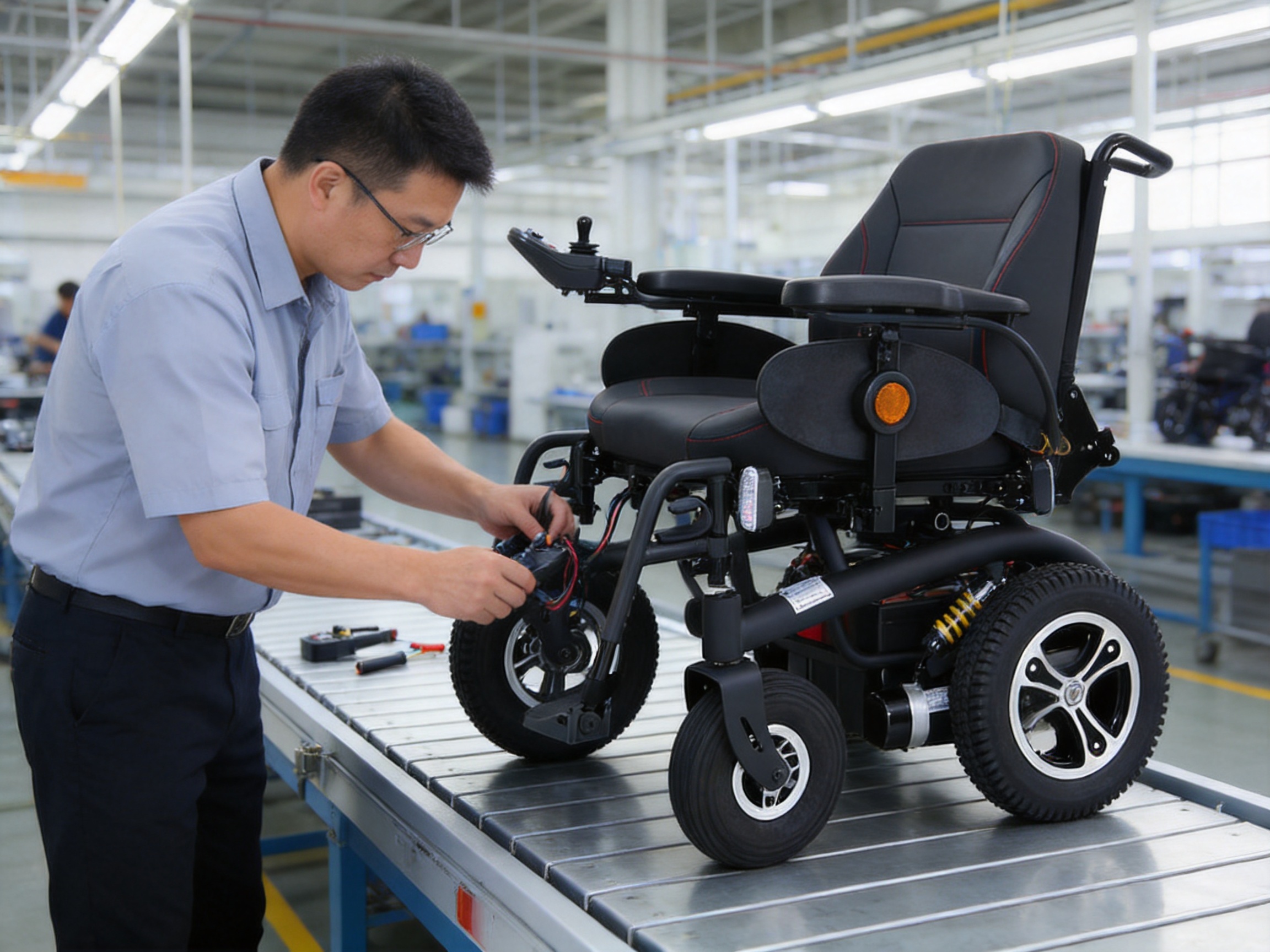
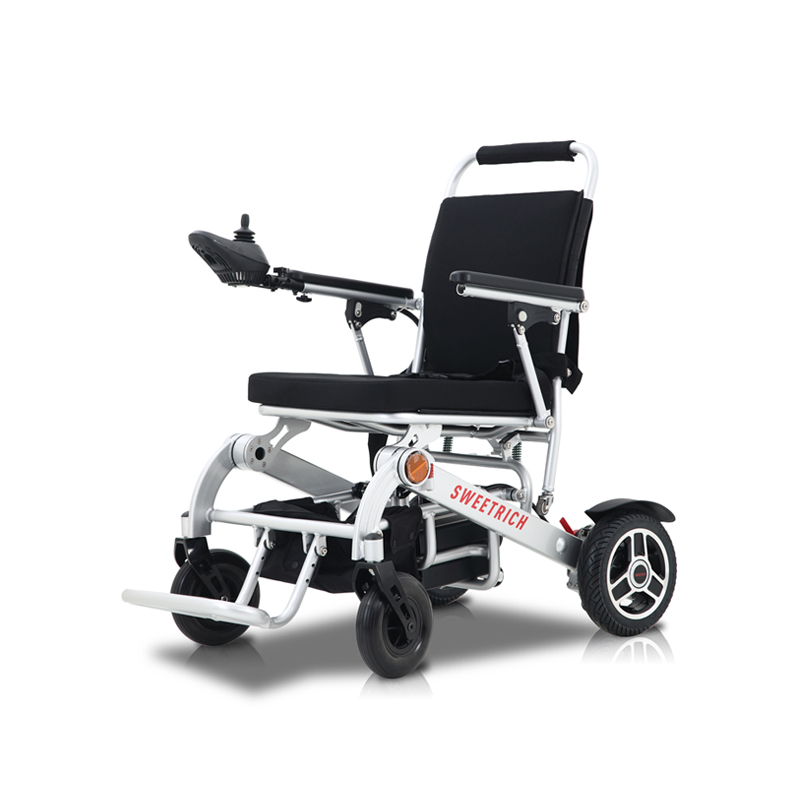
Choosing a power wheelchair for outdoor use requires more than comparing top speed or battery size. A suitable chair must combine stability, maneuverability, driving range, comfort, safety, and dependable construction in a design that can handle changing ground conditions. The iPower GTS Plus is developed around these priorities. It is a heavy-duty electric wheelchair intended for users who need additional outdoor capability, a higher weight capacity, and stronger drive performance than a basic indoor power chair.
The wheelchair is designed for non-medical use in the United States market. It is positioned as a practical mobility device for elderly users, people with limited mobility, and individuals who want an electric wheelchair capable of traveling beyond smooth indoor flooring. Its large tires, rear suspension, dual-motor drive system, adjustable seating features, and optional equipment make it suitable for paths, residential streets, parks, shopping areas, and other controlled outdoor environments.
At the same time, the product remains relatively compact compared with many large outdoor power wheelchairs. Its listed dimensions are 1,045 millimeters in length, 625 millimeters in width, and 1,080 millimeters in height. This balance between outdoor performance and manageable proportions is one of its most important advantages. Users receive the benefits of a stronger chassis and larger tires without moving to an excessively oversized platform.
Designed for Outdoor Mobility
Many standard power wheelchairs are optimized for indoor floors, smooth corridors, and short-distance travel. Such products can be easy to maneuver but may feel limited when used on uneven paving, outdoor walkways, compact gravel, or sloped ground. The iPower GTS Plus addresses this challenge with an outdoor-oriented configuration that emphasizes traction, ground clearance, wheel size, suspension, and motor output.
The 10-inch front wheel and 14-inch rear pneumatic tires help the chair roll over common outdoor surface changes more smoothly than small solid indoor wheels. Larger tires can reduce the effect of minor cracks, pavement edges, and uneven sections of ground. Pneumatic construction also offers a degree of cushioning, although tire pressure must be checked regularly and the chair should be used within appropriate operating conditions.
Rear suspension further supports outdoor comfort and control. When a wheelchair travels over a slightly uneven surface, the suspension can help reduce the transmission of shocks to the seat and frame. Suspension does not eliminate every vibration, and it does not make the chair suitable for hazardous terrain, but it contributes to a more controlled ride when navigating ordinary outdoor routes.
The maximum listed driving gradient is 10 degrees. This specification indicates that the chair is designed to manage moderate inclines under suitable conditions. Actual performance depends on the user’s weight, battery charge, tire condition, surface traction, weather, and the direction of travel. Slopes should always be approached carefully, and users should follow local safety guidance and the operating instructions supplied with the unit.
With a maximum forward speed of 8 kilometers per hour, or approximately 5 miles per hour, the chair offers a useful pace for outdoor mobility. This speed is fast enough for practical movement through many pedestrian environments while remaining appropriate for a controlled power wheelchair. Users should reduce speed around corners, on slopes, near doorways, and in crowded areas.
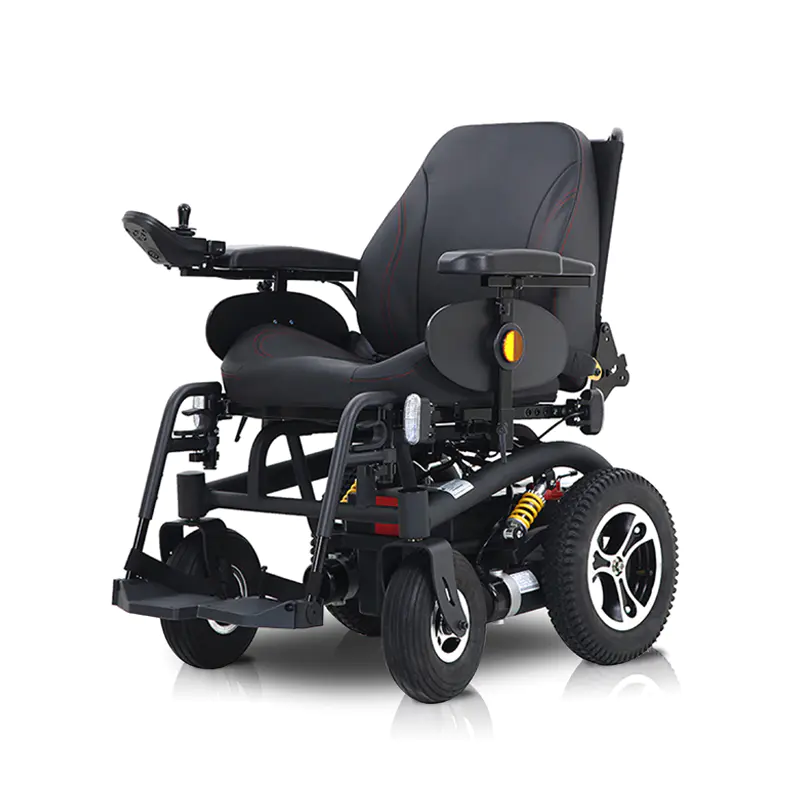
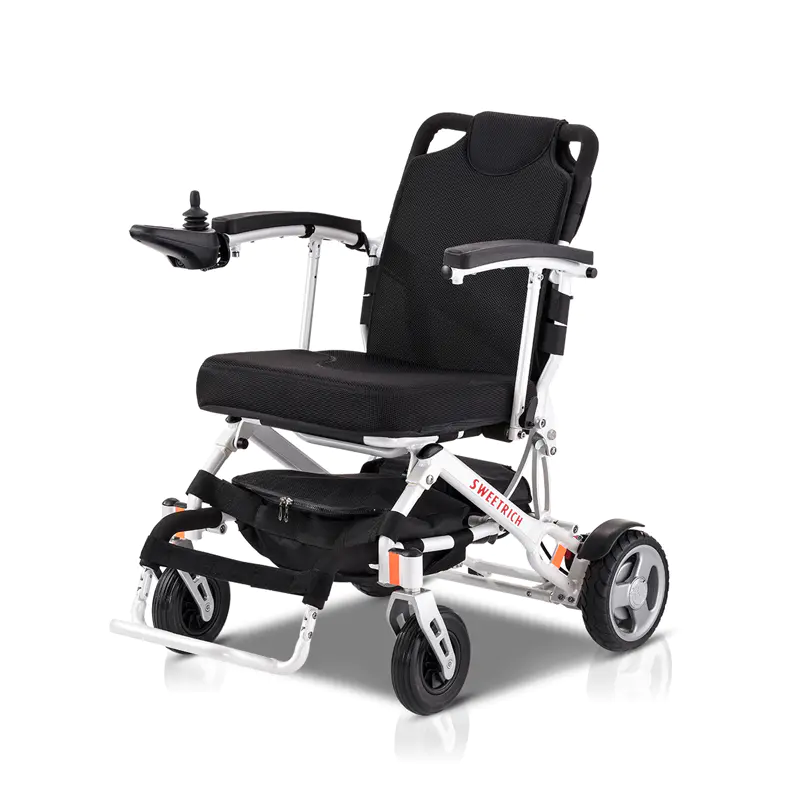
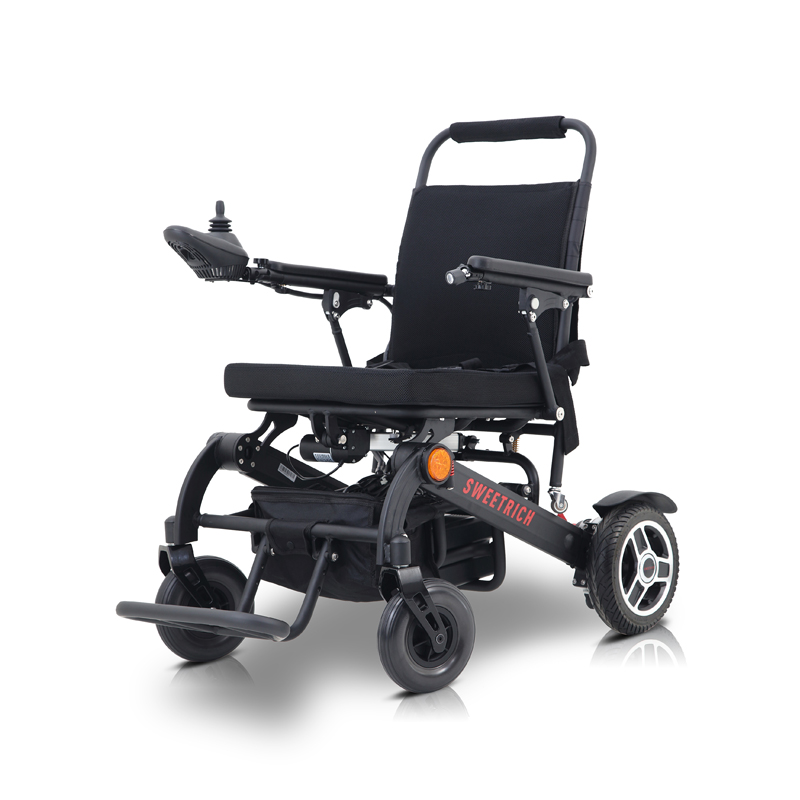
iPower GTS Plus More popular type second hand off road light power electric electronic wheelchair for the elderly
Dual-Motor Power for Confident Travel
The drive system uses two 24-volt, 350-watt motors, producing a total motor rating of 700 watts. This high-performance motor package is a major feature of the product. Dual-motor drive can provide balanced propulsion to both sides of the chair and supports controlled movement across surfaces that may be more demanding than smooth indoor flooring.
Compared with a lighter single-motor mobility device, a dual-motor power wheelchair can offer more consistent drive distribution. Each motor works with its corresponding wheel, helping the chair move forward while supporting steering through the joystick control system. This configuration is particularly valuable for a heavy-duty chair because the drive system must support both the chair structure and its user.
The motor package is paired with a 24-volt, 50-amp motor controller from PG or Dynamic. The controller coordinates the relationship between the joystick input, motor response, braking system, and speed control. A responsive controller allows the user to make gradual changes in direction and speed rather than relying on abrupt movements.
Control is an important part of real-world mobility. A chair may have powerful motors, but the user also needs predictable low-speed handling. The iPower GTS Plus uses a joystick control arrangement designed for accessible operation. The joystick can be made available for use on either side, which helps accommodate different user preferences and physical needs.
An optional swing-away controller mount adds further convenience. When the control module can move aside, the user may find it easier to approach a table, desk, counter, or transfer position. It may also reduce interference when the chair is being stored or transported. This accessory should be selected according to the user’s preferred driving position and transfer method.
Heavy-Duty Capacity Without Unnecessary Bulk
The listed weight capacity is 136 kilograms, or 300 pounds. A higher capacity provides additional flexibility for users who require a stronger seating platform and reinforced drive performance. It can also allow room for clothing, personal items, and small accessories while keeping the total load within the specified limit.
Weight capacity should never be treated as an approximate suggestion. The combined weight of the user and carried items should remain within the manufacturer’s stated limit. Exceeding the capacity can affect braking, range, stability, motor temperature, tire performance, and structural durability. A proper evaluation of user size, posture, transfer requirements, and daily routes is important before purchase.
The chair’s width is listed at 625 millimeters. This relatively moderate width can be useful for users who want outdoor strength while still needing to pass through common residential spaces. However, doorway widths, elevator dimensions, turning areas, ramps, and storage locations should be measured before ordering. An outdoor wheelchair must fit not only the user but also the user’s home and transportation environment.
The heaviest part is listed as 59 kilograms, although the source specification presents a pounds conversion that does not correspond to that kilogram value. Buyers and distributors should confirm the correct transport weight with the supplier before arranging lifting equipment, vehicle loading, or delivery. Regardless of the exact transport configuration, this is a substantial power wheelchair and should not be lifted manually without appropriate assistance.
Compared with highly portable folding chairs, the iPower GTS Plus prioritizes outdoor performance and structural strength over ultra-light transportability. That is a meaningful product distinction. A folding travel chair may be easier to place in a small vehicle, while a heavy-duty outdoor chair can offer greater stability, larger tires, stronger motors, and a higher user capacity. The better choice depends on whether the user’s main priority is compact travel or dependable outdoor driving.
Adjustable Seating for Different Users
Comfort and fit influence how safely and confidently a person operates a power wheelchair. The iPower GTS Plus includes adjustable seat width and adjustable armrest height. These features allow the seating area to be configured for a broader range of body types and personal preferences than a fixed-dimension chair.
Adjustable seat width can help the user achieve a more secure and comfortable sitting position. A seat that is too narrow may create pressure points, while a seat that is too wide may reduce lateral support. The correct setting should provide sufficient room without allowing excessive side-to-side movement. Adjustments should be made by a qualified dealer or according to the manufacturer’s instructions.
Adjustable armrest height can support different shoulder positions and driving styles. Proper armrest positioning may reduce unnecessary strain and help the user maintain a natural posture while operating the joystick. The armrests can also affect transfers, table access, and the user’s ability to reach controls, so their position should be reviewed as part of the complete seating setup.
Seat adjustments are not a substitute for professional seating assessment when a user has complex postural, orthopedic, or neurological requirements. The product is identified as a non-medical device for the United States market. Users with specific medical or postural needs should consult an appropriate healthcare or seating professional before selecting and configuring a power wheelchair.
The product’s design also supports optional equipment, including a light package and a future power tilt and lift system described in the supplied material. Availability, compatibility, installation requirements, and delivery timing should be confirmed before ordering. Optional seating systems can affect the chair’s weight, center of gravity, battery consumption, and overall dimensions.

Battery System and Practical Driving Range
The standard battery specification consists of two lead-acid batteries rated at 12 volts and 40 amp-hours each. Together, they form the 24-volt electrical system used by the motors and controller. Lead-acid batteries remain widely used in mobility equipment because they are familiar to service technicians, generally available through mobility distributors, and suitable for applications requiring dependable stored energy.
The listed maximum driving range is 30 to 40 kilometers, or approximately 19 to 25 miles. Range is always an estimate rather than a guaranteed distance. It may change according to user weight, terrain, gradient, tire pressure, ambient temperature, driving speed, stop-and-start operation, battery age, and the condition of the electrical system.
For daily planning, users should allow a safety reserve instead of using the full advertised range. A route that includes hills, rough surfaces, frequent acceleration, or long periods of operation may consume more energy than a controlled test route. New users should first evaluate the chair on familiar journeys and observe how battery levels change under actual conditions.
The charger specification is DC 24 volts and 5 amps, with an AC input range of 115 to 230 volts. Charging time is listed as approximately 6 to 8 hours. The chair should be charged in a suitable, dry, ventilated location using the correct charger. Users should inspect connectors and cables periodically and should not use damaged charging equipment.
Battery maintenance has a direct effect on reliability. Lead-acid batteries should be charged according to the operating instructions and should not be left deeply discharged for extended periods. If the chair will not be used for a long time, the owner should follow the recommended storage and charging procedure. Battery replacement should be performed with compatible specifications, and used batteries should be disposed of through an appropriate recycling or collection channel.
One advantage of the specified battery arrangement is the straightforward 24-volt architecture. The motors, controller, and charger are matched to the same system voltage, which simplifies technical servicing and helps distributors identify compatible replacement components. The use of established controller and motor categories can also support access to trained service personnel, subject to local availability.
Safety Through Controlled Braking and Stable Components
The iPower GTS Plus uses an electromagnetic brake system. Electromagnetic braking is commonly used in powered mobility equipment because the system can engage when the drive control is released or when power is removed, helping prevent unintended rolling under normal operating conditions.
Braking performance is affected by slope, surface condition, user weight, tire condition, battery status, and mechanical maintenance. The electromagnetic brake should not be considered a substitute for careful driving. Users should avoid steep or hazardous slopes, maintain a safe distance from obstacles, and reduce speed before turning or stopping.
The large front and rear tires contribute to stability by increasing the contact area and helping the chair pass over minor changes in surface level. The 14-inch rear pneumatic tires are especially relevant to outdoor driving because they provide a larger rolling diameter than many indoor wheelchair tires. Nevertheless, tire pressure must be maintained within the recommended range. Underinflation can reduce efficiency and handling, while overinflation can make the ride harsher and reduce contact with the ground.
The rear suspension works together with the tires and frame to create a more controlled driving experience. These components are not only comfort features; they also influence how the chair responds to bumps, transitions, and uneven surfaces. Regular inspection of tires, suspension components, wheel fasteners, and frame connections is important for long-term safety.
Users should perform a basic pre-drive check before setting out. The joystick should return properly to the neutral position, the chair should respond smoothly at low speed, the tires should appear properly inflated, and the battery indicator should show sufficient charge for the planned journey. Any unusual noise, steering behavior, braking response, or loss of power should be investigated before continued use.
Comparative Advantages in the Heavy-Duty Segment
The product’s advantages become clearer when it is compared with different types of mobility equipment. A compact indoor power wheelchair may offer a smaller turning footprint, but it may use smaller wheels, lower-output motors, and a lower weight capacity. A lightweight travel scooter may be easier to disassemble, but it may not provide the same seating support, joystick operation, or dual-motor power. A large premium outdoor wheelchair may offer additional electronic functions, but it may also be wider, heavier, and more expensive to transport.
The iPower GTS Plus occupies a practical middle position. It provides a 700-watt total motor package, a 136-kilogram capacity, large pneumatic tires, rear suspension, adjustable seating, and a maximum speed of 8 kilometers per hour. These features make it more outdoor-capable than a basic indoor chair while retaining dimensions that may be manageable in many residential environments.
Another advantage is the combination of user-oriented adjustability and technical performance. Some heavy-duty chairs focus mainly on strength and may offer limited seating adjustment. This model includes adjustable seat width and armrest height, allowing the chair to be adapted more closely to the individual user. The optional side-swappable joystick position further improves accessibility for people who need a particular control arrangement.
The product also has a clear configuration that is relatively easy to explain to buyers and service teams. Two 350-watt motors, a 24-volt electrical system, a 50-amp controller, electromagnetic braking, lead-acid batteries, and a defined charger specification provide a straightforward technical foundation. Clear specifications can help dealers recommend suitable accessories and organize maintenance more efficiently.
However, no wheelchair is ideal for every user. The iPower GTS Plus is not the lightest travel option, and its 59-kilogram heaviest listed part may make vehicle loading challenging. Lead-acid batteries are generally heavier than some newer battery technologies. The pneumatic tires require inspection and may be vulnerable to punctures. These considerations should be weighed honestly against the chair’s outdoor advantages.
Manufacturing Strengths and Product Development Capability
The product is manufactured by Suzhou Sweetrich Vehicle Industry Technology Co., Ltd., a high-tech company located in Suzhou Industrial Zone, Jiangsu, China. According to the supplied company information, the company was established in 2011 and operates a facility covering approximately 60 acres, with a 30,000-square-meter factory.
A factory of this scale can support a coordinated approach to product development, assembly, testing, inventory management, and export preparation. Mobility products require cooperation between mechanical design, electrical engineering, seating configuration, quality control, purchasing, and after-sales service. A structured manufacturing environment makes it possible to manage these activities as part of a repeatable production process rather than treating every unit as an isolated project.
The company states that it has accumulated more than ten years of experience in the research, development, and production of mobility scooters and power wheelchairs. This experience is important because mobility equipment must balance several competing requirements. The frame must be strong without becoming unnecessarily difficult to handle. Motors must provide useful performance without excessive energy consumption. Controls must be responsive but manageable. Seating must support comfort while allowing practical access and transfer.
Product development in this field also requires attention to real-world conditions. Mobility devices may be used in hot or cold weather, on different pavement types, around residential buildings, and during repeated daily charging cycles. Experience gained across multiple product generations can help a manufacturer identify common service issues, improve component selection, and refine assembly procedures.
The company also reports ownership of intellectual property rights for its electric scooters and power wheelchairs. Intellectual property can reflect investment in proprietary design concepts, engineering solutions, product styling, or control and structural arrangements. Buyers should still evaluate each product based on its documented specifications, certifications, warranty, and service support, but a company’s investment in product development is a positive indicator of long-term engineering commitment.
Quality Management and Assembly Considerations
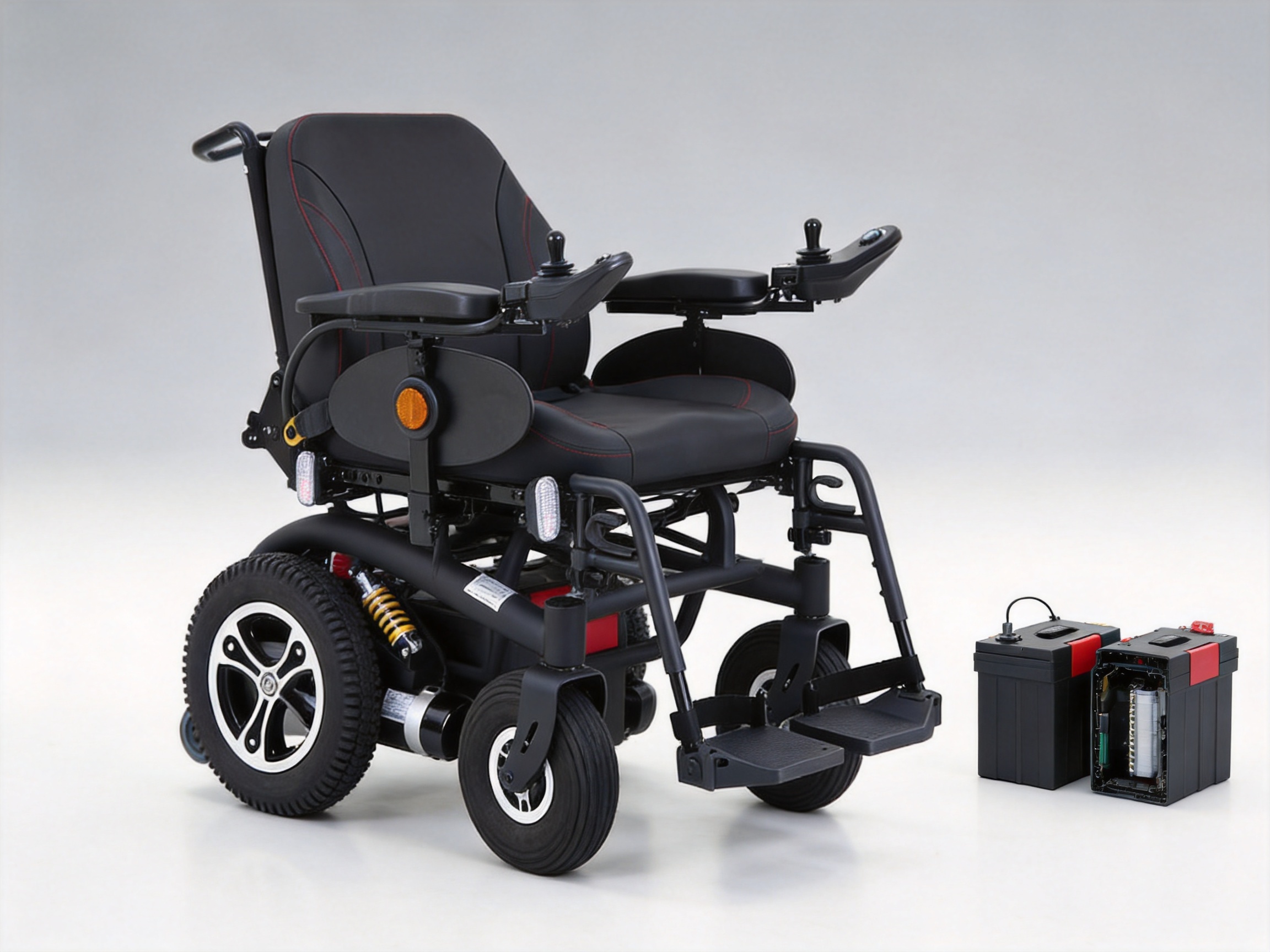
Reliable mobility equipment depends on more than the quality of individual components. Assembly consistency is equally important. Motors, gearboxes, wheels, brakes, wiring, controllers, seating hardware, and frame parts must be installed according to defined procedures. Electrical connections must be secure, mechanical fasteners must be tightened appropriately, and moving components must be checked for correct operation.
The manufacturer describes its production approach as being supported by strict production management and scientific product design. In practical terms, an effective manufacturing process should include incoming inspection of key components, assembly guidance, in-process checks, final functional testing, and product documentation. These measures help reduce variation between units and improve the likelihood that a chair will perform as expected when delivered.
Quality control should cover both static and dynamic conditions. Static checks may include frame alignment, seat attachment, armrest adjustment, tire installation, cable routing, and battery connections. Dynamic checks may include forward and reverse movement, steering response, electromagnetic braking, speed control, charger operation, and the behavior of the chair under representative load conditions.
Outdoor power wheelchairs also require attention to vibration and impact. Larger tires and suspension components are exposed to repeated changes in load as the chair crosses uneven surfaces. A well-managed assembly process should ensure that wheel hardware, suspension attachments, controller mounts, and frame joints are properly secured. Service schedules should then reinforce this approach through periodic inspection after delivery.
The company’s focus on comfort and advanced control technology is reflected in the product’s adjustable seating and joystick configuration. Manufacturing capability is valuable when it supports these user-centered details consistently. A chair can be technically powerful but still unsatisfactory if the controls are awkward, the armrests are poorly fitted, or the seating position cannot be adjusted to the user.
Export Experience and International Service Potential
The company reports that its mobility products are exported to America, Europe, Japan, Australia, the Middle East, Russia, and other markets. International distribution experience can provide several advantages. It may indicate familiarity with different customer expectations, packaging requirements, documentation practices, electrical standards, and distributor relationships.
For buyers outside China, supplier communication and after-sales support are important parts of the purchasing decision. A distributor should be able to clarify delivery configuration, warranty coverage, spare parts availability, battery replacement procedures, charger compatibility, and the process for reporting technical problems. Export experience can help a manufacturer organize these requirements, although the actual support level should always be confirmed for the buyer’s country.
International customers should also verify local regulations before use. Requirements may apply to lighting, road access, speed limits, wheelchair classification, electrical safety, battery transportation, and public-area operation. The supplied material identifies the device as non-medical for the United States market, so it should not automatically be treated as a medical device or assumed to meet every regional classification.
Packaging and logistics are especially important for a heavy-duty chair. The supplier and buyer should confirm crate or carton dimensions, total shipping weight, battery handling rules, unloading equipment, and whether the chair arrives fully assembled or requires final setup. Because the heaviest listed part is substantial, professional delivery may be appropriate for many users.
Maintenance for Long-Term Performance
A power wheelchair is a mechanical and electrical system that requires regular care. The most important maintenance tasks are practical and routine. Tires should be inspected for cuts, excessive wear, and correct inflation. Wheels should be checked for looseness. The joystick and controller mount should remain secure. The seat, armrests, and adjustment hardware should be inspected for movement or damage.
Battery terminals and charging connectors should be kept clean and dry. Cables should not be pinched, stretched, or routed near sharp edges. If the chair shows reduced range, slower acceleration, unusual heating, or inconsistent power, the battery system and controller should be examined by a qualified technician.
The electromagnetic brake should receive particular attention. If the chair rolls unexpectedly when the control is released, or if braking feels delayed, use should stop until the problem is professionally assessed. Brake performance is essential on ramps and inclines, and users should never attempt to repair electrical braking systems without suitable training.
Cleaning should be performed with methods appropriate for powered equipment. Excessive water should not be directed toward the controller, motor connections, charger socket, or battery compartment. After outdoor use in dusty or damp conditions, the chair should be allowed to dry before charging or storage. Mud and debris should be removed from the wheels and undercarriage before they harden.
Service intervals may vary according to usage. A person who drives several miles each day on uneven outdoor routes will place greater demands on tires, suspension, motors, and batteries than a person who uses the chair occasionally indoors. Keeping a basic service record can help identify gradual changes in performance and support warranty or repair discussions.
Key Specifications at a Glance
| Specification | Listed Detail |
|---|---|
| Product type | Heavy-duty electric power wheelchair |
| Intended positioning | Outdoor-oriented mobility and non-medical use for the United States market |
| Dimensions | 1,045 × 625 × 1,080 mm, length × width × height |
| Maximum forward speed | 8 km/h, approximately 5 mi/h |
| Maximum driving gradient | 10 degrees |
| Maximum driving range | 30–40 km, approximately 19–25 miles |
| Weight capacity | 136 kg, approximately 300 lb |
| Suspension | Rear suspension |
| Front tires | 10 × 3 inches |
| Rear tires | 14 × 3 inches, pneumatic |
| Brake system | Electromagnetic brake |
| Battery system | Two 12 V, 40 Ah lead-acid batteries |
| Charger | DC 24 V, 5 A; AC input 115–230 V |
| Charging time | Approximately 6–8 hours |
| Motors | Two 24 V, 350 W motors |
| Motor controller | 24 V, 50 A, PG or Dynamic |
| Heaviest listed part | 59 kg; confirm transport specification with the supplier |
| Adjustable features | Seat width and armrest height |
| Control options | Joystick available for either side; optional swing-away controller mount |
Who May Benefit from This Configuration?
The chair may suit users who need more outdoor capability than a compact indoor power wheelchair can provide. It may also be appropriate for people who prefer joystick operation, require a higher weight capacity, or want adjustable armrests and seat width. The large tires and dual motors make the configuration especially relevant to users who regularly travel across outdoor paths and moderately uneven surfaces.
It may be a good choice for residential users who move between the home, driveway, garden paths, nearby shops, and community areas. It can also be considered by mobility equipment dealers seeking a heavy-duty model with a clear specification package and optional accessories.
It may be less suitable for users whose first priority is lifting a chair into a small vehicle without assistance. The dual motors, heavy-duty frame, large batteries, and outdoor tires increase the total weight. Buyers who travel frequently by air, use compact cars, or need to carry the chair upstairs should compare the transport requirements carefully with those of a folding or highly portable model.
The chair should also be matched to the user’s physical abilities. A professional assessment may be appropriate if the user has limited upper-body control, significant postural needs, vision limitations, or difficulty operating a joystick. The control position, seat width, armrest height, and transfer method should be reviewed before final configuration.
Q&A: Common Questions About the Power Wheelchair
Is this power wheelchair intended mainly for indoor or outdoor use?
It is designed with outdoor performance in mind. The large 10-inch front wheel, 14-inch pneumatic rear tires, rear suspension, dual 350-watt motors, and 10-degree maximum listed gradient support outdoor mobility. It can also be used indoors where the available space, doorway width, and turning area are sufficient.
What is the maximum user weight?
The listed weight capacity is 136 kilograms, or approximately 300 pounds. The user’s body weight and all carried items should remain within this limit. A dealer or qualified professional should confirm that the seating configuration is appropriate for the individual user.
How far can it travel on one charge?
The listed range is 30 to 40 kilometers, or approximately 19 to 25 miles. Actual range varies with terrain, slope, user weight, speed, tire pressure, battery age, temperature, and driving habits. Users should plan routes with an appropriate reserve.
How long does charging take?
The stated charging time is approximately 6 to 8 hours. Charging should be carried out with the correct 24-volt charger in a dry, suitable location. The exact charging period can vary depending on battery condition and the remaining charge level.
Does it have suspension?
Yes. The specification identifies rear suspension. The suspension works with the large tires to help moderate vibration and improve control on suitable outdoor surfaces.
Can the joystick be installed on either side?
Yes. The supplied product information states that the joystick is available for both sides of use. An optional swing-away controller mount is also available, subject to configuration and availability.
What type of batteries does it use?
The standard specification is two 12-volt, 40-amp-hour lead-acid batteries. Together, they provide the 24-volt electrical system used by the chair. Replacement batteries should match the recommended specifications.
Is it a medical device?
The product information describes it as a non-medical device for the United States market. Buyers should check local rules and should obtain professional advice if the chair is being selected for specific medical, postural, or rehabilitation requirements.
Can it climb a 10-degree slope in all conditions?
The listed maximum driving gradient is 10 degrees, but real-world performance depends on surface traction, battery charge, user weight, tire condition, weather, and direction of travel. A maximum specification should not be interpreted as a recommendation to use every available slope.
Is it easy to transport?
The chair is built as a heavy-duty outdoor power wheelchair rather than an ultra-light folding model. The heaviest listed part is 59 kilograms, and buyers should confirm the exact transport configuration with the supplier. Vehicle ramps, lifting equipment, or professional delivery may be necessary.
What makes it different from a basic indoor power chair?
Its main differences include the 700-watt total motor package, 136-kilogram weight capacity, large front and rear tires, rear suspension, electromagnetic braking, and outdoor-oriented configuration. These features may provide stronger performance on suitable outdoor routes than a lighter indoor model.
What should be confirmed before ordering?
Buyers should confirm final dimensions, seat adjustment range, battery and charger configuration, accessory availability, transport weight, warranty terms, local service support, spare parts, delivery packaging, and any regional regulatory requirements.
Why the Manufacturing Partner Matters
A mobility product is only as useful as the support behind it. The manufacturer’s reported experience in mobility scooters and power wheelchairs, dedicated factory resources, international export activity, and focus on product development provide a foundation for commercial distribution and long-term ownership.
The company’s stated philosophy emphasizes quality, customer service, reasonable pricing, and long-term cooperation. These principles are particularly relevant in the mobility sector because customers often need advice before purchase and technical support after delivery. A reliable supplier should be able to explain how the chair is configured, how batteries are maintained, which parts are replaceable, and how warranty issues are handled.
Manufacturing strength also supports product consistency. When a company controls or coordinates research, design, assembly, testing, and quality management, it can use feedback from distributors and users to improve future versions. This continuous product-development cycle is valuable in a category where comfort, control layout, battery performance, and serviceability directly affect daily life.
For dealers, the manufacturer’s broad product focus may make it easier to build a mobility range around complementary categories such as mobility scooters, electric wheelchairs, and travel-oriented products. For end users, the most important outcome is a product that is properly configured, correctly delivered, and supported throughout its service life.
Conclusion
The iPower GTS Plus is a heavy-duty electric wheelchair developed for users who need practical outdoor performance without selecting an exceptionally large platform. Its strongest features include two 350-watt motors, a total motor rating of 700 watts, a 136-kilogram weight capacity, large pneumatic tires, rear suspension, electromagnetic braking, adjustable seat width, adjustable armrest height, and flexible joystick placement.
Its listed 8-kilometer-per-hour speed and 30-to-40-kilometer range provide useful mobility potential for many daily routes, while the 24-volt lead-acid battery system and established controller configuration offer a familiar technical platform for maintenance. The chair is not an ultra-light travel product, and its transport weight must be considered carefully. Pneumatic tires and lead-acid batteries also require regular care.
The manufacturer adds value through its reported high-tech facilities, more than a decade of industry experience, product development capability, intellectual property, production management, and international export reach. These strengths support a product strategy focused on comfort, reliable control, outdoor usability, and long-term customer relationships.
For users and distributors seeking a robust power wheelchair for suitable outdoor environments, the configuration offers a balanced combination of strength, adjustability, and practical driving performance. The final purchasing decision should be based on an individual assessment of dimensions, seating needs, transport arrangements, route conditions, local regulations, service access, and the user’s ability to operate the controls safely.
References
1. Product specification sheet for the iPower GTS Plus heavy-duty electric wheelchair.
2. Manufacturer-provided technical information covering dimensions, motors, controller, batteries, charger, braking system, tires, suspension, range, and weight capacity.
3. Manufacturer-provided company profile covering factory resources, product development, quality management, intellectual property, and international distribution.
4. General principles of powered wheelchair selection, battery maintenance, tire inspection, safe slope operation, and mobility equipment servicing.
5. General guidance for evaluating user fit, seating position, joystick placement, transport requirements, and non-medical mobility equipment suitability.