
 +86-(0)512-82283871
Content
Electric wheelchairs enable people with mobility limitations to move through homes, workplaces, public spaces, and outdoor areas with independence. The arrangement of wheels—particularly the location of the powered drive wheels in relation to the seat and the supporting caster wheels—plays a central role in determining how the chair behaves during everyday use. Wholesale Wheelchair Manufacturer companies produce a wide range of models featuring three primary layouts: front-wheel drive, mid-wheel drive, and rear-wheel drive. Each arrangement influences stability (the chair's resistance to tipping or rocking) and turning ability (the ease and tightness with which the user can change direction).
Stability matters for safety on slopes, uneven pavement, carpet transitions, thresholds, and during sudden stops or starts. Turning ability affects how comfortably someone can navigate narrow hallways, crowded rooms, bathrooms, elevators, or busy sidewalks. The choice of configuration often depends on the user’s primary environment (indoor versus outdoor), typical daily activities, body size and weight distribution, strength, balance, and personal preference for ride feel.
Front-Wheel Drive Layout
In a front-wheel drive electric wheelchair the two powered drive wheels sit at the forward end of the base frame, ahead of the user’s seat. Smaller caster wheels are positioned at the rear to support the back of the chair and allow pivoting.
Stability Characteristics
The forward placement of the drive wheels creates a pulling action rather than a pushing one. When the motors engage, they draw the chair forward, which tends to keep the front end planted on the ground. This pulling force improves traction when climbing gentle inclines or rolling over small obstacles such as door thresholds, low curbs, or cracked sidewalks. The rear casters trail behind and follow the path set by the drive wheels, reducing the chance of the front lifting unexpectedly.
On downward slopes the pulling motion helps control descent. The user’s body weight rests behind the drive axis, acting as a natural counterweight that resists forward tipping. Many users report a confident feel when approaching ramps or hills because the chair seems less likely to pitch nose-down compared with other layouts.
Side-to-side stability remains reasonable on level ground because the wide stance of the drive wheels and rear casters forms a stable triangle of contact points. However, rapid direction changes or sharp cornering on loose gravel can cause the rear casters to skid sideways if traction is marginal. This fishtailing sensation is more noticeable at higher speeds or on wet surfaces.
During sudden stops the forward momentum shifts weight toward the front, pressing the drive wheels harder into the ground and helping maintain control. Anti-tip wheels (small rollers mounted behind the drive wheels) are commonly added to prevent the rear from lifting during aggressive acceleration, although many users find the inherent geometry already limits backward tipping.
Turning Performance
Turning in a front-wheel drive chair requires the rear casters to swing outward as the front drive wheels pull the chair into the new direction. This produces a comparatively large turning radius—often several feet wider than the other configurations. Completing a full 360-degree rotation in a confined space, such as a narrow bathroom or elevator, usually demands multiple forward-backward adjustments.
The pulling action makes turns feel smooth and predictable once initiated, especially at moderate speeds. Gradual curves on sidewalks or open hallways are easy to manage because the drive wheels the motion. However, the larger arc needed for tight corners can frustrate users who spend a lot of time indoors among furniture, doorways, or crowded offices.
Tire choice influences turning behavior. Pneumatic tires offer better grip and compliance over small irregularities, making pivots smoother, while solid tires may slip more easily on polished floors. Joystick sensitivity settings can be adjusted to slow turning response at higher speeds, reducing the chance of oversteer.
Front-wheel drive suits people who travel outdoors frequently—on sidewalks, light trails, or parking lots—where wider turns are less problematic and the pulling traction provides confidence over uneven ground.
| Element | Key Benefit / Drawback | Ideal Use Case / Result |
|---|---|---|
| Pneumatic tires | Superior grip & compliance | Smoother turns on uneven ground |
| Solid tires | Prone to slipping | Risk of poor grip on smooth/polished floors |
| Joystick sensitivity | Adjustable to slow high-speed turns | Prevents oversteer, safer control |
| Front-wheel drive | Wider turns, strong traction | Outdoor travel on sidewalks, trails, lots |
Mid-Wheel Drive Layout
Mid-wheel drive positions the powered drive wheels directly beneath the user's seat, roughly aligned with the body's natural center of gravity. Two small casters sit ahead of the drive wheels and two behind, creating a six-wheel contact pattern in designs.
Stability Characteristics
The central placement of the drive wheels aligns the main load-bearing point close to the user's center of mass. This balanced distribution reduces forward or backward tipping tendencies during acceleration, braking, or stopping. When the motors apply power, the chair rises or settles evenly rather than pitching noticeably.
On perfectly flat surfaces the ride feels very stable. The four caster wheels provide additional ground contact, spreading weight and minimizing rocking side to side. Transitions over small lips or carpet edges are generally smooth because the front casters roll up first, followed by the drive wheels, then the rear casters.
Challenges appear when the surface is uneven. If one caster encounters a depression or rise, the opposite caster may briefly lift, causing a teetering or rocking motion sometimes described as a "see-saw" effect. This can feel unsettling to new users, although many adapt quickly. Suspension systems—springs or gas-charged shocks on the drive wheel mounts—help absorb shocks and keep all wheels in contact longer, improving perceived stability.
Inclines and declines are handled well because the drive wheels remain near the center of gravity. Backward tipping on steep uphill starts is less common than in rear-wheel drive, and forward tipping on steep descents is less pronounced than in front-wheel drive. The layout shines in environments with frequent level changes, such as homes with thick carpet, tile-to-carpet transitions, or slightly uneven concrete.
Turning Performance
The central drive position gives mid-wheel drive the tightest turning radius of the three configurations. Many models can pivot in place or within a space only slightly larger than the chair's width. This makes navigating narrow hallways, bathrooms, kitchens, elevators, and crowded waiting rooms noticeably easier.
Joystick inputs translate into immediate, intuitive direction changes because the pivot point is close to the user's hips. Small adjustments allow precise positioning next to tables, desks, or counters. At low speeds the chair feels agile and responsive, ideal for indoor environments where frequent direction changes occur.
At higher speeds sharp turns require caution. The short wheelbase and central pivot can produce a slight outward lean if the turn is too abrupt, though built-in speed-reduction curves in the controller help prevent loss of control. Users often describe the turning as natural, similar to leaning into a direction while walking.
Mid-wheel drive is frequently chosen by people who spend the majority of their time indoors or in structured environments with limited open space. The compact turning circle reduces the need for three-point turns and makes daily tasks less physically demanding.
Rear-Wheel Drive Layout
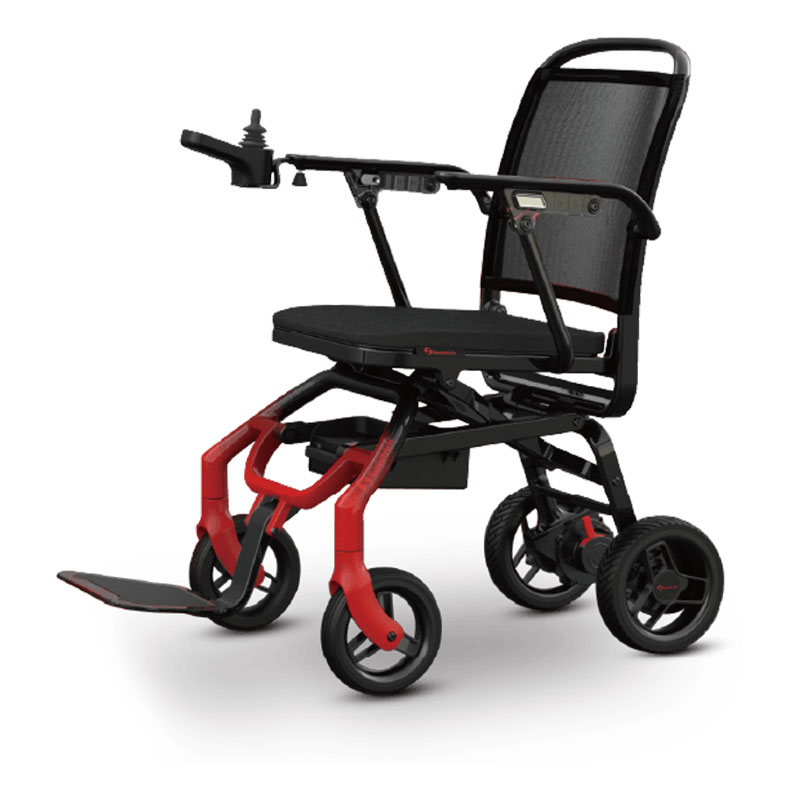
In rear-wheel drive electric wheelchairs, the powered drive wheels are mounted at the rear of the frame, directly behind the user's seat. This arrangement pushes the chair forward, while two smaller caster wheels sit at the front to guide direction and bear part of the forward weight.
| Component | Position / Location | Function / Role |
|---|---|---|
| Powered drive wheels | Rear of the frame, directly behind the seat | Propel the chair forward (pushing action) |
| Caster wheels | Front of the frame | Guide direction and support forward weight |
Stability Characteristics
The rear-mounted drive wheels create a pushing force that keeps the front casters pressed firmly against the surface during forward travel. This gives the chair a grounded, planted sensation, especially noticeable when descending ramps, approaching stops, or rolling over small irregularities. Because the user's center of mass sits ahead of the drive axis, the body acts as a natural counterweight, making backward tipping less likely during brisk acceleration or when starting up an incline.
On outdoor terrain such as cracked concrete, loose gravel, short grass, or light dirt paths, the rear wheels maintain strong contact and traction while the front casters roll over initial bumps and irregularities. The longer overall wheelbase of this layout smooths out the ride and reduces the side-to-side rocking or pitching that can occur in shorter-base designs. The front casters have time to climb small obstacles before the heavier drive wheels arrive, which helps the chair negotiate larger thresholds or curbs more confidently than some other configurations.
Backward tipping can still happen in certain situations, such as rapid acceleration on a steep uphill slope or when the front casters strike a high edge. For this reason, anti-tip rollers—small auxiliary wheels mounted behind the drive wheels—are included on nearly all rear-wheel drive models to limit rear lift and restore balance quickly. Lateral stability benefits from the wide spacing of the rear drive wheels and the forward reach of the casters, providing a secure base during side slopes or quick direction changes.
Indoors, the layout delivers a steady, composed feel on smooth hard floors, though users sometimes notice more transmitted vibration from floor seams, grout lines, or minor transitions compared with other configurations. People who frequently travel outdoors—whether on sidewalks, light trails, parking lots, or neighborhood streets—often prefer rear-wheel drive for its dependable tracking and reassuring handling across mixed surfaces.
Turning Performance
Turning in a rear-wheel drive chair occurs around the rear drive wheels, so the front casters must swing outward to follow the new path. This geometry produces a wider turning arc than mid-wheel or front-wheel drive layouts, similar to the sweep of a conventional rear-wheel drive automobile. Tight 90-degree corners or full 180-degree rotations in narrow hallways, bathrooms, or elevators typically require a multi-step maneuver: forward into the space, a partial turn, a short reverse, and then completion of the turn.
The pushing motion delivers very stable straight-line travel and gentle curves, even at moderate speeds. The chair holds its line predictably on sidewalks, wide corridors, or open rooms, making longer outdoor journeys feel controlled and effortless. Sharp, quick turns indoors can feel less agile because of the larger radius, and the front footrests or casters may come close to walls, furniture, or door frames during tight maneuvers.
Tire tread pattern and caster swivel freedom play important roles in turning grip. Deeper treads improve bite on loose or uneven ground but can leave marks or resist smooth pivoting on polished indoor floors. Many controllers include adjustable turning speed or sensitivity settings that allow users to soften response at higher velocities, reducing the risk of oversteer or caster shimmy.
Rear-wheel drive tends to appeal to active individuals who cover longer distances outside, where sweeping turns are common and straight-ahead stability carries more value than the ability to spin in very tight quarters.
Additional Factors That Interact with Wheel Configuration
Wheel layout works in combination with several other design elements that shape the final ride quality.
Tire construction and inflation pressure directly affect grip, shock absorption, and rolling resistance. Pneumatic tires conform to uneven surfaces and dampen vibration across all configurations, while solid or foam-filled tires provide longer service life and puncture resistance but transmit more road feedback.
Suspension—whether simple springs, gas-charged shocks, or linkage systems on the drive wheels, casters, or both—helps keep wheels in contact with the ground on rough terrain. Rear-wheel drive benefits from suspension that softens impacts on the front casters and maintains traction on the rear drive wheels during climbs or drops.
Seat position, height, tilt, and recline angle shift the user's center of gravity. A lower seat improves overall stability in any layout, while moving the seat slightly forward or backward can fine-tune weight distribution over the drive wheels. In rear-wheel drive, a rearward seat position increases traction on the pushing wheels.
Battery location influences balance. Batteries mounted low and toward the rear add weight over the drive wheels, enhancing traction and reducing the chance of wheel spin on slippery surfaces.
Speed and acceleration curves programmed into the controller affect how the chair behaves. Quicker acceleration can unsettle balance on any configuration, so many users prefer settings that ramp power gradually, especially indoors or on slopes.
Routine maintenance—keeping tire pressure correct, aligning casters so they track straight, lubricating swivel bearings, and checking motor mounts—preserves the intended handling and prevents small issues from growing into noticeable instability or pulling.
Safety Implications Across Configurations
Safe use hinges on choosing a wheel layout that fits the user's physical abilities, home environment, transportation habits, and typical destinations. Good stability lowers the chance of tipping during starts, stops, turns on inclines, or sudden direction changes. Responsive turning helps avoid obstacles in confined areas and navigate doorways or crowds without excessive maneuvering.
Every configuration gains from standard safety equipment: anti-tip rollers, automatic speed reduction during sharp turns, emergency stop functions, and low-battery warnings. User training is essential—practicing on ramps, thresholds, carpet edges, and tight spaces builds familiarity with the chair's limits and builds confidence.
Occupational therapists and mobility specialists evaluate wheel configuration during the fitting process, taking into account medical history, strength, balance, vision, home layout, vehicle access, and daily routines. Follow-up assessments track changes in weight, posture, or living situation that may call for adjustments or a different layout.
Maintenance and Long-Term Considerations
Maintenance needs differ slightly depending on the wheel arrangement. Rear-wheel drive chairs require regular attention to front caster swivel bearings to ensure free movement and prevent binding or pulling to one side. Drive wheel alignment and tire condition are checked to maintain straight tracking and even wear.
Efficient turning and smooth acceleration extend battery range because less energy is used correcting course or fighting instability. Keeping the chair clean—especially around wheels and casters—prevents debris from interfering with tracking or adding rolling resistance.
Long-term satisfaction depends on matching the configuration to real-world usage. A chair used mainly outdoors on uneven pavement, grass, or light trails benefits from the reliable traction and stability of rear-wheel drive. Someone who spends hours indoors in a compact home gains more from the tight turning circle of mid-wheel drive. Periodic professional servicing keeps components in good order and preserves the handling characteristics the user originally chose.
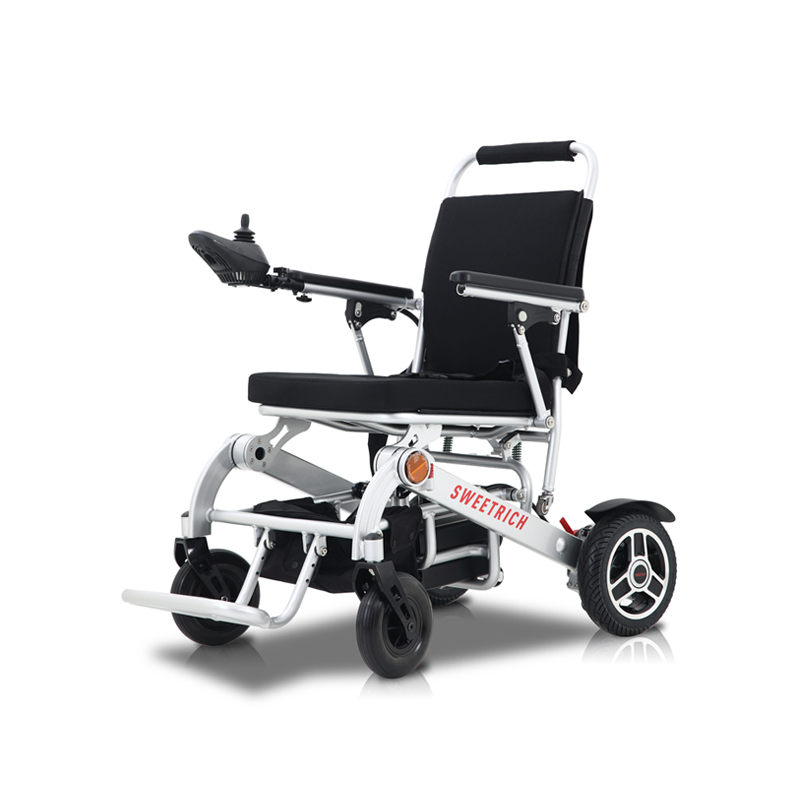
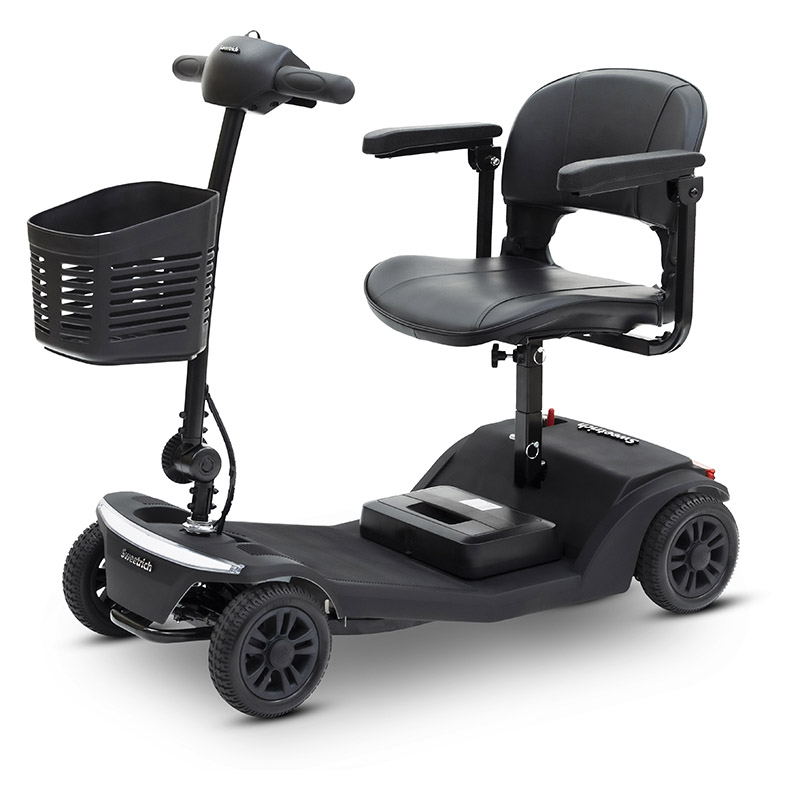
Sweetrich Wheelchair
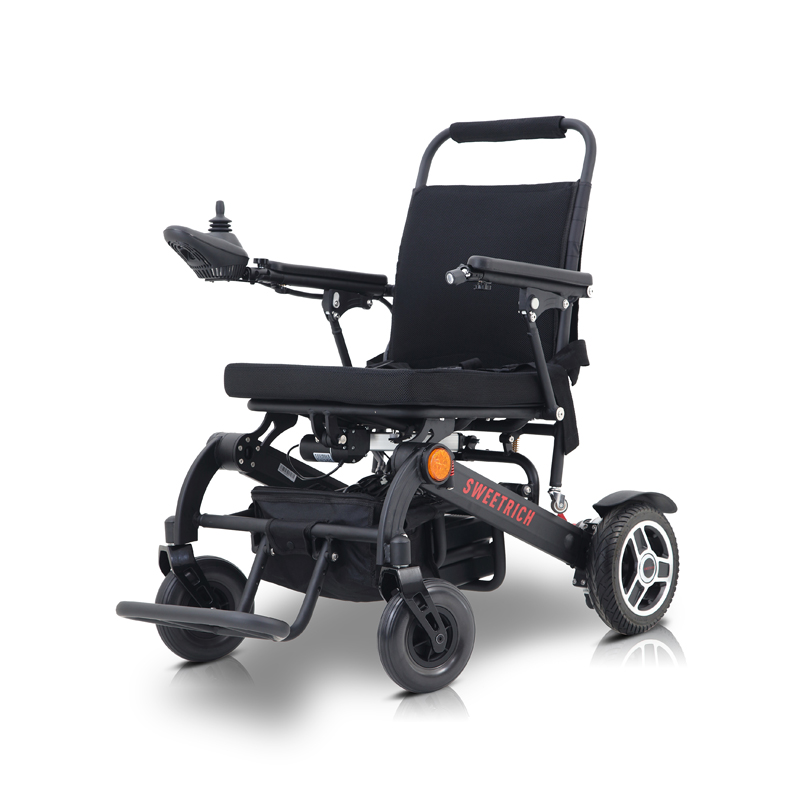
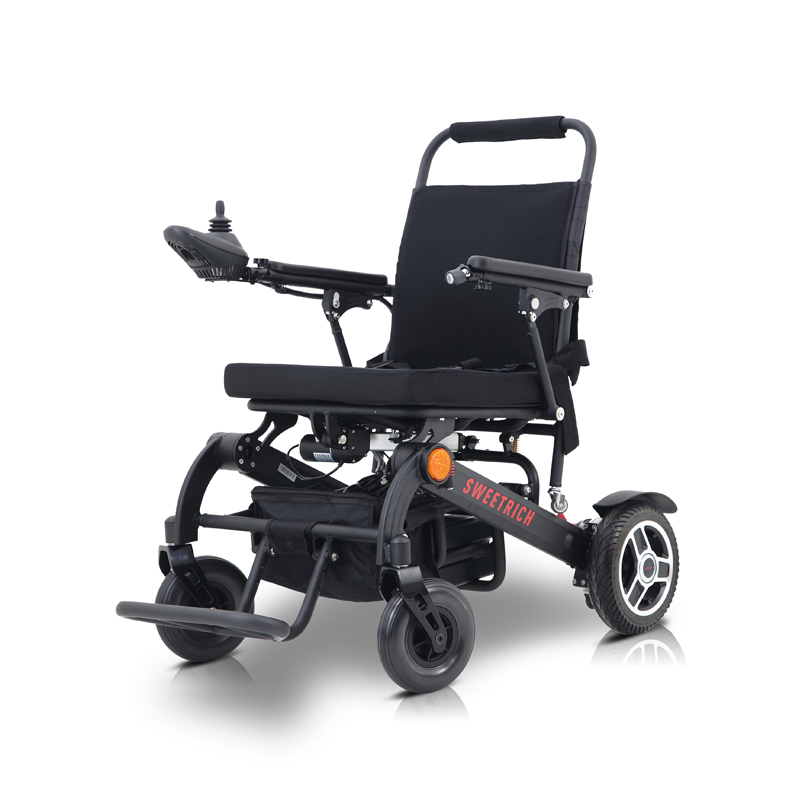
In settings where users need a reliable balance between confident outdoor handling and practical indoor maneuverability, Sweetrich Wheelchair offers models that thoughtfully integrate rear-wheel drive principles with user-focused refinements. Their rear-wheel drive electric wheelchairs feature a longer wheelbase for smooth tracking over uneven pavement, grass, and light trails, combined with responsive front caster geometry that keeps the chair planted during descents and stops. The design places emphasis on robust traction through the rear drive wheels while incorporating adjustable seat positioning and programmable controller settings to fine-tune stability and turning response according to individual body weight, posture, and daily routes.
With features like integrated anti-tip rollers, durable tire options, and low-maintenance caster assemblies, these chairs provide a secure, predictable ride that supports extended outdoor excursions without sacrificing control in tighter transitional spaces such as doorways or ramps. As mobility needs evolve with changing environments or physical requirements, Sweetrich Wheelchair delivers a practical foundation for sustained independence and safety across mixed-use scenarios.