
 +86-(0)512-82283871
Content
- 1 Why Does Suspension Matter for Senior Travel?
- 2 How Can Suspension Reduce Road Vibration for Seniors?
- 3 How Does Suspension Affect Steering and Stability?
- 4 Which Suspension Designs Are Used on Travel Scooters?
- 5 How Does Suspension Change Scooter Portability?
- 6 Why Do Tires Matter When Suspension Is Limited?
- 7 What Should Seniors Consider About Comfort and Maintenance?
- 8 How Should Travel Conditions Influence Suspension Choice?
- 9 How Can a Travel Scooter for Seniors Balance Comfort and Portability?
A trip on a mobility scooter can involve more than smooth indoor floors. Sidewalk joints, rough paving, small stones, sloped paths, and changes between different surfaces may all affect the way a scooter feels in motion. For older users, repeated vibration can make a journey less comfortable, especially when the vehicle is used for a longer period.
Suspension design becomes part of this experience. At the same time, a travel scooter needs to remain practical to carry, store, and move between locations. Adding more suspension components can change the vehicle's weight and structure, so comfort cannot be considered separately from portability.
For a Travel Scooter for Seniors, the useful question is how the suspension works with the rest of the vehicle and whether that arrangement matches the way it will be used.
Why Does Suspension Matter for Senior Travel?
A scooter without much cushioning can pass road movement directly through its wheels, frame, seat, and steering area. On a smooth floor, the difference may hardly be noticed. Once the route includes cracks or uneven paving, the effect becomes easier to feel.
Small impacts can reach the body through several contact points. Hands rest on the controls, the body rests on the seat, and the feet remain on the floor area. Repeated movement may create a feeling of stiffness or discomfort during an outing.
Suspension provides a moving connection between the wheels and the main body of the scooter. When a wheel meets a small change in the road surface, part of that movement can be absorbed before it reaches the seat and steering area.
For seniors who already experience discomfort around the back, hips, shoulders, or joints, reducing unnecessary vibration can make the riding experience easier to manage. The purpose is not to remove every movement from the road. Instead, the vehicle can respond to smaller changes in a less abrupt way.
Travel also creates another concern. A scooter needs to be moved between a home, car, accommodation, and destination. A suspension system that adds considerable structure may affect lifting and storage. That creates a practical design balance between:
- cushioning during movement
- ease of handling
- vehicle weight
- storage requirements
- outdoor use
How Can Suspension Reduce Road Vibration for Seniors?
Imagine a front wheel passing over a shallow crack in a sidewalk. The wheel moves upward as it crosses the edge, then returns to the surface. On a rigid arrangement, more of that movement can travel into the frame and steering area.
A suspension component allows part of the wheel movement to take place without transferring the entire impact directly to the main body. The result can feel less abrupt when traveling across minor surface changes.
The seat is another important contact point. A Travel Scooter for Seniors may use cushioning beneath the seat so that some movement is absorbed before reaching the user's lower body. Front suspension takes a different approach by working closer to the front wheels and steering area.
Road conditions also matter. A smooth indoor floor does not place the same demands on a scooter as an outdoor path with uneven paving. Even on an ordinary sidewalk, small gaps between surfaces can create repeated vibration.
Several parts can work together to influence the final riding feel:
- Wheels and tires provide the initial contact with the ground.
- Suspension components respond to changes in wheel movement.
- The seat affects how movement reaches the user's body.
- The frame connects these parts and influences how forces are distributed.
This is why suspension should not be judged in isolation. A scooter with a particular suspension arrangement may feel different when paired with another tire type, seat design, or frame layout.
For older users, the benefit is often easier to notice during repeated small bumps rather than a single large impact. Less abrupt movement can make it easier to remain relaxed instead of constantly adjusting the body to the road.
How Does Suspension Affect Steering and Stability?
Comfort is only one part of the discussion. The way a scooter responds to uneven ground can also influence steering.
Suppose one front wheel reaches a raised section while the other remains on the lower surface. A rigid structure may pass a sharper movement into the steering area. The handlebars can feel less settled for a moment, requiring the rider to respond to the change.
Suspension allows the wheel to move in response to the surface. This can help maintain more consistent contact between the wheel and the ground when the route includes small changes in height.
The effect becomes relevant when traveling through:
- uneven sidewalk sections
- sloped paths
- transitions between paving materials
- shallow curb cuts
- areas where one wheel reaches a surface change before another
A stable riding experience does not come from suspension alone. Wheel layout, vehicle width, seat position, tire condition, and speed all have a role in how the scooter behaves.
For that reason, a suspension system should be viewed as one part of the control system rather than a guarantee of safe movement. The rider still needs to adjust speed and direction according to the road.
Which Suspension Designs Are Used on Travel Scooters?
Different layouts place cushioning in different parts of the scooter. Each arrangement changes what kind of movement receives attention.
| Suspension Design | Main Function | Consideration for Seniors |
|---|---|---|
| Front Suspension | Absorbs movement around the front wheels | Can reduce vibration around the steering area |
| Seat Post Suspension | Adds cushioning beneath the seat | Focuses on movement felt through the seating position |
| Front and Rear Suspension | Provides cushioning at different parts of the vehicle | Can improve comfort on uneven surfaces while adding structure |
| Tire Based Cushioning | Uses tire flexibility to absorb smaller road changes | Simple approach with regular tire care needs |
Front suspension mainly deals with movement around the front wheels. It can be useful when hand and arm comfort is an important concern, particularly on routes with frequent small surface changes.
Seat post suspension takes a different route. Instead of placing additional moving parts around the wheels, cushioning is added below the seat. The arrangement focuses more directly on movement reaching the user's lower body.
A scooter with front and rear suspension uses additional components at different points of the vehicle. Such a layout may provide more cushioning across a wider range of surfaces, though the added structure can affect the overall weight and handling of the scooter.
Tires also play a role. Their flexibility can absorb some small vibrations before those movements reach the suspension or frame. This becomes particularly relevant in travel‑oriented designs where keeping the vehicle easy to transport is an important consideration.
The choice between these arrangements depends on the route, the expected riding conditions, and how the scooter needs to be carried. Once suspension is viewed together with weight and storage, the relationship between comfort and portability becomes much clearer.
How Does Suspension Change Scooter Portability?
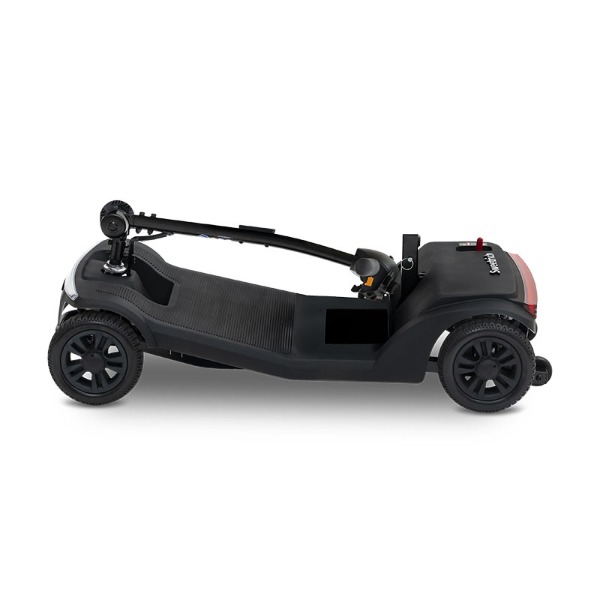
A travel scooter has a practical limitation that larger outdoor models may not face in the same way. It may need to be lifted into a vehicle, moved through a narrow storage area, or taken apart before transport. Every added component can therefore affect more than the riding experience.
Suspension hardware adds structure around the wheels, frame, or seat. A more involved arrangement may provide additional cushioning, yet it can also make the scooter heavier or less convenient to handle. For an older user, even a small change in lifting requirements can influence whether the scooter can be transported without assistance.
The question is not whether suspension should be added. It is where the cushioning is needed and how the rest of the vehicle can remain practical.
A lighter arrangement may use a limited suspension area together with flexible tires and seat cushioning. Another design may place suspension at both ends of the scooter. Each approach creates a different balance between riding comfort and portability.
When preparing a scooter for car travel, consider the whole handling process:
- Where will the scooter be lifted?
- Can the seat or other parts be removed?
- Does the folded or separated scooter fit the available space?
- Can the vehicle be moved without placing pressure on delicate components?
- Will another person need to assist with loading?
For a Travel Scooter for Seniors, these questions are closely connected. A comfortable ride is useful only when the scooter can also be transported and stored in a way that suits the user.
Why Do Tires Matter When Suspension Is Limited?
Suspension is not the only part that absorbs movement from the road. Tires also have a natural ability to soften small changes in the surface.
Air‑filled tires can compress slightly when they pass over a small bump or seam. That movement helps reduce some of the vibration before it reaches the rest of the scooter. In a lightweight travel design, this can provide a useful form of cushioning without adding a large mechanical structure.
There is another side to the choice. Air‑filled tires need regular attention because their pressure can change during use or storage. A tire that is not in suitable condition may alter the way the scooter feels on the road.
Solid tires work differently. They do not rely on air pressure and can reduce concerns about punctures or routine pressure checks. Their ability to soften road movement, however, depends on the tire material and design.
For travel use, the tire choice can therefore be considered alongside suspension:
Tire flexibility + suspension + seat cushioning = overall riding feel
No single part carries the entire responsibility for comfort. A scooter with limited mechanical suspension may still provide a reasonable ride when its tires and seat are designed to handle small surface changes.
For older users who prefer less tire maintenance, a solid tire combined with suitable seat or front cushioning may be worth considering. Those who are comfortable checking tire condition and pressure may have different preferences.
What Should Seniors Consider About Comfort and Maintenance?
A suspension system is part of a moving vehicle, so its condition can change through regular use. Dirt, moisture, loose connections, or unusual movement may affect how the scooter feels.
Routine inspection does not require complicated work. Before a trip, a quick visual check can cover the parts that are easiest to observe.
Look for:
- visible damage around the wheels
- unusual movement around the seat
- loose‑looking connections
- changes in steering feel
- unusual sounds during movement
- damaged or worn tires
Cleaning also matters. Dirt that collects around wheels or moving areas can remain there during storage and may become harder to remove later. After traveling through wet or dusty areas, allowing the scooter to remain clean and dry can make routine care easier.
Complex suspension components should not be taken apart without suitable instructions. When an unusual noise, loose part, or change in movement appears, the product instructions can provide the appropriate inspection method. Professional service may be needed where the user cannot safely identify the cause.
Maintenance should fit into the travel routine rather than become a separate burden. A simple check before leaving home can be easier to manage than dealing with an unexpected issue at the destination.
How Should Travel Conditions Influence Suspension Choice?
The same scooter may be used in very different environments during one trip. A hotel corridor can have a smooth floor, while the route outside may include paving joints, rough ground, or a sloped path.
That difference makes the planned route useful when considering suspension.
| Travel Situation | Suspension Focus | Other Factor to Consider |
|---|---|---|
| Indoor Floors | Limited cushioning needs | Turning space |
| Paved Sidewalks | Light vibration control | Tire condition |
| Uneven Paths | Greater impact absorption | Ground surface and stability |
| Frequent Car Travel | Simple suspension layout | Weight and storage |
| Longer Outdoor Trips | Comfort and control | Seat and tire design |
For mainly indoor travel, extensive cushioning may not be a major concern. Smooth floors place less demand on the wheels, so storage and turning space may receive more attention.
Outdoor sidewalks create a different situation. Small gaps, paving joints, and surface changes can produce repeated vibration. Here, tire flexibility and some form of suspension may become more relevant.
A longer outdoor trip brings several factors together. The route, expected riding time, seating position, tire condition, and ease of transport all need to fit the same use pattern.
There is also a practical difference between occasional outdoor use and regular outdoor travel. A scooter that spends much of its time indoors may not need the same suspension arrangement as one that regularly moves across mixed surfaces.
How Can a Travel Scooter for Seniors Balance Comfort and Portability?
The design challenge becomes clearer when comfort and transport are considered together. Adding cushioning can improve the way a scooter responds to uneven ground, while additional components may increase weight or take up more space.
For a Travel Scooter for Seniors, the suitable arrangement depends on how the vehicle will actually be used.
Someone who frequently loads a scooter into a car may place greater value on manageable weight and easy separation of parts. Another user who spends longer periods outdoors may pay closer attention to vibration, seating comfort, and wheel contact with the ground.
A useful way to organize the decision is:
Travel Route → Road Conditions → Comfort Needs → Suspension Design → Portability
The route determines the type of surfaces the scooter will encounter. Road conditions influence how much cushioning may be useful. Comfort needs affect the preferred position of that cushioning, while suspension design needs to remain compatible with the weight and storage requirements of travel.
Looking at these factors together avoids treating suspension as an isolated feature. Tires, seat design, vehicle structure, handling, and storage all contribute to how practical a scooter feels during a real journey.