
 +86-(0)512-82283871
Content
- 1 Why Should a Mobility Scooter Be Checked Before Air Travel
- 2 What Size Should Be Considered for Air Travel
- 3 How Does a 4 Wheel Travel Scooter Affect Airport Movement
- 4 What Should Be Checked About Folding and Storage
- 5 How Should Battery Information Be Checked Before Flying
- 6 What Frame Features Matter During Airport Handling
- 7 What Controls Should Be Checked Before Airport Travel
- 8 What Comfort Features Matter During Long Airport Trips
- 9 What Should Be Prepared Before Taking a Mobility Scooter on a Plane
- 10 How Can Buyers Compare Travel Mobility Scooters for Air Travel
Air travel changes how a mobility scooter needs to be considered. A scooter used around a neighborhood may have plenty of space for turning, parking, and storage, while an airport brings narrow passages, waiting areas, boarding procedures, and different handling conditions into the same journey.
For anyone looking for a Mobility Scooter for Air Travel, the vehicle needs to fit more than ordinary riding needs. Overall size, folding design, wheel arrangement, battery setup, frame construction, and ease of handling can all affect how practical a trip feels.
Buying decisions also benefit from separating two questions: how the scooter performs during everyday travel and how easily it can be prepared for transportation. A model that feels comfortable on local roads may still require more storage space than expected when folded. A compact design may simplify handling while offering a different riding experience.
Why Should a Mobility Scooter Be Checked Before Air Travel
Airports involve several stages of movement. A scooter may travel from a home storage area to a vehicle, through an airport entrance, across a waiting area, and toward a boarding point before reaching another location. Each stage places different demands on the design.
Size becomes important around crowded walkways and narrow passages. Folding becomes relevant during storage and transportation. Battery information needs attention because airlines can have specific rules for mobility equipment and batteries.
A practical pre‑purchase check can therefore cover several areas:
- Overall dimensions during normal use
- Folded size and handling method
- Wheel arrangement and turning space
- Seat and handlebar adjustment
- Frame and connection areas
- Battery type and removal method
- Ease of loading and storage
Air travel also means that a scooter may be handled by people other than its regular rider. A design that can be folded or separated in a straightforward manner may reduce confusion during transportation.
Airline policies can vary, so product information alone should not be treated as permission for air transport. Battery details, removable components, and handling requirements need to be checked with the airline before departure.
What Size Should Be Considered for Air Travel
Overall dimensions often receive attention during a purchase, although folded dimensions can be just as important for travel. A scooter takes up a certain amount of space while being ridden, then may occupy a different shape during transport.
Width affects movement through doors and indoor passages. Length influences turning space and storage. Height can matter when a folded scooter needs to fit inside a vehicle or storage area.
A simple comparison can make the relationship clearer:
| Area to Check | Why It Matters During Travel | What to Look At |
|---|---|---|
| Overall Width | Affects movement through narrow areas | Width between the outer wheel or body sections |
| Overall Length | Influences turning and storage | Front‑to‑rear space during normal use |
| Folded Size | Determines transport and storage needs | Shape and dimensions after folding |
| Seat Position | Changes the scooter profile | Whether the seat can be lowered or removed |
| Handlebar Area | Can affect folded height | Folding or adjustment method |
| Wheel Layout | Influences space during movement | Position of front and rear wheels |
Measurements should also be considered in relation to real surroundings. A scooter may pass through a wide entrance comfortably while becoming harder to position inside a small waiting area. Airport movement often involves stopping, turning, and changing direction rather than traveling in a straight line.
Folded size can also influence how easily another person can lift or move the scooter. A compact shape with awkward weight distribution may still be difficult to handle. Shape and balance are therefore worth checking together.
A useful approach is to picture the entire travel route rather than focusing on one measurement. Consider storage at home, loading into a vehicle, movement through an airport, waiting before boarding, and handling after arrival.
How Does a 4 Wheel Travel Scooter Affect Airport Movement
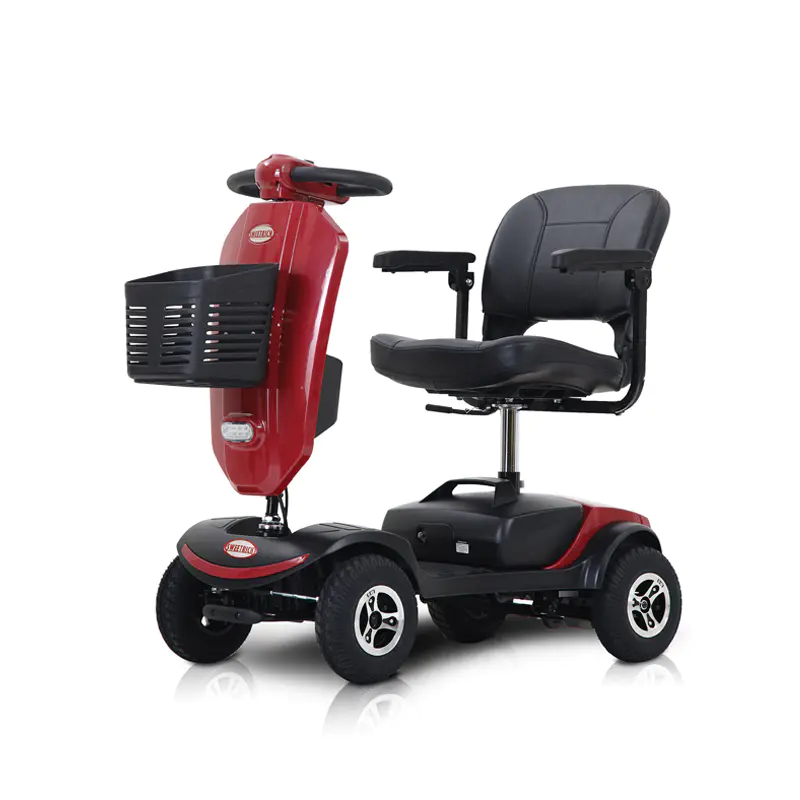
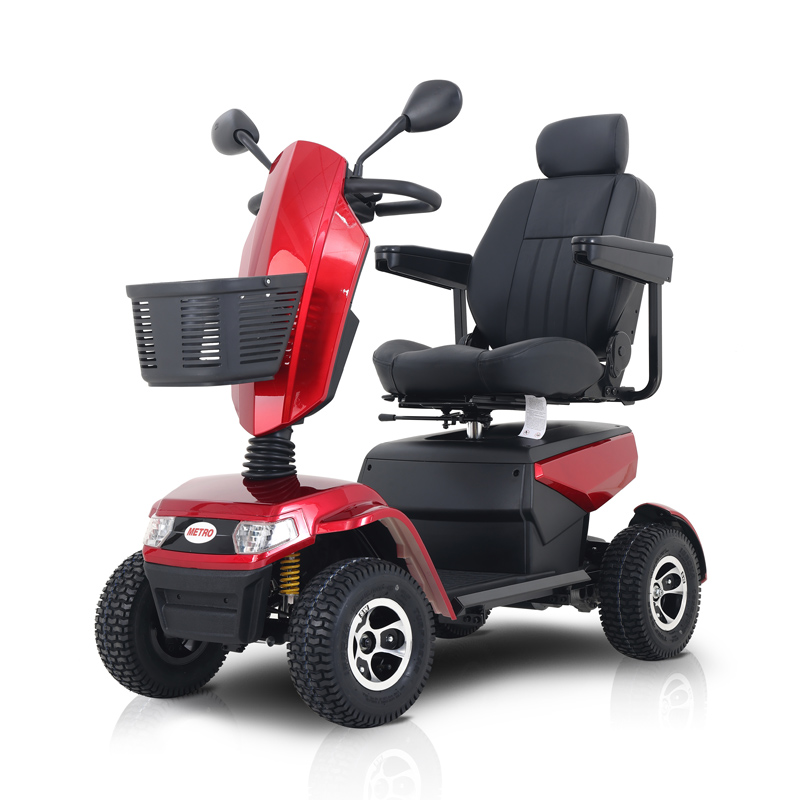
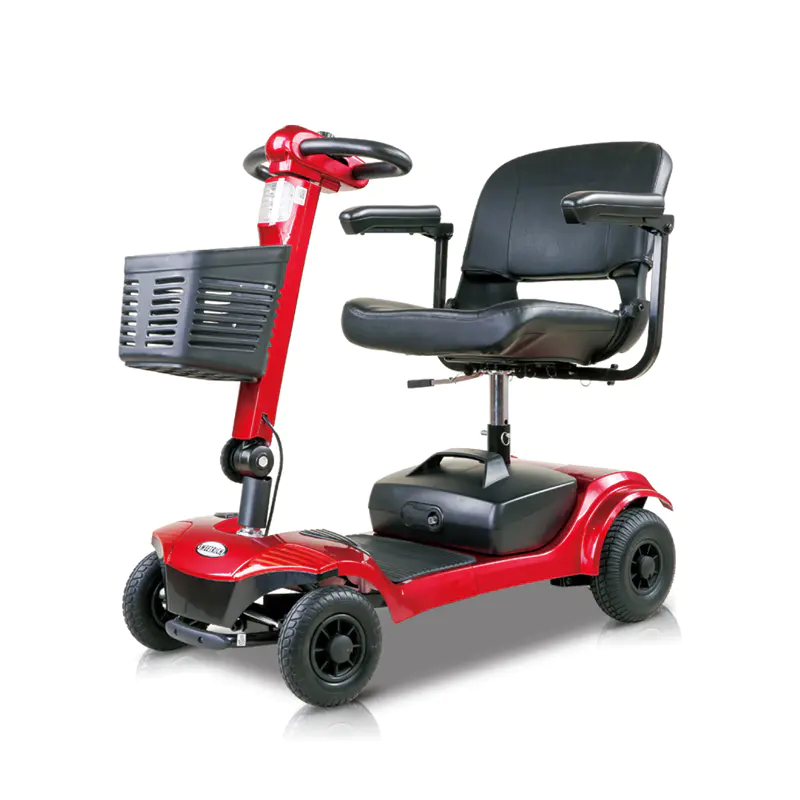
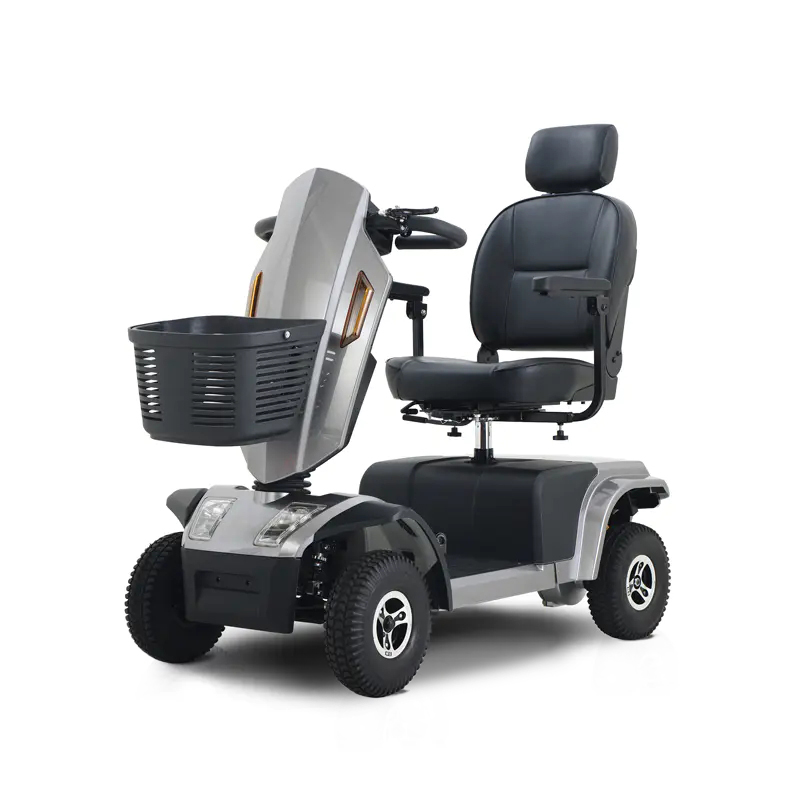
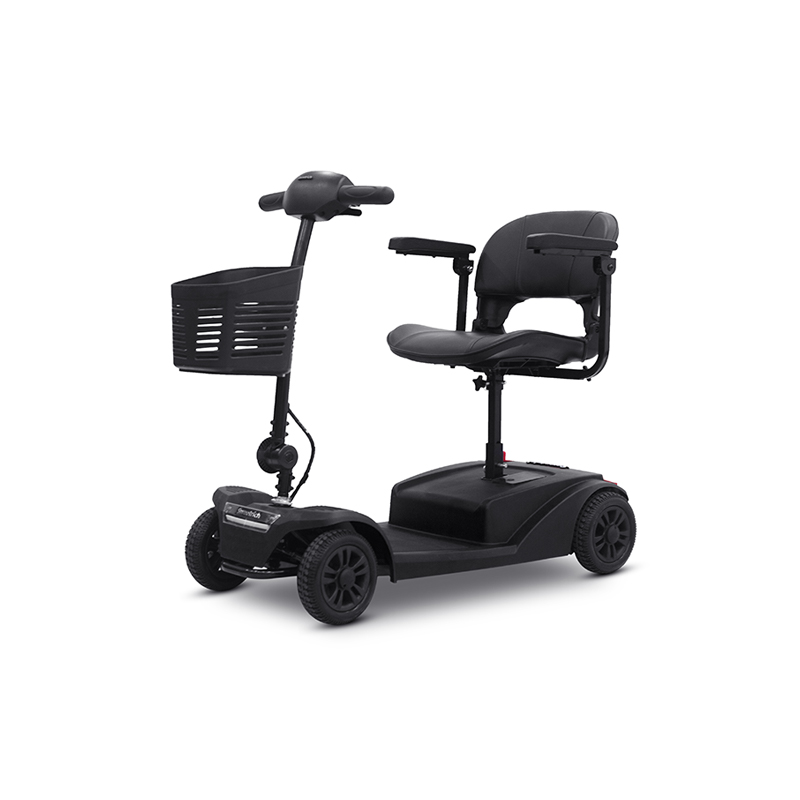
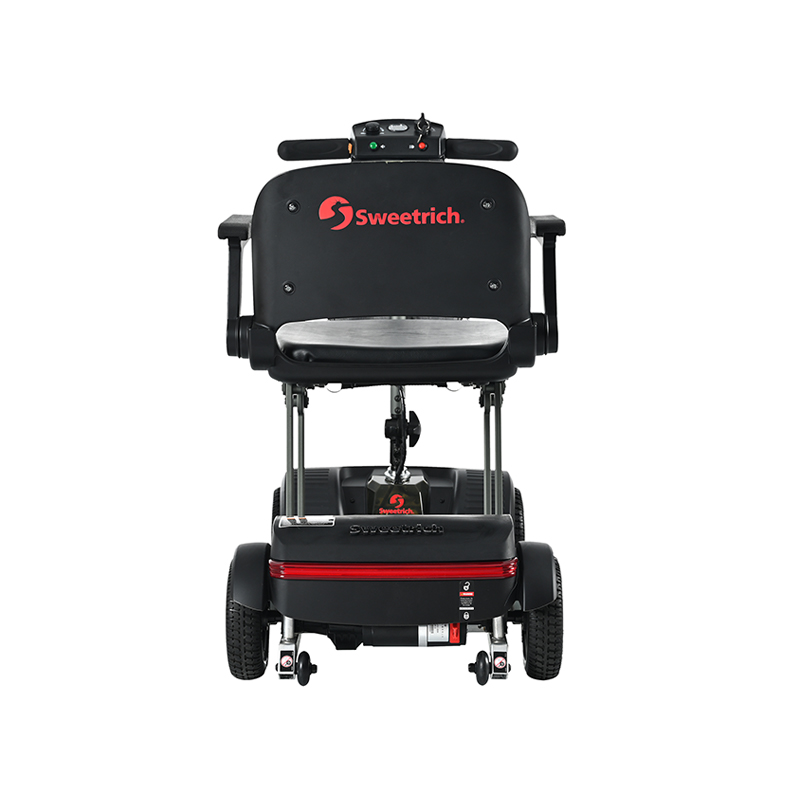
A 4 Wheel Travel Scooter has four points of contact with the ground, giving the frame and wheel arrangement a different layout from a three‑wheel design. Such a configuration can provide a settled feeling during ordinary movement, while the extra wheel also changes how much space may be needed for turning.
Airport environments contain many situations where turning space matters. Queue areas, seating zones, shop entrances, lifts, and connecting passages may require repeated changes in direction. A scooter that feels comfortable on an open path may require more careful positioning in a narrow area.
Wheel placement has a direct relationship with maneuvering. Front wheels influence the path during steering, while rear wheels follow the movement of the frame. A wider wheel stance may contribute to a stable feel while also requiring more clearance around corners.
For a 4 Wheel Travel Scooter, several points are worth checking before purchase:
- How easily does the scooter turn in a confined space?
- Can the front section change direction without excessive repositioning?
- Does the rear section need extra clearance when turning?
- Is the handlebar or steering area easy to control at low speed?
- Does the overall width suit common indoor passages?
Stability and maneuverability should be viewed together. Airport travel rarely involves long stretches of uninterrupted riding, so a scooter needs to work comfortably during short movements, stops, turns, and changes in direction.
A wider structure is not automatically unsuitable for travel. Likewise, a narrow body does not automatically make airport movement easier. Wheel placement, steering response, rider position, and frame layout all contribute to how the scooter behaves in limited space.
What Should Be Checked About Folding and Storage
Folding design can make a major difference when a scooter needs to move between different forms of transportation. A useful folding system should be understandable and manageable without creating unnecessary steps.
Start by checking how the main frame changes shape. Some designs fold as one unit, while others allow selected sections to be removed. Each arrangement has a different effect on storage and handling.
A removable seat can reduce overall height during storage. Foldable handlebars may make the upper section more compact. Detachable parts can help with fitting the scooter into a smaller storage area, although every additional part creates another item that needs to be handled and kept together.
Weight distribution also deserves attention. A folded scooter may have a small overall footprint while remaining awkward to carry when heavier sections sit far from the natural lifting position.
Useful checks include:
- Can the folding action be performed in a clear sequence?
- Does the folded structure remain stable when placed down?
- Are removable parts easy to identify and store?
- Can the folded scooter fit into the intended transport space?
- Are there exposed parts that could catch on surrounding objects?
- Does repeated folding require excessive force?
Storage needs extend beyond the airport. A travel scooter may spend time in a vehicle, hotel room, home storage area, or other temporary location. A folding system that works well across several environments can make travel preparation less complicated.
Careful handling is still necessary during folding and unfolding. Moving parts should remain free from obstruction, and locking points should be checked before riding. Simple operation is valuable because travel often involves carrying luggage, changing locations, and working within limited space.
How Should Battery Information Be Checked Before Flying
Battery requirements deserve attention before purchasing a Mobility Scooter for Air Travel. Airlines can apply different rules to mobility equipment, and battery arrangements can affect whether a scooter can be accepted for transportation.
A buyer should identify the battery type used by a scooter and determine whether the battery can be removed. The location of the battery also matters because removal may require access to a particular part of the frame or base.
Product documentation should clearly identify the battery arrangement and provide information needed for airline communication. Keeping relevant product and battery details available can make pre‑flight preparation easier.
Several points can be checked during the buying stage:
- Battery type
- Whether the battery is removable
- How the battery is disconnected
- Where the battery is positioned
- Whether the scooter has separate battery compartments
- What information is provided for transportation arrangements
Airline approval should always be confirmed separately. A scooter designed for travel does not automatically meet every airline's handling conditions.
Battery preparation also connects with the scooter's physical design. A removable battery may simplify certain transport arrangements, while a fixed battery can require a different procedure. Knowing how the battery fits into the overall frame makes it easier to prepare the scooter correctly.
For air travel, a purchase decision is therefore less about one convenient feature and more about how several design details work together. Size affects movement, folding affects storage, wheel arrangement affects maneuvering, and battery design affects transportation preparation. Looking at each part before purchase can reduce surprises once a journey begins.
What Frame Features Matter During Airport Handling
Airport travel can place a mobility scooter in situations that rarely occur during ordinary riding. A scooter may need to be moved without a rider, placed inside a vehicle, stored temporarily, or handled during a transfer between different parts of a journey. Frame construction matters during each stage because the structure connects many of the parts that need to remain aligned.
A useful frame does not need to rely on heavy construction alone. Main frame members should have clear supporting roles, while joints should connect different sections without creating obvious weak areas. Wheel supports, seat mounts, and folding points deserve particular attention because movement and handling can place pressure around such locations.
When a scooter is folded or separated, parts of the frame may carry the load in a different way from normal riding. A section that supports the seat during use may become part of the lifting structure during transport. Ease of handling therefore depends partly on where the frame places its weight.
Several areas can be checked before purchase:
- Main frame members and their alignment
- Seat support connections
- Front and rear wheel mounting areas
- Folding joints and locking points
- Handles or other areas used during manual movement
- Exposed sections that may contact surrounding surfaces
A frame can also affect how easily a scooter is protected during transport. Sharp edges, loose components, or parts that move freely after folding may require extra attention during handling. A compact structure with clearly secured sections can make preparation more straightforward.
Frame strength should still be viewed in relation to normal riding. A structure needs to support seated weight during movement while remaining practical to fold, store, and move. Adding structural material without considering handling can create a different set of difficulties.
What Controls Should Be Checked Before Airport Travel
Control layout becomes more noticeable in an airport because movement often takes place at a slower pace. Crowded areas require frequent stops, gentle turns, and small changes in direction. Simple control placement can make such movements easier to manage.
Steering controls should sit in a position that allows natural hand movement without forcing an uncomfortable posture. Speed control should also be easy to adjust during slow travel. Braking behavior needs attention because airport movement often involves stopping near people, seats, doors, and other obstacles.
A pre‑purchase check can include:
- Steering response during slow movement
- Ease of changing direction
- Position of speed controls
- Access to braking controls
- Visibility of important controls
- Ease of stopping and starting smoothly
Control layout also interacts with the rider's seating position. A handlebar placed too far forward may require unnecessary arm extension, while a position that is too close can restrict movement. Seat height and steering position should therefore be considered together.
Airport travel can involve long periods of waiting followed by short periods of movement. A control system that feels comfortable during both conditions can reduce unnecessary hand and arm movement.
For a 4 Wheel Travel Scooter, steering behavior deserves particular attention because four wheels influence how the scooter turns within a limited area. A test around a small indoor space can reveal more than a straight‑line ride across an open floor.
What Comfort Features Matter During Long Airport Trips
Travel can involve extended periods of sitting, even when actual scooter movement is limited. Waiting areas, queues, transfers, and pauses between different stages of a journey can make seating comfort an important part of the purchase decision.
Seat shape and support affect how the body is positioned during longer periods of use. A seat that provides adequate back support can help maintain a steady sitting position. Seat width and depth also need to suit the frame and the rider's normal posture.
Foot placement matters as well. A suitable foot area allows the legs to rest without interfering with steering or nearby structural parts. Enough clearance around the feet can also make getting on and off easier when the scooter is parked.
Armrests can provide additional support during seated travel, although their position should not make entry or exit difficult. Foldable or adjustable sections may offer practical advantages during storage.
Comfort checks can focus on a few simple areas:
- Seat support
- Backrest position
- Foot placement
- Armrest position
- Ease of getting on and off
- Relationship between seat height and steering controls
Comfort also needs to fit the scooter's travel size. A larger seat may provide more room while increasing the folded or overall dimensions. A compact structure may occupy less space while offering less room around the seating area.
For a Mobility Scooter for Air Travel, finding a reasonable balance between sitting comfort and transport practicality can matter more than focusing on either feature alone.
What Should Be Prepared Before Taking a Mobility Scooter on a Plane
Preparation begins before reaching the airport. Airline requirements should be checked before departure because transportation conditions can differ between carriers and routes. Battery information is particularly important, as restrictions may apply to different battery arrangements.
Product documents should be kept available in an accessible place. Useful information may include battery details, folding instructions, removal procedures, and basic vehicle specifications.
A simple preparation routine can reduce confusion:
- Check the airline's current mobility equipment requirements.
- Confirm the battery arrangement and transportation conditions.
- Review how the scooter folds or separates.
- Remove or secure parts according to the required procedure.
- Check that loose accessories are safely stored.
- Keep relevant product information available during airport handling.
A scooter should also be checked before leaving home. Wheels, steering, seat connections, folding joints, and other moving areas can be inspected for unusual looseness or visible damage.
Attention to removable parts is especially useful. A detachable seat, battery, basket, or other component can become separated from the main structure during transport. Each part should have a clear place and a simple method of securing it.
Airline communication should happen before the travel day rather than being left until arrival at the airport. Airline staff may need specific information about the scooter or battery, and procedures can vary according to the equipment involved.
Travel preparation is therefore part of the buying decision. A scooter that is easy to understand and prepare can reduce the number of steps involved before transportation.
How Can Buyers Compare Travel Mobility Scooters for Air Travel
Comparing travel scooters works better when several practical factors are considered together. A compact body may help with storage, while a wider four‑wheel layout may offer a different riding feel. Folding may simplify transport, while removable components can introduce additional handling steps.
For a Mobility Scooter for Air Travel, the comparison can begin with the travel route rather than with a feature list. Consider how the scooter will move from storage to a vehicle, from the vehicle into an airport, through indoor spaces, and toward the boarding area.
| Comparison Area | Questions to Consider | Travel Relevance |
|---|---|---|
| Size | How large is the scooter during use and after folding? | Affects movement and storage |
| Wheel Layout | How does it turn within limited space? | Influences airport maneuvering |
| Folding | How many steps are needed to fold or separate it? | Affects handling during transport |
| Battery | Can the battery be removed and clearly identified? | Relates to airline preparation |
| Frame | Are support areas and joints properly arranged? | Matters during riding and manual handling |
Daily use should remain part of the decision. A scooter intended for occasional air travel may still be used around shops, homes, sidewalks, or other local areas. Choosing a structure only for transportation can create limitations during ordinary movement.
Storage conditions also deserve attention. A folded scooter needs a suitable place in a vehicle or home, while removable sections need to be stored without being misplaced. Handling becomes easier when each component has a clear position.
A 4 Wheel Travel Scooter may suit a travel routine where a settled riding feel is important, while turning space should still be checked in advance. Wheel arrangement, frame width, and steering behavior work together, so a single feature cannot describe the full riding experience.
Battery requirements remain separate from general scooter design. Airline acceptance depends on the carrier's rules and the battery arrangement, meaning product descriptions should not replace direct confirmation with the airline.
A sensible purchase check can therefore move through the whole journey:
- Before leaving: storage, folding, battery access, and preparation
- During airport entry: width, steering, and low‑speed control
- While waiting: seat support and foot position
- During handling: frame connections and secure removable parts
- Before boarding: airline requirements and battery arrangements
- After arrival: unfolding, reassembly, and basic safety checks
A Mobility Scooter for Air Travel needs to fit the practical conditions surrounding air transportation as well as ordinary riding. Size influences where the scooter can move, folding affects how it can be stored, wheel placement shapes turning behavior, and frame construction supports both riding and handling.
Looking at those areas together creates a clearer basis for comparison. Rather than relying on one compact feature or one specification, a buyer can consider how the scooter behaves across the complete travel process, from preparation at home to movement through an airport and use after arrival.