
 +86-(0)512-82283871
Content
- 1 Why Is Solar Charging Being Considered for Heavy Duty Mobility
- 2 How Does Solar Energy Work With a Scooter Battery
- 3 Where Can Solar Charging Be Useful During Daily Use
- 4 How Can Solar Charging Change Battery Use
- 5 What Design Changes Are Needed for Solar Integration
- 6 How Does Solar Charging Affect Outdoor Convenience
- 7 What Should China Mobility Scooter Manufacturers Consider
- 8 Could Solar Charging Become a More Flexible Energy Option
Outdoor mobility often depends on having enough stored energy for the planned journey. For a larger mobility scooter, charging becomes part of daily preparation, especially when the vehicle is used away from home for longer periods. A wall outlet remains a familiar way to replenish a battery, yet access to fixed power is not always convenient during outdoor activities.
Solar charging introduces another way to think about energy use. Rather than relying entirely on a fixed electrical source, sunlight can provide additional energy while a scooter is parked outdoors. Solar input does not need to replace regular charging. Its role can be more practical when viewed as an extra source that works alongside the existing charging arrangement.
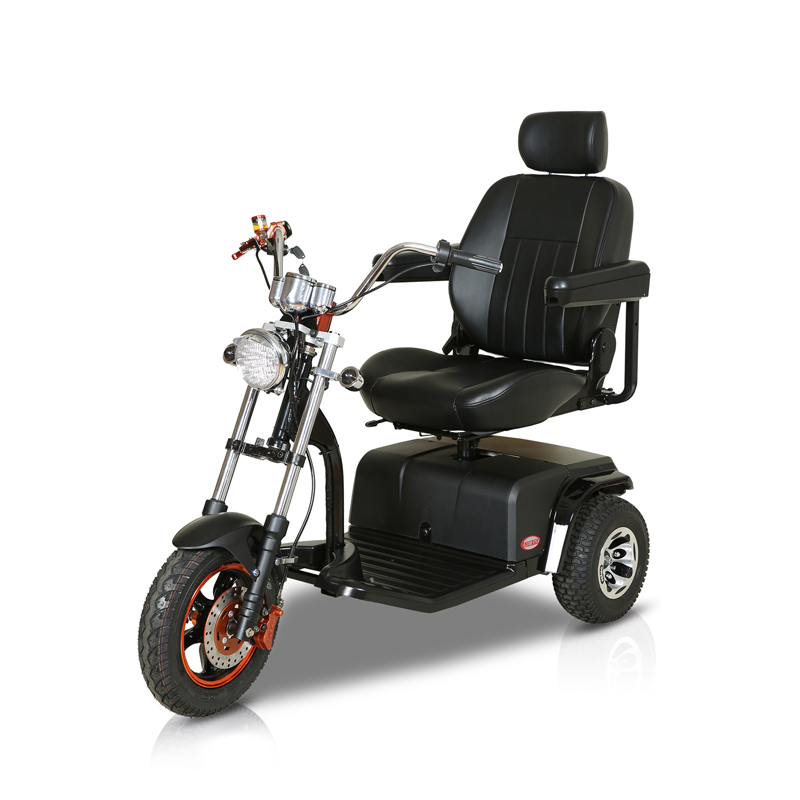
For a Heavy Duty Electric Mobility Scooter, such an approach also raises several design questions. Where should a solar component be placed? How can energy from sunlight be managed safely? Will the added structure affect storage space or vehicle balance? Answers depend on how the entire scooter is designed rather than on the solar panel alone.
Why Is Solar Charging Being Considered for Heavy Duty Mobility
A mobility scooter designed for heavier use may spend considerable time outdoors. Users can stop at parks, open public areas, gardens, or other places where a normal power outlet is not immediately available. During such periods, sunlight offers an opportunity to collect a small amount of additional energy without connecting the scooter to a wall socket.
Solar charging is especially relevant during long periods of outdoor parking. A scooter does not need to be moving to make use of available sunlight. Energy can be collected while the vehicle remains stationary, allowing part of the charging process to happen during a period when the scooter is not being ridden.
Such a setup changes the role of parking. Parking is normally a period when the vehicle simply waits for the next trip. With a suitable solar arrangement, an outdoor parking location can also become a place for gradual energy replenishment.
Several practical conditions still affect the result. Direct sunlight, shade, weather, parking direction, and the position of the solar component all influence how much energy can be collected. A shaded parking area cannot provide the same conditions as an open space.
For that reason, solar charging works better as an additional option rather than a complete replacement for conventional charging. Users can still rely on regular charging when a full energy supply is needed, while solar input may provide extra support during outdoor use.
How Does Solar Energy Work With a Scooter Battery
Sunlight does not simply flow directly from a solar panel into a battery. Energy produced by a solar component needs to pass through a suitable control system before reaching the battery. Stable management helps match the incoming energy with the battery's charging needs.
A basic system involves several connected parts. Sunlight reaches the solar surface, electrical energy is produced, and the charging system manages that energy before it reaches the battery. Each stage needs to work with the others.
Battery condition also matters. A battery does not accept energy in exactly the same way throughout its charging process. The charging system therefore needs to control how energy enters rather than allowing an uncontrolled flow.
For a larger mobility scooter, energy management becomes even more important because the battery is closely connected with vehicle operation. The charging system needs to remain separate from normal driving controls while still communicating correctly with the battery.
| Solar Input | Charging System | Battery | Vehicle Use |
|---|---|---|---|
| Receives sunlight | Manages incoming energy | Stores usable energy | Supplies power for riding |
| Changes with outdoor conditions | Regulates charging | Accepts controlled input | Uses stored energy when needed |
| Works mainly during light exposure | Coordinates energy flow | Provides energy after charging | Continues normal operation |
Such coordination prevents solar charging from being treated as an isolated add‑on. Its usefulness depends on how well it fits into the existing electrical structure.

Where Can Solar Charging Be Useful During Daily Use
Outdoor parking provides one of the clearest opportunities. A user may stop for a period of rest, spend time outside, or leave the scooter in a suitable open area. During the waiting period, sunlight can provide additional energy.
Garden areas are another possible setting. A scooter used around a private outdoor space may remain parked for long periods, giving a solar component more time to receive light.
Public outdoor areas can also provide suitable conditions, although surrounding buildings, trees, shelters, and other objects may create shade. Parking position therefore becomes more relevant when solar input is part of the energy plan.
Travel between indoor and outdoor locations creates another situation. A scooter may begin the day with conventional charging and later spend several hours outside. Solar charging can provide supplemental input during the outdoor portion without requiring the user to stop and search for an electrical outlet.
Weather remains an important limitation. Cloud cover and shade reduce available sunlight, while indoor parking provides little opportunity for solar collection. A practical design needs to function normally when solar input is unavailable.
How Can Solar Charging Change Battery Use
Traditional charging usually follows a clear routine: connect the scooter to a power source, allow the battery to charge, then disconnect it before use. Solar input introduces a more gradual form of energy replenishment.
The difference is particularly noticeable during outdoor parking. Instead of waiting until the scooter returns to a fixed charging location, some energy can be collected while it remains outside.
Such energy should not be confused with a complete charging session. Solar input can vary throughout the day, and available sunlight changes with the surrounding environment. Regular charging may still be necessary for planned trips.
A useful approach is to treat solar energy as support for normal battery management. Conventional charging can handle the main charging routine, while solar input provides an additional source when conditions allow.
For users, the change may be less about charging faster and more about having another opportunity to add energy. Small amounts collected during several outdoor stops can become part of a broader charging routine.
For manufacturers, the challenge is to make both energy sources work together without creating unnecessary complexity. Solar input, battery storage, charging controls, and normal vehicle operation need to remain coordinated throughout the process.
As solar charging becomes part of mobility design, attention is moving away from the panel alone and toward the complete energy path. Placement, protection, wiring, battery compatibility, and everyday use all influence whether the idea works naturally within a mobility scooter.
What Design Changes Are Needed for Solar Integration
Adding solar charging to a mobility scooter changes more than the charging method. Space, weight, wiring, and access to other parts all need to fit within the existing structure. A panel cannot simply be placed wherever open space happens to be available.
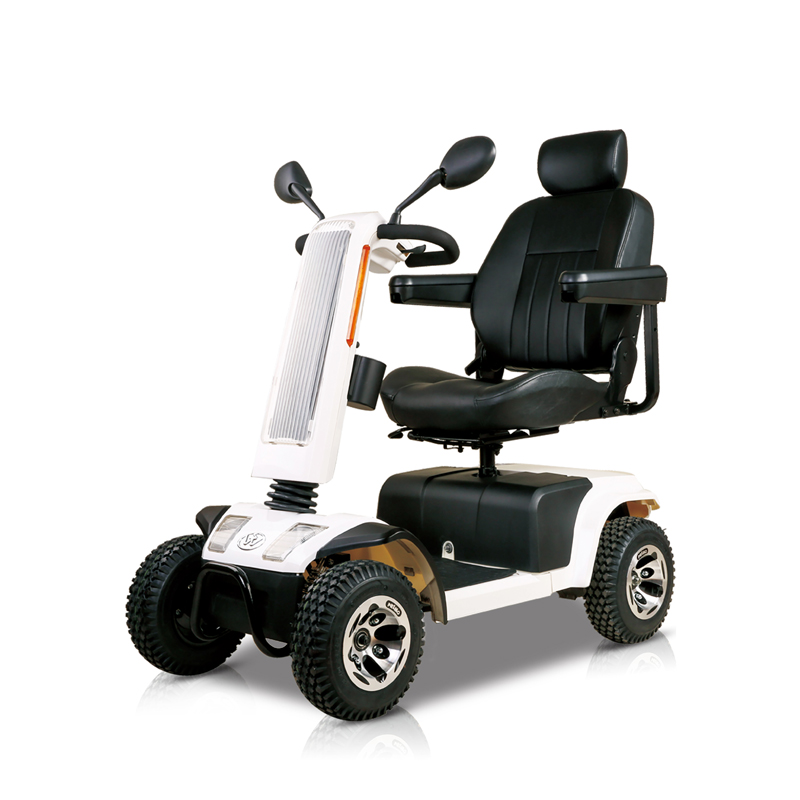
Upper sections can provide useful exposure to sunlight, although that area may already be needed for a seat, handle, storage space, or other equipment. A mounted solar surface also needs enough clearance to avoid interfering with normal movement.
Weight deserves attention as well. Any added component becomes part of the vehicle, so its position can affect balance. A large structure placed too far toward one side may change how the scooter feels during movement or when parked.
Wiring requires a similarly careful approach. Connections need protection from rain, dust, accidental contact, and repeated movement. Cables should follow a controlled path rather than crossing areas where they could become caught during folding, steering, or routine maintenance.
Solar components also need to remain accessible for inspection. A system hidden too deeply inside the frame may look tidy, yet maintenance can become harder. Designers need to find a practical middle ground between protection and access.
How Does Solar Charging Affect Outdoor Convenience
Solar charging can change what happens during periods when a scooter is simply parked. An outdoor stop does not have to be only a break between two journeys; under suitable conditions, it can also provide an opportunity for gradual energy input.
Such a change may be useful during outdoor activities where returning to a fixed charging point is inconvenient. A person can park in a suitable open area and continue with other activities while the charging system operates.
Parking position becomes part of the process. A shaded location may offer little useful sunlight, while an open position can provide better exposure. Buildings, trees, shelters, and nearby vehicles can also change conditions throughout the day.
For that reason, solar charging should remain flexible rather than becoming a requirement for normal operation. A scooter still needs to work when parked indoors, during poor weather, or in a shaded area.
From a daily‑use perspective, convenience comes from having another option available. Solar energy can support the normal charging routine without requiring every trip to be planned around sunlight.
What Should China Mobility Scooter Manufacturers Consider
For China Mobility Scooter Manufacturers, solar integration presents a product design issue as much as an energy issue. Adding a charging surface without changing the rest of the structure can create conflicts around space, weight, protection, and maintenance.
Frame design needs to accommodate the solar component without making ordinary operation awkward. Seat movement, storage access, steering, and entry space should remain practical after the new component is added.
Battery and charging systems also need to be considered together. Solar input can vary according to outdoor conditions, so the charging system needs to handle changes in available energy while maintaining suitable battery management.
Protection is another concern. Outdoor equipment can encounter moisture, dust, heat, vibration, and repeated handling. Solar components and their connections need to remain suitable for the environment in which the scooter is expected to operate.
Manufacturers can also look at installation and service requirements. A component that can be inspected without removing large sections of the frame may make routine maintenance easier. Clear connection points and accessible wiring can reduce unnecessary work during servicing.
Rather than treating solar charging as a separate accessory, manufacturers can consider it during the early design stage. Such planning allows the energy system and vehicle structure to develop together.
Could Solar Charging Become a More Flexible Energy Option
Solar charging has a natural connection with outdoor mobility because sunlight is available in many places where fixed electrical power may not be. Its usefulness still depends heavily on the surroundings, making flexibility an important part of future design.
Different arrangements may suit different users. A permanently integrated panel can keep the system together, while a movable or removable solar component may offer greater freedom in positioning. Each approach creates its own requirements for mounting, wiring, protection, and storage.
Energy management may become as important as the solar surface itself. Collecting sunlight is only one stage. Incoming energy needs to be handled properly before it reaches the battery, while normal charging should remain available when solar conditions are limited.
For a Heavy Duty Electric Mobility Scooter, the value of solar charging lies mainly in creating another path for energy replenishment during outdoor use. It does not remove the need for conventional charging, nor does every user have the same opportunity to benefit from sunlight.
Future design work is likely to focus on how solar components fit into the complete vehicle. A charging surface that blocks access to the seat, interferes with folding, or makes maintenance difficult would create new problems. A well‑coordinated layout can avoid such trade‑offs.
Solar charging therefore adds value when it fits naturally into the way a scooter is used. Outdoor parking, battery management, frame design, and daily operation all form part of the same system. For manufacturers, careful coordination can make solar energy a practical supporting function rather than an isolated feature.