
 +86-(0)512-82283871
Content
- 1 Why Does Base Width Matter for Senior Travel Scooters
- 2 How Does a Wider Base Affect Riding Stability
- 3 What Difference Does a Wide Base Make During Turns
- 4 Can a Wide Base Make Getting On and Off Easier
- 5
- 6 How Does Base Width Affect Uneven Surfaces
- 7 Why Can Four Wheel Travel Scooters Feel Different
- 8 How Does a Wide Base Affect Indoor Use and Storage
- 9 What Should Be Considered Before Choosing a Base Width
- 10 How Can Base Width Balance Stability and Daily Use
A travel scooter needs to fit into ordinary daily routines rather than simply move from one place to another. A trip to a nearby shop may involve a smooth sidewalk, a driveway edge, a narrow entrance, and a short stop beside a shelf. A visit to a community center can involve an elevator, a hallway, a doorway, and several turns. Each part of the route places slightly different demands on the vehicle.
Base width has a noticeable connection with such situations. A wider lower structure can give the scooter a broader stance, which may help reduce side-to-side movement during ordinary riding. Stability also depends on wheel placement, seat position, surface conditions, and how the rider sits. A wider base alone does not determine how a scooter will behave.
For a Travel Scooter for Seniors, practical fit matters as much as the feeling of stability. A vehicle that feels steady on an open sidewalk still needs to pass through regular doorways and fit into the storage space at home.
Why Does Base Width Matter for Senior Travel Scooters
Base width describes how much space the lower part of a scooter occupies from side to side. A wider structure generally creates more space between the left and right wheel paths, giving the vehicle a broader footprint on the ground.
During a straight ride on a smooth sidewalk, the difference may not feel dramatic. The change becomes easier to notice when one side of the vehicle meets a slightly different surface. A pavement joint, a shallow slope, or a small change in ground level can cause a narrow vehicle to feel more sensitive to side movement. A broader stance can provide more room for the vehicle to remain settled.
Seat position also matters. A rider sits above the base, so movement of the upper body can affect how the scooter feels. Reaching toward a shopping basket, turning to look behind, or shifting position while stopping creates small changes in weight distribution. A suitable seating position helps keep the body centered over the vehicle.
A practical check starts with the places where the scooter will actually be used:
- Home entrances and interior doorways
- Sidewalks around the neighborhood
- Shops and small public buildings
- Elevator entrances
- Storage areas at home
Width needs to work across all of those spaces. A base that feels comfortable outdoors may create difficulty in a narrow hallway, so stability and access need to be considered together.
How Does a Wider Base Affect Riding Stability
Stability is easier to understand through ordinary movement. Imagine crossing a sidewalk where one wheel passes over a shallow joint slightly before the other side. The scooter may respond with a small sideways movement. A broad lower structure can help provide a more settled stance while the wheels move across the surface.
Four-wheel layouts also distribute contact with the ground across four points. Practical guidance on mobility scooters notes that four-wheel designs can provide a steadier feel, while narrower three-wheel arrangements can offer easier movement through tight spaces.
Riding speed still matters. A scooter moving slowly through a neighborhood path behaves differently from one making a quick direction change. Gentle steering allows the wheels and body to adjust together. Sudden steering can create a larger shift in body movement, regardless of base width.
Seat adjustment has a similar effect. A seat that leaves enough room for the legs can make it easier to maintain a natural sitting position. Comfortable seating and adequate legroom are also useful when the handlebar is turned during a maneuver.
For daily use, a stable feeling often comes from several parts working together:
| Design Area | Daily-Use Effect |
|---|---|
| Wider Base | Provides a broader stance and may reduce side-to-side movement during normal riding |
| Wheel Placement | Affects how stable the scooter feels during turns and changes in direction |
| Seat Position | Influences weight distribution and the rider's overall sense of balance |
| Foot Area | Gives more room for comfortable foot placement and easier mounting |
| Overall Width | Affects passage through doorways, aisles, elevators, and other narrow spaces |
What Difference Does a Wide Base Make During Turns
Turning is where width becomes more noticeable. A broad structure can provide a stable platform, yet the same increase in body width may require more room to change direction. A scooter used mainly on open sidewalks may have plenty of space for turning. A shopping aisle or narrow apartment hallway presents a different situation.
Consider a simple trip through a local store. Entering through a wide doorway may feel easy, while turning beside a shelf can require several small steering adjustments. A wider scooter needs enough clearance from both sides, especially when the front section swings through the turn.
Four‑wheel travel scooters can provide a steadier feel during ordinary movement, while the larger overall footprint may reduce freedom in narrow areas. Guidance on mobility scooter use similarly notes a trade‑off between stability and maneuverability in different wheel layouts.
Turning technique also affects the result. Slowing down before a corner gives the vehicle more time to respond to steering. A gradual turn is easier to manage than a sharp steering movement made close to an obstacle.
For everyday routes, useful questions include:
- Is there enough room beside furniture?
- Can a doorway be entered without repeated corrections?
- Does the front section clear shelves and corners?
- Is there enough space to turn around before reaching a wall?
Such checks are more useful than judging width from appearance alone.
Can a Wide Base Make Getting On and Off Easier
Getting onto a scooter is a different task from riding it. Feet need to move into position, the body needs to settle onto the seat, and the steering area needs to remain clear. A broader lower section may provide a more open feeling around the feet, depending on the overall design.
Seat movement can also affect access. Some mobility scooters use seats that adjust or swivel, making entry and exit easier in suitable layouts. Adequate legroom is another practical consideration, especially when the rider needs space to position both legs comfortably.
A useful everyday example is parking beside a dining table. After stopping, the rider may need to turn slightly, move one foot into position, and stand or sit without hitting the steering area. Limited foot space can make a simple movement feel awkward even when the scooter itself has a stable base.
The same issue appears when returning to the scooter after shopping. Bags may be placed in a basket or carried separately, leaving less room around the front area. A clear footwell and suitable seat position can make the transition between standing and sitting more natural.
Base width therefore has value beyond riding stability. Its relationship with seat height, foot space, steering position, and entry space can influence how easily a scooter fits into everyday routines.
How Does Base Width Affect Uneven Surfaces
Daily routes rarely stay completely smooth. A sidewalk may contain joints between paving blocks, a driveway may slope slightly toward the road, or a curb cut may create a small change in height. Such conditions can make a scooter feel different from riding on a flat indoor floor.
A wider lower structure can provide a broader stance while the wheels move across minor changes in the surface. When one wheel reaches a different level, the scooter still needs to respond to the change, so width should not be treated as a solution for every type of uneven ground. Wheel placement, ground clearance, seat position, and riding speed also influence how the vehicle behaves.
Body position matters during such movement. Sitting upright with both feet placed naturally gives the rider a more predictable position over the base. Leaning sharply to one side can change the way the scooter feels when one wheel passes over a raised section.
A wider base can therefore provide useful support during ordinary surface changes, while careful route selection remains important. Large cracks, steep slopes, loose ground, and damaged pavement require attention regardless of vehicle width.
Why Can Four Wheel Travel Scooters Feel Different
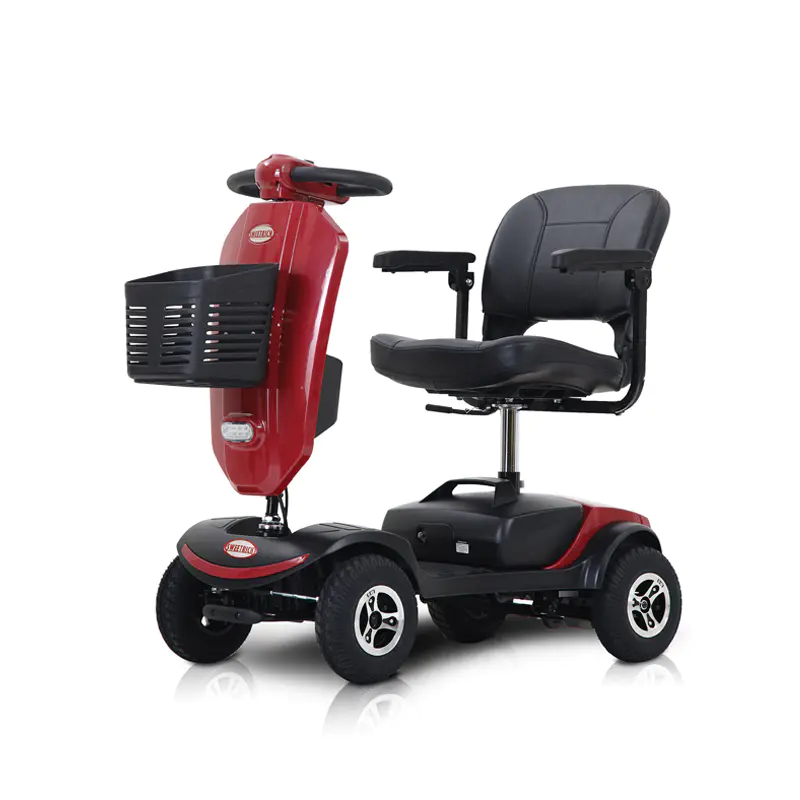
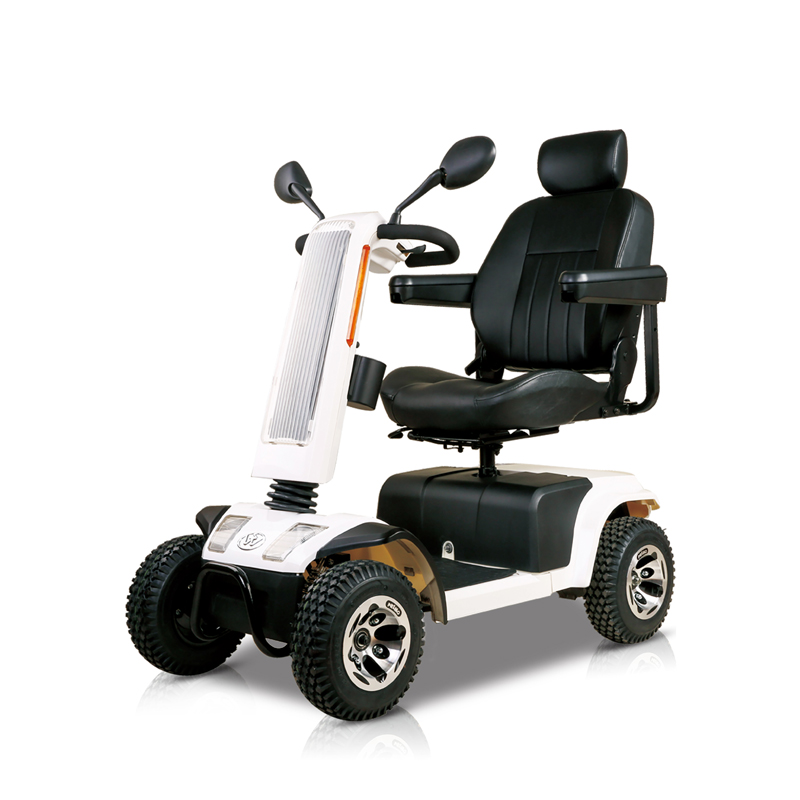
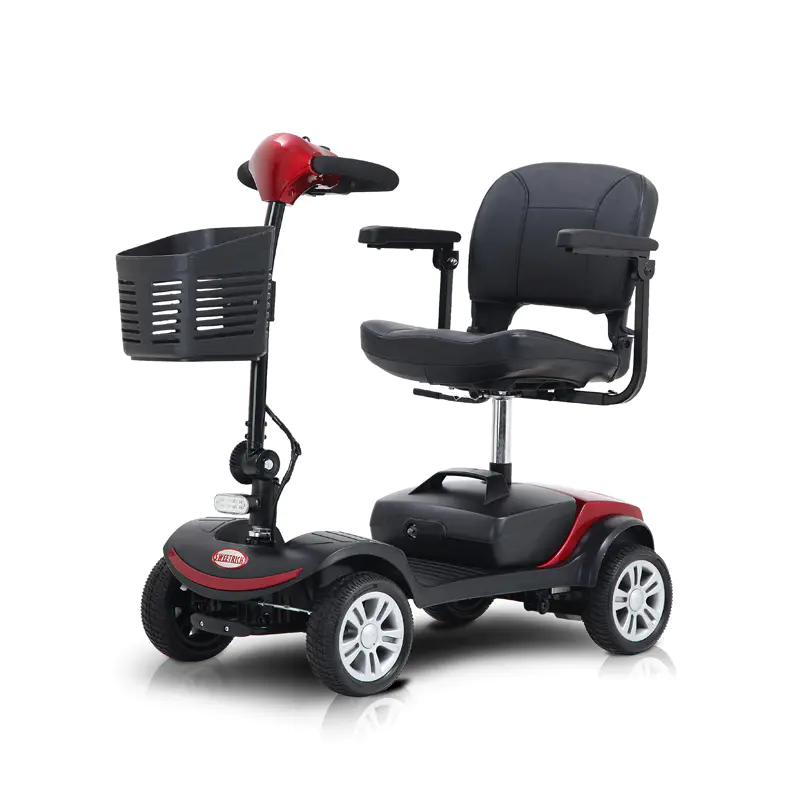
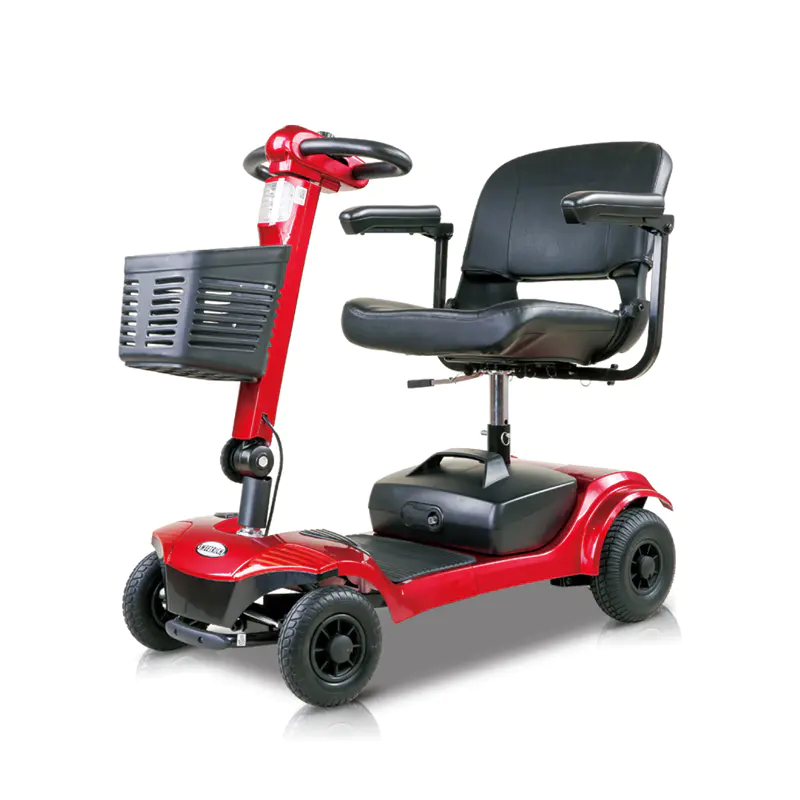
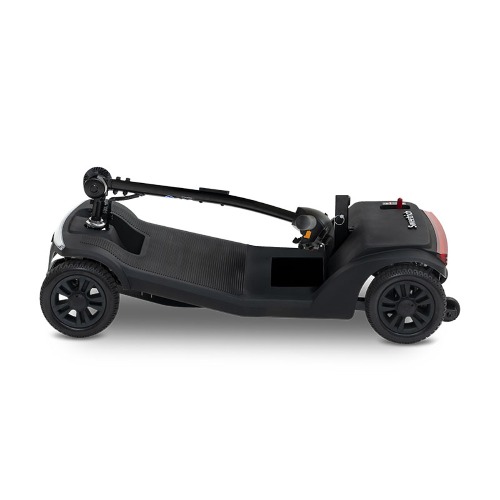
A 4 Wheel Travel Scooter has four points of contact with the ground, creating a different riding feel from a three‑wheel layout. Front and rear wheels are arranged across both sides of the vehicle, giving the lower structure a defined footprint.
Four‑wheel designs can feel settled during straight movement and gentle turns. Such a layout may suit routes where stability and a predictable ride are important, especially around residential areas, shopping centers, and paved public paths.
Maneuvering space still needs consideration. A four‑wheel structure may occupy more room during a turn than a narrower layout, depending on its overall dimensions and steering design. A small shop aisle can therefore present a different challenge from a broad sidewalk.
Wheel position also matters when crossing a surface change. A front wheel reaches an uneven section before the rear wheel, so the vehicle moves through the change in stages. A stable seating position allows the rider to respond naturally rather than making sudden body movements.
For daily travel, several parts need to be considered together:
- Width of the lower structure
- Position of all four wheels
- Seat location
- Available foot space
- Steering response
- Clearance around the wheels
Such details help explain why two scooters with a similar overall appearance may feel different during ordinary use.
How Does a Wide Base Affect Indoor Use and Storage
Indoor travel introduces a different set of requirements. A shopping center may have broad walkways, while a small store can contain narrow aisles and closely placed shelves. Residential spaces may include doorways, furniture, elevator entrances, and tight corners.
A wider base can provide a stable platform, yet available floor space becomes more important. Before bringing a scooter into a home, doorway width and the path from the entrance to the storage area deserve attention. Measuring the narrowest point along the route gives a clearer picture than checking the entrance alone.
Elevators are another practical example. The scooter needs enough room to enter, turn, and leave without contacting the walls or doors. A broad vehicle may fit comfortably inside an elevator while still requiring careful positioning near the entrance.
Storage creates a similar trade‑off. A scooter kept beside a wall, under a covered area, or inside a storage room needs enough surrounding space for parking and later removal. A vehicle that fits physically may still be inconvenient when there is no clear room to approach it.
Transport by car also changes the requirements. A compact travel scooter may need to be folded, separated into sections, or positioned carefully inside a vehicle. A wider base can affect how much room remains for other items, so storage dimensions deserve attention before purchase.
Daily Situation Base Width Consideration Useful Check Home doorway Enough clearance on both sides Measure the narrowest opening Elevator Width and turning room Check entrance and interior space Shop aisle Side clearance during turns Look at shelf spacing Home storage Parking and removal space Leave a clear path around the scooter Car transport Available loading space Check the storage area and access
Practical dimensions matter more than appearance in such situations. A scooter can look compact from the front while still requiring additional room around the seat, steering area, or rear wheels.
What Should Be Considered Before Choosing a Base Width
Choosing a suitable width starts with the route rather than the scooter. A person who mainly travels along open sidewalks has different needs from someone who regularly moves through small shops, narrow hallways, and compact living spaces.
Travel Scooter for Seniors should therefore be considered in relation to daily habits. A simple route assessment can cover the following areas:
- Outdoor path: pavement condition, slopes, surface changes, and available space.
- Indoor route: doorways, corridors, elevators, and furniture placement.
- Entry and exit: foot space, seat position, and room beside the scooter.
- Storage: parking area, doorway access, and removal path.
- Transport: available vehicle space and lifting requirements.
Seat width also deserves attention. A wider base does not automatically mean a more comfortable seating area. Seat dimensions, legroom, steering position, and the distance between the seat and surrounding structures all contribute to how the vehicle feels during daily use.
A route that looks spacious during a quiet period may become harder to navigate when people, shopping carts, chairs, or temporary displays occupy part of the walkway. Leaving enough room for normal movement gives a more realistic idea of whether the scooter size suits the environment.
How Can Base Width Balance Stability and Daily Use
A wide base can provide a broader lower footprint, which may contribute to a settled feeling during ordinary travel. Greater width also occupies more space, making doorway access, indoor turns, storage, and car transport important parts of the decision.
For a Travel Scooter for Seniors, useful selection starts with everyday movement. Outdoor stability may matter during sidewalk travel, while indoor maneuverability can become more important inside a small home or store. A 4 Wheel Travel Scooter may offer a different balance between support and turning space because of its four‑wheel layout.
Rather than judging width alone, the complete arrangement deserves attention. Wheel position, seat placement, foot space, steering behavior, route width, and storage conditions all influence practical use.
A suitable base is therefore one that fits the places where the scooter will actually go. A little extra room around the body can make ordinary riding feel more settled, while excessive width may create unnecessary difficulty in narrow areas. Matching the vehicle to real routes keeps the design choice grounded in everyday use.