
 +86-(0)512-82283871
Content
Selecting a motorized wheelchair is a pivotal decision that directly influences an individual's independence, safety, and daily comfort. The market offers a vast array of models, each with distinct features and capabilities, which can make the selection process daunting. This guide is structured to demystify that process by focusing on the practical, detailed considerations that truly matter. We will explore how to match a chair to your specific environment, ensure it can be transported conveniently, evaluate its power and endurance, and tailor it to your physical needs. The aim is to move beyond generic advice and provide a framework for identifying a motorized wheelchair that acts as a dependable extension of your personal mobility, offering not just movement, but enhanced freedom and quality of life for the long term.
Assessing Your Primary Usage Environment
The foundation of a good choice lies in a clear understanding of where the wheelchair will be used most frequently. A model ideal for polished indoor floors may struggle on different surfaces, and vice versa. Incorrectly matching the chair to your environment can lead to premature wear, safety issues, and frustration. Therefore, a meticulous evaluation of your daily routes and terrain is the indispensable first step.
Indoor Mobility Considerations
For users who will spend the majority of their time inside homes, offices, or commercial buildings, specific design elements become critical. Indoor environments demand precision maneuvering in often confined spaces.
- Turning Radius: This is perhaps the most vital specification for indoor use. A smaller turning radius allows for navigating through doorways, around furniture, and in tight corners like bathrooms and kitchens with much greater ease.
- Overall Width and Length: Measure your doorways, hallways, and the spaces where the chair will need to park (e.g., under a desk, beside a bed). Ensure the wheelchair's dimensions, including the footrests, are comfortably smaller than the narrowest passage.
- Seat Type and Swivel: A seat that can swivel or a wheelchair with a compact footprint can make transferring to and from beds, sofas, or toilets significantly safer and simpler.
- Drive Wheel Configuration: Rear-wheel drive offers stability but a wider turn, while mid-wheel drive typically provides the best turning radius for indoor agility, though some users may note a different feel in motion.
Outdoor and All-Terrain Capabilities
If your lifestyle or surroundings require venturing outdoors, the wheelchair must be built to handle more challenging conditions. This is where understanding the true meaning of an all terrain power wheelchair for uneven surfaces becomes essential. Not all chairs marketed for "outdoor use" are created equal.
- Tire Type: Puncture-proof, airless tires or knobby, all-terrain tires provide much better traction and durability on grass, gravel, dirt paths, and mild inclines compared to standard indoor carpet tires.
- Motor Power and Gear Systems: Outdoor and all-terrain models feature more powerful motors and often multiple gear settings. High torque is necessary for climbing slopes, navigating soft ground, and maintaining control on declines.
- Suspension System: A quality suspension is non-negotiable for comfort and safety on uneven ground. It absorbs shocks from bumps, cracks, and curbs, protecting the user from jolts and protecting the wheelchair's frame and electronics from damage.
- Ground Clearance: Higher ground clearance prevents the undercarriage from getting caught on obstacles, curbs, or uneven transitions between surfaces.
It is crucial to match the chair's specifications to your specific outdoor needs. For example, a chair that comfortably handles packed gravel garden paths might not be suitable for frequent beach use or steep, rugged trails. Understanding the limits of "all-terrain" as applied to your life is key to finding a reliable partner for outdoor mobility.
Practicalities of Transportation and Storage
A wheelchair that perfectly fits your home and daily route is of little use if you cannot take it where you need to go. Transportability is a major practical hurdle for many users and caregivers. The weight and disassembly process of the chair are primary factors determining how easily it can be moved in a vehicle.
The Challenge of Vehicle Transport
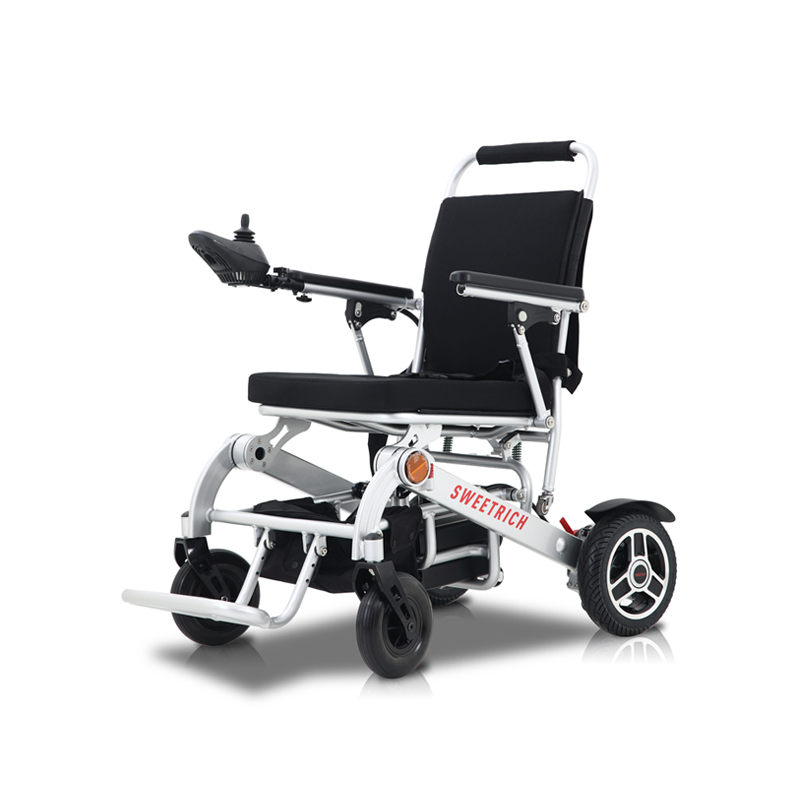
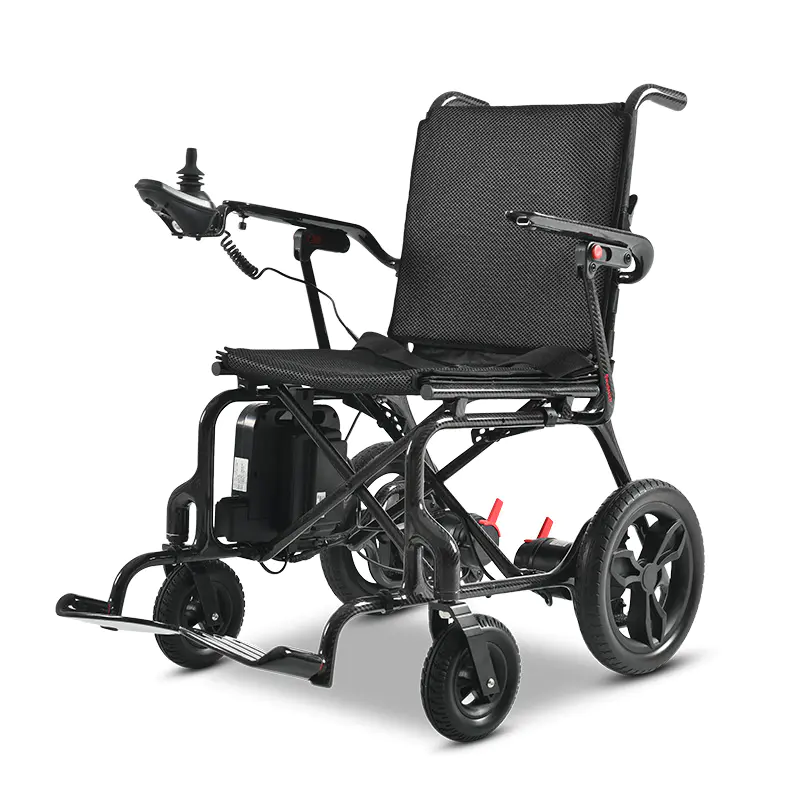
Most standard motorized wheelchairs are heavy and require a wheelchair-accessible van with a lift or ramp for transport. However, for individuals who wish to travel more spontaneously or with caregivers who may have physical limitations, this is not always feasible. This is precisely why many seek information on lightweight foldable electric wheelchair options.
Key Features of Transport-Friendly Chairs
- Folding Mechanism: A truly foldable design allows the chair to collapse into a more compact form, often reducing its width and height significantly. The mechanism should be robust yet simple enough to operate without excessive strength or tools.
- Weight: "Lightweight" is relative in this category. While a folding electric chair will be heavier than a manual wheelchair, the lightest models are designed to approach a weight that a strong person can lift into a car trunk or backseat in pieces. Pay close attention to the weight of the heaviest individual component.
- Battery Removal: Removable batteries serve two purposes: they allow for charging away from the chair and, more importantly for transport, they reduce the weight of the main frame during lifting.
- Size When Folded: Check the folded dimensions to ensure it will fit in your vehicle's storage space, whether that's a trunk, hatchback, or SUV rear.
While a lightweight foldable electric wheelchair option offers unparalleled convenience for travel, it often involves trade-offs. These chairs may have a slightly smaller range, less powerful motors for steep hills, or a lower weight capacity compared to their full-sized, non-folding counterparts. The decision hinges on prioritizing transport ease versus maximum performance in daily use.
Understanding Power, Range, and Battery Life
The heart of any motorized wheelchair is its power system, comprising the motor, controller, and battery. These components determine how far you can go, how well you can tackle slopes, and how long the chair will serve you before needing a recharge or service. A reliable chair has a power system that not only meets but exceeds your daily requirements to account for variables like weather, terrain, and battery aging.
Deciphering Battery Specifications and Real-World Range
Manufacturers often advertise a "maximum range" under ideal conditions. A more practical question to ask is: what is the average range per charge for a mid size power wheelchair? A mid-size chair is a common choice, balancing indoor maneuverability with sufficient power and battery capacity for diverse activities.
- Battery Type (Ah - Amp Hours): The battery's capacity, measured in Amp-hours (Ah), is a primary indicator of potential range. Higher Ah generally means a longer range. Common sizes are 20Ah, 30Ah, or 50Ah. A chair with two 30Ah batteries has a total of 60Ah of capacity.
- Voltage (V): The system voltage (e.g., 24V, 36V) works with the Amp-hours to determine total energy (Watt-hours). A higher voltage system can often provide more power to the motor efficiently.
- Real-World Factors: The advertised range is calculated on flat, smooth terrain at a constant speed with a lightweight user. In reality, range is drastically affected by:
- User weight and cargo
- Frequent inclines or declines
- Rough terrain (grass, gravel)
- Frequent stops and starts
- Use of accessories like lights or a ventilator
- Temperature (cold weather reduces battery performance)
- Battery age (capacity diminishes over time)
A prudent approach is to take the manufacturer's maximum range estimate and reduce it by 30-40% to get a realistic average range per charge for a mid size power wheelchair for daily planning. If your daily travel needs total 10 miles, look for a chair advertised for at least a 16-18 mile range to ensure you rarely, if ever, risk running out of power.
Motor Power and Hill Climbing Ability
Motor power, often related to the wheelchair's drive system, determines its ability to climb slopes, accelerate, and handle soft surfaces. A reliable chair should comfortably manage the steepest incline you encounter regularly, with a reserve of power.
Comparing common motor and drive configurations:
| Drive Type | Typical Motor Power | Ideal For | Considerations |
|---|---|---|---|
| Front-Wheel Drive (FWD) | Good pulling power | Outdoor use, traversing obstacles, good traction on loose surfaces. | Can be less stable on very steep slopes as weight shifts back; turning radius may be larger. |
| Rear-Wheel Drive (RWD) | Strong, stable power | High-speed straight-line travel, outdoor use, good for active users. | Largest turning radius; the "feel" is similar to a car, which some prefer. |
| Mid-Wheel Drive (MWD) | Excellent maneuverability | Superior indoor navigation, tight spaces, generally good all-purpose use. | May have a tendency to "tip" backwards or forwards on very steep slopes if not properly balanced; often has anti-tip wheels. |
Prioritizing Comfort, Support, and Customization
A wheelchair that is powerful and transportable but uncomfortable will not be used willingly or for extended periods. Comfort is multifaceted, encompassing postural support, pressure relief, and the ease of operating the chair's controls. This is especially critical for individuals who spend many hours in their chair each day or who have specific medical conditions.
Seating Systems: From Basic to Advanced
The seat is your primary interface with the wheelchair. A basic vinyl seat may suffice for short trips, but for extended use, investing in a quality seating system is investing in your health and comfort.
- Cushioning and Pressure Relief: This is paramount for preventing pressure sores (ischemic ulcers). High-density foam is a minimum standard. Advanced options include gel cushions, air-filled cushions, and viscoelastic memory foam, which better distribute weight and reduce pressure points.
- Seat Dimensions: Width and depth must be correct. A seat too narrow causes discomfort and skin issues; too wide hinders proper arm positioning and access to controls. Depth should support the thighs without pressing behind the knees.
- Backrest Support: A contoured backrest provides better lumbar and lateral support than a flat panel. Height is also key; a taller backrest offers more support for the upper back and shoulders.
Adjustability and User-Specific Controls
Finding the best power wheelchair for tall and heavy adults requires a focused search on durability and adjustability. Standard chairs often have weight and size limits that are insufficient.
- Weight Capacity: This is the absolute first filter. Chairs are rated for a maximum user weight. Always choose a chair with a capacity that exceeds your weight to ensure longevity, safety, and full performance.
- Frame Strength and Size: Heavy-duty frames are constructed from reinforced materials (often aircraft-grade aluminum or steel) and have wider bases for stability. They also offer extended seat widths and depths, and sometimes increased ground clearance.
- Adjustable Components: Look for chairs where the seat height, armrest height and width, footrest length, and even the controller mount can be adjusted. This allows you to achieve an optimal, comfortable, and safe driving position.
- Control Interface Customization: For users with limited hand strength or dexterity, the standard joystick may not be suitable. Exploring alternatives like compact portable mobility scooter with joystick control options can be misleading, as mobility scooters are a different category. However, the principle is valid for wheelchairs: look for programmable controllers, sensitivity adjustments, and alternative input devices such as chin controls, sip-and-puff systems, or head arrays. A reliable provider should offer a range of control interfaces to match the user's abilities.
For the best power wheelchair for tall and heavy adults, the focus must be on robust construction, high-capacity motors and batteries, and a fully adjustable seating system. Compromising on any of these factors can lead to a chair that is unsafe, uncomfortable, or prone to frequent breakdowns.
Making the Final Decision and Ensuring Long-Term Reliability
After narrowing down choices based on environment, transport, power, and comfort, the final step involves practical verification and planning for the long term. A reliable choice is one that proves itself not just on paper, but through testing and is backed by strong support.
The Critical Importance of a Test Drive
Never purchase a motorized wheelchair without a comprehensive test drive. This is your opportunity to experience the factors discussed firsthand.
- Simulate Your Environment: If possible, test the chair on a surface similar to your home flooring (carpet, tile) and on an outdoor incline or uneven ground.
- Assess Comfort: Sit in the chair for an extended period, at least 15-20 minutes. Do you feel pressure points? Is the back support adequate? Are the armrests at the right height?
- Check Maneuverability: Practice turning in tight spaces, navigating through a mock doorway, and reversing. Does the chair feel responsive and stable?
- Evaluate Controls: Are the controls intuitive and easy to reach? Can you operate them comfortably from your natural seated position?
Warranty, Service, and Support
A reliable product is backed by a reliable company. Scrutinize the warranty details and understand the service network.
- Warranty Length and Coverage: Look for a comprehensive warranty that covers the frame, electronics (controller, motors), and batteries for a reasonable period (e.g., 2-5 years on frame, 1-2 years on electronics, 1 year on batteries). Understand what is considered "wear and tear" versus a manufacturing defect.
- Local Service Providers: Ensure there are authorized repair technicians in your area. A chair with a brilliant warranty is of little use if the nearest service center is hundreds of miles away.
- Parts Availability: Ask about the typical availability of common replacement parts like tires, batteries, and cushions. A long wait for parts translates to prolonged loss of mobility.
Selecting a reliable motorized wheelchair is a process that demands careful research, self-assessment, and hands-on evaluation. By methodically considering your specific needs for environment, transport, power, comfort, and long-term support, you can confidently invest in a mobility solution that truly enhances your independence and freedom for years to come. Remember, the most reliable chair is the one that fits your life perfectly, empowering you to engage with the world on your own terms.