
 +86-(0)512-82283871
Content
- 1 What Actually Makes a Scooter Easy to Handle After Folding
- 2 How Does a Folding Seat Change the Shape of the Scooter
- 3 Why Does the Folded Profile Matter More Than Folding Speed
- 4 How Do Wheels Affect the Folded Structure
- 5 Where Can a Foldable Seat Reduce Handling Problems
- 6 What Parts Need Protection When a Scooter Is Checked
- 7 How Can the Folding Process Be Made Easier to Follow
- 8 Why Does the Seat Design Matter After Unfolding Again
- 9 How Could Travel Focused Scooter Design Evolve
- 10 What Should Manufacturers Consider When Designing for Air Travel
Air travel puts a different kind of pressure on mobility equipment. A scooter that feels convenient on a daily trip may become harder to handle once it needs to pass through an airport, be prepared for loading, or remain in a compact position during transport. Riding comfort matters during normal use, while the folded shape, exposed parts, and ease of handling become more noticeable during a journey.
For a Mobility Scooter for Air Travel, folding ability is only one part of the design. What happens after folding can have a greater effect on how easily the equipment can be moved and stored. A compact frame with a seat that still sticks out may not create the same handling experience as a structure in which the seat moves neatly into the folded profile.
Manufacturers are therefore paying closer attention to the transition between riding mode and transport mode. Rather than treating folding as a separate feature, current design thinking increasingly connects the frame, seat, wheels, and control area. Such an approach can make the folded scooter easier to position without turning the design into something difficult to use in everyday situations.
What Actually Makes a Scooter Easy to Handle After Folding
A folded scooter needs to behave differently from a scooter that is ready to ride. During normal use, wheels, seat height, handlebars, and foot space are arranged around the rider. Once folded, much of that structure needs to occupy a smaller and more controlled space.
A useful folded design usually has a clear outline, limited loose movement, and few parts extending far beyond the frame. Shape matters because airport handling involves movement through spaces that were not designed around one particular scooter. An uneven profile can make carrying, placing, or positioning the device less convenient.
Weight distribution matters as well. When a seat folds forward or downward, the center of the equipment changes. A well-coordinated structure keeps major components positioned in a way that feels predictable when the scooter is lifted or moved. Poorly balanced folding can make one side feel heavier, placing extra effort on the person handling it.
Another point concerns stability after folding. A scooter that remains partly open may take up more room and have parts that move unexpectedly. A secure folded position gives handlers a clearer idea of where the equipment begins and ends.
Rather than asking only whether a scooter can fold, it is more useful to ask several practical questions:
- Does the folded structure keep a reasonably even shape?
- Are important parts protected inside or close to the frame?
- Can the folded position remain stable during movement?
- Are there unnecessary parts that need to be removed?
- Can the scooter be returned to riding condition without a complicated process?
Answers to those questions reveal more about transport practicality than the folding function alone.
How Does a Folding Seat Change the Shape of the Scooter
Seat design has a noticeable effect on folded form. A fixed seat can remain above the frame after other sections have moved inward, creating additional height and an uneven outline. Such an arrangement may work well during daily riding, yet become less convenient when the scooter needs to occupy a limited storage space.
A folding seat changes that relationship. Once the seat moves down or toward the frame, unused space around the upper section can be reduced. More of the scooter can then follow a single folding direction, creating a shape that is easier to position.
Seat movement also affects how a person approaches the scooter while preparing it for transport. A seat that folds with the main structure requires fewer separate actions than a design where the seat must be removed and handled as an individual part. Fewer loose components can make the preparation process easier to keep organized.
Good seat folding is not simply a matter of adding a hinge. Placement, movement range, locking points, and contact with the frame all need to work together. During riding, the seat needs to remain firmly positioned. During folding, it needs enough freedom to move without interfering with wheels or other structural parts.
A useful way to view the design is to compare the two states:
| Riding State | Folded State |
|---|---|
| Seat supports the rider | Seat moves closer to the frame |
| Wheels are positioned for movement | Wheels follow the compact structure |
| Controls remain accessible | Controls need protection from contact |
| Frame provides riding stability | Frame needs a stable transport position |
| Foot area remains open | Open space is reduced |
Such changes show why seat design can influence much more than sitting comfort. A folding seat becomes part of the transport system once the scooter leaves its normal riding position.
Why Does the Folded Profile Matter More Than Folding Speed
Fast folding may sound useful, yet speed alone says little about how convenient a scooter is to handle afterward. A person can complete a folding action quickly and still end up with a bulky or awkward object.
A cleaner folded profile can reduce that problem. When the seat, frame, and wheels settle into a relatively controlled shape, storage becomes easier to plan. There are fewer questions about which side should face outward or which component might catch against another object.
A simple folded profile can also help during manual movement. Handles or suitable gripping areas become easier to locate when the surrounding structure is not crowded with protruding parts. Smooth surfaces and protected components can reduce the chance of accidental contact during handling.
Another useful consideration is whether folding creates a second task. For example, a scooter may fold through one movement and then require several additional adjustments before it is safe to move. Such a process weakens the practical value of a compact design.
For air travel, transport convenience is therefore linked to the complete sequence rather than a single action: preparing the scooter, folding it, securing it, moving it, placing it in a storage area, and later opening it again. A design that keeps each stage straightforward is easier to work with in real situations.
How Do Wheels Affect the Folded Structure
Wheel placement can change how a scooter folds. Four wheels provide a stable base during normal riding, while folding requires those wheels to occupy a smaller area without interfering with the frame or seat.
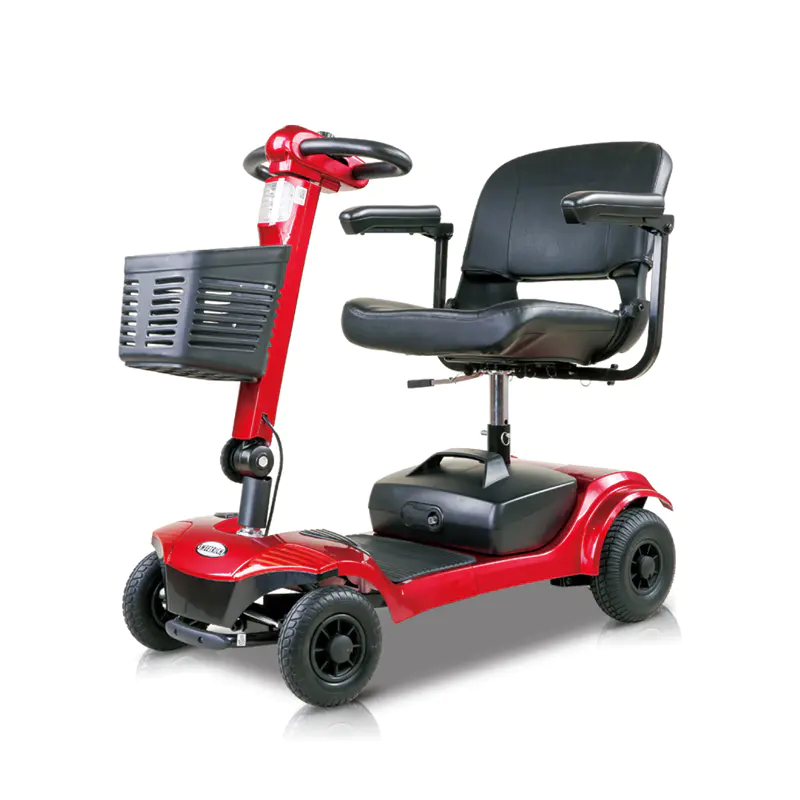
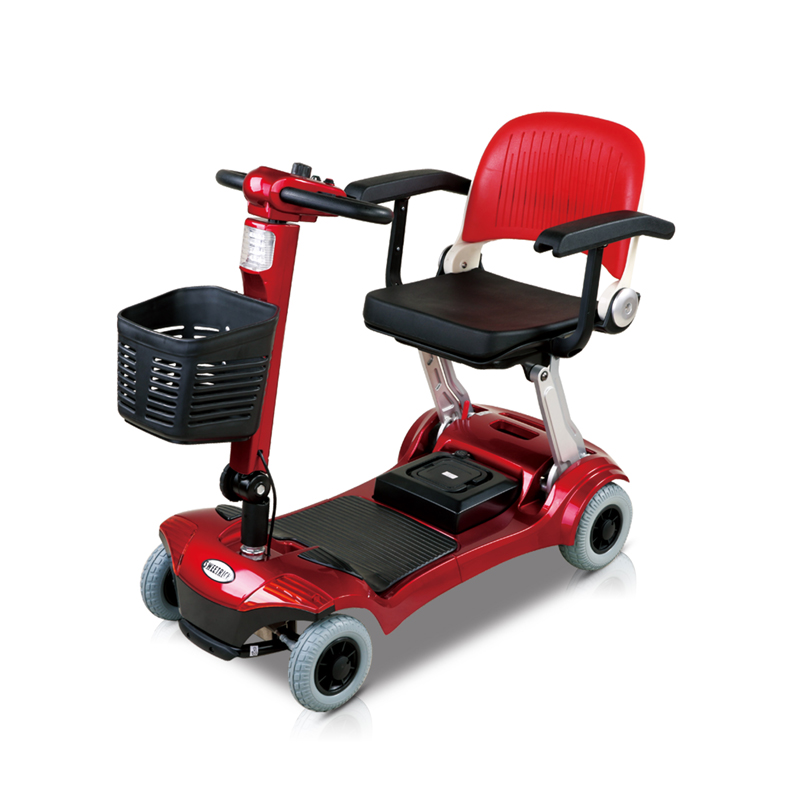
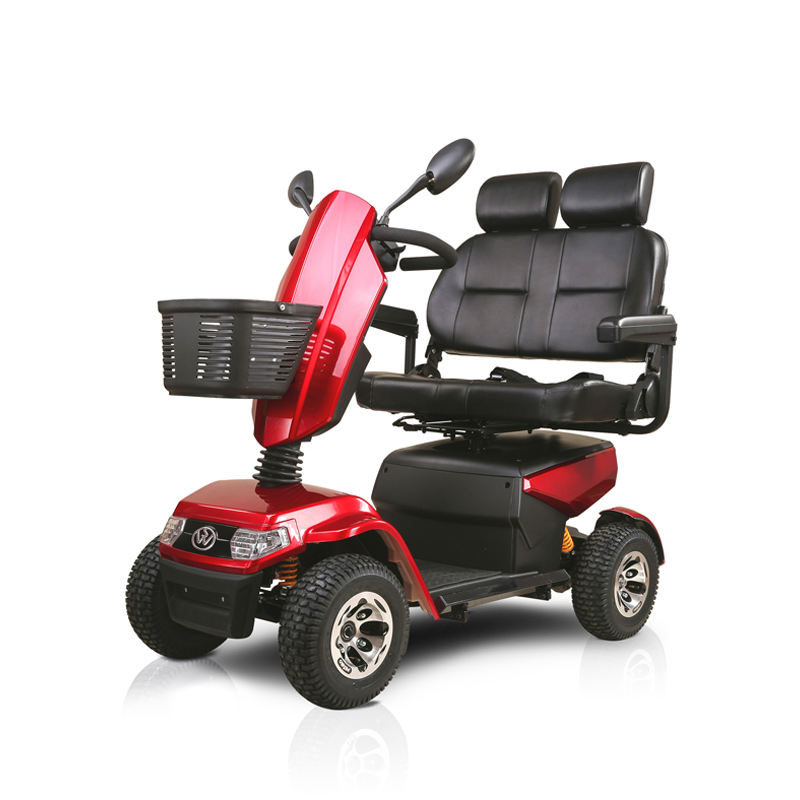
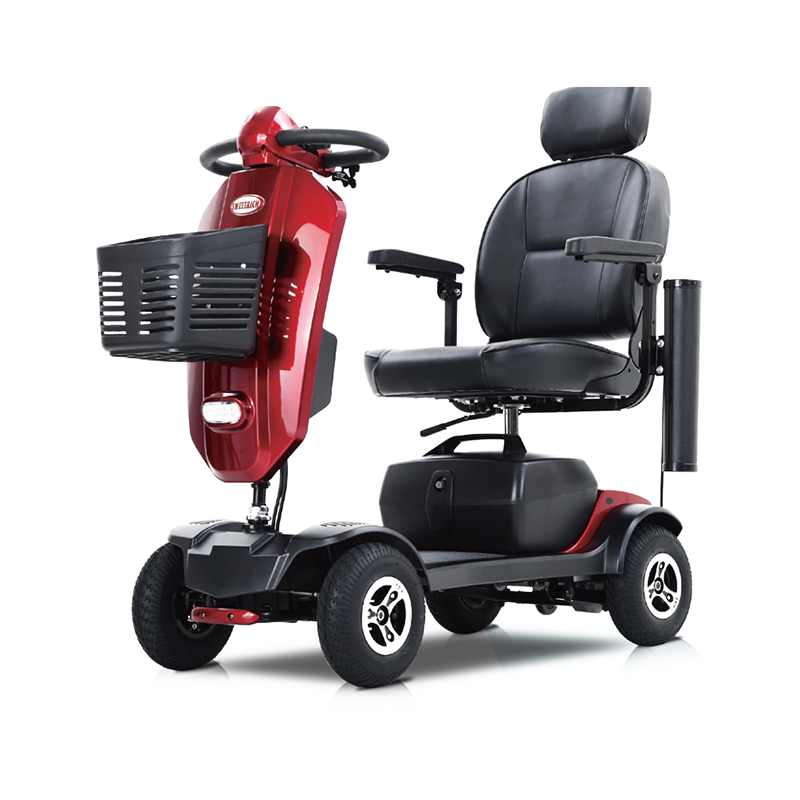
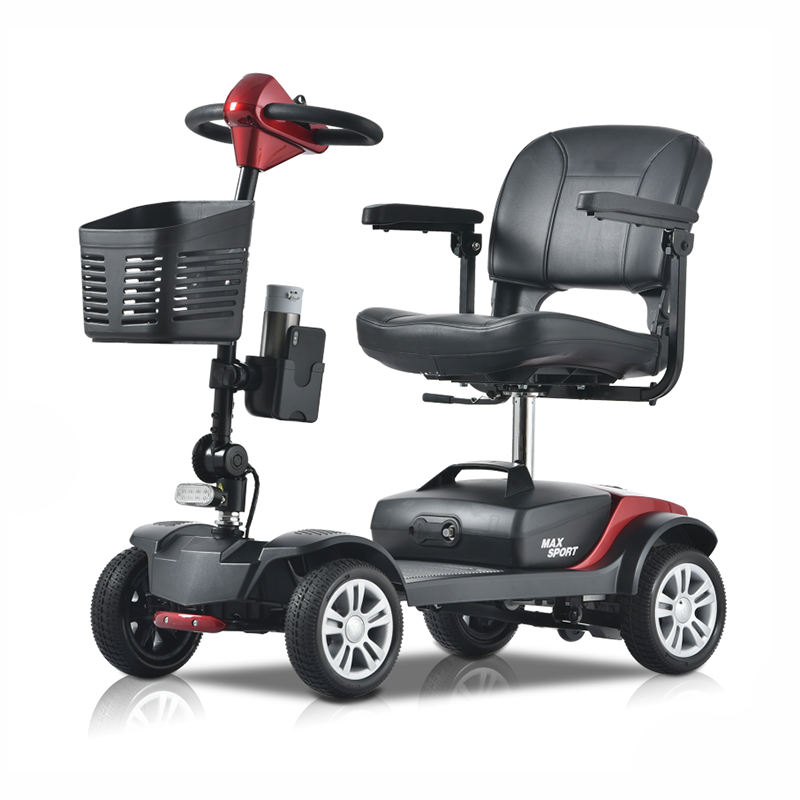
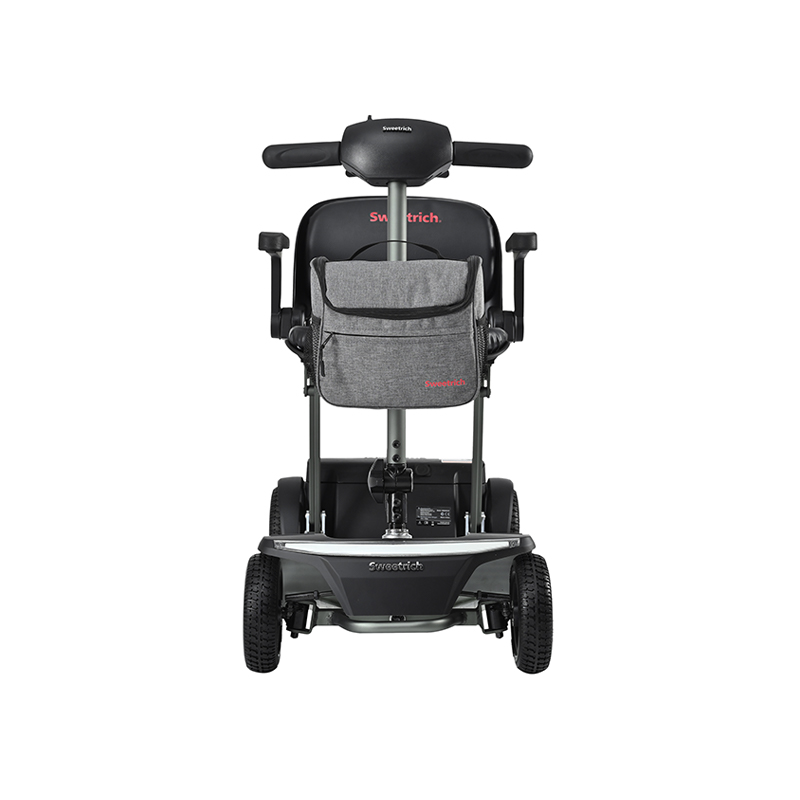
A Foldable 4 Wheel Scooter needs to balance two different structural needs. During use, wheel spacing supports steady movement and predictable handling. During folding, wheel positions become part of the compact outline. A wheel that remains far outside the folded frame can increase the overall footprint, while a wheel that moves too close to another component may interfere with the folding path.
Front and rear wheel positions can also influence how the folded scooter rests on a surface. A stable resting position reduces unwanted movement while the device is being stored or moved. Designers therefore need to consider not only how wheels support riding, but also how they behave after the frame has changed shape.
Wheel protection deserves attention as well. Wheels are naturally exposed, so contact with other luggage or handling equipment can occur during transport. Keeping vulnerable connections close to protected structural areas can help reduce unnecessary exposure.
A four‑wheel layout does not automatically make folding difficult. Much depends on how the frame directs movement and how the wheels relate to the seat and other components. Careful coordination can allow a stable riding structure to become a manageable folded form without adding unnecessary complexity.
Where Can a Foldable Seat Reduce Handling Problems
A folding seat can reduce handling issues by keeping more parts attached to the main body. Removing a seat before transport creates another loose component that must be stored, protected, and remembered when the scooter is needed again.
Keeping the seat connected can simplify preparation. Once folded, it becomes part of the overall shape rather than another object beside it. Such integration can be useful when several pieces of mobility equipment or luggage are being handled in the same area.
Seat position also affects where a person can hold the scooter. A large fixed seat may block natural gripping areas, while a folded seat can open more space around the frame. Small changes in available hand space can make a noticeable difference when equipment needs to be moved manually.
Another consideration is accidental movement. A seat that folds without a clear resting position may swing during handling. A defined folded position gives the structure greater control and makes its condition easier to judge.
For manufacturers, the challenge lies in keeping the folding seat simple without weakening the riding structure. A seat must support normal use, remain stable during movement, and still become compact when transport is required. Treating all three conditions as part of one design problem can produce a more coherent result.
What Parts Need Protection When a Scooter Is Checked
Once a scooter is folded, protection becomes part of the transport design. Hand controls, folding joints, seat connections, and exposed fittings can sit close to the outer surface, making their position important during handling.
Controls deserve particular attention because they are built for operation rather than contact. A handlebar that works well during riding may become vulnerable when the folded scooter is moved or placed near other luggage. Keeping sensitive areas close to the frame can reduce unnecessary exposure.
Seat joints need similar consideration. Regular folding and opening place repeated movement on the connection area, so the joint needs to move freely while remaining secure in both positions. A controlled folding path can also prevent one component from pressing against another.
Protection does not always require extra covers or separate parts. Recessed fittings, suitable clearances, and thoughtful folding directions can provide protection through the structure itself. Such an approach can keep the design simpler while giving exposed components more space.
How Can the Folding Process Be Made Easier to Follow
A folding mechanism becomes less useful when its operation requires too many small steps. During travel preparation, users may have limited space and may need to complete the process without repeatedly checking complicated instructions.
A clear sequence helps. Each movement should help naturally into the next, with obvious points for releasing, folding, and securing the structure. Once the scooter reaches its transport position, a clear locking action can help confirm that folding is complete.
Loose parts can create another issue. Removing a seat, handle, or other component may reduce the folded size, yet every detached piece needs to be stored and protected. Keeping suitable components attached to the main structure can make preparation less troublesome.
For air travel, simplicity is valuable because the scooter may pass through several handling stages. A practical folding process should remain understandable even when the surrounding environment is busy.
Why Does the Seat Design Matter After Unfolding Again
Transport convenience should not come at the expense of everyday use. Once the scooter reaches its destination, the folded seat needs to return to a stable riding position without requiring excessive adjustment.
A well‑integrated seat can move between riding and folded positions while remaining connected to the main structure. When opened, it should settle into a predictable position, with enough clearance around the rider and nearby components.
Seat movement also needs to work with the frame. Folding creates additional movement around the upper section, while normal riding requires a firm connection. Finding a suitable balance between both states is an important part of the design.
Such considerations show why a folding seat is more than a space‑saving feature. Its value depends on how naturally it connects transport preparation with normal riding.
How Could Travel Focused Scooter Design Evolve
Travel‑oriented scooter design is moving toward a broader view of folding. Reducing size remains useful, though the condition of the scooter after folding deserves equal attention.
A compact structure can be easier to position, while an awkward arrangement of loose parts can create new handling problems. Seat integration, wheel placement, frame movement, and protection of controls therefore need to be considered together.
Another useful direction is reducing unnecessary transitions. A scooter may be folded, moved, stored, and opened again during one journey. Each additional adjustment creates another opportunity for confusion or misplaced components.
For manufacturers, practical testing should cover both sides of the design. The scooter needs to feel natural during everyday riding and remain manageable once prepared for transport. A Foldable 4 Wheel Scooter can meet both needs when its wheel layout, seat movement, and frame structure are developed as one system.
What Should Manufacturers Consider When Designing for Air Travel
Design decisions should begin with the complete folded condition rather than focusing only on the folding mechanism. Seat position, wheel placement, control protection, and frame stability all affect how the finished structure can be handled.
A useful design review can ask:
- Does the folded scooter keep a controlled shape?
- Can vulnerable parts remain protected?
- Does the seat stay connected where practical?
- Are the wheels positioned without creating unnecessary protrusions?
- Is the locking position easy to recognize?
- Can the scooter be reopened without complicated adjustment?
Battery arrangements also need careful consideration because airline requirements can differ. Clear preparation instructions help users identify what needs to be checked before travel.
For a Mobility Scooter for Air Travel, transport‑friendly design is therefore less about adding a single feature and more about coordinating several small structural choices. A folding seat, protected controls, suitable wheel positioning, and a clear folding sequence can work together to make the change from riding mode to transport mode more manageable.